MastiffCalm, dignified and enormous
The Mastiff, often called the English Mastiff, is one of the heaviest dog breeds in the world. Calm, good-natured and patient with family, it is also a natural guardian. It suits owners with plenty of space, a strong budget and a tolerance for drool.
Why people love the Mastiff
- Calm, gentle and patient with its family
- Moderate exercise needs; low-key indoors
- Not a frequent barker
- Natural guardian presence without much training
- Short coat with simple grooming
Things to consider
- Short lifespan of about 6 to 10 years
- Heavy drooling and slobber around the house
- Food, medication and vet costs scale with giant size
- Needs strong leash training before adulthood
- Joint, heart and bloat risks
Is this breed right for you?
10 questions · live resultHistory and Origin
Large mastiff-type dogs have lived in Britain for over 2,000 years, and Roman writers noted the size and courage of British war dogs. Through the Middle Ages, mastiffs guarded estates and livestock and were used in bear and bull baiting. One famous line was kept for centuries at Lyme Hall in Cheshire.
After blood sports were banned in 1835, breeders focused on the Mastiff as a guardian and companion. The breed was nearly lost in Britain during World War II, when food shortages made keeping giant dogs difficult and only a handful survived. Breeders rebuilt the population with dogs from North America. The AKC recognized the Mastiff in 1885.
Size, Colors and Build
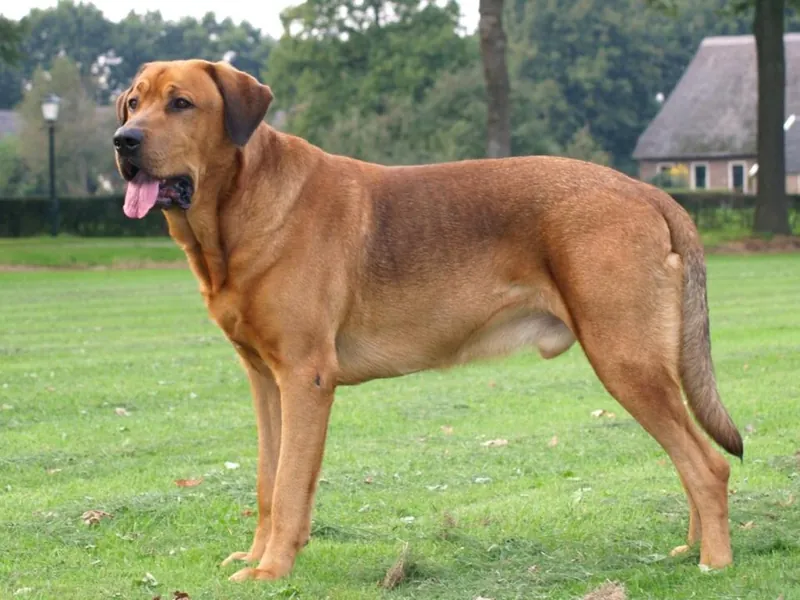
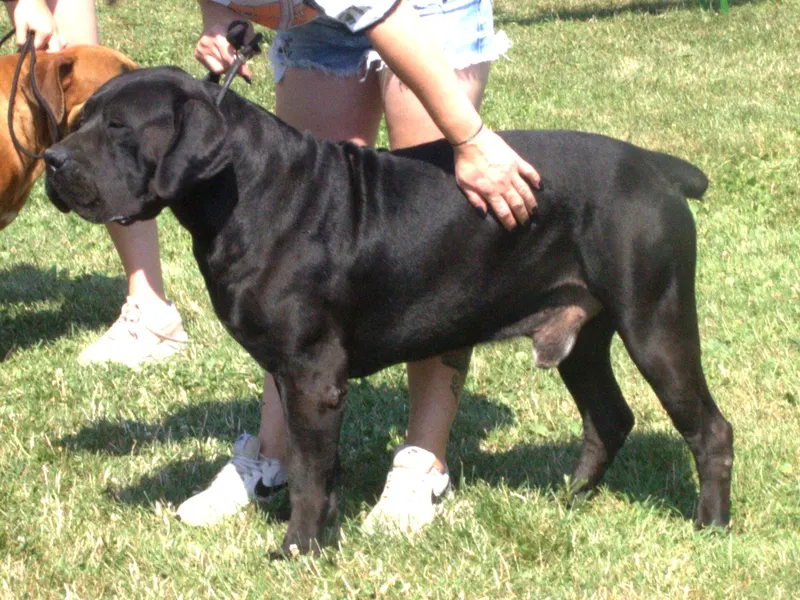
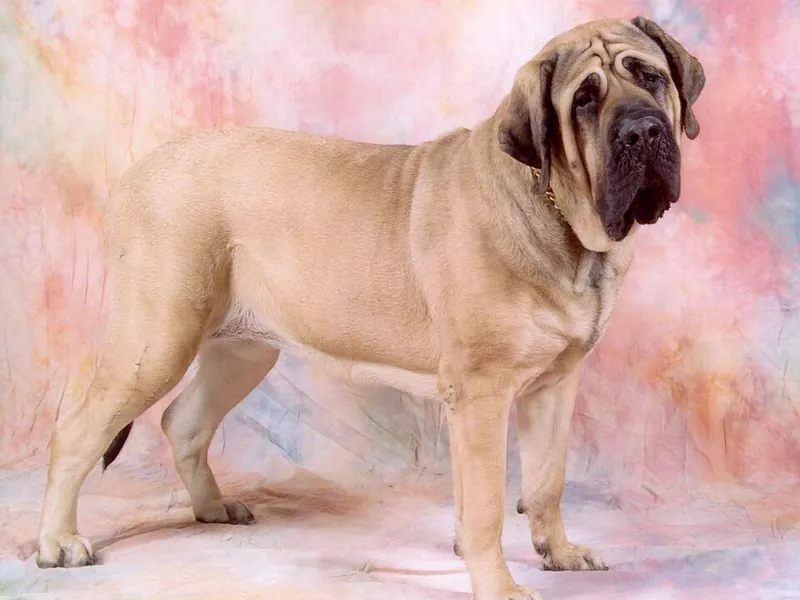
The Mastiff is one of the heaviest dog breeds. Adults stand about 28 to 31 inches at the shoulder and weigh roughly 119 to 229 lb. The body is massive and heavy-boned, with a wide, deep chest, a broad, square head and a short muzzle. Males are clearly larger and heavier than females, with more pronounced head and bone.
The short, straight outer coat lies over a dense undercoat. The AKC accepts three colors: fawn, apricot and brindle. All Mastiffs should have a dark mask on the muzzle, nose and ears, and the dark around the eyes gives the breed its gentle, thoughtful expression. A small white patch on the chest is permitted, while larger white areas are a fault.
Loose skin on the head forms wrinkles, especially when the dog is alert. Breeders who aim for moderate, athletic dogs avoid excessive wrinkling, very short muzzles and extreme weight, which can bring eye, breathing and joint problems.
Temperament and Personality
Mastiffs are calm, dignified and good-natured. They are usually patient and gentle with children in their family and are content to spend much of the day resting. They are not frequent barkers. Their guarding instinct typically shows as quietly placing themselves between their family and a stranger rather than charging.
Many are reserved with people they do not know. Their size alone means supervision with small children is important, and early socialization with dogs and visitors helps raise a confident, relaxed adult.
Mastiffs are often sensitive and eager for approval from their people. They usually dislike being left out of family life and do best living indoors with their family rather than outside in a kennel.
Are Mastiffs Good for First-Time Owners?
Mastiffs can work for committed first-time owners, but their size makes mistakes costly, so it is not the easiest choice.
Temperament is rarely the problem: Mastiffs are calm and eager to please. The difficulties are practical. A puppy grows very fast, and leash manners, not jumping on people and accepting handling must be solid before the dog outweighs you. Beginners need a reward-based trainer, early socialization with visitors and other dogs, and a plan for the costs of a giant breed. Physical strength or reliable control through training is essential, since an adult Mastiff that pulls cannot be held by force.
Can Mastiffs Live in an Apartment?
A Mastiff can live in a large ground-floor apartment, but it is far from ideal; a house with a yard suits the breed better.
Mastiffs are quiet and spend much of the day resting, so they do not need much activity space. The trouble is everything else: stairs are hard on growing and aging joints, a sick or injured Mastiff cannot be carried, small rooms fill quickly with a dog this size, and many buildings have weight limits for pets. Drool and shedding are also more noticeable in a small space. If you do choose apartment life, an elevator, nearby green space and a non-slip floor are important.
Do Mastiffs Need a Yard?
A yard is not strictly necessary, but it makes life with a Mastiff much easier.
Mastiffs do not need room to run; they need easy access to the outdoors. A fenced yard means quick toilet breaks without stairs or long walks, which matters for a giant puppy with fragile joints and for an older dog with stiff hips. It also gives a cool, shaded place to lounge. A solid fence of about 5 to 6 feet is sensible. A yard does not replace walks, though: daily walks remain important for exercise and socialization, and Mastiffs should not live outside alone.
Exercise and Training
Adult Mastiffs need moderate daily exercise: one or two walks and some play. They are not built for running or jumping and tire quickly in warm weather, so walk in the cool parts of the day. Puppies grow very fast, so avoid forced exercise, long stairs and jumping from vehicles until growth plates close.
Training should start the day a puppy comes home. Mastiffs are sensitive and can be stubborn, so calm, reward-based training works best. Leash manners are essential: an adult Mastiff can outweigh most owners.
Grooming and Shedding
The short, dense coat needs a weekly brush and sheds moderately, more during seasonal changes. Wipe the facial wrinkles and lips daily, as drool and moisture can cause skin irritation. Many owners keep towels handy around the house. Trim nails regularly and check ears for infection.
Feeding and Nutrition
Feeding a Mastiff puppy correctly is one of the most important parts of owning the breed. Giant puppies grow very fast, and too much energy or calcium can contribute to joint and bone problems. Feed a diet formulated for large or giant-breed puppies, keep the puppy lean with ribs easy to feel, and avoid adding supplements unless your vet advises them. Many Mastiffs keep growing and filling out until two or three years of age.
- Feed puppies three or four meals a day and adults at least two meals.
- Bloat is a serious risk in this deep-chested breed. Avoid exercise for about an hour before and after meals, discourage gulping and discuss preventive gastropexy with your vet.
- Raised bowls are no longer generally recommended for bloat prevention; ask your vet.
Keep adults lean to protect hips, elbows and the heart. Extra pounds are hard on a dog already carrying this much weight. Use small treats in training and count them in the daily ration. Wipe the lips after meals to reduce drool-related skin irritation, and choose a stable, heavy bowl.
| Adult weight | Less active | Typical adult | Very active |
|---|---|---|---|
| 119 lb | 1,950 kcal | 2,230 kcal | 2,790 kcal |
| 174 lb | 2,600 kcal | 2,970 kcal | 3,710 kcal |
| 229 lb | 3,190 kcal | 3,640 kcal | 4,560 kcal |
Estimates use the resting energy formula veterinarians work with (70 × body weight in kg0.75) and standard activity factors. Use the feeding guide on your food as a starting point and adjust to body condition. Puppies, seniors, pregnant animals and pets that need to lose weight have different needs, so ask your vet.
Health and Lifespan
Mastiffs have one of the shorter lifespans among dog breeds, typically 6 to 10 years. Health concerns include:
- Hip and elbow dysplasia
- Wobbler syndrome, a neck spinal condition
- Dilated cardiomyopathy
- Bloat (gastric dilatation-volvulus)
- Osteosarcoma
- Eyelid problems such as entropion and ectropion
Choose breeders who screen hips, elbows, hearts and eyes, and who breed for moderate, functional dogs rather than maximum size.
Mastiff Price and Cost of Ownership
Typical breeder price in the US$1,500 to $3,500
A Mastiff puppy from a reputable US breeder typically costs about $1,500 to $3,500. Prices vary by breeder, region and lines. Look for breeders who screen hips, elbows, hearts and eyes and breed for moderate, functional dogs.
Adoption through Mastiff rescue groups is a good option, particularly for people who prefer an adult dog with a known temperament.
Size drives almost every ongoing cost. Food for a dog of this weight is a major monthly expense, and medication doses, anesthesia and surgery are priced by weight, so routine treatments cost more than for smaller dogs. Bloat surgery, cruciate repair and treatment of dysplasia or heart disease can be very expensive. Insurance premiums for giant breeds are higher, but coverage is worth comparing early. Budget for a giant crate, an orthopedic bed, a ramp for the car and possibly a larger vehicle.
Is the Mastiff Right for You?
Mastiffs suit families with a house, a yard and a large car who want a calm guardian. They can be good for relatively inactive households, provided owners can manage a giant dog physically. They are not suited to small apartments, owners who mind drool and hair, or those unable to budget for giant-breed food, medication and veterinary care.
Consider practical details too: a giant dog needs a large crate, a sturdy bed, a vet who can handle heavy patients, and possibly a ramp for the car as it ages.
Mastiff Traits at a Glance
Mastiff FAQ
How big do Mastiffs get?
They weigh about 119 to 229 lb and stand roughly 28 to 31 inches tall, with males considerably heavier than females.
Are Mastiffs good family dogs?
Yes, they are calm and patient with family, including children, though their size calls for supervision.
Do Mastiffs drool?
Yes, many drool a lot, especially after drinking and in warm weather.
How much exercise does a Mastiff need?
Moderate exercise: one or two daily walks plus some play. Avoid strenuous activity in heat and during the puppy growth phase.
Are Mastiffs good guard dogs?
Yes. They are naturally protective and their size deters most intruders, though they rarely bark or act without reason.
How long do Mastiffs live?
Typically 6 to 10 years.