BroholmerDenmark's calm estate guardian
The Broholmer is a rare giant mastiff from Denmark, once kept to guard manor houses and farms. It is calm, even-tempered and low-maintenance in grooming, but its size, watchful nature and stubborn streak call for space and an experienced owner.
Why people love the Broholmer
- Calm, composed and relaxed indoors
- Affectionate with its own family
- Natural deterrent on rural properties
- Short coat needs only weekly brushing
- Barks relatively little for a guardian breed
Things to consider
- Short lifespan of about 8 to 10 years
- Giant size raises costs for food, care and transport
- Reserved with strangers; needs ongoing socialization
- Can be stubborn and slow to respond
- Rare outside Scandinavia; long search for puppies
Is this breed right for you?
10 questions · live resultHistory and Origin
Large mastiff-type dogs have been kept in Denmark for centuries as hunting and guard dogs. In the late 1700s, Count Niels Frederik Sehested of the Broholm estate on the island of Funen promoted a consistent type, and the breed took its name from his estate. Broholmers guarded farms and estates, and butchers used them to drive cattle.
The breed nearly disappeared after World War II. In the 1970s, a group of Danish enthusiasts with support from the Danish Kennel Club tracked down remaining dogs and rebuilt the population. The FCI recognizes the Broholmer, and the AKC records it in its Foundation Stock Service. It remains rare outside Scandinavia.
Size, Coat and Colors
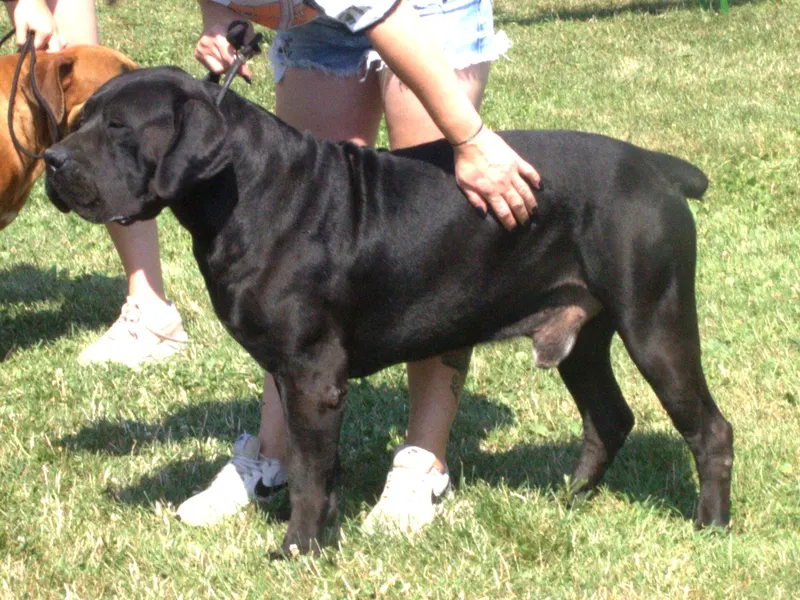
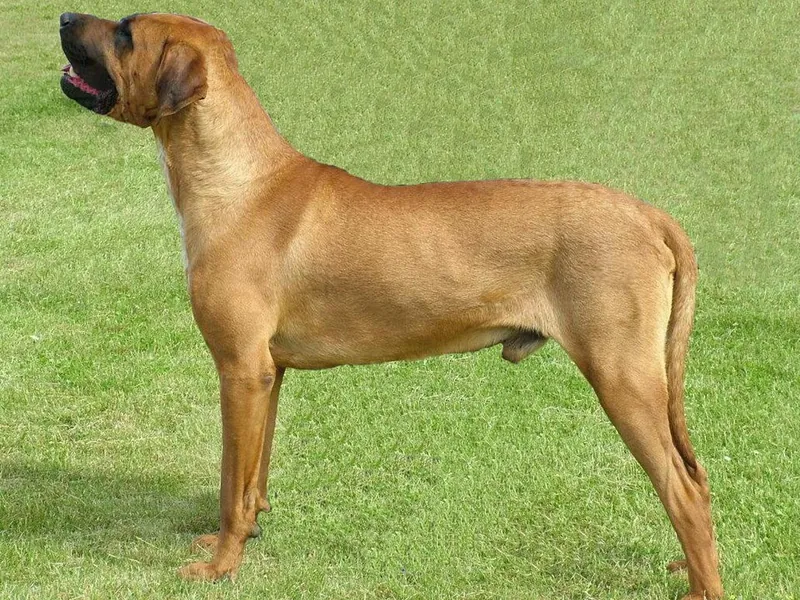
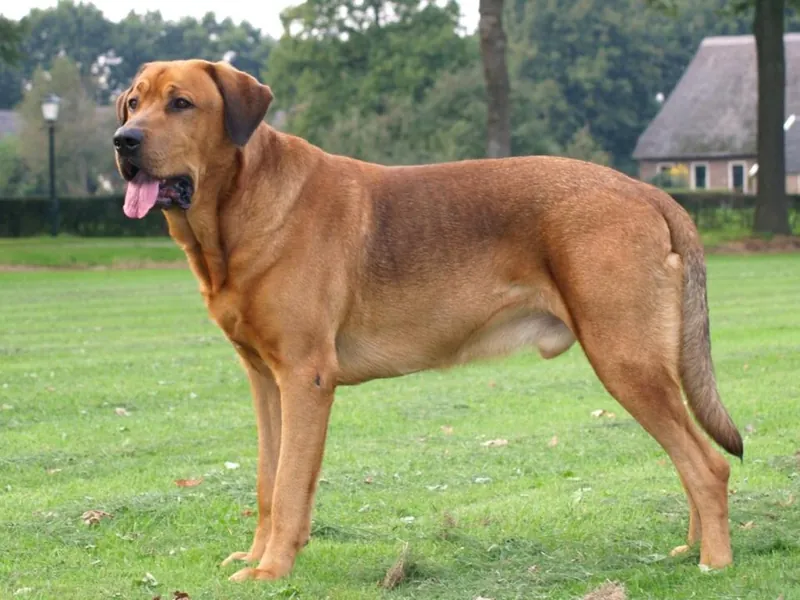
The Broholmer is a giant, rectangular mastiff with a broad, massive head, a powerful neck and a deep chest. Its movement is calm and ground-covering, and it should look powerful without being heavy or clumsy. Adults stand about 28 to 30 inches tall and weigh roughly 88 to 154 lb. The difference between the sexes is clear: males measure around 30 inches and are considerably heavier and more massive, while females are around 28 inches and lighter.
The coat is short, dense and close-lying with a thick undercoat, which gives some protection in cold Scandinavian winters.
Colors: the FCI standard recognizes three colors:
- light yellow or golden yellow, usually with a black mask
- red-yellow, with a black mask
- black
Small white markings on the chest, feet and tail tip are permitted. The black mask on yellow dogs gives the breed its distinctive, serious expression. Loose skin on the throat forms a moderate dewlap, and the lips are heavy enough to cause some drooling.
Temperament and Personality
Broholmers are typically calm, friendly and composed. They form close bonds with their family and are usually relaxed indoors. They are watchful by nature and alert to anything unusual on their territory, but they bark relatively little.
Toward strangers they are reserved rather than effusive, and they can be protective if they perceive a threat. Like many mastiffs, they may be stubborn and slow to respond when they see no reason to. Early socialization helps them stay confident and steady.
Broholmers usually get on with other household pets when raised with them. Their calm nature makes them pleasant house dogs, but their body weight alone means they should be taught early not to jump up or lean on people.
Are Broholmers Good Guard Dogs?
Yes, Broholmers are effective watchdogs and guardians, though they tend to be calm and measured rather than reactive.
The breed was developed to guard Danish estates and farms, and it remains alert to anything unusual on its territory. Most Broholmers deter intruders through their size and presence rather than barking, and they usually bark relatively little. Toward strangers they are reserved, and they can become protective if they perceive a threat. Regular socialization with visitors, new places and people keeps guarding behavior balanced. A well-socialized Broholmer accepts guests introduced by its owner and remains relaxed at home.
Are Broholmers Good for First-Time Owners?
Broholmers are generally better suited to experienced owners. Their calm temperament helps, but their giant size, stubborn streak and protective instincts call for confident handling.
A first-time owner would need to commit to early leash training, careful socialization and calm, consistent rules before the dog becomes too heavy to manage physically. The costs and practicalities of a giant breed, including a large vehicle, sturdy crate and higher veterinary bills, are also significant. Because the breed is rare, finding a mentor through a breed club and meeting adult Broholmers beforehand is especially important for anyone new to dogs.
Are Broholmers Good With Other Dogs?
Broholmers are usually tolerant and calm with other dogs, especially those they have been raised with, but individual temperament and socialization matter.
The breed is generally less dog-reactive than many guardian breeds and often lives well in multi-dog homes. Same-sex tension can occur between adults, as with many large breeds. Unfamiliar dogs entering their territory may be met with suspicion. Because of their size, even play can be overwhelming for small dogs, so supervision is important. Early, positive exposure to many well-mannered dogs helps raise a steady adult that remains calm in public.
Exercise and Training
Exercise needs are moderate. Daily walks and time to wander in a fenced garden suit adults well. Puppies should not be overexercised, since their joints develop slowly.
- Start leash manners early: an adult can outweigh many owners.
- Use calm, consistent, reward-based training; forceful methods backfire with this sensitive giant.
- Introduce visitors and new places regularly so that guarding remains measured.
Grooming and Shedding
The short, dense coat comes in light or golden yellow, red-yellow and black, often with a dark mask. A weekly brush with a rubber curry or bristle brush is enough, with more frequent brushing during seasonal sheds.
Check the ears and trim nails regularly. Some Broholmers drool, especially after drinking, so keep a towel handy.
Feeding and Nutrition
Broholmer puppies grow rapidly over a long period, and controlled growth is essential for joints prone to hip and elbow dysplasia. Feed a complete diet formulated for giant-breed puppies, keep the puppy lean and avoid adding calcium or other supplements unless your vet recommends them. Weigh the puppy regularly and avoid pushing for size.
Bloat: gastric dilatation-volvulus is a serious risk in deep-chested giant breeds. Feed two or three smaller meals a day, avoid exercise for about an hour before and after eating and know the warning signs, such as a swollen belly and unproductive retching. Discuss a preventive gastropexy with your vet.
Adult condition: adult Broholmers are calm and moderately active, so they can gain weight easily. Keep the ribs easy to feel and the waist visible. Every extra pound adds strain to joints in a dog of this size.
Practical points: large bowls and a calm feeding area help. Some Broholmers drool more after eating and drinking, so keep a towel nearby. Count treats in the daily ration.
| Adult weight | Less active | Typical adult | Very active |
|---|---|---|---|
| 88 lb | 1,560 kcal | 1,780 kcal | 2,220 kcal |
| 121 lb | 1,980 kcal | 2,260 kcal | 2,820 kcal |
| 154 lb | 2,370 kcal | 2,710 kcal | 3,380 kcal |
Estimates use the resting energy formula veterinarians work with (70 × body weight in kg0.75) and standard activity factors. Use the feeding guide on your food as a starting point and adjust to body condition. Puppies, seniors, pregnant animals and pets that need to lose weight have different needs, so ask your vet.
Health and Lifespan
As a giant breed, the Broholmer has a relatively short life expectancy of about 8 to 10 years. Breed clubs require hip and elbow X-rays for breeding dogs, reflecting the risk of dysplasia common in heavy breeds.
Owners should also be aware of gastric dilatation-volvulus (bloat), which affects deep-chested giant dogs. Feed several smaller meals rather than one large one, avoid hard exercise right after eating, and keep the dog lean to protect its joints.
Broholmer Price and Cost of Ownership
The Broholmer is very rare in the United States. It is recorded in the AKC Foundation Stock Service, and only a few litters are born outside Scandinavia each year. Most US owners import from Denmark or elsewhere in Europe, which adds travel, transport and paperwork costs. Prices vary by breeder, region and lines, and waiting lists can be long. Ask for hip and elbow X-ray results for both parents.
Adoption is rare, though mastiff rescues occasionally place similar giant breeds.
The main ongoing cost drivers are food for a dog that can exceed 150 lb, veterinary care scaled to a giant patient, including higher anesthesia and medication doses, and possible preventive gastropexy. Treatment for joint disease can be costly. Owners should also budget for a large vehicle, a sturdy crate, durable bedding and secure fencing.
Is the Broholmer Right for You?
The Broholmer suits experienced owners with a house, a securely fenced property and a calm household. It can be a gentle family companion and a natural deterrent on rural properties.
It is not a breed for apartments, novice handlers or people seeking an athletic jogging partner. Because the breed is rare, expect to search, wait and possibly travel to find a responsible breeder.
Plan for the practical side of a giant dog: a large vehicle, a sturdy crate, higher food and medication costs and a vet comfortable handling very large patients.
Broholmer Traits at a Glance
Broholmer FAQ
How big do Broholmers get?
They stand about 28 to 30 inches tall and weigh roughly 88 to 154 lb, with males noticeably larger than females.
Are Broholmers good family dogs?
They are typically calm and affectionate with their own family. Their size means supervision with small children is important.
Is the Broholmer AKC recognized?
Not fully. The AKC records the Broholmer in its Foundation Stock Service, a step before full recognition.
Do Broholmers shed?
Yes, moderately. Their short coat needs only weekly brushing, more during seasonal sheds.
How long do Broholmers live?
Usually about 8 to 10 years, which is typical for giant breeds.