Spanish MastiffSpain's giant guardian of migrating flocks
The Spanish Mastiff is a massive, calm livestock guardian that spent centuries protecting sheep from wolves on Spain's long seasonal migrations. It is gentle with its own people but independent, watchful and enormous, so it belongs with experienced owners who have real space.
Why people love the Spanish Mastiff
- Calm and dignified at home with its family
- Outstanding livestock guardian
- Short coat is easy to brush
- Gentle with children it grows up with
- Low exercise needs for its size
Things to consider
- Enormous size needs space and strong handling
- Heavy drooling, especially after drinking and eating
- Tends to bark at dusk and night
- Independent and slow to obey commands
- Shorter lifespan typical of giant breeds
Is this breed right for you?
10 questions · live resultHistory and Origin
Large guardian dogs have worked in Spain for many centuries. The Spanish Mastiff is most closely tied to the transhumance, the seasonal movement of huge Merino sheep flocks between northern summer pastures and southern winter grazing. Several dogs traveled with each flock, wearing spiked collars, and their job was to deter wolves and thieves rather than to herd.
As transhumance declined in the 20th century, so did the working population, although the breed still guards livestock in parts of Spain today. A breed standard was drawn up in the mid 20th century and the breed is recognized by the FCI in Group 2. In the United States it is part of the AKC Foundation Stock Service.
Size, Build and Colors
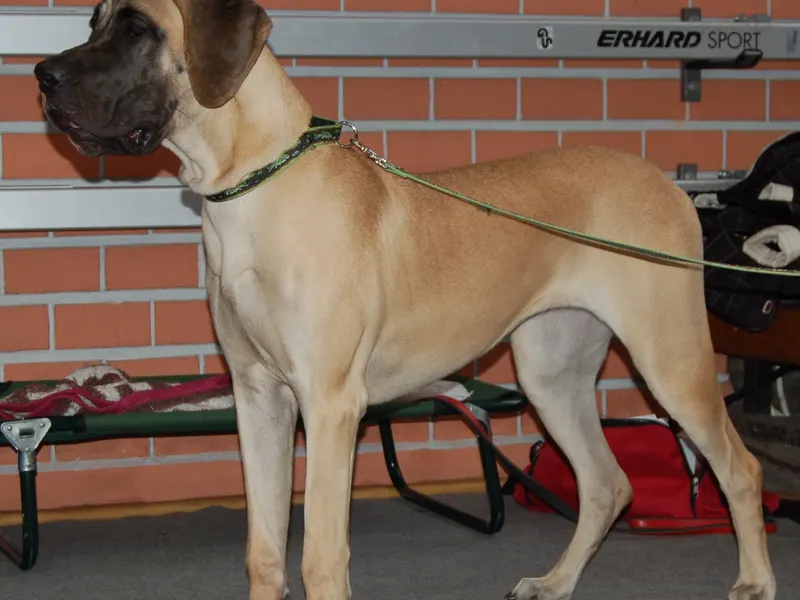
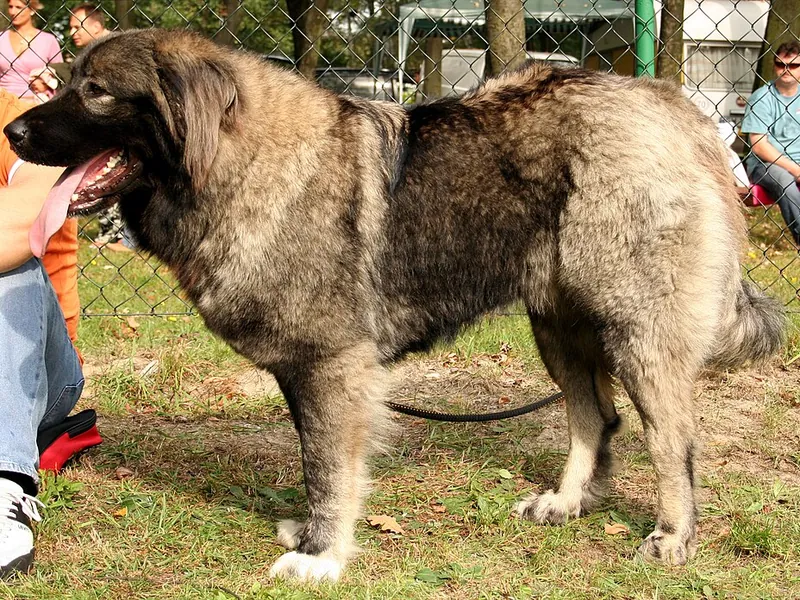
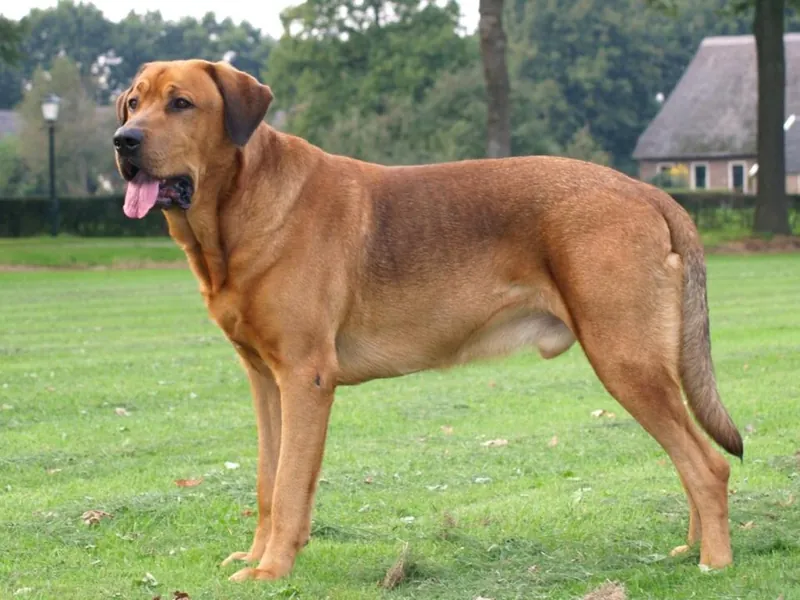
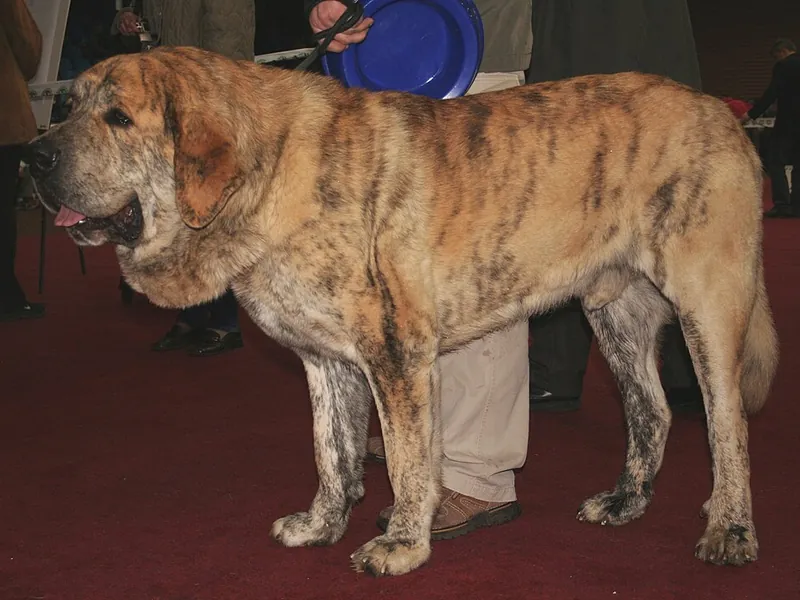
The Spanish Mastiff is one of the largest dog breeds. Adults stand about 28 to 31 inches or more at the shoulder and weigh roughly 141 to 201 lb. Males are at the upper end, with heavier heads and more massive bodies, while females are slightly smaller and lighter but still very large.
The breed has a powerful, rectangular body, deep chest and strong bone. The head is large with a broad skull and loose skin that forms a double dewlap on the neck. The lips hang down, contributing to the breed's notorious drooling.
The coat is short to medium in length, dense and smooth. Accepted colors include:
- Fawn, yellow and red
- Black and wolf-gray
- Brindle
- Combinations of these colors, sometimes with white markings
The ears are medium-size and triangular, hanging close to the cheeks. The tail is thick and low-set. Movement should be a smooth, heavy trot, reflecting the breed's endurance as a working guardian.
Temperament and Personality
At home the Spanish Mastiff is often quiet and dignified, spending long periods lying where it can watch its territory. It is typically affectionate and tolerant with its own family, including children it has grown up with, but its sheer mass means play needs supervision.
This is a true guardian. It is reserved or suspicious with strangers, decides for itself what counts as a threat and will stand its ground. Many bark in the evening and at night, which was useful on open pasture but can trouble neighbors. With other animals it is often protective of those it knows, while unfamiliar dogs may be challenged.
Do Spanish Mastiffs Bark a Lot?
Spanish Mastiffs bark less than many breeds during the day, but many are vocal in the evening and at night.
This behavior comes from their history guarding flocks against predators that were most active in the dark. Their deep, loud bark can carry far and may disturb neighbors in suburban settings. Training can reduce excessive barking, but it rarely eliminates it entirely. Rural homes with distance from neighbors suit the breed best. Keeping the dog indoors at night can help in more populated areas.
Do Spanish Mastiffs Need a Yard?
Yes, a Spanish Mastiff needs a large, securely fenced yard or property. Apartment living is not suitable.
The breed likes to patrol and watch its territory, and it needs space to move comfortably given its size. Fencing must be tall, sturdy and regularly checked, as a giant guardian can push through weak barriers. A yard also helps with drool management, since much of it ends up outdoors. Even with land, daily walks and outings are important for socialization and mental health.
Are Spanish Mastiffs Good with Other Dogs?
Spanish Mastiffs are often protective of dogs they live with but may challenge unfamiliar dogs entering their territory.
As livestock guardians, they treat their own animals as part of their group. A Spanish Mastiff raised with another dog usually accepts it, especially if it is of the opposite sex. Same-sex adults can sometimes clash. Unfamiliar dogs, particularly on the Mastiff's property, may be seen as intruders. Early socialization, careful introductions on neutral ground and supervision help prevent conflicts.
Small dogs and pets the Mastiff knows are usually treated gently, but size alone means play should be supervised.
Exercise and Training
Exercise needs are moderate: daily walks and time to patrol a large, securely fenced property suit it better than intense running. Puppies grow very fast, so avoid forced exercise, long stair climbing and jumping while the joints develop.
Training is the real challenge. Spanish Mastiffs were bred to make decisions without human direction and are not eager to obey for its own sake. Start socialization and calm, consistent training from the first week at home, and teach loose-lead walking before the dog outweighs you. Harsh methods tend to backfire. Owners should have experience with large guardian breeds.
Grooming and Shedding
The short, dense coat is easy to maintain with a weekly brush, with more frequent brushing during seasonal sheds. Colors include fawn, brindle, black, wolf-gray and combinations with white.
The bigger daily chore is drool. Loose lips mean slobber, especially after drinking and eating, so keep towels handy. Wipe the lip folds to avoid irritation, check the ears weekly and trim nails regularly, which is far easier if a puppy learns to accept it early.
Feeding and Nutrition
Spanish Mastiff puppies grow extremely fast, and controlled growth is essential to protect bones and joints. Feed a complete food formulated for giant-breed puppies, with balanced calcium and phosphorus. Do not add calcium supplements, and aim for a lean puppy rather than a chubby one.
Growth continues for two years or more, so consult your vet before switching to adult food. Keep exercise gentle during this time.
- Feed two or three meals a day to reduce the risk of bloat in this deep-chested giant.
- Avoid exercise for about an hour before and after meals.
- Use a sturdy, raised or floor-level bowl depending on your vet's advice; the evidence on bloat and bowl height is mixed.
- Keep adults lean, as excess weight strains joints.
Expect drool after every meal and drink. A towel and easy-clean flooring near the feeding area help.
| Adult weight | Less active | Typical adult | Very active |
|---|---|---|---|
| 141 lb | 2,220 kcal | 2,530 kcal | 3,170 kcal |
| 201 lb | 2,890 kcal | 3,300 kcal | 4,130 kcal |
Estimates use the resting energy formula veterinarians work with (70 × body weight in kg0.75) and standard activity factors. Use the feeding guide on your food as a starting point and adjust to body condition. Puppies, seniors, pregnant animals and pets that need to lose weight have different needs, so ask your vet.
Health and Lifespan
Like most giant breeds, the Spanish Mastiff has a shorter lifespan than smaller dogs, typically about 10 to 12 years. Hip and elbow dysplasia are the main orthopedic concerns, and the rapid growth phase makes careful feeding and controlled exercise important.
Some Spanish Mastiffs have loose eyelids, which can lead to eye irritation. Deep-chested giant dogs are also at risk of bloat (gastric dilatation-volvulus), so learn the warning signs. Choose a breeder who X-rays hips and elbows of breeding dogs and can show results.
Spanish Mastiff Price and Cost of Ownership
Spanish Mastiffs are rare in the US, and most puppies come from a handful of breeders or are imported from Spain. Prices vary by breeder, region and lines, and import costs can add significantly. Look for breeders who screen for hip and elbow dysplasia and who can show working or temperament records.
Rescues sometimes place giant guardian breeds, including Spanish Mastiffs, through livestock guardian dog networks.
Breed-specific ongoing costs include:
- Very large amounts of giant-breed food.
- Tall, strong fencing and maintenance.
- Pet insurance for joint problems and bloat.
- Large crates, beds and vehicles that fit a giant dog.
- Higher vet costs, as medication doses scale with weight.
Is the Spanish Mastiff Right for You?
This breed suits rural owners with large, well-fenced land, experience with guardian dogs and a tolerance for drool and night barking. It can also be an outstanding livestock protector.
- Good match: farms, smallholdings, experienced owners who want a calm, protective presence.
- Not a match: apartments, suburban lots with close neighbors, first-time owners or anyone wanting an obedient sports dog.
Budget for the costs of a giant dog, from food to veterinary care and a vehicle large enough to carry it.
Spanish Mastiff Traits at a Glance
Spanish Mastiff FAQ
How big do Spanish Mastiffs get?
They are among the largest breeds: around 28 to 31 inches or more at the shoulder and roughly 141 to 201 lb, with males at the upper end.
Are Spanish Mastiffs good family dogs?
They are often gentle with their own family, but their size, guarding instinct and independence make them best for experienced owners with space.
Do Spanish Mastiffs drool?
Yes, a lot. Their loose lips produce plenty of slobber, especially after meals and drinking.
Are Spanish Mastiffs easy to train?
No. They are intelligent but independent and were bred to act on their own judgment, so training needs patience, early socialization and consistency.
How long do Spanish Mastiffs live?
Typically about 10 to 12 years, which is normal for a giant breed.