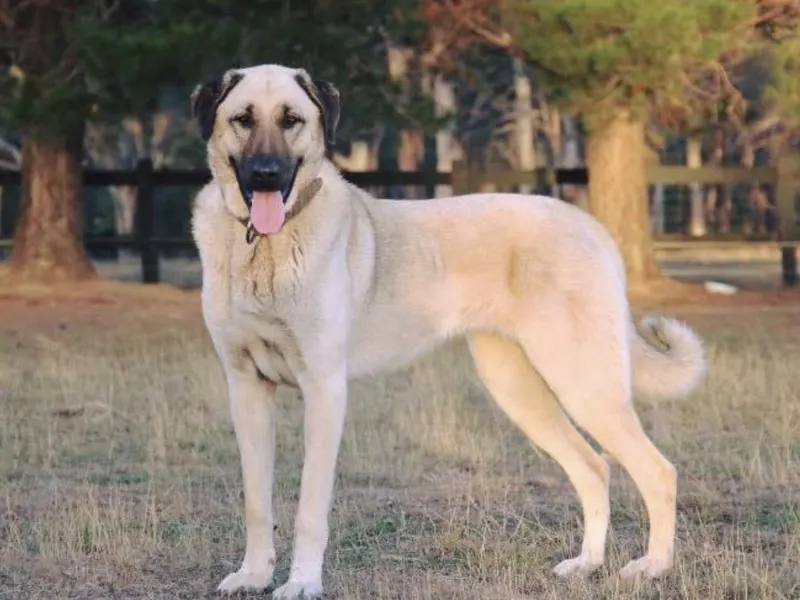
BoerboelSouth Africa's powerful farm guardian
The Boerboel is a massive, muscular mastiff from South Africa, bred to guard isolated farms. Calm and affectionate with its family but naturally protective and wary of strangers, it is a breed for experienced owners who can provide firm, fair guidance and lifelong socialization.
Why people love the Boerboel
- Calm, affectionate and devoted with its own family
- Natural guardian of home and property
- Short coat is easy to groom
- Moderate exercise needs as an adult
- Intelligent and capable of learning a lot with fair training
Things to consider
- Size and strength demand experienced, confident handling
- Often intolerant of unfamiliar dogs, especially the same sex
- Shorter lifespan of 9 to 11 years
- Feeding, vet care and insurance cost more for a giant dog
- Local rules, landlords and insurers may restrict the breed
Is this breed right for you?
10 questions · live resultHistory and Origin
The Boerboel developed in South Africa from large dogs brought by European settlers from the 1600s onward, including mastiff and bulldog types, which mixed with local dogs over several centuries. On remote farms, these dogs guarded homesteads and livestock against predators such as leopards and baboons. The name means farmer's dog in Afrikaans.
Organized breeding began in the 1980s, when enthusiasts set out to preserve the type. The AKC recognized the Boerboel in 2015. The breed is not recognized by the FCI or The Kennel Club.
Size, Coat and Colors
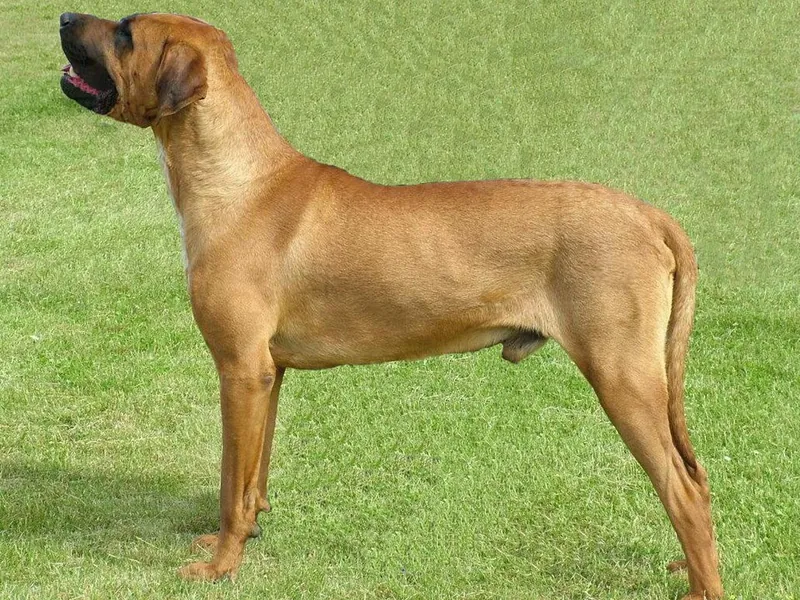
The Boerboel is a large, muscular mastiff with a blocky head, a broad, deep muzzle, thick skin and powerful hindquarters. It looks heavy but should move with surprising agility, which reflects its farm-guarding background.
Adults weigh about 150 to 200 lb and stand roughly 22 to 27 inches at the shoulder. The AKC standard puts males at about 24 to 27 inches and females at about 22 to 25 inches. Males are clearly larger, with a broader head and more massive build; females are noticeably lighter but should still look strong.
The coat is short, dense and smooth. Accepted colors include:
- shades of brown, reddish brown and fawn
- cream
- brindle
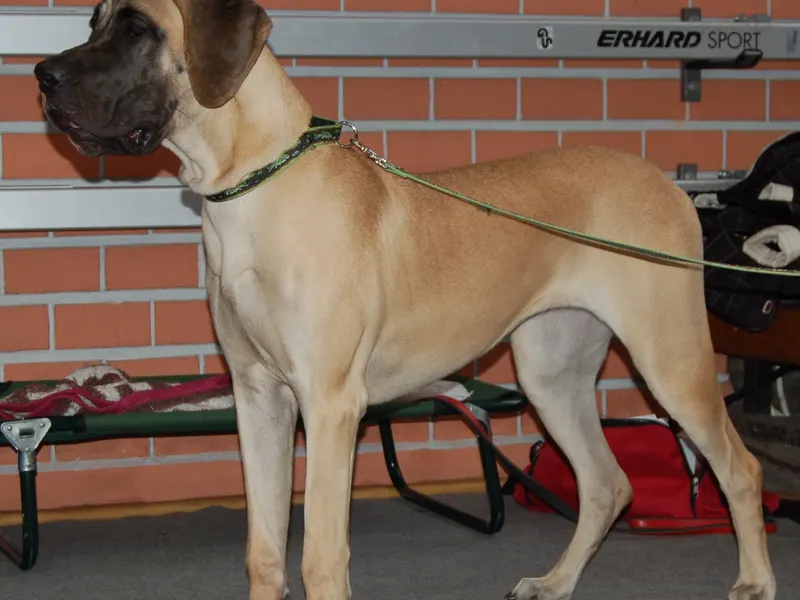
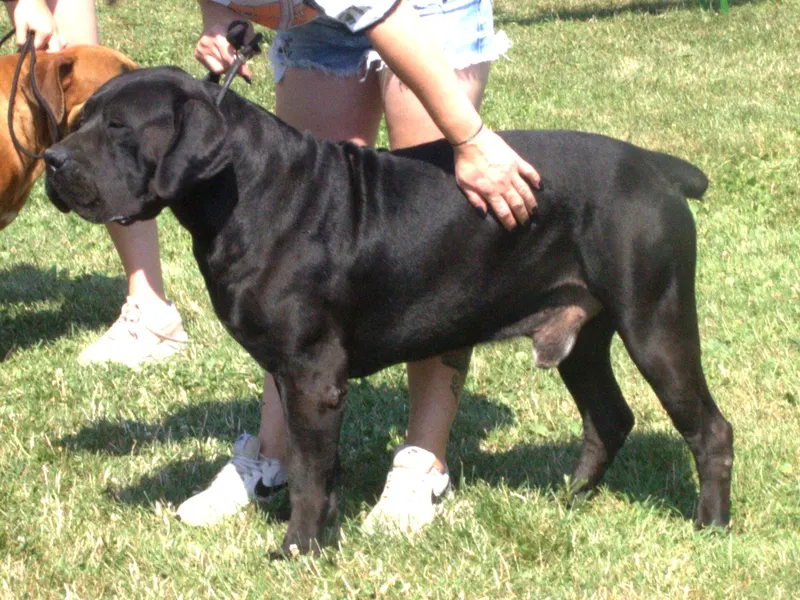
A black mask is desirable, and limited white patches on the legs or chest may appear. Some breeders produce black or piebald dogs, but registries differ on whether these colors are accepted, so ask about registration before buying one. The skin is thick and loose, forming wrinkles on the forehead when the dog is alert.
Temperament and Personality
Boerboels are confident, intelligent and very attached to their family. At home they are often calm and affectionate. Their guarding instinct is strong: they are watchful and reserved with strangers and protective of their territory.
Many Boerboels do not tolerate unfamiliar dogs, particularly of the same sex. With children, they can be gentle with their own family's kids, but their size and protectiveness require supervision, especially when visiting children are around.
Many like to lie where they can watch the doors. Their response to a perceived threat is usually to stand their ground and block rather than retreat, which is why controlled introductions and a clear routine for guests matter.
Are Boerboels Easy to Train?
Boerboels are intelligent and can learn a great deal, but they are not easy dogs to train. They are strong-willed, mature slowly and test boundaries, and their size means training gaps matter more than in a small breed.
Start in puppyhood with leash manners, impulse control, settle on a mat and calm greetings, while the dog is still easy to handle. Use consistent, reward-based methods with clear rules; harsh treatment tends to damage the bond and can make a guardian dog less predictable. Continue socialization and training throughout adolescence, and work with an instructor experienced with guardian breeds. Well-trained Boerboels can be impressively steady companions.
Are Boerboels Good Guard Dogs?
Yes, guarding is the Boerboel's original job. It was bred to protect isolated South African farms and is naturally watchful, territorial and wary of strangers.
That instinct means the owner's role is management, not encouragement. A Boerboel does not need protection training to guard; it needs socialization, solid obedience and clear routines for visitors, deliveries and walks in public. Many owners crate or separate the dog when guests arrive until it has calmly accepted them. A well-managed Boerboel is usually calm and quiet at home, alerting and standing its ground rather than reacting at every noise.
Do Boerboels Need a Yard?
Yes, realistically a Boerboel needs a house with a large, securely fenced yard. A dog of 150 to 200 lb needs space to move, and its guarding instinct makes shared hallways, elevators and crowded sidewalks stressful to manage.
The fence matters as much as the yard. It should be tall, solid and well maintained, with secure gates, so the dog cannot reach passersby or other dogs. A yard does not replace walks and training, though: Boerboels left alone outside for long periods can become bored, territorial or noisy. Use the yard for play and patrol, and keep the dog indoors with the family the rest of the time.
Exercise and Training
Adults need moderate daily exercise: brisk walks, play in a secure yard and mental challenges. Puppies should avoid forced running and jumping to protect developing joints.
Training must start early and continue for life. Boerboels are intelligent but strong-willed, and need calm, consistent, reward-based guidance from an owner they respect. Socialize the puppy widely with people, places and dogs. Teach leash manners while the dog is still small, because an adult can outweigh many owners. Obedience, scent games and impulse-control work help channel the breed's intelligence, and puppy classes with an instructor familiar with guardian breeds are strongly recommended.
Grooming and Shedding
The short, dense coat needs only a weekly brush and occasional bath. Shedding is moderate. Check skin folds on the face and keep them clean. Expect some drool. Trim nails regularly and start handling puppies early so grooming stays easy with an adult. Lighter-coated dogs can sunburn on the nose and belly, and the short coat offers little protection in cold, wet weather.
Feeding and Nutrition
Feeding a Boerboel starts with protecting its joints during growth. Like other giant breeds, Boerboel puppies should grow slowly and steadily rather than as fast as possible.
- Feed a puppy food formulated for large or giant breeds, with appropriate calcium levels, and do not add calcium supplements unless your veterinarian recommends them.
- Keep puppies lean. A slim, slow-growing puppy is less likely to develop hip and elbow problems than a heavy one.
- Split the daily ration into three or four meals for puppies and at least two meals for adults.
Bloat is a serious risk in large, deep-chested dogs. Avoid one large daily meal, prevent gulping with a slow feeder, and keep exercise calm for about an hour before and after eating. Learn the warning signs, such as a swollen belly, retching without vomiting and restlessness, and treat them as an emergency.
Adult Boerboels tend to be less active than their size suggests, so monitor body condition and adjust portions. Use small treats for training, as calorie-dense rewards add up quickly.
| Adult weight | Less active | Typical adult | Very active |
|---|---|---|---|
| 150 lb | 2,320 kcal | 2,650 kcal | 3,320 kcal |
| 200 lb | 2,880 kcal | 3,290 kcal | 4,120 kcal |
Estimates use the resting energy formula veterinarians work with (70 × body weight in kg0.75) and standard activity factors. Use the feeding guide on your food as a starting point and adjust to body condition. Puppies, seniors, pregnant animals and pets that need to lose weight have different needs, so ask your vet.
Health and Lifespan
Boerboels typically live 9 to 11 years. Health concerns include:
- Hip and elbow dysplasia
- Eye conditions such as entropion and ectropion
- Heart disease
- Bloat (gastric dilatation-volvulus), as in other large, deep-chested breeds
Genetic diversity in the breed is limited. Look for breeders who screen hips, elbows, eyes and hearts, and keep your dog lean.
Feed measured meals rather than one large daily meal, and avoid vigorous exercise straight after eating.
Boerboel Price and Cost of Ownership
Typical breeder price in the US$1,500 to $3,000
A Boerboel puppy from a reputable US breeder typically costs about $1,500 to $3,000. Prices vary by breeder, region and lines. Look for breeders who screen hips, elbows, eyes and hearts, and be wary of very cheap puppies from unscreened parents. Adults are sometimes available through mastiff and guardian-breed rescues.
Ongoing cost drivers for this giant breed include:
- Large food volumes and giant-sized beds, crates and equipment
- Higher medication and anesthesia doses, which are priced by weight
- Insurance covering joint disease, heart issues and bloat surgery
- Training classes with an instructor experienced in guardian breeds
- Secure fencing
Some homeowner and renter insurance policies have breed restrictions, so check coverage before bringing a Boerboel home.
Is the Boerboel Right for You?
A Boerboel suits experienced owners with a large, securely fenced property and the time to train and socialize thoroughly. It is not suitable for apartments, inexperienced owners or homes with frequent unfamiliar visitors. Some countries and municipalities restrict or regulate large guardian breeds including the Boerboel, and insurers and landlords may have their own rules, so check local regulations first.
Boerboel Traits at a Glance
Boerboel FAQ
How big do Boerboels get?
Adults weigh about 150 to 200 lb and stand roughly 22 to 27 inches tall at the shoulder.
Are Boerboels good family dogs?
They are affectionate with their own family but are protective and powerful. They suit experienced owners who supervise interactions with children.
Are Boerboels good with other dogs?
Many are not, particularly with dogs of the same sex. Early socialization helps but management is usually needed.
Are Boerboels good for first-time owners?
Generally not. Their size, strength and guarding instinct are best handled by owners with experience of large protective breeds.
Do Boerboels shed?
Moderately. The short coat is easy to care for with weekly brushing.
How long do Boerboels live?
Typically 9 to 11 years.