Greater Swiss Mountain DogPowerful, gentle Swiss farm dog
The Greater Swiss Mountain Dog is the largest of the four Swiss mountain dog breeds, a powerful tricolor farm worker bred to pull carts and guard property. Calm, loyal and good with children, it needs space, consistent training and owners prepared for giant-breed health concerns.
Why people love the Greater Swiss Mountain Dog
- Calm, loyal and gentle with children
- Alert watchdog without being overly suspicious
- Short coat is easier than the Bernese coat
- Enjoys carting, hiking and draft work
- Low hunting drive compared with many large breeds
Things to consider
- Giant size brings high food and vet costs
- Relatively short lifespan of 8 to 11 years
- Higher-than-average risk of splenic torsion and bloat
- Slow to mature; mouthy and boisterous as youngsters
- Overheats easily in hot weather
Is this breed right for you?
10 questions · live resultHistory and Origin
Large tricolor dogs worked on Swiss farms for centuries, guarding property, driving cattle and pulling carts of milk and cheese to market. As machines replaced draft dogs in the 19th century, the type became rare.
In 1908, Swiss geologist and dog expert Albert Heim saw a short-coated tricolor dog at a show in Langenthal and recognized it as a distinct breed. The Swiss Kennel Club recognized the Greater Swiss Mountain Dog in 1910. The AKC recognized it in 1995.
The Greater Swiss is closely related to the Bernese Mountain Dog, Appenzeller and Entlebucher, the other Swiss mountain dog breeds. Unlike the long-coated Bernese, it has a short, dense coat, and it is thought to be the oldest of the four.
Size, Coat and Tricolor Markings
The Greater Swiss Mountain Dog is the largest of the four Swiss mountain dog breeds, standing about 24 to 28 inches and weighing roughly 86 to 141 lb. Males are clearly bigger and heavier than females, with broader heads and more massive bone. The body is strong and slightly longer than tall, built for pulling and farm work rather than speed.
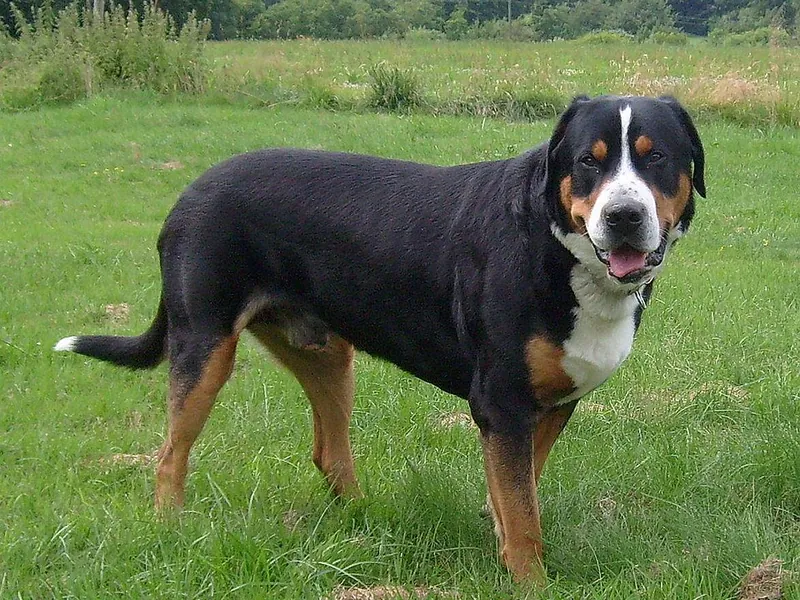
The double coat is short to medium, with a dense outer coat and a thick undercoat that may be black, gray or tawny. Unlike the long-coated Bernese Mountain Dog, the Swissy looks sleek and smooth.
The standard calls for a symmetrical tricolor pattern: a black base coat with rich rust markings over the eyes, on the cheeks, chest, legs and under the tail, and white on the head (a blaze), muzzle, chest, feet and tail tip. Symmetry of markings is valued in the show ring. Other color combinations, such as blue or red-based tricolor, occur occasionally but are faults. Eyes are brown, and the ears are triangular and hang close to the head.
Temperament and Personality
Swissies are calm, loyal and family-oriented. They are usually gentle with children and alert watchdogs, barking to announce visitors.
They can be stubborn and slow to mature. Their hunting drive is low, but they can be pushy with other dogs.
Swissies are typically confident and friendly once they know a person, but they can be cautious with strangers and protective of their homes. They enjoy being part of family activities and dislike long periods alone.
As puppies and adolescents, Swissies can be boisterous and mouthy, and they often take two to three years to mature mentally. Patient training through this period pays off.
Do Greater Swiss Mountain Dogs Bark a Lot?
Swissies are moderate to frequent barkers. They were bred partly as farm guardians, so most will bark loudly to announce visitors, delivery drivers and unusual sounds, and their deep voice carries.
They are not usually nuisance barkers when well exercised and included in family life, but boredom or long hours alone can make barking worse. Teach a quiet cue early, reward calm behavior at windows and doors, and give the dog a job such as carting or long hikes. Neighbors in close housing may notice the bark more than with smaller breeds.
Do Greater Swiss Mountain Dogs Drool?
Most Swissies drool a little, but they are not heavy droolers like mastiffs. The lips are fairly tight in a typical dog, so drool is mostly limited to after drinking, around food, in hot weather or during excitement.
Individual dogs vary. Those with looser lips drool more, and almost all leave water trails from the bowl. A towel by the water dish and a quick wipe after meals handle most of it. If you strongly dislike any drool, meet adult dogs from the breeder's lines before deciding, since parents are the best guide to what to expect.
Are Greater Swiss Mountain Dogs Good with Other Pets?
Usually yes, with the right introductions. Swissies have a low hunting drive and often live peacefully with cats they are raised with, as well as other household dogs.
Some can be pushy or dominant with other dogs, particularly same-sex dogs, and their size means rough play can overwhelm smaller pets. Early socialization with calm dogs and cats, supervised introductions and clear house rules help. Because of their size, always supervise interactions with small dogs and cats until you are confident the Swissy is gentle and respectful.
Exercise and Training
About an hour of daily activity, such as long walks, carting and hiking, suits adults. Avoid overexercising puppies.
- Start leash training early.
- Use consistent, reward-based training.
- Teach calm greetings.
Swissies enjoy hiking, carting and draft work, which match their history as working farm dogs. Many also enjoy obedience and rally. Avoid heavy exercise in hot weather, as they overheat easily.
Puppies should not be forced into long walks or repetitive jumping. Short, frequent outings are better for growing joints.
Grooming and Shedding
The short, dense double coat is black, rust and white. Brush weekly, more during seasonal sheds.
Swissies drool moderately.
Swissies shed year-round, with heavier seasonal sheds. Brush more often during these periods to remove loose undercoat. Keep a towel handy for drool after drinking.
Trim nails regularly and check ears for infection.
Feeding and Nutrition
Swissy puppies grow for well over a year, and controlled growth is the key nutrition goal. Feed a diet formulated for large or giant-breed puppies, keep the puppy lean and avoid calcium supplements. Rapid growth and excess weight raise the risk of joint problems seen in the breed.
Adults should be kept at a lean, athletic weight. Many Swissies love food and gain weight easily, so measure meals and adjust for activity.
The breed has a higher-than-average risk of both bloat and splenic torsion. Feed two or three smaller meals a day, avoid exercise for an hour before and after meals, keep mealtimes calm and use a slow feeder if your dog gulps. Discuss a preventive gastropexy with your vet.
Some Swissies have lick fits, which may be linked to digestive discomfort. Regular meal times, gradual food changes and avoiding table scraps can help; report any episodes to your vet. Count treats as part of the daily ration.
| Adult weight | Less active | Typical adult | Very active |
|---|---|---|---|
| 86 lb | 1,530 kcal | 1,750 kcal | 2,190 kcal |
| 114 lb | 1,890 kcal | 2,160 kcal | 2,700 kcal |
| 141 lb | 2,220 kcal | 2,530 kcal | 3,170 kcal |
Estimates use the resting energy formula veterinarians work with (70 × body weight in kg0.75) and standard activity factors. Use the feeding guide on your food as a starting point and adjust to body condition. Puppies, seniors, pregnant animals and pets that need to lose weight have different needs, so ask your vet.
Health and Lifespan
Greater Swiss Mountain Dogs typically live 8 to 11 years. Splenic torsion is more common than average, and bloat is a concern. Joint problems, epilepsy and urinary incontinence also occur.
Choose breeders who screen hips, elbows and eyes.
Splenic torsion, where the spleen twists, is more common in the breed than average and can cause sudden illness. Bloat is also a concern, so feed smaller meals and avoid exercise right after eating.
Some Swissies develop lick fits, episodes of frantic licking and swallowing, which may be linked to digestive discomfort. Discuss any such episodes with your vet.
Greater Swiss Mountain Dog Price and Cost of Ownership
Typical breeder price in the US$2,000 to $3,500
A Greater Swiss Mountain Dog puppy from a reputable US breeder typically costs about $2,000 to $3,500. Prices vary by breeder, region and lines, and the breed is uncommon enough that waiting lists are normal. Ask for hip, elbow and eye screening on both parents.
Swissies occasionally come into breed-specific rescues, usually as adults.
Ongoing costs reflect giant size. Food bills are high, and medication doses, anesthesia, crates and boarding all cost more for a dog of this weight. Pet insurance is worth considering, especially for bloat, splenic torsion and joint surgery, and some owners budget for a preventive gastropexy. Carting equipment, larger vehicles and air conditioning in hot climates may add to the bill. Grooming is mostly do-it-yourself.
Is the Greater Swiss Mountain Dog Right for You?
The Swissy suits families with space and time for training.
It is not ideal for apartments.
The Greater Swiss Mountain Dog suits families with a house and fenced yard who can provide regular exercise, consistent training and plenty of companionship. It is a loyal family protector and a gentle companion for children when well raised.
It is not ideal for apartments, very hot climates or owners who are away for long periods. Be prepared for the costs of a giant breed and a relatively short lifespan.
Greater Swiss Mountain Dog Traits at a Glance
Greater Swiss Mountain Dog FAQ
How big do Greater Swiss Mountain Dogs get?
They stand about 24 to 28 inches tall and weigh 86 to 141 lb.
Are Greater Swiss Mountain Dogs good family dogs?
Yes. They are gentle and loyal with children.
How long do Greater Swiss Mountain Dogs live?
Typically 8 to 11 years.
Do Greater Swiss Mountain Dogs shed?
Yes, they shed year-round and more heavily during seasonal coat changes.
How much exercise does a Greater Swiss Mountain Dog need?
About an hour a day of walking, hiking or carting, with controlled exercise for puppies.
Are Greater Swiss Mountain Dogs good for first-time owners?
They can be for committed first-time owners who are prepared for their size and stubbornness and invest in training.