NewfoundlandThe sweet-natured water rescue giant
The Newfoundland is a giant working dog bred to haul nets and pull people out of cold Atlantic water. Famous for its gentle nature with children, it suits families who love the outdoors, have space and can keep up with a thick, shedding coat.
Why people love the Newfoundland
- Exceptionally patient and gentle with children
- Calm and mellow indoors as an adult
- Natural swimmer with a water rescue heritage
- Usually friendly with other dogs and pets
- Trainable and eager to cooperate with calm handling
Things to consider
- Short lifespan, typically 9 to 10 years
- Heavy shedding and drool year-round
- Struggles in hot, humid climates
- Giant size raises costs for food, vet care and transport
- Prone to heart, joint and bladder stone problems
Is this breed right for you?
10 questions · live resultHistory and Origin
The breed developed on the island of Newfoundland, off Canada's east coast, as a working dog for fishermen. Newfoundlands hauled nets and lines, pulled carts and retrieved gear and people from the sea. Their likely ancestors include local dogs and large European breeds brought by fishing crews, though the exact mix is unknown.
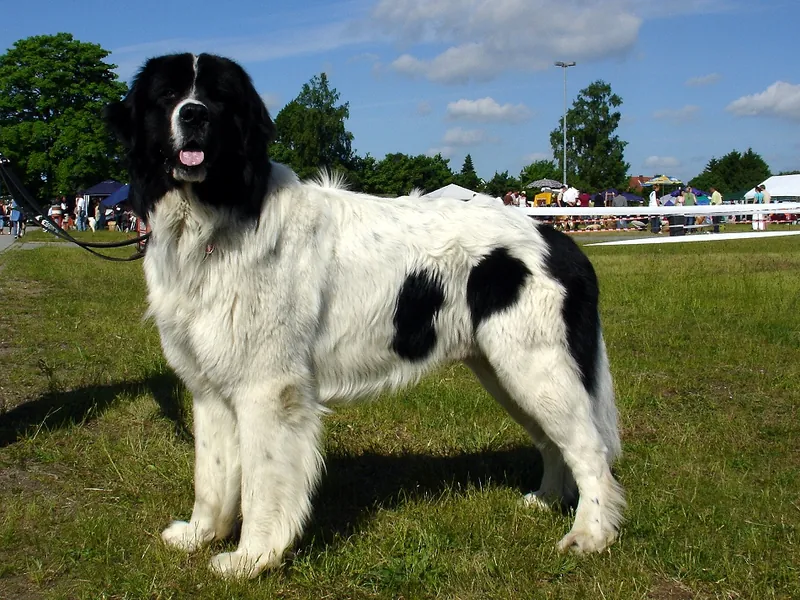
English visitors brought the dogs to Britain in the 18th century, where they became fashionable. The black and white variety is often called Landseer after painter Sir Edwin Landseer. Water rescue tests remain a popular activity for the breed today.
Size, Coat and Colors
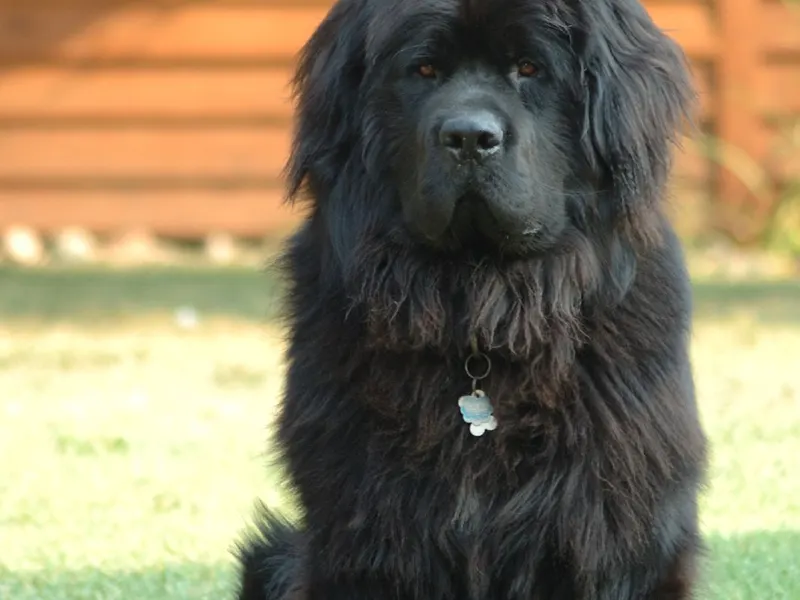
The Newfoundland is a giant, heavy-boned dog standing about 26 to 28 inches at the shoulder and weighing around 119 to 150 lb. It has a massive head with a short, square muzzle, small deep-set eyes and a soft, benevolent expression. The body is deep and broad, built for swimming and hauling, and the feet are large and webbed.
The double coat is flat, water-resistant and moderately long, with a soft, dense undercoat that keeps the dog warm in cold water. The outer coat feels slightly oily.
Recognized colors are black, brown, gray and white and black, known as Landseer. Solid colors may have small white marks on the chest, toes or tail tip. Males are larger and heavier than females, with broader heads and more coat, and the gap in size is noticeable side by side.
Temperament and Personality
Sweetness of temperament is the hallmark of the breed. Newfoundlands are calm, patient and very tolerant with children, and they usually accept other pets readily. They are not natural guard dogs, though their size alone deters strangers, and some will place themselves between family and anything they find odd.
Newfies are sensitive and do not respond well to harsh handling. Many have a strong urge to swim and may try to rescue swimmers who do not want rescuing.
Because they are so mellow indoors, Newfies are often underestimated as puppies. A six-month-old can already weigh as much as an adult Labrador and still have a puppy's lack of judgment, so early manners matter.
Is the Newfoundland Good for First-Time Owners?
The Newfoundland is one of the few giant breeds that can suit a first-time owner, thanks to its sweet, cooperative temperament. It rarely shows sharp behavior, accepts other pets readily and responds well to calm, reward-based training.
The challenge is size rather than personality. A puppy can outgrow its handler within months, so leash manners, polite greetings and settling on a mat need to start early. Beginners should also be ready for the practical side: drool on walls, hair on furniture, a large vehicle, a vet used to giant breeds and higher bills for everything. Owners who plan for these realities, ideally with a puppy class and an experienced breeder as mentor, usually find the breed very rewarding.
Is a Newfoundland a Good Guard Dog?
A Newfoundland is a watchdog by presence rather than behavior. Its size and deep bark discourage strangers, but the breed is friendly by nature and most dogs greet visitors kindly once their owner does.
What a Newfie does show is a protective, intervening instinct. Many will place themselves between a family member, especially a child, and something unfamiliar, and the breed standard describes a dog that will act calmly to protect when it truly matters. This is quiet watchfulness, not territorial guarding.
If you want a dog that alerts you to arrivals and looks imposing, the Newfoundland fits. If you want a dog trained to guard a property, a guardian breed is a better match.
Can a Newfoundland Live in an Apartment?
It is possible but rarely ideal. Adult Newfoundlands are calm indoors and do not need intense exercise, so energy is not the main problem. Space, stairs and climate are.
A 120 to 150 lb dog takes up a lot of floor, sheds heavily and drools, which is harder to live with in small rooms. Puppies should avoid repeated stair climbing while their joints develop, and an elderly Newfie with weak hindquarters may struggle with stairs or need lifting. Without a yard, every bathroom break means a walk outside, and in summer the apartment must stay cool.
A ground-floor apartment with elevator access, air conditioning and nearby green space or water can work for an owner committed to daily outings.
Exercise and Training
Daily walks and, ideally, regular swimming keep a Newfoundland fit. Swimming is excellent low-impact exercise for heavy joints. They are not built for long runs and overheat quickly, so avoid exercise in hot weather.
Training should start early, while the puppy is still small enough to move. Teach loose-leash walking, polite greetings and a solid stay. The breed is willing but independent, so use calm repetition and rewards. Water work, carting and drafting give this working breed a real job.
Grooming and Shedding
The water-resistant double coat is heavy and oily, sheds steadily, and blows out in spring and fall. Brush thoroughly two or three times a week, and daily during the shed, with a pin brush and undercoat rake. Pay attention behind the ears, under the legs and around the trousers where mats form.
Newfoundlands drool heavily. Check ears often, as dogs that swim are prone to ear infections, and dry the coat well after swimming to avoid hot spots.
Feeding and Nutrition
Controlled growth is the priority in a Newfoundland puppy. Giant breeds grow for up to two years, and fast growth or extra weight strains hips, elbows and ligaments. Feed a diet formulated for large or giant-breed puppies, keep the puppy lean with a visible waist, and do not add calcium or other supplements unless your vet advises it.
Adults need enough food to maintain muscle without extra weight, since every pound matters for joints and the heart. Newfies are often less active than their size suggests, so portions may be lower than owners expect.
- Split food into two or three meals a day to lower bloat risk, and avoid hard exercise around meals.
- Cystinuria, a cause of bladder stones, has a DNA test. Dogs affected may need a diet chosen by the vet, plenty of water and regular urine checks.
- Keep a towel ready, because drinking and eating trigger heavy drool.
| Adult weight | Less active | Typical adult | Very active |
|---|---|---|---|
| 119 lb | 1,950 kcal | 2,230 kcal | 2,790 kcal |
| 150 lb | 2,320 kcal | 2,650 kcal | 3,320 kcal |
Estimates use the resting energy formula veterinarians work with (70 × body weight in kg0.75) and standard activity factors. Use the feeding guide on your food as a starting point and adjust to body condition. Puppies, seniors, pregnant animals and pets that need to lose weight have different needs, so ask your vet.
Health and Lifespan
The typical lifespan is about 9 to 10 years. Health issues seen in the breed include:
- Hip and elbow dysplasia
- Subvalvular aortic stenosis (SAS), an inherited heart defect
- Cystinuria, which causes bladder stones. A DNA test is available.
- Bloat (gastric dilatation-volvulus) and cruciate ligament injuries
Ask breeders for hip, elbow, cardiac and cystinuria results on both parents, and keep your dog lean to protect its joints.
Newfoundland Price and Cost of Ownership
Typical breeder price in the US$1,500 to $3,500
A Newfoundland puppy from a reputable US breeder generally costs about $1,500 to $3,500. Prices vary by breeder, region and lines, and color, especially brown, gray or Landseer, can affect demand. Good breeders provide hip, elbow, cardiac and cystinuria results for both parents.
Newfoundland rescue groups place adults, often because owners underestimated the size or shedding, and adoption suits experienced homes well.
Ongoing costs are those of a giant dog: large quantities of food, medication and anesthesia dosed by weight, a big crate, a suitable vehicle and professional grooming if you do not brush and bathe at home. Insurance taken out early is worth comparing because heart defects (SAS), cruciate ligament tears, bloat surgery and joint problems are all expensive. Mobility aids and support harnesses are common costs in later years.
Is the Newfoundland Right for You?
Newfoundlands suit families in cooler climates with a house, a yard and access to water. They are good for first-time owners willing to learn proper giant-breed puppy care and invest in training. They are not for people who mind hair on the sofa, drool on the walls or the costs of a 120 to 150 lb dog.
A practical checklist before you commit: a car big enough for a crate of this size, a vet comfortable treating giant breeds, and a plan for lifting or supporting an elderly dog with weak hindquarters.
Newfoundland Traits at a Glance
Newfoundland FAQ
Are Newfoundlands good family dogs?
Yes. They are known for their patience with children and gentle nature, though their size means supervision is still essential.
How big do Newfoundlands get?
Adults typically weigh about 119 to 150 lb and stand 26 to 28 inches at the shoulder.
Do Newfoundlands like water?
Most love it. They have a water-resistant coat and webbed feet and were bred to retrieve gear and people from the sea.
Do Newfoundlands shed?
Yes, heavily. Expect steady shedding year-round and a major coat blow twice a year.
Can Newfoundlands live in hot climates?
They struggle in heat because of their size and thick coat. Air conditioning, shade, cool water and exercise only in the coolest hours are essential.
How long do Newfoundlands live?
Most live 9 to 10 years.