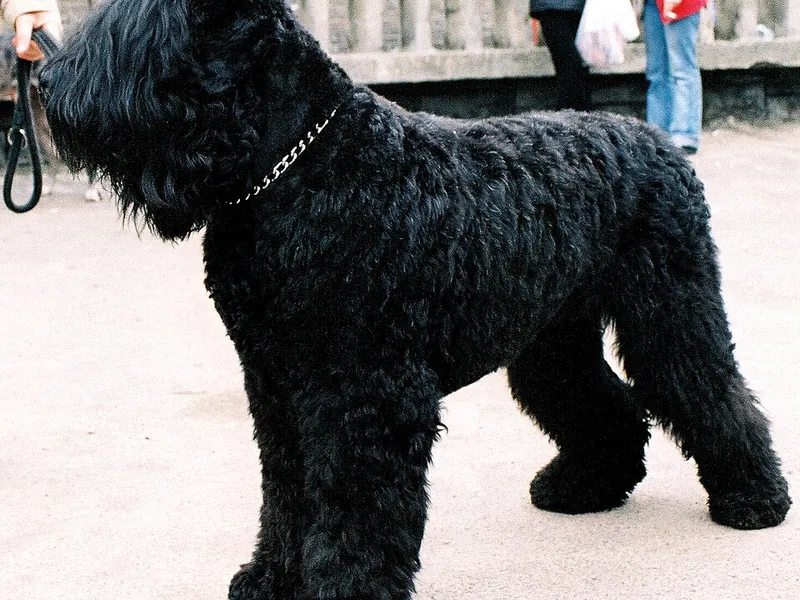
KomondorHungary's corded livestock guardian
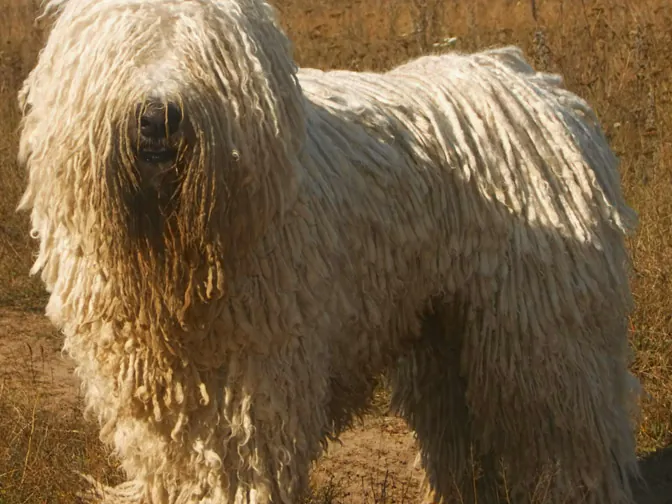
The Komondor is a giant Hungarian livestock guardian covered in heavy white cords, bred to protect sheep from wolves and thieves. It is calm and devoted to its family, but its independent guarding instinct and intensive coat care make it a breed for experienced owners with space.
Why people love the Komondor
- Highly effective guardian of livestock and property
- Calm and steady at home
- Corded coat does not shed in the usual way
- Deeply loyal to its own family and animals
- Moderate exercise needs for a large breed
Things to consider
- Corded coat needs hours of hands-on care
- Bathing and drying can take a full day
- Very territorial and suspicious of strangers
- Independent, so obedience is not a priority for it
- Needs strong, tall fencing and space
Is this breed right for you?
10 questions · live resultHistory and Origin
The Komondor's ancestors are thought to have arrived in Hungary with the Cumans, nomadic people who settled there in the Middle Ages. For centuries the breed guarded flocks, living with the sheep and blending in thanks to its white coat.
The breed was nearly lost during World War II but was preserved by Hungarian and foreign breeders. The AKC recognized it in 1937, and The Kennel Club lists it in the Pastoral Group.
The name Komondor is thought to derive from the Cumans, and the breed has been part of Hungarian pastoral life for centuries.
Size, Corded Coat and Color
The Komondor is a large, muscular, heavy-boned dog, slightly longer than tall, whose shape is almost hidden under its coat. Adults stand about 26 to 31 inches and weigh roughly 80 to 132 lb. The AKC standard sets minimum heights of 27.5 inches for males and 25.5 inches for females, and males are clearly bigger and more imposing.
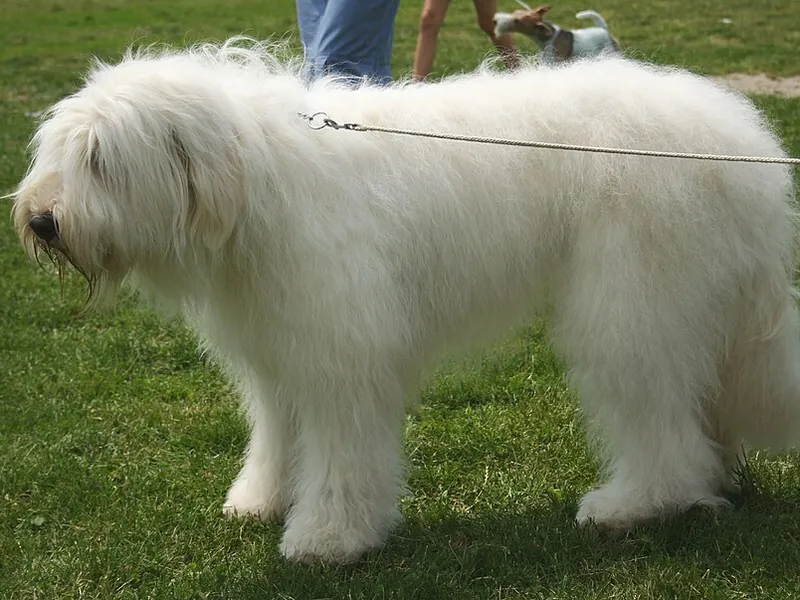
The famous coat is a double coat. A soft, woolly undercoat mixes with the coarser outer coat, and as the dog matures the two felt together into cords. Puppies have soft, fluffy curls, cords start forming at around eight to twelve months and a full adult coat can take several years to develop. In mature dogs the cords can reach the ground. Cords are typically longest on the rump and shortest on the head and legs.
The only accepted color is white, ideally over gray skin. The nose, lips and eye rims are black or dark gray, and the eyes are dark brown. A Komondor that is not corded or is clipped short still belongs to the breed but cannot be shown in that state.
Temperament and Personality
Komondors are calm, steady and loyal to their family. As guardians, they are independent thinkers, deciding on their own when to act. They are suspicious of strangers and very territorial.
They can be gentle with their own children and animals but may not accept visiting kids or new pets easily. Early socialization is essential.
A Komondor may appear sleepy and calm much of the day, but it is always watching. When it perceives a threat, it acts quickly and decisively. This makes it an effective guardian but means owners must manage visitors and introductions carefully.
Do Komondors Bark a Lot?
Komondors bark when they believe something needs guarding, and their deep voice is loud. They are not usually nuisance barkers when nothing is happening, but they take their watchdog role seriously and will warn about strangers, other animals and unusual sounds around their territory.
In rural settings this barking is part of the job, particularly at night when predators are active. In suburbs it can cause conflict with neighbors. Limiting the dog's view of a busy street, keeping it indoors at night and teaching it to stop on cue all help. Expect a guardian, not a silent dog.
Does a Komondor Need a Yard?
Yes, a Komondor really needs a large, securely fenced yard or property. The breed's exercise comes largely from patrolling its territory, and it is happiest with land to watch over, ideally with livestock.
Fencing should be tall and strong, since a guardian that decides to extend its territory can be hard to bring back. Avoid invisible fences, which do not stop a determined guardian and do nothing to keep strangers out. A yard alone is not enough, though: daily walks, training and social exposure keep a Komondor manageable and calm with visitors. Apartments and small city lots are a poor fit.
Can You Shave a Komondor?
Yes, a Komondor can be clipped short, and some pet owners do so to make care easier. A short coat is far quicker to wash and dry and lets you check the skin more easily, which can be practical for working dogs in wet climates or older dogs with skin issues.
There are trade-offs. The cords provide protection from weather and bites, so a clipped dog loses some of that, and needs sun and cold protection if clipped very close. Regrowing a full corded coat takes years. A clipped Komondor cannot be shown in conformation. Discuss the decision with a groomer or breeder experienced with corded breeds.
Exercise and Training
Exercise needs are moderate: daily walks and time in a secure yard. Mental stimulation comes from patrolling and guarding.
- Start socialization early and continue it for years.
- Use consistent, respectful leadership; this breed does not respond to harshness.
- Provide strong fencing; Komondors guard their territory.
Komondors are not built for long-distance running. They prefer patrolling their territory, and many are content with a large, secure yard and daily walks. They need mental engagement through training and social exposure.
Grooming and Shedding
The famous coat forms cords naturally as the puppy coat matures. Cords need to be separated by hand regularly to prevent large mats. Bathing is a major task, and the coat may take a long time to dry fully.
The coat does not shed in the usual way, but debris collects in the cords. Some owners keep the coat shorter for practicality.
Cords take time to form, usually starting around eight to twelve months and developing over several years. Owners must regularly separate cords, keep the coat clean and dry, and check the skin underneath for irritation.
Feeding and Nutrition
Komondors grow slowly and steadily, and keeping that growth controlled supports their hips. Feed a complete food formulated for large or giant breed puppies, avoid extra calcium and keep the puppy lean. Overfeeding to produce a bigger dog does more harm than good.
The breed's deep chest means bloat is a concern. Divide the daily ration into two or more meals, avoid exercise for about an hour before and after eating and use a slow feeder if your dog eats quickly. Learn the warning signs, such as a swollen belly and unproductive retching.
Adult Komondors are moderately active and can gain weight easily, especially if they spend a lot of time lying in the yard on guard. The cords make body condition hard to see, so feel for the ribs under the coat and weigh your dog regularly.
Food can stain and mat the cords around the mouth. Wipe the face after meals and consider a bowl that keeps the beard out of food and water.
| Adult weight | Less active | Typical adult | Very active |
|---|---|---|---|
| 80 lb | 1,450 kcal | 1,660 kcal | 2,070 kcal |
| 106 lb | 1,790 kcal | 2,050 kcal | 2,560 kcal |
| 132 lb | 2,110 kcal | 2,410 kcal | 3,010 kcal |
Estimates use the resting energy formula veterinarians work with (70 × body weight in kg0.75) and standard activity factors. Use the feeding guide on your food as a starting point and adjust to body condition. Puppies, seniors, pregnant animals and pets that need to lose weight have different needs, so ask your vet.
Health and Lifespan
Komondors usually live 10 to 12 years. Hip dysplasia, bloat (gastric dilatation-volvulus) and ear problems are reported. Skin issues can occur under the coat if it is not cared for properly.
Choose breeders who screen hips and who discuss bloat prevention.
The breed's deep chest means owners should learn the signs of bloat, such as restlessness, a swollen abdomen and unproductive retching. Many owners feed smaller meals and avoid exercise right after eating.
Komondor Price and Cost of Ownership
Komondors are uncommon in the US, and puppies usually come from a small number of breeders with waiting lists. There is no consistent published price range, and prices vary by breeder, region and lines. Breeders who hip-screen their dogs and raise puppies with livestock or in a home environment are worth waiting for. Breed rescues occasionally rehome adults, typically to experienced homes.
The coat is the main ongoing cost driver. Bathing requires a large tub or professional facilities, plenty of shampoo and long drying times, sometimes with a high-velocity dryer. Professional groomers experienced with corded coats are scarce and charge accordingly.
Other drivers include strong, tall fencing, food for a large breed, treatment of skin or ear problems under the coat and insurance that covers bloat and hip dysplasia.
Is the Komondor Right for You?
At 80 to 132 lb and 26 to 31 inches, the Komondor suits experienced owners with land and livestock or a secure property. It is not suitable for apartment life or first-time owners.
Its coat care, guarding instinct and size require commitment and planning.
Before buying, consider practical points: where the dog will be dried after rain, whether your fencing is tall and strong enough, and whether you have the time to manage introductions with guests.
Komondor Traits at a Glance
Komondor FAQ
Do Komondors shed?
They do not shed in the usual way, but their corded coat needs regular maintenance.
How big do Komondors get?
They stand 26 to 31 inches tall and weigh 80 to 132 lb.
Are Komondors good family dogs?
They are loyal to their family but very protective and independent, needing experienced handling.
How long do Komondors live?
Usually 10 to 12 years.
Is the Komondor good for first-time owners?
No. Its size, independence and guarding instinct make it best for experienced owners.
How do you wash a Komondor?
Bathing requires soaking and rinsing the cords thoroughly, then drying them completely, which can take many hours.