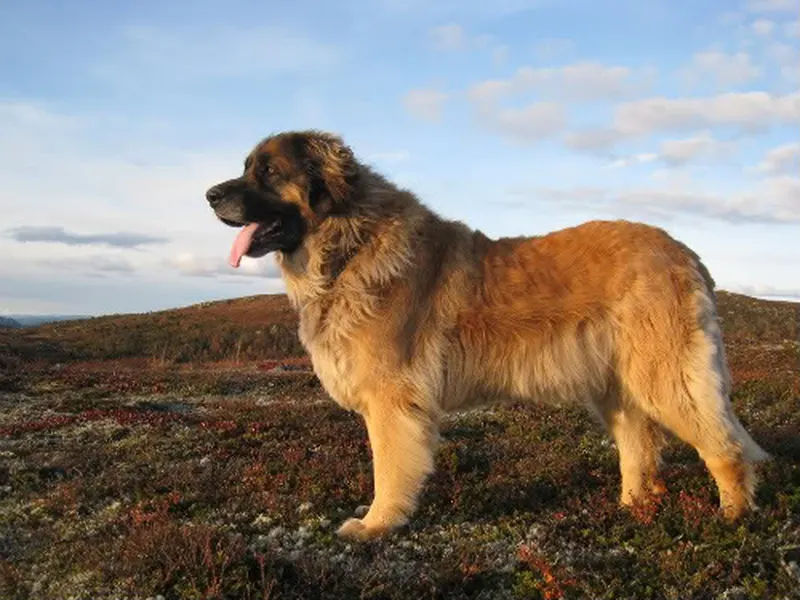
Black Russian TerrierA powerful Soviet-bred guardian
The Black Russian Terrier is a large, powerful working dog created in the Soviet Union to guard and protect. Calm, confident and devoted to its family, it suits experienced owners with space, time for training and a commitment to heavy grooming.
Why people love the Black Russian Terrier
- Calm, confident and deeply loyal with its family
- Natural guardian with a steady, watchful nature
- Coat sheds moderately rather than heavily
- Intelligent and capable in obedience and working sports
- Enjoys cold weather thanks to its thick coat
Things to consider
- Needs professional grooming every six to eight weeks
- Strong guarding drive requires experienced handling
- Large size brings high food, vet and equipment costs
- Does not cope well with long hours alone
- Wet, food-catching beard means daily cleanup
Is this breed right for you?
10 questions · live resultHistory and Origin
In the late 1940s and 1950s, the Soviet military's Red Star Kennel near Moscow set out to create a large, hardy working dog capable of guarding facilities in harsh climates. Breeders crossed several breeds, with the Giant Schnauzer as a key foundation along with the Airedale Terrier, Rottweiler and Newfoundland.
Despite its name, the BRT is not a true terrier; it belongs to working and guarding breeds. Dogs were later released to civilian breeders, the FCI recognized it in 1984 and the AKC added it to the Working Group in 2004.
Size, Coat and Color
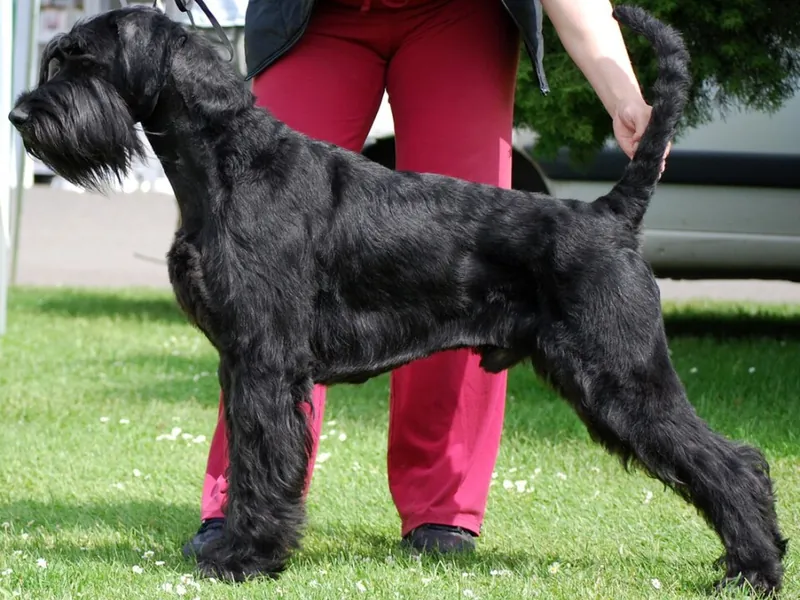
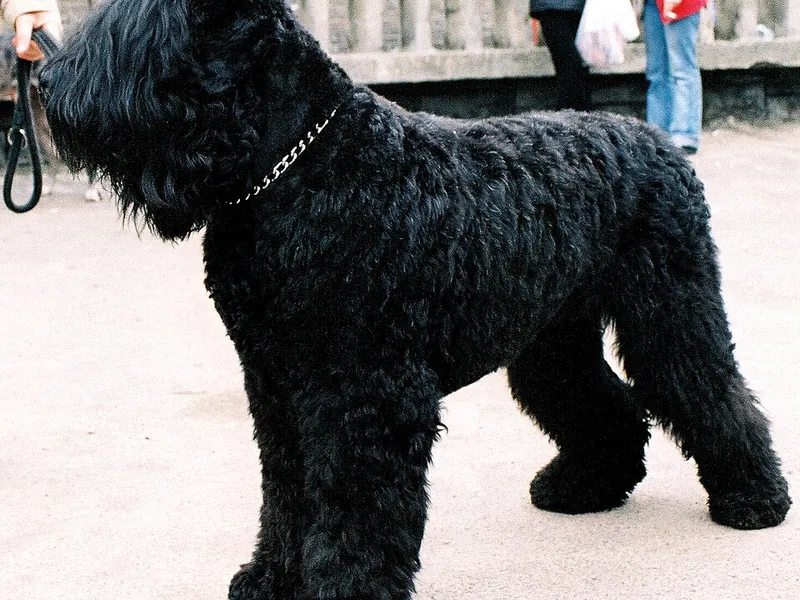
The Black Russian Terrier is a large, robust, slightly longer-than-tall working dog with heavy bone, a broad chest and a long, powerful head. Its beard, mustache and eyebrows give it a distinctive, bear-like expression.
Adults stand about 26 to 30 inches and weigh roughly 80 to 130 lb. The AKC standard calls for males of about 27 to 30 inches and females of about 26 to 29 inches. Males are larger and more massive, with a more pronounced head, while females are slightly lighter but still powerful.
The double coat is coarse, dense and slightly wavy, with a soft undercoat. It covers the whole body, and longer furnishings form the beard, eyebrows and leg hair. Show grooming emphasizes a powerful, confident outline rather than an exaggerated look.
The only accepted color is black, sometimes with scattered gray hairs. Puppies are born black, and some dogs gray around the muzzle with age. Tails were traditionally docked, but natural tails are standard in many countries where docking is restricted.
Temperament and Personality
BRTs are calm, intelligent and deeply loyal. They want to be with their family and can be affectionate and playful at home. Toward strangers they are naturally aloof and watchful, with a strong protective instinct.
This is a dog with a real guarding drive and considerable strength, so early, ongoing socialization and confident, experienced handling are important. Most are good with children in their own family, though their size means supervision with small kids.
Many BRTs are calm and quiet indoors and like to rest where they can see their family.
Are Black Russian Terriers Good for First-Time Owners?
Generally no. Black Russian Terriers are loyal and often calm, but their size, strength and real guarding instinct are best handled by owners with experience of large working or protective breeds.
A BRT needs early and lifelong socialization, consistent reward-based training with clear boundaries, and an owner who can manage visitors and public situations confidently. Grooming is another commitment: brushing to the skin every week and a professional trim every six to eight weeks. First-time owners determined to get a BRT should choose a breeder who offers ongoing support and enroll in training classes from day one.
Are Black Russian Terriers Good With Other Pets?
Many BRTs live well with other pets they are raised with, including cats. Their prey drive is generally moderate, and they tend to accept animals they consider part of the household.
Same-sex dogs are where conflicts are most likely, and some BRTs are reserved or bossy with unfamiliar dogs. Early socialization with a variety of calm dogs, careful introductions and supervision during play help. A BRT's size means even friendly play can overwhelm smaller pets, so teach calm behavior indoors. Multi-dog households often do best with a pair of opposite sexes.
Can Black Russian Terriers Be Left Alone?
Not for long periods. Black Russian Terriers were bred to work closely with people and are strongly attached to their families. Many become bored, anxious or destructive when left alone for full workdays.
Most adults can handle a few hours alone if they are well exercised and have chews or food puzzles. Teach alone time gradually from puppyhood, using a crate or secure room while the dog is young. A BRT left alone in a yard may bark, dig or patrol excessively, so indoor time with the family is better. For long days, arrange a dog walker or a trusted sitter experienced with large breeds.
Exercise and Training
BRTs need daily exercise, including long walks and play, plus a job for the mind such as obedience, tracking, protection sports or carting. They are not hyperactive, but an underused BRT can become bored and destructive.
Training should start early and be consistent, fair and reward based. BRTs learn well but can be independent and test boundaries. Firm leadership without harshness works best. Socialize widely with people, places and other dogs.
Many BRTs enjoy cold weather thanks to their thick coat, but provide shade and water on hot days.
Grooming and Shedding
The coat is coarse, dense and slightly wavy, with a beard and eyebrows. It needs brushing at least weekly to the skin and a trim roughly every six to eight weeks. Many owners rely on professional groomers.
Shedding is moderate. The beard holds water and food, so expect some mess and drool around the water bowl.
Feeding and Nutrition
Black Russian Terriers grow quickly and reach a large adult size, so careful puppy feeding protects their joints in a breed where hip and elbow dysplasia occur.
- Feed a puppy food formulated for large or giant breeds and avoid adding calcium unless your veterinarian advises it.
- Aim for slow, steady growth and a lean puppy rather than a heavy one.
- Divide the daily ration into three or four meals for puppies and at least two meals for adults.
- As a large, deep-chested dog, the BRT has a risk of bloat. Avoid one large daily meal, slow fast eaters and keep exercise calm around meals.
Bladder stones linked to hyperuricosuria occur in the breed. If your dog has tested as affected, your veterinarian may recommend a specific diet and plenty of water to dilute urine. Always provide fresh water. The beard soaks up food and water, so wipe it after meals. Check body condition with your hands, as the coat hides weight changes.
| Adult weight | Less active | Typical adult | Very active |
|---|---|---|---|
| 80 lb | 1,450 kcal | 1,660 kcal | 2,070 kcal |
| 105 lb | 1,780 kcal | 2,030 kcal | 2,540 kcal |
| 130 lb | 2,090 kcal | 2,380 kcal | 2,980 kcal |
Estimates use the resting energy formula veterinarians work with (70 × body weight in kg0.75) and standard activity factors. Use the feeding guide on your food as a starting point and adjust to body condition. Puppies, seniors, pregnant animals and pets that need to lose weight have different needs, so ask your vet.
Health and Lifespan
BRTs generally live 10 to 12 years. Known health concerns include hip and elbow dysplasia, bladder stones linked to hyperuricosuria, progressive retinal atrophy and juvenile laryngeal paralysis and polyneuropathy (JLPP). DNA tests exist for JLPP and hyperuricosuria, and breed clubs recommend heart exams.
As a large, fast-growing breed, puppies should grow slowly on a controlled diet, with limited jumping and forced running.
Black Russian Terrier Price and Cost of Ownership
Typical breeder price in the US$1,500 to $3,000
A Black Russian Terrier puppy from a reputable US breeder typically costs about $1,500 to $3,000. Prices vary by breeder, region and lines, and the breed is relatively uncommon, so waiting lists are normal. Breed club rescue occasionally places adults.
Breed-specific cost drivers include:
- Professional grooming every six to eight weeks for a large, heavily coated dog
- Large food volumes and giant-size crates, beds and equipment
- DNA tests for JLPP and hyperuricosuria, plus hip, elbow, eye and heart screening
- Insurance covering joint disease, bloat and bladder stones
- Training classes with an instructor experienced in guardian breeds
Medication and anesthesia costs rise with body weight.
Is the Black Russian Terrier Right for You?
A BRT is best for experienced owners who want a devoted protective companion, have a house with a secure yard and are home much of the day. It does not cope well with long periods alone.
- Good match: experienced owners, active families with older children, people interested in working dog sports.
- Think twice: apartments, first-time owners, homes with frequent unfamiliar visitors and no time for training.
Owning a BRT is a long-term commitment of time and money: training classes, professional grooming and the costs of feeding and caring for a giant dog all add up.
Black Russian Terrier Traits at a Glance
Black Russian Terrier FAQ
Is the Black Russian Terrier a real terrier?
No. Despite its name, it was bred mainly from working breeds such as the Giant Schnauzer and is classified as a working dog.
Are Black Russian Terriers good family dogs?
They can be loyal, affectionate family dogs for experienced owners, but they need training and socialization because of their size and protective instincts.
How big do Black Russian Terriers get?
They are large dogs, roughly 26 to 30 inches tall and about 80 to 130 lb, with males bigger than females.
Do Black Russian Terriers shed?
They shed moderately, but the coat requires regular brushing and trimming.
Can a Black Russian Terrier live in an apartment?
It is a poor fit for apartments because of its size and need for space.
How long do Black Russian Terriers live?
Typically 10 to 12 years.