Gordon SetterScotland's black and tan bird dog
The Gordon Setter is the largest and heaviest of the setters, a black and tan bird dog from Scotland bred for stamina on the moors. It is loyal, steady and affectionate with its family. It suits active owners with space who enjoy long days outdoors and do not mind regular grooming.
Why people love the Gordon Setter
- Loyal, devoted and affectionate with family
- More watchful than other setters, a good alert dog
- Tireless partner for hiking and field work
- Trains well with patient, positive methods
- Distinctive black and tan coat
Things to consider
- Needs around two hours of exercise daily
- Long puppyhood lasting two to three years
- Feathered coat needs frequent brushing
- Does not cope well with long hours alone
- Bloat risk in this deep-chested breed
Is this breed right for you?
10 questions · live resultHistory and Origin
Black and tan setters existed in Scotland before the breed had a name, but the Gordon Setter takes its name from Alexander Gordon, the 4th Duke of Gordon, who kept a well-known kennel of them at Gordon Castle in the late 18th and early 19th centuries.
Hunters valued Gordons as slower but very steady and enduring dogs that could work all day on the Scottish moors. The breed came to the United States in 1842, and the AKC recognized it in 1884. Gordons remain less common than English and Irish Setters.
Early Gordons often had more white and some tan-and-white coloring, but the solid black and tan pattern became fixed as the breed standard developed.
Size, Coat and Colors
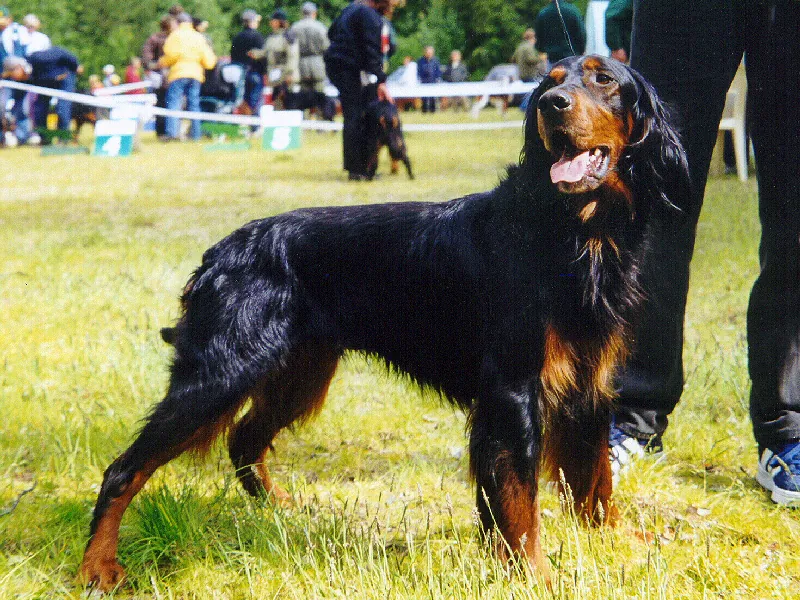
The Gordon Setter is the heaviest of the setters, a strong, stylish bird dog weighing about 45 to 80 lb. The AKC standard gives males 24 to 27 inches and 55 to 80 lb, and females 23 to 26 inches and 45 to 70 lb, so the size difference between the sexes is clear. The body is deep-chested and well-boned, built for stamina rather than speed, with a long head, low-set ears and a tail carried level with the back.
The coat is soft and shining, straight or slightly wavy, with long feathering on the ears, chest, belly, legs and tail. Hair on the head and front of the legs is short and fine.
Gordons come in only one color: black and tan. The tan is a rich chestnut or mahogany on the eyebrows, muzzle, throat, chest, legs and under the tail. A small white spot on the chest is allowed. Red or mismarked puppies occasionally appear but are not accepted in the show ring.
Temperament and Personality
Gordons are confident, loyal and affectionate, and are often described as more of a one-family dog than other setters. They can be reserved with strangers and make good watchdogs.
Gordons mature slowly and may stay puppyish and boisterous for two to three years. They are sensitive and do not respond well to harsh training. They need company and do not cope well with long hours alone.
Young Gordons are energetic and clumsy, while mature dogs are generally steady and devoted. Many Gordons are protective of their home and family, which is unusual among setters, and they can be cautious with unfamiliar dogs.
Is the Gordon Setter Good for First-Time Owners?
A Gordon Setter can work for an active first-time owner, but it is not the easiest choice. Its affectionate, loyal nature is rewarding, yet it needs a lot of exercise, patient training and regular grooming.
Beginners should be ready for a long, energetic adolescence. Gordons mature slowly and can stay bouncy, mouthy and distractible until two or three years old. They are sensitive, so harsh corrections backfire, and their interest in birds makes recall a long-term project. A first-time owner who loves hiking or running, has a fenced yard, joins a training class early and is home for much of the day can do well with the breed.
Are Gordon Setters Easy to Train?
Gordon Setters are intelligent and generally willing to learn, but they are not push-button dogs. Many owners describe them as more independent and strong-willed than English or Irish Setters.
Training works best with:
- Positive methods and plenty of praise, since Gordons are sensitive.
- Short sessions with variety, because repetition bores them.
- Long-line recall practice in open spaces where birds are present.
- Patience through the slow-maturing adolescent phase.
Gordons often excel in field training, hunt tests, rally and tracking once they have a solid foundation. Their bond with their owner is strong, and that bond is the best training tool you have.
Can Gordon Setters Be Left Alone?
Gordon Setters do not like long periods alone. They are family-centered dogs that want to be near their people, and a bored or lonely Gordon may bark, chew or try to escape the yard.
An adult that has had a long run or hike can usually handle about four hours alone, especially when alone time has been built up gradually. Full workdays are hard for the breed without a dog walker, doggy daycare or a family member who comes home at midday. Before leaving, give real exercise and a chew or food puzzle. Young Gordons, still clumsy and chewy, are safer in a dog-proofed room or crate when unsupervised.
Exercise and Training
The PDSA suggests two hours or more of exercise daily. Long walks, off-leash running in safe areas, retrieving, field training and hiking all suit this breed.
Gordons are intelligent and often eager to learn and generally train well with patience and positive methods. They can also be strong-willed, and their bird interest makes recall in open country a long-term project. A fenced yard is important.
Grooming and Shedding
The soft, shiny coat with long feathering on the ears, chest, belly, legs and tail requires real care. The PDSA recommends daily brushing to prevent tangles, especially behind the ears and in the armpits. Many owners trim the feet, ears and neck regularly. Shedding is moderate.
Gordons have pendulous lips and can drool, especially after drinking. Check the long ears weekly for infections.
Feeding and Nutrition
Gordon Setters are deep-chested, which puts them at risk of bloat. Feed two meals a day rather than one, keep hard exercise away from the hour before and after eating, and discourage gulping with a slow-feeder bowl if needed. Ask your vet about a preventive gastropexy.
Puppies grow and mature slowly and should be raised on a diet formulated for large-breed growth. Keeping them lean, rather than pushing growth, supports hips and elbows.
- Working and very active Gordons may need more food in hunting season, and less in quieter months.
- Hypothyroidism is reported in the breed. Unexplained weight gain, low energy or coat changes are worth a vet check before simply cutting portions.
- Skin allergies occur in the breed. If your dog itches persistently, ask your vet about a structured diet trial.
- Wipe the lips and ear feathering after meals.
| Adult weight | Less active | Typical adult | Very active |
|---|---|---|---|
| 45 lb | 940 kcal | 1,080 kcal | 1,340 kcal |
| 62 lb | 1,200 kcal | 1,370 kcal | 1,710 kcal |
| 80 lb | 1,450 kcal | 1,660 kcal | 2,070 kcal |
Estimates use the resting energy formula veterinarians work with (70 × body weight in kg0.75) and standard activity factors. Use the feeding guide on your food as a starting point and adjust to body condition. Puppies, seniors, pregnant animals and pets that need to lose weight have different needs, so ask your vet.
Health and Lifespan
Gordon Setters typically live 12 to 13 years. Conditions noted by the PDSA and breed clubs include:
- Hip and elbow dysplasia
- Bloat (gastric dilatation-volvulus), a risk in deep-chested breeds
- Skin allergies (atopy)
- Hypothyroidism
- Inherited eye disease, including a form of progressive retinal atrophy with a DNA test
Choose breeders who screen hips and elbows, test thyroid and use available DNA tests.
Gordon Setter Price and Cost of Ownership
Typical breeder price in the US$1,500 to $3,000
Gordon Setter puppies from reputable US breeders typically cost about $1,500 to $3,000. Prices vary by breeder, region and lines, and field or show lines can affect availability. The breed is less common than other setters, so waiting lists are usual. Ask for hip and elbow results, thyroid testing and the PRA DNA test on both parents.
Breed rescue groups place adult Gordons, which can be a good way to skip the long puppy stage.
Ongoing cost drivers include professional grooming or trimming of the feathered coat, ear care, and insurance that covers bloat surgery and hip or elbow treatment. Fencing and dog walking or daycare for working owners are common breed-specific expenses.
Is the Gordon Setter Right for You?
A Gordon Setter fits active families, hikers and hunters with a house and garden who want a loyal, affectionate dog with some watchdog instinct. It can be good with children when well socialized, although young Gordons are bouncy.
It is not ideal for apartments, owners who dislike grooming or drool, or those who are away from home most of the day.
Because Gordons mature slowly, be ready for an extended adolescence with plenty of energy and a few chewed objects, followed by a steady, loyal adult dog that is well worth the wait.
Gordon Setter Traits at a Glance
Gordon Setter FAQ
How big do Gordon Setters get?
They stand about 23 to 27 inches tall and weigh around 45 to 80 lb, with females at the lower end of the range.
Are Gordon Setters good family dogs?
Yes, they are loyal and affectionate with their families but need lots of exercise and patience during their long puppyhood.
Do Gordon Setters shed?
They shed moderately, and the feathered coat needs frequent brushing.
How much exercise does a Gordon Setter need?
About two hours or more daily, including running and mental work.
Do Gordon Setters drool?
Some do, especially after drinking, because of their loose lips.
How long do Gordon Setters live?
Typically 12 to 13 years.