BullmastiffCalm, powerful English estate guardian
The Bullmastiff is a massive, muscular guardian bred in England to stop poachers. Calm and affectionate at home but highly protective, it suits experienced owners with space, time for training and an acceptance of drool and a short lifespan.
Why people love the Bullmastiff
- Calm and quiet indoors once exercised
- Devoted, affectionate family companion
- Natural guardian that rarely barks without reason
- Short coat needs little grooming
- Moderate exercise needs for a giant breed
Things to consider
- Short lifespan of about 7 to 9 years
- Heavy drooling and some snoring
- Very strong; needs early leash training and socialization
- Can be dominant with same-sex dogs
- Giant-breed costs for food, gear and vet care
Is this breed right for you?
10 questions · live resultHistory and Origin
The Bullmastiff was developed in England in the mid-1800s by gamekeepers who needed a dog to track and pin poachers on large estates. They crossed Mastiffs with Bulldogs to create a dog fast enough to catch intruders and strong enough to hold them without mauling.
The Kennel Club recognized the breed in 1924, and the AKC followed in 1934. Both list it in the Working group.
Breeders aimed for roughly 60 percent Mastiff and 40 percent Bulldog, and the brindle color was favored in early dogs because it blended into the night on estates. Today fawn, red and brindle are accepted.
In the early 1900s, gamekeepers demonstrated the dogs by setting them on volunteers wearing protective clothing to show how they could pin a man without biting hard.
Size, Colors and Coat
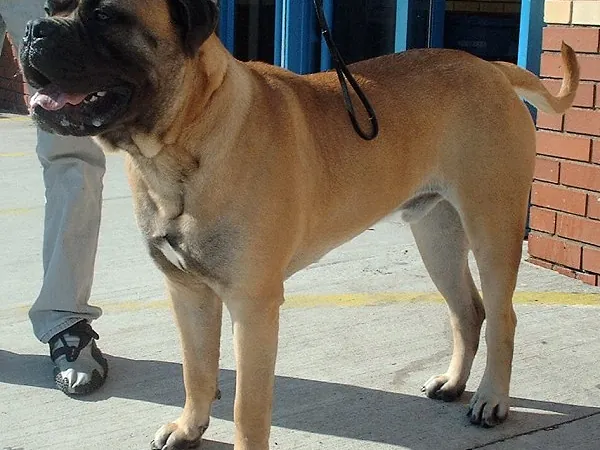
The Bullmastiff is a powerful, nearly square dog with a broad, wrinkled head, dark muzzle and a deep, wide chest. It stands about 24 to 27 inches at the shoulder and weighs roughly 90 to 130 lb. The difference between the sexes is clear: under the AKC standard, males are 25 to 27 inches and 110 to 130 lb, while females are 24 to 26 inches and 100 to 120 lb. Some European standards accept lighter dogs. Males also have heavier heads and more bone.
The coat is short and dense, lying flat and giving good weather protection. Accepted colors are:
- Red, in any shade
- Fawn, in any shade
- Brindle
A dark mask on the muzzle is essential, and dark markings around the eyes are typical. A small white mark on the chest is allowed, but other white markings are faulted. The ears are V-shaped and darker than the body coat.
Temperament and Personality
Bullmastiffs are calm, loyal and affectionate with their family. They are naturally protective and wary of strangers, making them excellent guardians.
They can be dominant with other dogs, especially of the same sex, and their size and strength require careful socialization. Supervision with children is wise because of their power. They do not do well alone for long periods.
Indoors, a well-exercised Bullmastiff is often a quiet, gentle presence that likes to lie near its people. They rarely bark without reason, so when they do, it usually means something unusual is happening. Many are sensitive to criticism and respond best to calm, patient handling.
Many also tolerate cats they are raised with, though introductions to new animals need care.
Is a Bullmastiff Good for First-Time Owners?
Generally no. A Bullmastiff is usually a better choice for someone who has already raised a large dog. Its temperament at home is calm, but its size, strength and protective instincts call for confident, consistent handling.
A young Bullmastiff that has not learned leash manners can pull an adult off their feet, and guarding behavior needs early, careful socialization so it stays balanced. A first-time owner who still wants the breed should work with an experienced breeder, enroll in puppy and adolescent classes, and consider a professional trainer familiar with guardian breeds.
Are Bullmastiffs Aggressive?
Bullmastiffs are not bred to be aggressive; the standard calls for a fearless but docile dog. They are protective guardians, so they may block or stand their ground with strangers who come onto the property rather than greet them.
Behavior depends heavily on socialization, training and management. Well-raised Bullmastiffs are usually gentle with family and accept guests their owners welcome. Same-sex dog aggression can occur, particularly between males, so plan introductions carefully. Because of their size, any reactivity has real consequences, which is why early training is essential. Some insurers and landlords list mastiff-type breeds, so check your policies.
Are Bullmastiffs Good With Other Dogs?
Often, but not always. Many Bullmastiffs live peacefully with another dog, especially one of the opposite sex that they grew up with.
The breed can be dominant toward dogs of the same sex, and some adults become less tolerant of unfamiliar dogs as they mature. Opposite-sex pairs and an easygoing smaller companion tend to work best. Avoid crowded dog parks with an adolescent Bullmastiff, keep greetings short and on leash, and step in early if play becomes too rough. Their weight means even friendly play can bowl over smaller dogs.
Exercise and Training
Bullmastiffs need daily exercise, but not intense running. UK vets recommend up to two hours of walks and play daily.
- Train early with consistent, reward-based methods.
- Socialize widely to keep guarding balanced.
- Avoid strenuous exercise in heat; they overheat easily.
- Teach loose-leash walking early; adult Bullmastiffs are very strong.
Puppies grow fast and heavy, so protect their joints: avoid stairs and long runs until growth plates close, and focus on short, frequent outings. Keep adults lean, as excess weight speeds up joint problems.
Grooming and Shedding
The short coat needs weekly brushing. Shedding is moderate. Drooling is heavy, so keep towels at hand. Wipe facial wrinkles to prevent irritation.
Check the eyes daily, since loose eyelids can trap dirt, and clean ears weekly.
Feeding and Nutrition
Feeding a Bullmastiff well starts with puppyhood. Giant-breed puppies grow from a few pounds to over 100 lb, and growing too fast increases the risk of hip and elbow problems.
- Use a food formulated for large or giant-breed puppies, with controlled calcium, and never add calcium supplements unless your vet prescribes them.
- Keep puppies lean rather than plump; slow, steady growth is the goal. Many Bullmastiffs are not fully mature until two or three years old.
- Feed three or four meals a day while young, then two or three smaller meals for adults to lower bloat risk.
Discourage gulping with a slow-feeder bowl and keep the dog calm for an hour after eating. Excess weight shortens an already short life and strains the joints, so check body condition monthly. Expect drool around the water bowl; a washable mat helps. Use low-calorie treats for training, as portion sizes for a dog this big add up quickly.
| Adult weight | Less active | Typical adult | Very active |
|---|---|---|---|
| 90 lb | 1,580 kcal | 1,810 kcal | 2,260 kcal |
| 130 lb | 2,090 kcal | 2,380 kcal | 2,980 kcal |
Estimates use the resting energy formula veterinarians work with (70 × body weight in kg0.75) and standard activity factors. Use the feeding guide on your food as a starting point and adjust to body condition. Puppies, seniors, pregnant animals and pets that need to lose weight have different needs, so ask your vet.
Health and Lifespan
Bullmastiffs have a short lifespan, typically 7 to 9 years. Health issues include bloat, hip and elbow dysplasia, BOAS, eyelid and eye problems, skin infections and cancer.
Choose breeders who hip and elbow score, screen eyes and favor moderate conformation.
Bloat is an emergency in this deep-chested breed: feed two or three smaller meals a day, rest after meals, and learn the signs, such as a swollen belly and unproductive retching.
Bullmastiff Price and Cost of Ownership
Typical breeder price in the US$1,500 to $3,000
A Bullmastiff puppy from a reputable US breeder typically costs around $1,500 to $3,000. Prices vary by breeder, region and lines, and breeders who hip and elbow score, eye-check and choose moderate, healthy conformation often charge more.
Breed rescues and the national breed club rescue network rehome adult Bullmastiffs, often because owners underestimated their size.
The main ongoing cost drivers are size related:
- Large volumes of food, and giant-breed puppy food during the long growth phase
- Medications and anesthesia dosed by weight, which cost more for a giant dog
- Emergency bloat surgery, or a preventive gastropexy many owners discuss with their vet
- Higher pet insurance premiums and extra-large crates, beds and vehicle space
Is the Bullmastiff Right for You?
The Bullmastiff suits experienced owners with space and time for training, who want a calm, protective companion.
It is less suited to first-time owners, apartments, or households unable to manage drool, size and a short lifespan.
Plan for the costs of a giant breed, including larger food portions, bigger beds and crates, and veterinary care. Many Bullmastiffs are content with a moderate routine and enjoy relaxing with their family, which makes them good companions for owners who prefer calm evenings at home after daily walks.
Bullmastiff Traits at a Glance
Bullmastiff FAQ
Are Bullmastiffs good family dogs?
They are loyal and affectionate with their family but need supervision with children due to their size and strength.
How big do Bullmastiffs get?
Bullmastiffs stand about 24 to 27 inches tall and weigh roughly 90 to 130 lb.
Do Bullmastiffs drool?
Yes, they drool heavily.
Are Bullmastiffs good guard dogs?
Yes. They are naturally protective and wary of strangers.
How much exercise does a Bullmastiff need?
UK vets recommend up to two hours a day of walks and play.
How long do Bullmastiffs live?
Most live 7 to 9 years.