Dogue de BordeauxFrance's massive, devoted guardian mastiff
The Dogue de Bordeaux is an ancient French mastiff with a huge head, a rich fawn coat and a deeply loyal, protective nature. It is affectionate and often gentle at home, but its size, guarding instinct, drool and short lifespan make it a breed for prepared, experienced owners.
Why people love the Dogue de Bordeaux
- Calm, affectionate and devoted to its family
- Natural guardian of home and property
- Moderate exercise needs; no long runs required
- Short coat is easy to brush
- Often gentle with its own family's children
Things to consider
- Very short lifespan of about 5 to 8 years
- Heavy, constant drooling
- Heat intolerance and breathing issues from the short muzzle
- Wary of strangers and unfamiliar dogs
- High veterinary and giant-breed costs
Health note: this breed is affected by health concerns linked to its body shape. Read the health section and choose a breeder who health-tests and breeds for moderate features.
Is this breed right for you?
10 questions · live resultHistory and Origin
The Dogue de Bordeaux is one of France's oldest breeds, rooted in the Aquitaine region around Bordeaux. These mastiffs guarded estates and vineyards, drove cattle and were used on large game. The breed was shown at the first Paris dog show in 1863 and named after its home city.
Numbers fell sharply during the World Wars and recovered from a small population in the later 20th century. The 1989 film Turner and Hooch introduced it to American audiences, and the AKC recognized it in the Working Group in 2008. The Kennel Club also places it in the Working Group.
Size, Head and Fawn Coat
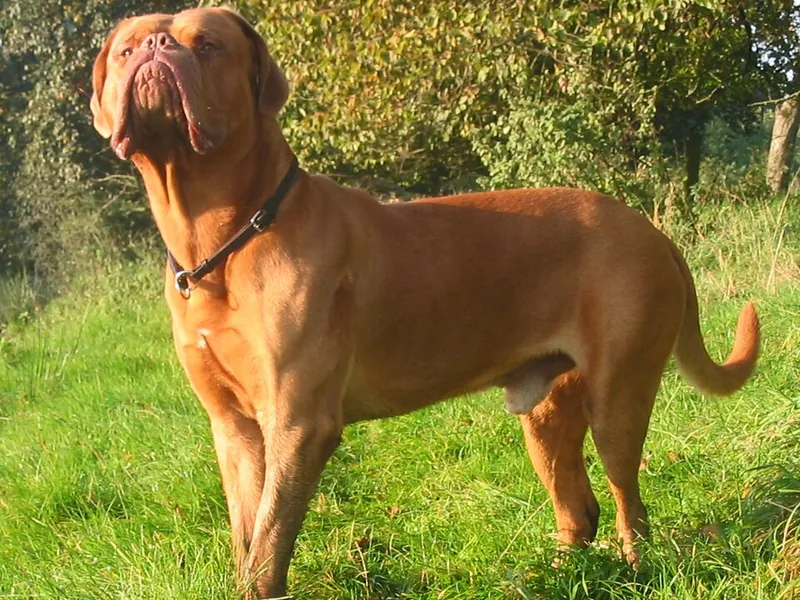
The Dogue de Bordeaux is a massive, muscular mastiff standing about 23 to 27 inches and usually weighing 99 lb or more. Males are larger and heavier, often well over 110 lb, with a broader head and more pronounced wrinkles; females are slightly smaller but still powerfully built. The body is low-set, thick and wide, with a deep chest and heavy bone.
The head is the breed's signature. It is one of the largest in the dog world relative to body size, with a short, broad muzzle, an undershot jaw, thick hanging lips and symmetrical wrinkles that change with the dog's expression.
The coat is short, fine and soft to the touch. The only accepted color is fawn, in shades from mahogany to isabella (a pale fawn). The mask may be black, brown or absent; a brown mask comes with a brown nose and lighter eye color. Limited white patches on the chest and the tips of the feet are allowed. Loose skin around the neck forms a noticeable dewlap.
Temperament and Personality
At home, a Dogue is usually calm, affectionate and very attached to its family, often leaning its full weight against people it loves. It is also a natural guardian, watchful and territorial, and it may be wary of strangers and unfamiliar dogs.
The breed is sensitive and responds poorly to harsh handling, yet it can be stubborn. Its strength means that training and socialization are not optional. Many are tolerant with children in their own family, but their sheer mass requires supervision with kids and visitors.
Is the Dogue de Bordeaux Aggressive?
The Dogue de Bordeaux is not typically aggressive with its own family, but it is a natural guardian that is watchful, territorial and often wary of strangers and unfamiliar dogs. Combined with its size and strength, that makes management essential.
A well-bred, well-socialized Dogue is usually calm and confident rather than reactive. Socialization through adolescence, leash training before the dog outweighs you and calm, consistent guidance are key. Introduce new dogs carefully, especially same-sex dogs. Some insurers and landlords restrict mastiff breeds, and certain municipalities have rules on large dogs, so check local regulations before bringing one home.
Is the Dogue de Bordeaux Good for First-Time Owners?
Generally no. The breed is affectionate and not hyperactive, but its sheer mass, guarding instinct and stubborn streak make it challenging for someone without experience of large, strong-willed dogs.
A Dogue that pulls on the leash or decides to guard the door can be hard to control physically. The breed's health issues also require informed decisions about heat management, weight control and veterinary care. A first-time owner who is set on the breed should work with an experienced trainer from puppyhood, choose a breeder who selects for stable temperament and be financially and emotionally prepared for a short lifespan.
Are Dogues de Bordeaux Good with Other Dogs?
Some are, many are not. Dogues raised with another dog often live peacefully with it, but tolerance of unfamiliar dogs is limited, and same-sex conflicts can be serious given the breed's strength.
Early, controlled exposure to calm dogs helps, as does continued socialization into adulthood. Dog parks are generally a poor idea. If you want a second dog, an opposite-sex dog of a calm breed is usually the safest pairing. Introductions should be gradual, on neutral ground and supervised, and feeding should happen separately to avoid resource conflicts.
Exercise and Training
Exercise needs are moderate: daily walks and play sessions rather than running or long hikes. Avoid exercise in heat, as the short muzzle limits cooling. Puppies should not do forced running or repeated stairs while their joints develop.
- Start leash training early, before the dog outweighs you.
- Socialize widely with people, places and calm dogs through adolescence.
- Use calm, consistent, reward-based methods with short sessions.
Grooming and Shedding
The short, fine coat is easy to brush weekly, though shedding is noticeable. The real care work lies elsewhere: the loose skin and facial folds must be cleaned and dried several times a week to prevent fold dermatitis.
Drool is heavy and constant, especially after drinking. Keep towels around the house and wipe the jowls regularly. Clean ears and trim nails routinely.
Feeding and Nutrition
Dogue puppies grow rapidly, so feed a diet formulated for large or giant-breed growth and keep them lean. Fast growth and excess weight in puppyhood put additional stress on hips and elbows, both concerns in the breed. Do not add calcium supplements.
Adults should stay lean too. Extra weight worsens breathing problems, heat intolerance and joint strain in a breed with a short muzzle and heavy frame.
Bloat is a significant risk. Feed two or three smaller meals a day, avoid exercise before and after eating, and keep mealtimes calm. A raised bowl is not automatically better; discuss bowl height and a preventive gastropexy with your vet.
The undershot jaw and heavy lips can make eating messy, and some Dogues struggle with very small kibble. Wipe the jowls and facial folds after meals to prevent irritation. Use small, low-fat treats in training and count them in the daily ration.
| Adult weight | Less active | Typical adult | Very active |
|---|---|---|---|
| 99 lb | 1,700 kcal | 1,940 kcal | 2,430 kcal |
Estimates use the resting energy formula veterinarians work with (70 × body weight in kg0.75) and standard activity factors. Use the feeding guide on your food as a starting point and adjust to body condition. Puppies, seniors, pregnant animals and pets that need to lose weight have different needs, so ask your vet.
Health and Lifespan
The Dogue de Bordeaux has one of the shortest lifespans of any breed, with the AKC citing 5 to 8 years. Its shortened muzzle and heavy head can cause breathing difficulty and heat intolerance. Skin fold infections, an undershot jaw, hip and elbow dysplasia and weak hindquarters are documented. Heart disease, such as aortic stenosis, and bloat are also concerns in the breed.
Choose breeders who screen hips, elbows and hearts and who favor a functional muzzle and moderate build over exaggeration. Keep the dog lean and plan for higher veterinary costs.
Dogue de Bordeaux Price and Cost of Ownership
Typical breeder price in the US$1,500 to $3,500
A Dogue de Bordeaux puppy from a reputable US breeder typically costs about $1,500 to $3,500. Prices vary by breeder, region and lines. Ask for hip, elbow and heart screening results on both parents, and favor breeders who select for a functional muzzle and moderate build.
Dogues come into mastiff rescues regularly, often because owners underestimated size or costs. Adopting an adult can be a good option.
Ongoing costs are high. Food, medications and anesthesia all scale with weight, and the breed's heart, joint, skin fold and breathing issues often mean regular veterinary visits. Pet insurance is worth considering early, before conditions appear. Budget for air conditioning in warm climates, heavy-duty crates and beds, and possibly higher homeowner or renter insurance, as some policies restrict mastiff breeds.
Is the Dogue de Bordeaux Right for You?
Males and females typically weigh 99 lb or more and stand 23 to 27 inches. This breed suits experienced owners with space, a secure yard, a cool climate or air conditioning, and tolerance for drool and a shorter companionship.
It is not suitable for first-time owners, small apartments or households wanting a sociable dog for frequent guests. Be emotionally and financially prepared for health issues.
Plan your car, house and budget around a dog this size: medication, crates, beds and veterinary procedures all cost more for a giant breed. Living with a Dogue also means accepting a short time together, which many owners describe as the hardest part of loving the breed.
Dogue de Bordeaux Traits at a Glance
Dogue de Bordeaux FAQ
How long do Dogues de Bordeaux live?
The AKC gives a lifespan of 5 to 8 years, which is very short. Some dogs live longer, but owners should be prepared for this.
How big does a Dogue de Bordeaux get?
Adults stand about 23 to 27 inches tall and usually weigh 99 lb or more, with males heavier than females.
Do Dogues de Bordeaux drool?
Yes, heavily. Drool is a constant part of living with this breed.
Are Dogues de Bordeaux good with kids?
Many are gentle with their own family's children, but their size and guarding nature mean they need supervision and training.
Is the Dogue de Bordeaux the dog from Turner and Hooch?
Yes. The 1989 film made the breed widely known in the United States.
Is the Dogue de Bordeaux brachycephalic?
Yes, it has a shortened muzzle that can reduce heat tolerance and breathing capacity, so avoid strenuous exercise in warm weather.