Ca de BouThe powerful guardian of Majorca
The Ca de Bou is a compact, muscular molosser from Majorca with a calm presence and a strong instinct to guard its home and family. Deeply loyal to its people but watchful with strangers, it is a breed for experienced owners who can offer firm, fair leadership and thorough socialization.
Why people love the Ca de Bou
- Calm and affectionate with its family
- Quiet indoors; rarely barks without reason
- Short coat needs very little grooming
- Medium-large size is manageable for a molosser
- Deeply loyal and stays close to its people
Things to consider
- Strong guarding instinct needs experienced handling
- Often selective with unfamiliar dogs
- Regulated in some regions
- Heat-sensitive due to heavy build
- Very rare in the US
Is this breed right for you?
10 questions · live resultHistory and Origin
The name means bull dog in Majorcan Catalan. The breed developed on the Balearic Islands, where powerful dogs were used to guard property and, historically, in bull-baiting before that practice was banned. During the 18th century the islands were under British control for long periods, and British bulldog-type dogs are thought to have mixed with local guarding dogs.
After bull-baiting ended, numbers dropped sharply and the breed came close to disappearing in the mid-20th century. Spanish enthusiasts rebuilt it, and it is recognized by the FCI as a Spanish breed in the molosser group. It remains uncommon outside Spain and Central Europe.
Size, Build and Colors
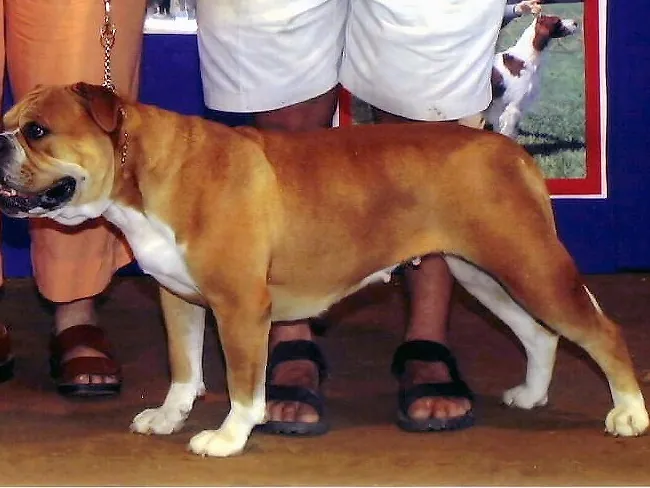
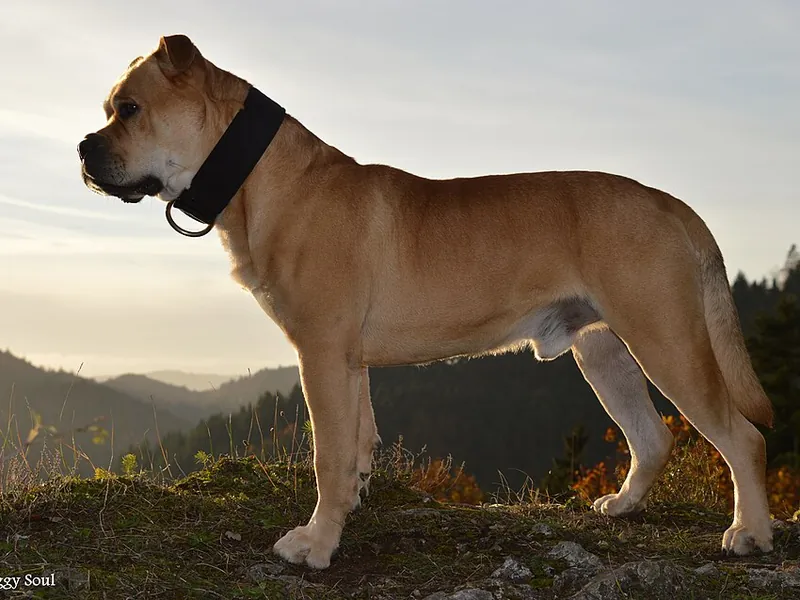
The Ca de Bou is a medium-large, powerful molosser standing about 20 to 23 inches at the shoulder and weighing roughly 66 to 84 lb. It is slightly longer than tall, with a broad chest, strong bone and a large, square head.
The breed shows pronounced differences between the sexes. Males have a noticeably larger, broader head than females, which is a hallmark of the breed standard. Females are slightly smaller overall but still muscular and solid.
The coat is short, rough to the touch and close-lying. Accepted colors include:
- Brindle, in dark, medium or light shades
- Fawn, from light to deep red
- Black
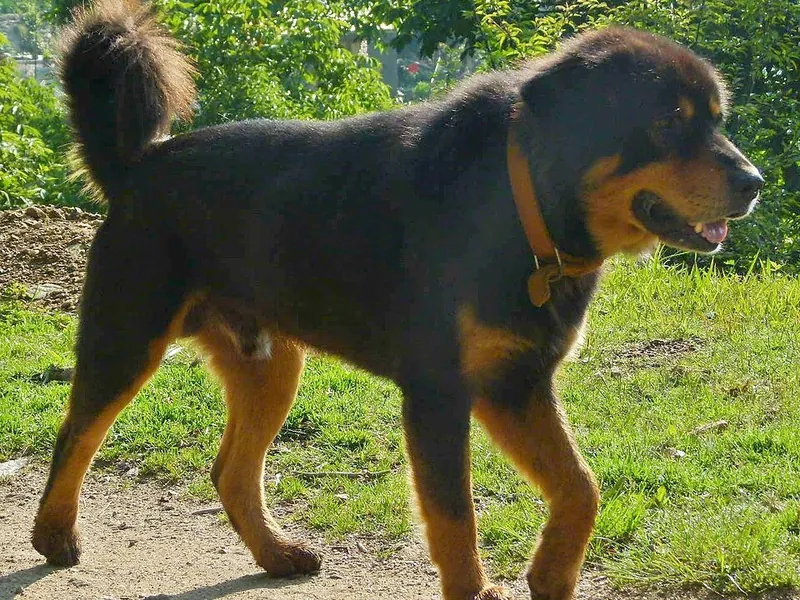
White markings on the chest, feet and face are permitted, but should not cover more than about 30 percent of the body. A black mask is common. The ears are rose-shaped and folded back, and the tail is long, thick at the base and tapering. The overall impression is of strength and calm confidence.
Temperament and Personality
Within the family, the Ca de Bou is typically calm, steady and affectionate, and it bonds strongly with its people. It is not usually hyperactive at home. Toward strangers it is naturally wary and highly watchful, and it will step in if it believes its family or territory is threatened.
Many individuals are not tolerant of unfamiliar dogs, especially of the same sex. Careful, early and ongoing socialization with people, places and well-mannered dogs is essential to produce a stable adult.
A well-raised Ca de Bou is usually quiet indoors and does not bark without reason, which makes its warnings worth taking seriously. Owners describe it as sensitive to the mood of the household and eager to stay close to its people rather than roam.
Is the Ca de Bou Good for First-Time Owners?
No, the Ca de Bou is generally not recommended for first-time owners.
The breed is loyal and calm with its family but has a strong guarding instinct and can be selective with other dogs. Managing visitors, socializing thoroughly and handling a powerful dog on leash all require experience. Training must be consistent and calm through adolescence. Owners should also check local regulations, as some regions restrict or regulate the breed. Experienced owners of other guardian or molosser breeds are usually a better match.
Is the Ca de Bou Easy to Train?
The Ca de Bou is intelligent and capable but not always easy to train because of its strong will and independence.
It responds best to calm, consistent training based on rewards and clear boundaries. Harsh methods damage trust and can make a guardian breed more defensive. Priorities include loose-leash walking, calm greetings and reliable recall. Early and ongoing socialization is essential to produce a stable adult. A professional trainer experienced with guardian breeds is a valuable investment, particularly during adolescence.
Does the Ca de Bou Need a Yard?
A house with a securely fenced yard suits the Ca de Bou better than an apartment.
The breed is calm indoors, but its guarding instinct means it likes territory to watch. A yard also makes it easier to manage exercise and toilet breaks. Fencing should be secure and solid, as the breed may react to dogs or people passing by. Avoid placing the dog where constant foot traffic triggers guarding. Even with a yard, daily walks and socialization outside the property are important.
Exercise and Training
Moderate daily exercise suits most adults: long walks, play in a secure yard and some structured training. Avoid intense exercise in hot weather, as heavy-bodied dogs can overheat.
This is a strong-willed breed that needs consistent, calm training based on rewards and clear boundaries. Harsh handling backfires. Owners should be physically able to control a powerful dog on leash. A professional trainer experienced with guardian breeds is a good investment, especially through adolescence.
Grooming and Shedding
The short, rough coat needs very little care: a weekly rubdown with a grooming mitt and the occasional bath. Typical colors are brindle, fawn and black, sometimes with small white markings. Keep nails short, clean the facial folds if present, and check ears and teeth regularly.
Feeding and Nutrition
The Ca de Bou is a heavy, muscular breed that can gain weight easily if overfed. Extra weight strains joints and makes heat tolerance worse. You should be able to feel the ribs under a thin layer of muscle and fat and see a waist.
Puppies should eat a complete food formulated for large-breed puppies, with balanced calcium and phosphorus, to support steady growth.
- Feed two meals a day for adults and three or four for young puppies.
- Avoid strenuous exercise right before and after meals.
- In hot weather, feed during cooler parts of the day and make sure water is always available.
- Feed in a quiet place, especially in multi-dog homes, as some guardians protect food.
Use part of the daily ration as training rewards to keep treats from adding extra weight.
| Adult weight | Less active | Typical adult | Very active |
|---|---|---|---|
| 66 lb | 1,250 kcal | 1,430 kcal | 1,790 kcal |
| 84 lb | 1,500 kcal | 1,720 kcal | 2,150 kcal |
Estimates use the resting energy formula veterinarians work with (70 × body weight in kg0.75) and standard activity factors. Use the feeding guide on your food as a starting point and adjust to body condition. Puppies, seniors, pregnant animals and pets that need to lose weight have different needs, so ask your vet.
Health and Lifespan
The Ca de Bou usually lives around 10 to 12 years. There is little published breed-specific health data, but as a heavy, broad-headed breed it may face orthopedic issues common in large molossers, such as hip and elbow dysplasia. Ask breeders for hip and elbow screening results and keep the dog lean to protect its joints.
Ca de Bou Price and Cost of Ownership
The Ca de Bou is very rare in the US, and most puppies are imported from Spain or Central Europe. Prices vary by breeder, region and lines, and import costs add significantly. Look for breeders who screen for hip and elbow dysplasia and who can show temperament evaluations of the parents.
Rescue placements are rare.
Breed-specific ongoing costs include:
- Professional training with guardian breed experience.
- Secure fencing.
- Pet insurance for joint problems.
- Homeowners insurance, which may restrict molosser or guardian breeds.
- Fees for permits or licensing in areas that regulate the breed.
Check if your city, state or landlord has rules that apply to molosser breeds before importing a puppy.
Is the Ca de Bou Right for You?
A Ca de Bou can suit you if you:
- Have experience with guardian or molosser breeds
- Can commit to lifelong socialization and training
- Want a calm, devoted dog for a home with a securely fenced yard
Some countries, regions and cities restrict or regulate the breed, for example parts of Germany, so check local rules before getting one. It is not a good first dog or a fit for busy homes with many unfamiliar visitors.
Ca de Bou Traits at a Glance
Ca de Bou FAQ
Is the Ca de Bou a good family dog?
In experienced hands it can be a loyal, calm family companion. It is protective, so visitors and children's friends need careful management.
How big does a Ca de Bou get?
Adults stand roughly 20 to 23 inches tall and weigh about 66 to 84 lb, with a broad, muscular build.
Is the Ca de Bou restricted?
Some places regulate it, such as the German state of Bavaria. Rules change, so check national and local regulations before buying or importing.
Does the Ca de Bou shed?
It sheds lightly to moderately. Its short coat is easy to keep clean with weekly brushing.
How long does a Ca de Bou live?
Typically around 10 to 12 years.
Is the Ca de Bou good with other dogs?
Many are selective, especially with dogs of the same sex. Early socialization and careful introductions are important, and some adults do best as the only dog.