AkbashTurkey's tall white flock guardian
The Akbash is a tall, white livestock guardian from western Turkey, valued by farmers for watching over sheep and goats without human direction. Calm and gentle with its charges but strongly territorial, it belongs on rural properties with experienced owners.
Why people love the Akbash
- Highly effective guardian for sheep, goats and poultry
- Calm and patient with livestock and its family
- Low energy around the farm when no threat appears
- Coat resists dirt and needs little bathing
- Light, agile build for a guardian breed
Things to consider
- Strongly territorial toward unfamiliar people and dogs
- Barks a lot, especially at night
- Recall rarely dependable; needs tall fencing
- Very large and physically demanding to handle
- Unsuited to city or suburban life
Is this breed right for you?
10 questions · live resultHistory and Origin
Akbash means white head in Turkish. These dogs have long guarded flocks in western Turkey, where shepherds prized light-colored dogs that were easy to distinguish from wolves. The breed is leaner and longer-legged than many guardian breeds, giving it speed to respond to predators.
In the 1970s American researchers brought Akbash dogs to the United States, and they were later used in programs evaluating guardian dogs for reducing predator losses on ranches. The United Kennel Club recognizes the breed. The FCI, AKC and The Kennel Club do not list it as a separate breed.
Size, Color and Coat
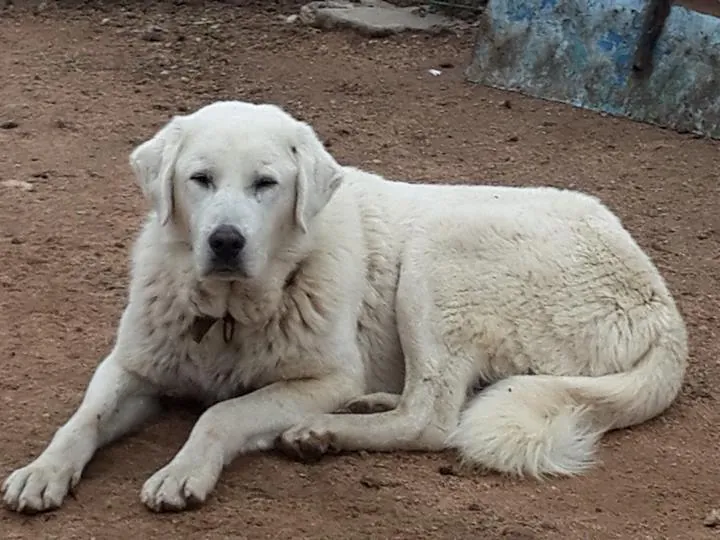
The Akbash is a very large, long-legged livestock guardian standing 28 to 34 inches at the shoulder and weighing 90 to 119 lb. Males are considerably larger and more massive, while females are lighter and more refined. Compared with many guardian breeds, the Akbash is lean and athletic, built for speed when responding to predators.
The coat is always white or cream, sometimes with light biscuit shading on the ears. Two coat types occur:
- Medium: dense and fairly short
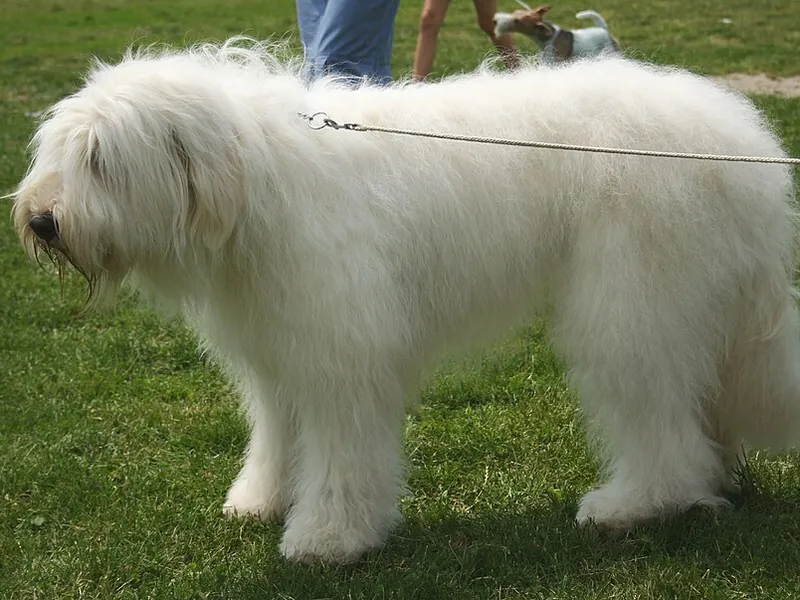
- Long: with feathering on the legs and tail and a ruff around the neck
Both have a dense undercoat. The skin often shows pink or gray mottling, and the nose, lips and eye rims should be dark. The ears are V-shaped and drop, and the tail is long, often curled over the back when the dog is alert. Double dewclaws on the hind legs occur in some dogs.
Temperament and Personality
Akbash dogs are calm, quiet observers that conserve energy until needed. With livestock and family they are typically gentle and patient. Toward unfamiliar people and dogs entering their territory they are suspicious and protective, and they will escalate from warning barks to physical intervention if they judge a threat is real.
They are highly independent thinkers. This is a dog that makes its own decisions, which is exactly what makes it valuable on a farm and challenging in a suburban home.
On a farm, an Akbash often lies quietly among the flock for hours, then moves quickly to investigate any disturbance. This alternating calm and alertness is typical of the breed and explains why it can look lazy but still be highly effective.
Do Akbash Dogs Bark a Lot?
Yes, Akbash dogs bark a lot, especially at night, because barking is their main way of warning predators away.
A guardian on duty will bark at coyotes, unfamiliar dogs, vehicles and other disturbances, sometimes for long periods. This is a valuable behavior on a ranch, where it deters predators before contact. In residential areas it can lead to complaints and conflicts with neighbors. Training can reduce barking at minor triggers, but it will not eliminate it, and should not, for working dogs. Anyone considering an Akbash should be sure the location tolerates a loud, frequent guardian voice.
Are Akbash Dogs Good with Cats and Other Pets?
An Akbash raised with cats, poultry or other animals usually accepts and guards them as part of its charges.
The breed is selected to protect, not chase, livestock, and young dogs bond with the animals they grow up with. Puppies still need supervision, because playful behavior such as chasing or mouthing must be redirected while they mature, which can take up to two years. Unfamiliar dogs entering the property are a different matter: an Akbash often treats them as intruders. Introductions to new animals should be slow, controlled and supervised.
Are Akbash Dogs Aggressive?
Akbash dogs are not aggressive toward their family or livestock, but they are protective guardians that act against perceived threats.
A typical Akbash watches calmly, then escalates from barking to posturing and, if needed, physical intervention against intruders. This makes it effective against predators but means visitors, delivery workers and unfamiliar dogs need management. Early socialization with many people, consistent handling and secure fencing are essential. Owners should always introduce guests and keep the dog contained when strangers enter its territory. Behavior also depends on how the dog was raised and whether it works with livestock.
Exercise and Training
Adults are not high-energy, but they need space to patrol and a purpose. A large property with tall, secure fencing is essential, because guardians tend to expand their territory if allowed.
Training focuses on socialization, manners and trust rather than precise obedience. Start early with gentle, consistent, reward-based work, and expose the young dog to visitors, vets and handling. Recall is rarely dependable. Owners must be able to physically manage a very large dog.
Puppies need careful supervision with livestock, because playful behavior such as chasing lambs must be gently redirected. Many owners work with experienced guardian-dog mentors through the first two years, when the dog matures into its role.
Grooming and Shedding
The white double coat can be medium or longer. Brush weekly, and daily during seasonal shedding, when the undercoat comes out in quantity. The coat resists dirt well, so baths are seldom needed. Do not shave it. Trim nails, check dewclaws and inspect ears regularly.
Working dogs that live outside year-round need sturdy shelter, fresh water and regular parasite checks, since ticks and burrs easily hide in the white coat.
Feeding and Nutrition
Akbash puppies grow from a few pounds to around 100 lb or more over about 18 to 24 months. Feed a diet formulated for large or giant breed growth and keep the puppy lean, so its bones and joints develop at a steady rate. Avoid calcium supplements on top of a complete puppy food, which can harm skeletal development.
Adult guardians are often less food-driven than their size suggests. Many conserve energy and eat moderately when the work is quiet, then need more in winter or during busy lambing seasons when they patrol actively. Adjust portions to body condition rather than size alone.
- Feed two meals a day rather than one large meal, since bloat is a risk.
- Rest the dog after eating where possible.
- Feed working dogs where livestock cannot steal their food, and keep livestock feed away from the dogs.
- Provide fresh, unfrozen water at all times outdoors.
Regular weight checks help spot health issues early in dogs that live outdoors.
| Adult weight | Less active | Typical adult | Very active |
|---|---|---|---|
| 90 lb | 1,580 kcal | 1,810 kcal | 2,260 kcal |
| 119 lb | 1,950 kcal | 2,230 kcal | 2,790 kcal |
Estimates use the resting energy formula veterinarians work with (70 × body weight in kg0.75) and standard activity factors. Use the feeding guide on your food as a starting point and adjust to body condition. Puppies, seniors, pregnant animals and pets that need to lose weight have different needs, so ask your vet.
Health and Lifespan
The Akbash typically lives 10 to 12 years. As a giant breed, it is prone to hip dysplasia and bloat, and dilated cardiomyopathy has also been reported. Epilepsy and hypothyroidism are mentioned in veterinary sources. Ask breeders for hip scores and heart checks, keep the dog lean, and learn the warning signs of bloat.
Akbash Price and Cost of Ownership
The Akbash is uncommon in the US, and most puppies come from working ranches and farms rather than pet breeders. Prices vary by breeder, region and lines, and pups from proven working parents are often more expensive. Livestock guardian rescues sometimes rehome adults, but these dogs need placements suited to their working nature.
Breed-specific cost drivers include:
- Tall, secure perimeter fencing for large properties
- Food for a giant breed, especially during growth and winter work
- Hip screening and heart checks for breeding dogs
- Shelter and heated water for dogs working outdoors in cold seasons
- Liability coverage, since some insurers have rules for guardian breeds
Grooming costs are modest, though heavy seasonal shedding requires good tools.
Is the Akbash Right for You?
An Akbash fits best if you:
- Need a working guardian for sheep, goats or poultry
- Have acreage with secure, high fencing
- Have experience with large, independent guardian breeds
It is not a good choice for city life, first-time owners or homes with frequent unfamiliar visitors.
Akbash Traits at a Glance
Akbash FAQ
Is the Akbash a good family dog?
It can be devoted to its own family, but it is a working guardian first. It suits rural homes with experienced owners rather than typical suburban families.
How big does an Akbash get?
Adults stand roughly 28 to 34 inches tall and weigh about 90 to 119 lb.
Is the Akbash the same as the Kangal or Anatolian Shepherd?
No. All three are Turkish guardians, but the Akbash is always white and has a leaner, longer-legged build.
Does the Akbash shed?
Yes, moderately year-round and heavily when the undercoat sheds seasonally.
How long do Akbash dogs live?
Typically 10 to 12 years.