Olde English BulldoggeAn athletic bulldog type from America
The Olde English Bulldogge is a modern American breed developed to recreate a more athletic, freer-breathing bulldog of the 1800s. It is muscular, confident and usually devoted to its family. It suits owners who like the bulldog look but want a more active dog, and who choose breeders carefully.
Why people love the Olde English Bulldogge
- Affectionate and loyal with its family
- More athletic and freer-breathing than the English Bulldog
- Short coat needs minimal grooming
- Moderate exercise needs
- Copes reasonably well with time alone once trained
Things to consider
- Strong dog that needs consistent training
- Can be selective with same-sex dogs
- Heat sensitivity and possible breathing problems
- Varies widely between lines and registries
- Bull-type restrictions may apply locally
Is this breed right for you?
10 questions · live resultHistory and Origin
In the early 1970s David Leavitt of Pennsylvania set out to breed a bulldog resembling the working bulldogs of the early 19th century, with better breathing and mobility than the modern English Bulldog. He used a planned crossbreeding program based on the English Bulldog, Bullmastiff, American Pit Bull Terrier and American Bulldog.
Leavitt later renamed his line the Leavitt Bulldog, while others continued under the Olde English Bulldogge name. Several registries exist, and the United Kennel Club recognized the breed in 2014. It is not recognized by the AKC or The Kennel Club.
Size, Build, Coat and Colors
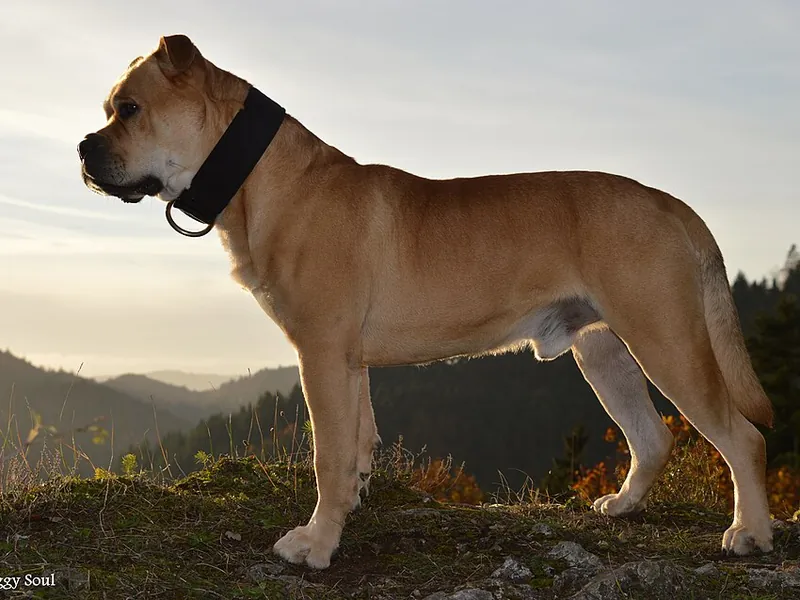
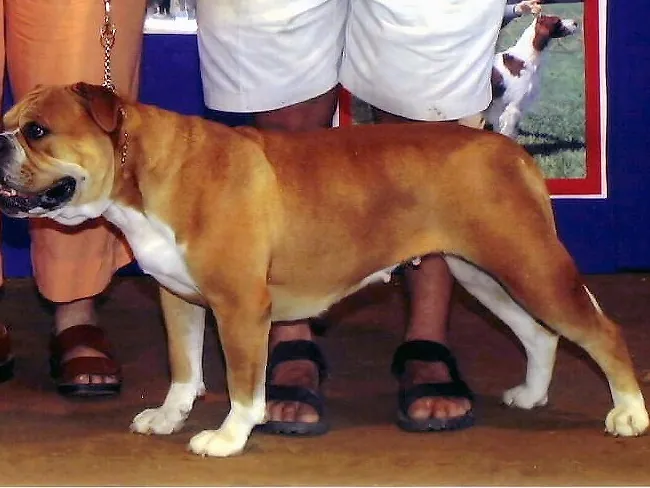
The Olde English Bulldogge is a medium to large, muscular bulldog with a powerful, athletic build. Adults stand about 16 to 20 inches at the shoulder and weigh roughly 51 to 79 lb. Males are larger and heavier than females, with a broader head and chest.
The head is large with a broad skull and a moderate muzzle, longer than the English Bulldog's. The UKC standard calls for open nostrils and free breathing, with no excessive wrinkling. The body is compact with a deep chest and strong legs, allowing better movement than more extreme bulldog types.
The coat is short, close and fine.
Common colors include:
- Brindle in various shades
- Fawn and red
- White, often with patches
- Black and combinations of these colors
Some registries disallow certain colors such as merle, so check the standard used by your breeder's registry. Appearance varies between breeding programs and registries.
Temperament and Personality
Olde English Bulldogges are typically described as confident, alert and affectionate with their families. Reliable behavior studies are scarce, so individual temperament depends heavily on breeding lines and upbringing.
They are strong dogs that can be protective of their home. Early socialization with people, children and other dogs, together with consistent leadership, helps produce a stable adult. Some bull-type dogs are selective with other dogs of the same sex, so introductions should be careful.
Are Olde English Bulldogges Good Family Dogs?
They can be affectionate, loyal family dogs when well bred and socialized. Many are tolerant of children and enjoy being part of family activities.
Their strength and size mean supervision is needed with young children, as a playful adult can easily knock over a toddler. Early training, clear rules and socialization with visitors and other dogs help produce a stable adult. Because temperament varies between breeding lines, meeting the parents is especially important. Families who want a sturdy, affectionate dog and can commit to training often find the OEB a good match.
Are Olde English Bulldogges Aggressive?
A well-bred, well-socialized OEB is not inherently aggressive. Most are described as confident and affectionate, though they can be protective of home and family.
As with other strong bull-type breeds, outcomes depend heavily on genetics, socialization and training. Early, broad socialization with people and dogs, positive training and consistent leadership are essential. Some can be selective with dogs of the same sex as they mature. Because the breed has several registries and breeding philosophies, choose a breeder who prioritizes stable temperament and can show you calm, friendly parents.
Are Olde English Bulldogges Good With Other Dogs?
Many live well with other dogs, especially opposite-sex companions they are raised with. Some, however, become selective or intolerant of same-sex dogs as they mature, a trait seen in several bull-type breeds.
Early socialization with calm, stable dogs helps, and introductions should be gradual and supervised. Avoid crowded dog parks, where a scuffle with a strong, heavy dog can escalate quickly. Owners should learn to read stiff body language and intervene early. Cats raised with an OEB are often accepted, but supervision is wise during introductions and with small pets.
Exercise and Training
The OEB needs moderate exercise: daily walks of 45 to 60 minutes, play sessions and some mental work. It is more athletic than the English Bulldog but still heavy, so avoid strenuous exercise in heat. Build up fitness gradually.
Training should start in puppyhood. Positive methods, clear rules and short sessions work well. Teach loose-leash walking early, as an adult can easily outweigh its owner's pulling strength. Because laws on bull-type dogs vary, check local rules and housing or insurance restrictions before getting one.
Grooming and Shedding
The short, close coat needs only a weekly brush with a rubber mitt and an occasional bath. If your dog has facial wrinkles, clean and dry them regularly to prevent fold infections. Check ears and trim nails every few weeks.
Feeding and Nutrition
Weight control is critical for the Olde English Bulldogge. Extra weight makes breathing harder, especially in dogs with shorter muzzles, and adds stress to hips and elbows. Keep the dog lean and muscular, with a visible waist and ribs easy to feel.
Puppies should eat a diet formulated for large breeds to support steady growth. Avoid overfeeding, as rapid growth increases joint stress.
- Feed puppies three to four meals a day and adults two.
- Avoid hard exercise around meals, especially in warm weather.
- Use slow-feeder bowls for dogs that eat fast and gulp air.
- Clean facial folds after meals to prevent infections.
Some OEBs develop skin allergies. If your dog shows itching, ear infections or skin problems, work with your vet to identify triggers rather than changing diets frequently on your own.
| Adult weight | Less active | Typical adult | Very active |
|---|---|---|---|
| 51 lb | 1,030 kcal | 1,180 kcal | 1,480 kcal |
| 79 lb | 1,440 kcal | 1,640 kcal | 2,050 kcal |
Estimates use the resting energy formula veterinarians work with (70 × body weight in kg0.75) and standard activity factors. Use the feeding guide on your food as a starting point and adjust to body condition. Puppies, seniors, pregnant animals and pets that need to lose weight have different needs, so ask your vet.
Health and Lifespan
The breed's typical lifespan is about 9 to 14 years. The UKC standard explicitly calls for free, unobstructed breathing and warns against exaggeration, and good breeders follow that goal. Still, problems seen in bulldog types can occur:
- Hip and elbow dysplasia
- Breathing problems in dogs with shorter muzzles or narrow nostrils
- Skin fold infections and allergies
- Heat sensitivity
Ask breeders for hip and elbow X-ray results, look for open nostrils and a moderate muzzle in the parents, and avoid lines with very short faces or heavy wrinkling.
Olde English Bulldogge Price and Cost of Ownership
Typical breeder price in the US$1,500 to $3,500
An Olde English Bulldogge puppy from a reputable US breeder typically costs about $1,500 to $3,500. Prices vary by breeder, region and lines, and differences between registries also affect pricing. Ask for hip and elbow X-ray results, and look for parents with open nostrils, moderate muzzles and easy breathing in warm weather.
Bulldog rescues and shelters sometimes have OEBs or bulldog mixes, which can be a good option.
Breed-specific ongoing costs include:
- Large-breed food in substantial amounts
- Training to manage strength and leash pulling
- Insurance covering joint, skin and breathing problems
- Possible insurance or housing restrictions for bull-type dogs
- Cooling gear for hot weather
Is the Olde English Bulldogge Right for You?
An OEB may suit you if you want a sturdy, affectionate dog with moderate exercise needs and minimal grooming, and you are prepared to invest in training and socialization. It copes reasonably well with time alone once trained.
It is less suited to first-time owners who cannot handle a strong dog, very hot climates, or areas with restrictions on bull-type breeds.
Because several registries and breeding philosophies exist, research carefully before choosing a puppy. Meet the parents, check their breathing and movement in warm weather and ask for health test results rather than relying on the breed name alone.
Olde English Bulldogge Traits at a Glance
Olde English Bulldogge FAQ
How big do Olde English Bulldogges get?
They stand about 16 to 20 inches tall and weigh roughly 51 to 79 lb.
Is the Olde English Bulldogge healthier than the English Bulldog?
It was bred to breathe and move more freely, and well-bred dogs often do, but joint, skin and breathing problems still occur in some lines.
Is the Olde English Bulldogge AKC-recognized?
No, it is recognized by the United Kennel Club but not by the AKC or The Kennel Club.
Do Olde English Bulldogges shed?
They have a short coat that sheds lightly to moderately and needs little grooming.
How long do Olde English Bulldogges live?
Typically about 9 to 14 years.
How much exercise does an Olde English Bulldogge need?
Moderate exercise, about 45 to 60 minutes a day, avoiding heat.