Rampur GreyhoundIndia's powerful princely-era sighthound
The Rampur Greyhound is a strong, short-coated sighthound from northern India, bred to course fast game in open country. It is rare, little documented and seldom kept as a companion, so it suits only experienced sighthound owners who can manage an intense chase instinct.
Why people love the Rampur Greyhound
- Calm and composed indoors
- Remarkable speed and athleticism
- Short, easy-care coat
- Rare breed with a distinctive history
- Quiet compared with many breeds
Things to consider
- Intense chase instinct; small pets at risk
- Cannot be trusted off leash in open areas
- Very little reliable breed information
- Needs a high, secure fence
- Practically unavailable outside India
Is this breed right for you?
10 questions · live resultHistory and Origin
The breed takes its name from Rampur, a former princely state in today's Uttar Pradesh in northern India. It is associated with the Nawabs of Rampur, who are said to have developed it by combining local and Afghan-type hounds with imported English Greyhounds to create a dog with both speed and toughness.
Rampur Greyhounds were used to hunt jackal and other game across open plains, and reportedly to take on larger animals as well. The breed has no FCI, AKC or Kennel Club recognition. It survives in small numbers in India, where it is still kept mainly as a coursing and hunting dog rather than as a household pet.
Size, Coat and Build
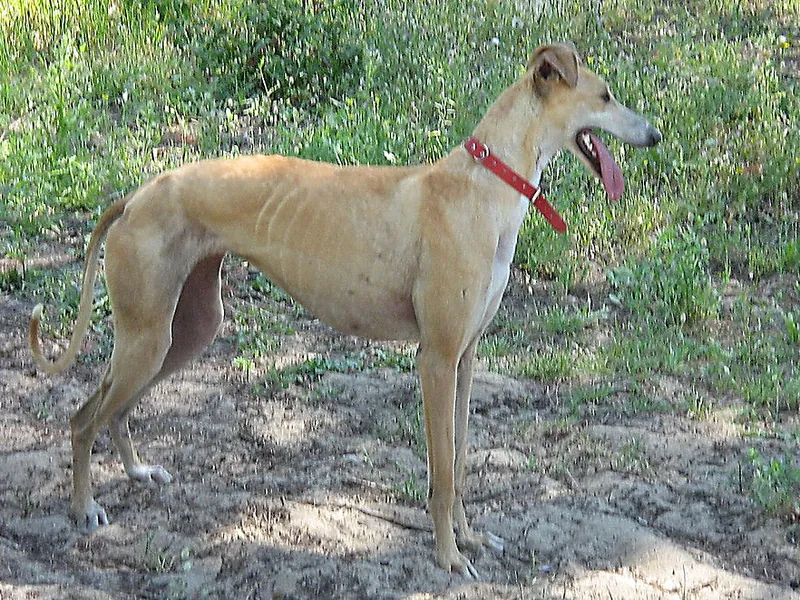
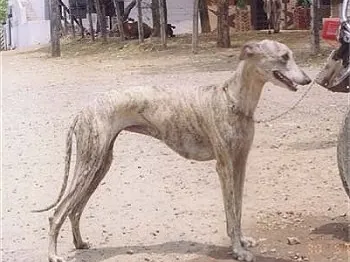
The Rampur Greyhound is a large, powerful sighthound from northern India, standing about 22 to 30 inches and weighing roughly 51 to 71 lb. It is more muscular and robust than the English Greyhound, with a deep chest, a strong back, long legs and a broad, flat skull. The ears are small and often folded back, rose-shaped, close to the head. The tail is long and thin, carried low with a slight curve.
The coat is short, smooth and fine, with very little undercoat. Reported colors include gray, mouse gray, black, brindle and particolored, sometimes with white markings. Some sources describe gray shades as the traditional color.
Males are usually taller and heavier than females. Because the breed is rare and has no widely available international standard, appearance varies between dogs and regions, and detailed size data for each sex are not well documented.
Temperament and Personality
Reliable information about Rampur Greyhounds as family companions is scarce. Like other sighthounds, they are generally described as quiet and composed indoors and explosive outdoors. Their defining trait is an intense chase instinct: anything small that runs is likely to be pursued.
Individual temperament depends heavily on how a dog was bred and raised. Anyone considering one should meet the parents and ask in detail about their behavior with people, dogs and other animals.
Are Rampur Greyhounds Good for First-Time Owners?
No. The Rampur Greyhound is a rare, poorly documented sighthound best suited to experienced sighthound owners.
Its intense chase instinct, independence and need for secure space to sprint require an owner who already understands sighthounds. There is also little reliable information on temperament, health or lifespan, and few breeders outside India to offer support. First-time owners interested in a sighthound will find better-documented options with established breed clubs, rescue networks and health data.
Many sighthound enthusiasts gain experience with Greyhounds or Salukis first before considering a rare breed like this one.
Can Rampur Greyhounds Live in an Apartment?
Apartment life is possible for some sighthounds, but it is a poor match for the Rampur Greyhound.
Like other sighthounds, it may be calm and quiet indoors. However, it needs regular chances to sprint in a securely fenced area and is a large, muscular dog. Without a yard or easy access to a fenced field, meeting its exercise needs is very difficult. Its thin coat and low body fat also mean it needs soft bedding and warmth. A house with a high, secure fence suits the breed far better.
Are Rampur Greyhounds Easy to Train?
Rampur Greyhounds are not easy to train in the obedience sense. Like most sighthounds, they are independent and bored by repetition.
Training should focus on house manners, calm leash walking, waiting at doors and coming to the handler in enclosed spaces. Use short sessions and food rewards. Do not expect reliable recall around running animals. Harsh methods tend to make sighthounds shut down. Lure coursing is a good outlet that matches the breed's instincts.
Patience and a calm, consistent routine matter more than formal obedience.
Exercise and Training
This is a muscular, athletic dog bred for speed. It needs daily walks plus regular chances to sprint in a safely fenced area. Lure coursing is a good outlet where available.
- Never rely on recall near open land, roads or livestock. Sighthounds can reach high speed in seconds.
- Use a secure, high fence; a dog of 22 to 30 inches can clear low barriers.
- Train patiently with rewards. Sighthounds tend to be independent and lose interest in repetitive drills.
Grooming and Shedding
The coat is short and smooth, so grooming is minimal: a weekly once-over with a rubber mitt or soft brush, plus nail trims and dental care. With little body fat and a thin coat, a Rampur Greyhound may need a coat in cold weather and soft bedding to protect bony pressure points.
Feeding and Nutrition
Rampur Greyhounds are naturally lean, and a healthy adult may show a hint of the last ribs and hip bones. Do not feed extra simply because the dog looks thin; judge condition by feel and with your vet. Excess weight strains joints and does not suit a sighthound's build.
- Feed puppies a large-breed growth diet, divided into three or four meals, and keep them slim during growth.
- Split adult food into at least two meals a day to lower bloat risk, which applies to deep-chested sighthounds.
- Avoid sprinting or hard play for about an hour before and after meals.
Sighthounds can be picky eaters, so a consistent schedule and removing uneaten food after a short time helps. Their low body fat means they may need slightly more food in cold weather. Because there is no breed-specific nutrition research, work with your vet to adjust portions to activity and condition.
| Adult weight | Less active | Typical adult | Very active |
|---|---|---|---|
| 51 lb | 1,030 kcal | 1,180 kcal | 1,480 kcal |
| 71 lb | 1,320 kcal | 1,510 kcal | 1,890 kcal |
Estimates use the resting energy formula veterinarians work with (70 × body weight in kg0.75) and standard activity factors. Use the feeding guide on your food as a starting point and adjust to body condition. Puppies, seniors, pregnant animals and pets that need to lose weight have different needs, so ask your vet.
Health and Lifespan
No breed-specific health studies are available, and no typical inherited diseases are documented. General considerations for large, deep-chested sighthounds apply: bloat (gastric dilatation-volvulus) is a risk in deep-chested dogs, and sighthounds as a group can be more sensitive to some anesthetics, which is worth mentioning to your veterinarian.
There is no reliable lifespan figure for the breed. Because it is so rare, ask breeders directly about the health and age of related dogs.
Rampur Greyhound Price and Cost of Ownership
The Rampur Greyhound is practically unavailable outside India, and there is no reliable US puppy price. Acquiring one would mean importing, which involves travel costs, health certificates, import requirements and finding a reputable source.
Adoption is not a realistic option for this breed in the US, though sighthound rescues place many similar dogs, including retired racing Greyhounds and Galgos.
Breed-specific ongoing costs include a high, secure fence, access to a fenced field or lure coursing club, a warm coat for cold weather and soft bedding. Veterinary costs should include a vet familiar with sighthound anesthesia protocols. Bloat surgery can be expensive, so insurance or an emergency fund is advisable.
Is the Rampur Greyhound Right for You?
Realistically, this breed is for experienced sighthound enthusiasts, ideally people with a direct connection to breeders in India. It is a poor choice for first-time owners, for homes with cats or small pets, and for anyone who wants a dog that can be walked off leash.
- Good fit: experienced sighthound owners with secure, spacious grounds.
- Poor fit: homes with small animals, apartments, owners wanting a well-documented breed.
Rampur Greyhound Traits at a Glance
Rampur Greyhound FAQ
How big do Rampur Greyhounds get?
They are large sighthounds, typically about 22 to 30 inches tall and around 51 to 71 lb, with a more muscular build than many other sighthounds.
Are Rampur Greyhounds good pets?
They are rarely kept as companions, even in India, and little is known about them as family dogs. Their strong chase instinct requires experienced handling.
Do Rampur Greyhounds shed?
Their short, smooth coat sheds lightly and needs only weekly grooming.
Is the Rampur Greyhound recognized by kennel clubs?
No. Neither the FCI, the AKC nor The Kennel Club recognizes it.
Can Rampur Greyhounds live with cats?
It is risky. Like other sighthounds bred to course game, they are strongly triggered by small running animals.