Alapaha Blue Blood BulldogA rare plantation bulldog from southern Georgia
The Alapaha Blue Blood Bulldog is a rare, muscular bulldog developed in southern Georgia to catch and hold livestock and to guard the homestead. It is devoted to its family but strongly protective and strong-willed, so it needs experienced, committed owners.
Why people love the Alapaha Blue Blood Bulldog
- Loyal and affectionate with its own family
- Natural guardian of home and property
- Short coat is easy to maintain
- Athletic and strong for structured activities
- Can be gentle with children it has grown up with
Things to consider
- Protective and wary of strangers; needs lifelong socialization
- Often intolerant of unfamiliar dogs, especially same sex
- High prey drive; cats and small pets are at risk
- Strong-willed and powerful; best for experienced owners
- Possible breed restrictions in housing and insurance
Is this breed right for you?
10 questions · live resultHistory and Origin
The breed is named after the Alapaha River region of southern Georgia. It is closely associated with the Lane family, who preserved a line of old Southern plantation bulldogs during the 20th century. After the family patriarch's death, his granddaughter Lana Lou Lane continued the breeding program and helped found a breed association in the late 1970s.
These dogs worked as catch dogs, holding semi-wild cattle and hogs for farmers, and as guardians of the farm and family. The breed is recognized by some smaller registries but not by the AKC, The Kennel Club or the FCI, and it remains rare even in the United States.
Size, Coat and Colors
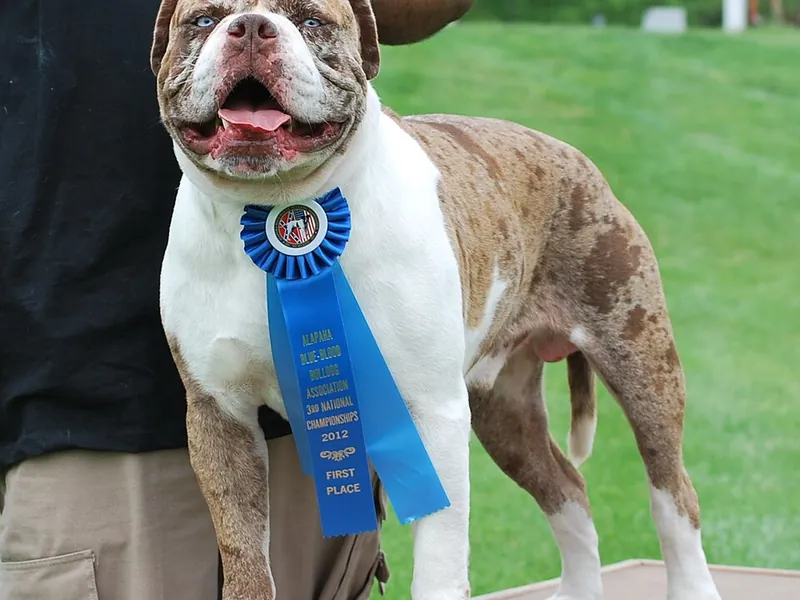
The Alapaha Blue Blood Bulldog is a muscular, athletic bulldog with a broad, square head, strong jaws and a deep chest, built for agility rather than bulk. Adults stand about 18 to 25 inches at the shoulder and weigh roughly 51 to 90 lb. Males are larger and heavier, with broader heads and more muscle, while females are noticeably smaller and lighter.
The coat is short, stiff and close-lying, with a glossy finish and no undercoat to speak of.
Colors: the breed is usually mostly white with patches of color. Standards from the breed's own associations vary, but common markings include:
- black, brown, red, fawn or blue patches on white
- brindle patches
- merle patterns in some lines
Eyes can be brown, blue, amber or odd colored, and glass-eyed dogs with pale blue eyes occur in some lines. Because the breed is recognized only by smaller registries, appearance varies considerably between breeders. Dogs with large amounts of white or merle-to-merle breedings carry a higher risk of deafness.
Temperament and Personality
Alapahas are loyal and affectionate with their own family and can be gentle with children they have grown up with. They are naturally protective and territorial, usually wary of strangers and quick to position themselves between their people and anything unfamiliar.
They tend to have high prey drive and can be intolerant of unfamiliar dogs, especially those of the same sex. Early and ongoing socialization is essential, and many do best as the only dog or in carefully managed multi-dog homes. Cats and small pets are a risk.
Are Alapaha Blue Blood Bulldogs Aggressive?
Alapaha Blue Blood Bulldogs are not aggressive toward their families by nature, but they are protective, territorial and wary of strangers, which calls for careful management.
The breed was developed to guard homesteads and catch livestock, so it tends to react to perceived threats and can be intolerant of unfamiliar dogs. Good outcomes depend on stable breeding, early and ongoing socialization, clear boundaries and a calm, confident owner. Visitors and other dogs should be introduced under control. Some cities, landlords and insurers restrict bulldog and mastiff-type dogs, so check rules before getting one.
Can Alapaha Blue Blood Bulldogs Live in an Apartment?
An Alapaha is not well suited to apartment living. Its protective nature, strength and intolerance of unfamiliar dogs make shared hallways, elevators and busy sidewalks stressful.
The breed does best in a house with a securely fenced yard, where it can patrol and burn energy in a controlled space. In an apartment, frequent close encounters with neighbors and their dogs can trigger guarding behavior. Many buildings also restrict bulldog or mastiff-type breeds or set weight limits. If apartment living is unavoidable, an experienced owner, extensive daily exercise and professional training support are essential.
Are Alapaha Blue Blood Bulldogs Easy to Train?
Alapahas are intelligent and learn quickly, but they are strong-willed and need an experienced, consistent handler, so they are not considered easy to train.
They respond best to calm, confident, reward-based training with clear rules, starting in puppyhood. Teach loose-leash walking and impulse control before the dog reaches full strength, and practice calm behavior around visitors regularly. Harsh methods tend to increase resistance or defensive behavior. Structured activities such as tug with rules, flirt-pole games and obedience classes build cooperation. Professional guidance is valuable if guarding or dog reactivity appears.
Exercise and Training
Daily walks and structured play, plus a secure yard, usually meet this breed's needs. Activities like flirt-pole games, tug with rules and strength-based exercise help channel energy and build a working relationship.
Training should be consistent, calm and confident. The breed is intelligent but strong-willed and needs an owner who sets clear boundaries without harshness. Start obedience and socialization early and teach loose-lead walking before the dog reaches full strength. Some countries, states and cities restrict bulldog or mastiff-type dogs, so check local rules and housing or insurance terms before getting one.
Grooming and Shedding
The short, stiff coat is easy to maintain with weekly brushing. Shedding is moderate. Many dogs are mostly white with patches of color; the blue-tinged and merle patterns seen in some lines gave rise to the breed's name.
- Check the skin regularly for irritation or allergies.
- Clean ears and wipe any facial wrinkles.
- Trim nails often, since heavy dogs can wear them unevenly.
Feeding and Nutrition
Alapahas are muscular, athletic bulldogs, and their joints benefit from a lean, fit body. Hip dysplasia is reported in the breed, so avoid excess weight at all life stages. A fit Alapaha has a visible waist and ribs you can feel easily.
Puppies: feed a complete diet formulated for large-breed puppies, aiming for steady, controlled growth. Avoid adding calcium or other supplements unless your vet recommends them. Three or four meals a day for young puppies can move to two meals for adults.
Bloat: the deep chest means some risk of gastric dilatation-volvulus. Divide food into at least two meals, avoid strenuous exercise around mealtimes and learn the warning signs.
Skin: skin problems and allergies are reported in the breed. If your dog has itchy skin, recurrent ear infections or paw licking, work with your vet to identify the cause. Food is one possibility among several, so avoid frequent random diet changes.
Multi-pet homes: because some Alapahas guard resources, feed them separately from other pets and pick up bowls after meals. Use treats generously in training but count them in the daily ration.
| Adult weight | Less active | Typical adult | Very active |
|---|---|---|---|
| 51 lb | 1,030 kcal | 1,180 kcal | 1,480 kcal |
| 70 lb | 1,310 kcal | 1,500 kcal | 1,870 kcal |
| 90 lb | 1,580 kcal | 1,810 kcal | 2,260 kcal |
Estimates use the resting energy formula veterinarians work with (70 × body weight in kg0.75) and standard activity factors. Use the feeding guide on your food as a starting point and adjust to body condition. Puppies, seniors, pregnant animals and pets that need to lose weight have different needs, so ask your vet.
Health and Lifespan
Health concerns reported in the breed include hip dysplasia, congenital deafness linked to large white areas, entropion (inward-rolling eyelids) and skin problems. Merle-to-merle breedings raise the risk of deafness and eye defects and should be avoided.
Reliable lifespan data is limited. Choose breeders who test hips and hearing (BAER testing) and are open about health in their lines. Keep the dog lean to protect its joints.
Alapaha Blue Blood Bulldog Price and Cost of Ownership
The Alapaha Blue Blood Bulldog is rare even in the United States, and it is recognized only by smaller registries, not the AKC. Prices vary widely by breeder, region and lines, and because breed standards differ between associations, the quality of breeding also varies. Choose breeders who test hips and use BAER hearing tests for parents and puppies, avoid merle-to-merle breedings and are open about temperament.
Adoption is possible: bulldog-type rescues sometimes take in Alapahas and similar dogs.
Ongoing cost drivers include secure fencing, professional training for a strong, protective dog and treatment for hip dysplasia, eyelid problems such as entropion and skin conditions. Homeowner and renter insurance may cost more or exclude bulldog and mastiff types, and some housing does not accept them, which can limit future moves.
Is the Alapaha Blue Blood Bulldog Right for You?
This breed suits experienced owners with a secure property who want a loyal, protective companion and can commit to lifelong training and management.
- Good match: experienced bulldog or guardian-breed owners, rural or suburban homes with secure fencing, single-dog households.
- Less ideal: first-time owners, apartments, homes with other dogs or small pets, frequent visitors.
Alapaha Blue Blood Bulldog Traits at a Glance
Alapaha Blue Blood Bulldog FAQ
How big do Alapaha Blue Blood Bulldogs get?
They stand about 18 to 25 inches at the shoulder and weigh roughly 51 to 90 lb.
Are Alapaha Blue Blood Bulldogs good family dogs?
They can be loyal and affectionate with their own family, but their protective nature and strength make them best for experienced owners.
Do Alapaha Blue Blood Bulldogs get along with other dogs?
Some do with careful socialization, but many are intolerant of unfamiliar dogs, especially of the same sex.
Is the Alapaha Blue Blood Bulldog recognized by the AKC?
No. It is recognized only by smaller registries.
Do Alapaha Blue Blood Bulldogs shed?
They shed moderately. Weekly brushing keeps the short coat tidy.
Are Alapaha Blue Blood Bulldogs prone to deafness?
Dogs with a lot of white can be born deaf, so hearing tests for puppies and parents are advisable.