Polish GreyhoundPoland's powerful, self-assured sighthound
The Polish Greyhound, or Chart Polski, is a large, muscular sighthound from Poland, bred to course hare, fox and even wolf on open plains. Confident and more watchful than most sighthounds, it suits experienced owners without small pets who can give it space to run.
Why people love the Polish Greyhound
- Calm, quiet and relaxed indoors when well exercised
- Devoted and loyal to its family
- Short coat needs minimal grooming
- More watchful than most sighthounds, alerting to strangers
- Spectacular athlete for lure coursing and racing
Things to consider
- Extremely high prey drive toward cats and small animals
- Recall cannot be trusted in unfenced areas
- Needs regular free running in a large, secure space
- Can be intolerant of other dogs, especially the same sex
- Very rare in the US
Is this breed right for you?
10 questions · live resultHistory and Origin
The Chart Polski is an old Polish breed. Large sighthounds of this type were used by the Polish nobility for coursing hare, fox and larger game across open countryside, and they appear in Polish hunting literature and paintings from several centuries ago. It is thought to be related to Asian sighthounds of the steppe.
The breed became very rare during the 20th century. Polish breeders revived it from remaining dogs, and the FCI recognized it in Group 10 (sighthounds) in 1989. It is a big dog: about 27 to 31 inches tall and roughly 60 to 95 lb (about 27 to 43 kg), heavier and more robust than the English Greyhound.
Size, Coat and Colors
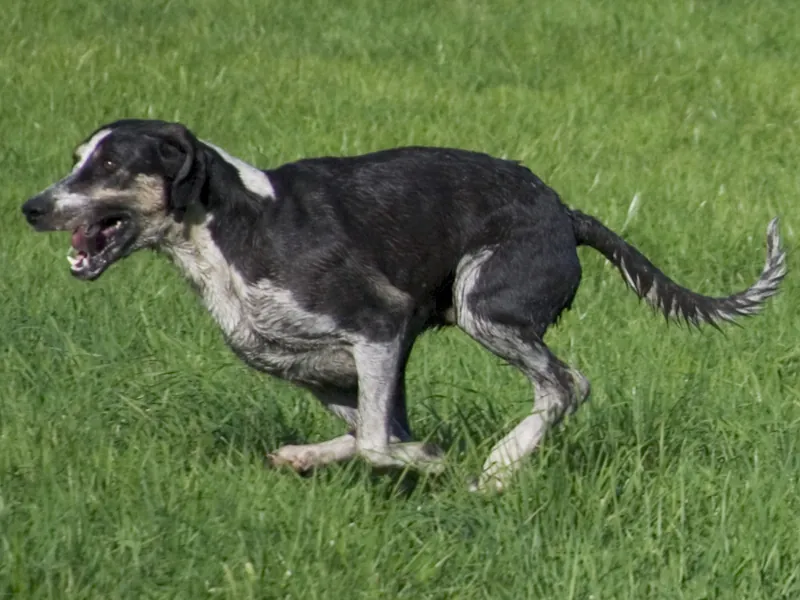
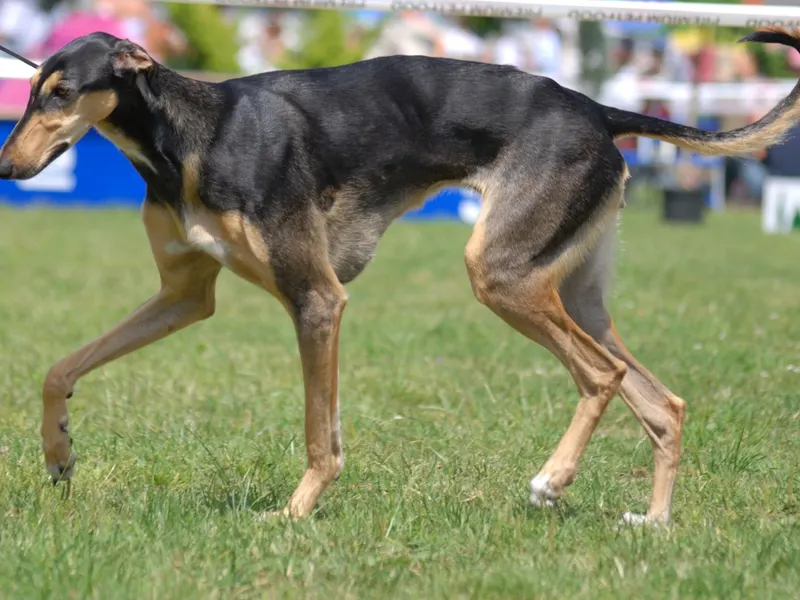
The Polish Greyhound, or Chart Polski, is a large, powerful sighthound with a long, strong head, a deep chest, a tucked-up belly and long, muscular legs. It is more robust and less refined than the English Greyhound, with a slightly arched loin and a long tail that curves upward at the end.
Adults stand about 27 to 31 inches and weigh roughly 60 to 95 lb. Under the FCI standard, males are about 27.5 to 31.5 inches and females slightly smaller, about 27 to 29.5 inches. Males are heavier and more muscular, and females look somewhat finer.
The coat is short, firm and elastic, lying close to the body. It may be slightly longer on the underside and the back of the thighs. The eyes are large, dark and almond-shaped, with an alert, penetrating expression that differs from the softer look of many sighthounds.
All colors are accepted, including:
- black, gray and blue
- fawn and red, with or without black overlay
- brindle
- parti-colors with white
Temperament and Personality
Chart Polskis are self-confident, calm at home and devoted to their family. Compared with many sighthounds, they show more territorial and watchful behavior and may be reserved or protective toward strangers.
Prey drive is extremely high. Cats and other small animals are generally at risk, and some Chart Polskis are not tolerant of other dogs, especially of the same sex. They can be patient with older children in their own family but are not usually recommended for homes with very young kids.
Is the Chart Polski a Good Family Dog?
The Chart Polski can be a loyal, calm family dog for the right household, typically one with older children, no cats or small pets and an experienced owner. Indoors, a well-exercised Chart Polski is usually quiet and relaxed.
It is less suitable for families with very young children, busy multi-pet homes or households without a large, securely fenced area. Its prey drive is very high, and it can be reserved or protective with strangers. Families who enjoy lure coursing or have land where the dog can run safely and who want a devoted, dignified companion are the best fit.
Can a Chart Polski Live in an Apartment?
It is not a good fit. A Chart Polski is calm indoors, but it is a large sighthound that needs regular free running at full speed in a big, securely fenced area, not just leash walks.
Apartment living also brings frequent encounters with cats, small dogs and other animals in hallways and on sidewalks, which can trigger its intense chase instinct. Its size makes tight spaces awkward, and it needs soft bedding to protect its bony joints. A house with a large, tall-fenced yard and access to coursing fields or other safe running areas suits the breed far better.
Is the Chart Polski Good for First-Time Owners?
Generally no. The Chart Polski is calm at home but combines extreme prey drive, independence, some territorial behavior and a powerful, fast body that is challenging to manage without experience.
It needs an owner who understands sighthounds: someone who will never rely on recall in open areas, can provide secure running space and accepts that training is a patient negotiation. Some dogs are not tolerant of other dogs, which adds to the management load. First-time owners interested in sighthounds may find a retired racing Greyhound or a Whippet easier as a first experience.
Exercise and Training
This breed needs daily long walks plus regular free running in a large, securely fenced area. Lure coursing and racing are excellent outlets. Indoors, a well-exercised Chart Polski is usually quiet and relaxed.
- Never trust recall in unfenced areas; it can reach high speed in seconds.
- Training takes patience. It is intelligent but independent and not eager to repeat drills.
- Fences must be tall and secure.
- It copes poorly with being left alone for long hours.
Grooming and Shedding
The short, firm coat needs minimal grooming. Brush weekly with a rubber mitt; shedding is moderate. Keep nails trimmed and teeth clean. With little body fat, many need a coat in cold or wet weather and padded bedding to protect elbows and hips.
Feeding and Nutrition
Like other sighthounds, the Chart Polski should be lean and muscular, with the last few ribs and hip bones faintly visible. Owners used to other breeds sometimes think a correctly conditioned sighthound looks too thin and overfeed it.
- Feed puppies a large-breed puppy food and aim for steady growth rather than maximum size.
- Puppies do well on three or four meals a day, adults on two meals.
- Bloat is a known risk in this deep-chested breed. Avoid one large meal, slow down fast eaters and rest the dog for about an hour before and after free running.
- Adjust portions to activity: dogs in lure coursing or racing need more than dogs on daily walks.
Cardiomyopathy has been reported in the breed. If your dog receives a heart diagnosis, follow your veterinarian's diet guidance. With little body fat, the Chart Polski may need slightly more food in cold weather. Use small rewards for training and recall practice in fenced areas.
| Adult weight | Less active | Typical adult | Very active |
|---|---|---|---|
| 60 lb | 1,170 kcal | 1,330 kcal | 1,670 kcal |
| 95 lb | 1,650 kcal | 1,880 kcal | 2,350 kcal |
Estimates use the resting energy formula veterinarians work with (70 × body weight in kg0.75) and standard activity factors. Use the feeding guide on your food as a starting point and adjust to body condition. Puppies, seniors, pregnant animals and pets that need to lose weight have different needs, so ask your vet.
Health and Lifespan
The Chart Polski is generally robust, with a typical lifespan of about 10 to 12 years. Reported health risks include:
- Cardiomyopathy (heart muscle disease)
- Certain cancers
- Bloat (gastric dilatation-volvulus), because of the deep chest
Like other sighthounds, Chart Polskis can be more sensitive to some anesthetics, so make sure your veterinarian knows the breed. Choose breeders who screen hearts and are open about health in their lines.
Polish Greyhound Price and Cost of Ownership
The Chart Polski is very rare in the US, and there is no reliable typical US price. Most puppies come from breeders in Poland or elsewhere in Europe, so expect import costs, paperwork and waiting times. Prices vary by breeder, region and lines. Rescue options are extremely limited.
Breed-specific cost drivers include:
- Import costs, including transport, health certificates and vaccinations
- Tall, secure fencing for a fast, powerful sighthound
- Lure coursing club fees and travel to events
- Heart screening and insurance covering cardiomyopathy and bloat
- Coats for cold weather and padded beds for bony joints
Make sure your veterinarian is familiar with sighthound anesthesia sensitivities before any procedure. Grooming costs are low.
Is the Polish Greyhound Right for You?
The Chart Polski suits experienced sighthound owners with a secure, spacious property and no small pets. It is not a good choice for apartments, households with cats or young children, or first-time owners.
- Good fit: experienced owners, lure coursing enthusiasts, single-dog homes with land.
- Poor fit: homes with cats or small pets, multi-dog households, city apartments.
Polish Greyhound Traits at a Glance
Polish Greyhound FAQ
How big does a Polish Greyhound get?
It stands about 27 to 31 inches tall and weighs roughly 60 to 95 lb.
Is the Chart Polski good with cats?
Generally no. Its prey drive is very high, and cats and small animals are at risk.
How long do Polish Greyhounds live?
Typically about 10 to 12 years.
Do Polish Greyhounds shed?
They shed moderately. Their short coat needs only weekly brushing.
Is the Chart Polski a good guard dog?
It is more watchful and territorial than most sighthounds and will alert to strangers, but it is not a dedicated guardian breed.
How much exercise does a Chart Polski need?
Daily long walks plus regular free running in a large, securely fenced area. Lure coursing is an excellent outlet for its speed and chase instinct.