Appenzeller SennenhundLively Swiss cattle dog and watchdog
The Appenzeller Sennenhund is a medium-sized, tricolor Swiss farm dog with a tightly curled tail and boundless energy. Bred to drive cattle and guard alpine farms, it is loyal, vocal and suspicious of strangers, and it needs an active owner with a real job for it.
Why people love the Appenzeller Sennenhund
- Loyal, attentive watchdog with strong family bonds
- Quick learner that enjoys working with its handler
- Short double coat with straightforward care
- Longer-lived than most Swiss mountain dogs
- Versatile: herding, agility, obedience and scent work
Things to consider
- Barks loudly and persistently at strangers
- Needs two hours or more of activity daily
- Herding instinct may show as nipping at heels
- Rare in the US, with few breeders
- Can become reactive without ongoing socialization
Is this breed right for you?
10 questions · live resultHistory and Origin
The Appenzeller comes from the Appenzell region of northeastern Switzerland, where farmers used it to move cattle between pastures, guard the homestead and even pull small carts. It is one of four Swiss mountain dog breeds, alongside the Bernese, the Greater Swiss and the Entlebucher.
A Swiss forester, Max Siber, promoted the breed in the late 1800s, and the Swiss Kennel Club supported efforts to preserve it. A breed club formed in 1906, and Albert Heim, a key figure in the Swiss mountain dog breeds, helped write its first standard. The breed remains uncommon outside Europe and is recorded in the AKC Foundation Stock Service.
Size, Coat and Colors
The Appenzeller is a medium-large, muscular dog with a nearly square body and a lively, agile build that is lighter than the Bernese or Greater Swiss Mountain Dog. Adults stand about 20 to 22 inches at the shoulder and weigh 49 to 71 lb. Males are usually taller and more substantial than females, with a broader head.
The head is wedge-shaped with small, brown eyes, a lively expression and high-set, triangular ears that hang close to the cheeks when relaxed and lift forward when alert.
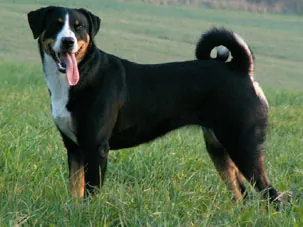
The double coat has a dense, shiny topcoat and a thick undercoat in black, brown or gray. The breed is always tricolor:
- Base color: black or havana brown
- Rust markings over the eyes, on the cheeks, chest and legs
- White markings: a blaze on the face, a white chest, white feet and a white tail tip
Symmetrical markings are preferred. The tail is set high and curls tightly over the back, often to one side, a trait that sets the Appenzeller apart from other Swiss mountain dogs.
Temperament and Personality
Appenzellers are lively, self-assured and intensely loyal to their family. They are natural watchdogs: reserved or suspicious with strangers and quick to sound the alarm, often loudly and persistently.
With their own people they are affectionate and playful. They generally get on with other household animals they are raised with, but their herding instinct can show up as nipping at heels or circling children and pets. Without enough activity they can become restless, noisy and destructive.
Appenzellers often choose one person as their main focus while staying devoted to the whole family. Their alertness can tip into reactivity on busy streets if they are not exposed to city life early.
Is the Appenzeller Good for First-Time Owners?
The Appenzeller is generally better suited to experienced owners. Its energy, watchfulness and strong opinions require consistent training and a lot of daily activity.
First-time owners often struggle with the barking, the herding nips and the reactive behavior that can develop without early socialization. The breed is also rare, so local trainers may not know it. Someone new to dogs who is set on an Appenzeller should be very active, take puppy and obedience classes, work closely with the breeder, and expose the dog to many people and places throughout its first two years.
Can Appenzellers Live in Apartments?
Appenzellers are poorly suited to apartment life. Their energy, alertness and loud bark make close neighbors a challenge, and they do best with a fenced yard and room to move.
An Appenzeller in an apartment would need several hours of activity, consistent quiet training and a calm building. Constant noises from hallways and neighbors tend to trigger alert barking. Even well-exercised dogs prefer to patrol a home they can see and protect. A rural or suburban house with a secure yard is a much better match for most dogs of this breed.
Are Appenzellers Good With Other Pets?
Appenzellers usually get along with other animals they are raised with, including dogs, cats and farm animals. Their herding instinct, however, can lead them to chase, circle or nip at pets that run.
Introduce new pets carefully and redirect herding behavior with toys and games. With unfamiliar dogs, Appenzellers can be reserved and sometimes confrontational, particularly with dogs of the same sex. Early, positive exposure to well-mannered dogs helps. Small pets such as rabbits should be housed securely and supervised, as a running animal invites herding or chasing.
Exercise and Training
This breed needs substantial daily exercise and mental work, often two hours or more. Long walks, hiking, herding, agility, obedience and scent work suit it well. A fenced yard or rural home is ideal.
- They learn quickly and like to work with their handler; use consistent, reward-based methods.
- Start socialization early and continue it, so their watchfulness does not become fearfulness or reactivity.
- Teach a quiet cue and avoid rewarding alarm barking.
- Redirect herding behavior toward toys and games.
Grooming and Shedding
The Appenzeller has a dense, glossy double coat in black or brown with symmetrical rust and white markings. Weekly brushing is usually enough, increasing during seasonal sheds when the undercoat comes out. Shedding is moderate overall.
Check ears and nails regularly. Some Appenzellers drool more than other short-coated breeds, especially after drinking or exercise.
The thick tail curls tightly over the back, a feature unique among the Swiss mountain dogs.
Feeding and Nutrition
An Appenzeller's food needs depend heavily on how much it works. A dog herding on a farm or training daily in sports will need more than a family companion with long walks. Adjust portions based on body condition, aiming for a clear waist and ribs that are easy to feel.
Hip dysplasia is the main recognized concern in the breed, so controlled growth matters. Feed puppies a diet appropriate for medium-to-large breeds, avoid excess calcium and supplements unless your vet recommends them, and keep the puppy lean through adolescence.
Adults usually do well on two meals a day. Avoid strenuous exercise right before and after meals, a sensible habit for any active, deep-chested dog.
Appenzellers are food-motivated, which makes training easier but can lead to weight gain if treats are not counted. Use small rewards and part of the daily ration for training sessions. Food puzzles and scent games at mealtime also give this working breed a mental outlet.
Because reliable breed health data are limited, routine vet checks and bloodwork in adulthood help catch issues early.
| Adult weight | Less active | Typical adult | Very active |
|---|---|---|---|
| 49 lb | 1,000 kcal | 1,150 kcal | 1,430 kcal |
| 71 lb | 1,320 kcal | 1,510 kcal | 1,890 kcal |
Estimates use the resting energy formula veterinarians work with (70 × body weight in kg0.75) and standard activity factors. Use the feeding guide on your food as a starting point and adjust to body condition. Puppies, seniors, pregnant animals and pets that need to lose weight have different needs, so ask your vet.
Health and Lifespan
Appenzellers commonly live 13 to 15 years. Reliable breed-wide health data is limited. Hip dysplasia is the main recognized concern, and X-ray screening of breeding dogs is required or recommended by breed clubs in Nordic countries and elsewhere.
The breed has a relatively small gene pool, so choose a breeder who screens hips and elbows, considers genetic diversity and can show health records for the parents.
Appenzeller Sennenhund Price and Cost of Ownership
Appenzellers are rare in the US, and published US price ranges are not reliable. Many puppies are imported from Switzerland or neighboring countries, and import, transport and paperwork costs can add significantly. Prices vary by breeder, region and lines. Expect to search widely and join a waiting list.
Rescue options are very limited, but breed clubs occasionally rehome adult dogs.
Ongoing cost drivers include:
- Secure fencing for a high-energy watchdog
- Training: classes or a trainer familiar with herding and working breeds
- Insurance covering hip dysplasia and orthopedic issues
- Health screening: hip and elbow evaluations
- Food for an active medium-large dog
Is the Appenzeller Sennenhund Right for You?
The Appenzeller suits experienced, active owners in rural or suburban homes who want a loyal working companion and watchdog and can give it a job every day.
It is less suited to apartments, noise-sensitive neighbors, first-time owners or households that cannot provide plenty of exercise and training.
Expect to search widely for a puppy: breeders are few outside Switzerland and neighboring countries, and waiting lists are common.
Appenzeller Sennenhund Traits at a Glance
Appenzeller Sennenhund FAQ
How big do Appenzellers get?
Appenzellers stand about 20 to 22 inches tall and weigh roughly 49 to 71 lb.
Are Appenzeller Sennenhunds good family dogs?
They are devoted to their family and can be good with respectful children, but their herding instinct and energy require supervision and training.
Do Appenzellers bark a lot?
Yes. They are natural watchdogs and tend to bark readily at strangers and unusual activity.
How much exercise does an Appenzeller need?
A lot: often two hours or more a day of activity plus mental challenges.
Is the Appenzeller AKC recognized?
Not fully. It is recorded in the AKC Foundation Stock Service.
How long do Appenzellers live?
Most live around 13 to 15 years.