ChinookNew Hampshire's rare, friendly sled dog
The Chinook is a rare American sled dog developed in New Hampshire in the early 20th century. It combines strength and endurance with an unusually gentle, people-loving temperament. It suits active families who want a sociable working dog and can live with some vocal "woo-wooing".
Why people love the Chinook
- Unusually gentle and patient with children
- Gets along well with other dogs
- Cooperative and responsive to positive training
- Great partner for hiking, skijoring and carting
- Fewer escape and chase issues than many sled breeds
Things to consider
- Rare breed with long waiting lists
- Heavy seasonal shedding of the double coat
- Vocal woo-wooing and howling
- Needs one to two hours of activity daily
- Some lines prone to seizures and shyness
Is this breed right for you?
10 questions · live resultHistory and Origin
The breed traces back to one dog: Chinook, born in 1917 at the Wonalancet, New Hampshire farm of explorer and musher Arthur Treadwell Walden. Chinook's sire was a large mastiff-type farm dog and his dam a Greenland husky. Walden bred Chinook to other dogs to create a strong, fast and gentle freighting dog.
Chinooks hauled supplies on Admiral Richard Byrd's Antarctic expedition of 1928 to 1930, where the original Chinook died. Numbers later fell so low that the breed was among the rarest in the world. Dedicated breeders kept it alive, it was named the state dog of New Hampshire in 2009, and the AKC recognized it in the Working Group in 2013.
Size, Coat and Color
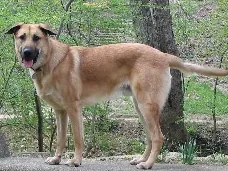
The Chinook is a large, athletic sled dog with a strong but not bulky build, standing 22 to 26 inches at the shoulder and weighing about 51 to 90 lb. Males are noticeably taller and heavier than females, with broader heads and more substance.
The breed has only one color: tawny. Shades range from pale honey to deep reddish gold. Typical markings are darker ears and muzzle, often with dark shading around the eyes and a lighter blaze on the face and chest. White markings or other colors are not accepted.
The medium-length double coat lies close to the body with a soft, thick undercoat. The tail is well furred and carried in a saber shape. Ears may be dropped, partially raised or fully erect, and all are acceptable. The eyes are medium-size and almond-shaped, usually brown to amber, and give the breed its soft, friendly expression. Overall, the Chinook should look like a dog built for steady freighting rather than speed.
Temperament and Personality
Chinooks are known for being affectionate, calm and eager to please. They are typically very good with children and get along well with other dogs and pets, more so than many sled breeds. Some are reserved with strangers at first.
They are vocal dogs. Rather than constant barking, many "talk" with howls, grumbles and the breed's characteristic "woo-woo". They form close bonds and do not like being left alone for long periods.
Are Chinooks Good for First-Time Owners?
Chinooks can be a good choice for first-time owners who are active and patient, more so than many other sled breeds.
They are cooperative, sensitive and keen to please, which makes training smoother than with independent Nordic breeds. The challenges are their exercise needs, heavy seasonal shedding and vocal habits. Some Chinooks are shy, so early socialization is important. Since the breed is rare, first-time buyers should expect to join a waiting list and work closely with a breeder through the Chinook Owners Association or a similar club, which also provides guidance after the puppy comes home.
Are Chinooks Good with Cats?
Many Chinooks live well with cats, especially when raised with them, though some have a moderate prey drive.
Compared with many sled breeds, Chinooks are known for gentler behavior around other animals. A puppy that grows up with a household cat usually treats it as family. Adult Chinooks without cat experience vary, and introductions should be slow and supervised. Watch how the dog reacts to running cats and small animals outdoors. Small pets such as rabbits or guinea pigs should always be kept separate and secure.
Can Chinooks Live in an Apartment?
Chinooks are better suited to houses with a fenced yard, but an apartment can work for owners who provide plenty of daily exercise.
This breed needs one to two hours of activity every day, including long walks, hikes or pulling sports. Without it, a Chinook may become restless and vocal, which can disturb neighbors. Shedding is also intense twice a year, and a small space shows it quickly. Some owners in apartments succeed by taking long morning and evening outings and joining a skijoring or canicross group. In hot climates, air conditioning is important because of the thick coat.
Exercise and Training
Chinooks need one to two hours of activity a day. They excel at sledding, skijoring, carting, hiking, canicross and backpacking, as well as obedience and agility.
Training is usually straightforward because the breed is cooperative and sensitive. Positive methods work best; heavy corrections can make a Chinook shut down. Some individuals are shy, so early, broad socialization is especially valuable. A secure fence is recommended, as with most sled dogs.
Because the breed was built for steady freighting rather than racing, Chinooks are happiest with long, moderate-paced outings rather than short sprints. Many families enjoy pulling sports with them, using a properly fitted harness once the dog is fully grown.
Grooming and Shedding
The medium-length double coat is always tawny, from pale honey to deep reddish gold, often with darker ears and muzzle. Brush weekly, and daily during the twice-yearly shedding season when the undercoat comes out in clumps. The coat insulates well against cold; in hot weather, exercise early or late and provide shade.
Feeding and Nutrition
Chinooks were bred for steady freighting work, so their energy needs depend strongly on activity. A dog that pulls a sled or hikes all weekend needs more food than a family pet with daily walks. Adjust portions by season and workload, and check body condition regularly: you should be able to feel the ribs easily under a light layer of fat.
Puppies grow into large dogs and benefit from a complete food formulated for large-breed puppies, which supports steady growth and avoids excessive calcium. Do not start serious pulling or long runs until the growth plates close, usually after 12 to 18 months.
- Feed two meals a day as adults to reduce the risk of bloat.
- Avoid strenuous work right before and after meals.
- Provide plenty of fresh water during exercise, especially in warm weather.
- Use training treats sparingly, as many Chinooks gain weight when activity drops.
| Adult weight | Less active | Typical adult | Very active |
|---|---|---|---|
| 51 lb | 1,030 kcal | 1,180 kcal | 1,480 kcal |
| 70 lb | 1,310 kcal | 1,500 kcal | 1,870 kcal |
| 90 lb | 1,580 kcal | 1,810 kcal | 2,260 kcal |
Estimates use the resting energy formula veterinarians work with (70 × body weight in kg0.75) and standard activity factors. Use the feeding guide on your food as a starting point and adjust to body condition. Puppies, seniors, pregnant animals and pets that need to lose weight have different needs, so ask your vet.
Health and Lifespan
Chinooks commonly live 12 to 15 years. Because the breed descends from a small number of dogs, breeders pay close attention to inherited conditions. Issues listed by the AKC and veterinary sources include:
- Hip dysplasia
- "Chinook seizures", a movement disorder seen in the breed, as well as epilepsy
- Cryptorchidism (undescended testicles)
- Digestive sensitivity, allergies and cataracts
Ask breeders about hip scores, eye exams and any seizure history in their lines. Keep your Chinook lean, since the breed can gain weight easily.
Chinook Price and Cost of Ownership
Typical breeder price in the US$1,500 to $3,000
A Chinook puppy from a reputable US breeder typically costs about $1,500 to $3,000. Prices vary by breeder, region and lines. Because the breed is rare, expect waiting lists and limited litters. Good breeders screen parents for hip dysplasia and eye problems and are open about seizure history in their lines.
The breed has a small rescue network, and adult Chinooks occasionally need new homes.
Ongoing cost drivers include:
- Large-breed food, especially for active working dogs.
- Pet insurance for hip dysplasia, seizures and cataracts.
- Pulling harnesses, carts or sled equipment for sports.
- Grooming tools or professional de-shedding during heavy shedding seasons.
Is the Chinook Right for You?
A Chinook is a great fit for active families who hike, ski or run, have a yard and want a friendly dog that gets along with kids and other pets. Waiting lists are common because the breed is rare.
It is less suited to apartments, long workdays alone or owners who need a quiet dog.
Ask breed clubs about adult dogs as well as puppies. A small number of retired breeding dogs are sometimes placed in new homes, which can be an easier start for first-time Chinook owners.
Chinook Traits at a Glance
Chinook FAQ
How big do Chinooks get?
Chinooks stand about 22 to 26 inches tall and weigh roughly 51 to 90 lb, with males larger than females.
Are Chinooks good family dogs?
Yes, they are known for being gentle with children and sociable with other dogs.
Why is the Chinook so rare?
The breed was developed from a single foundation dog and its numbers fell very low in the mid 20th century; it is still uncommon today.
Do Chinooks bark a lot?
They are vocal, often howling or making a "woo-woo" sound rather than barking constantly.
How long do Chinooks live?
Typically 12 to 15 years.
Do Chinooks shed?
Yes, moderately year-round and heavily twice a year.