Curly-Coated RetrieverThe tall, independent retriever in curls
The Curly-Coated Retriever is a tall, elegant gundog covered in tight, water-resistant curls. More independent and reserved than a Labrador, it suits active owners who want a capable, loyal retriever with a mind of its own.
Why people love the Curly-Coated Retriever
- Affectionate family dog, often excellent with children
- Low-maintenance curly coat that should not be brushed
- Hardy, enthusiastic water retriever
- More independent than most retrievers, calm as an adult
- Watchful without being a guard dog
Things to consider
- Needs at least an hour of daily exercise
- Matures slowly and can be boisterous until 2 to 3 years
- Independent streak makes training slower than other retrievers
- Reserved with strangers compared with other retrievers
- Rare in the US, so breeders are hard to find
Is this breed right for you?
10 questions · live resultHistory and Origin
The Curly is considered one of the oldest retriever breeds. It developed in England in the late 18th and early 19th centuries, probably from the now-extinct English Water Spaniel, retrieving setters and other water dogs, with Poodle blood possibly added later to tighten the curls.
Curlies were shown at Birmingham in 1860 and became popular with gamekeepers and poachers for their hardiness and their willingness to retrieve from cold water and rough cover. The rising popularity of Flat-Coated and later Labrador Retrievers pushed the Curly aside, and it remains uncommon. The AKC recognized the breed in 1924.
It is the tallest of the retriever breeds, standing up to 27 inches at the shoulder.
Size, Curly Coat and Colors
The Curly-Coated Retriever is the tallest of the retrievers, an elegant but strong dog built for endurance. Adults stand about 25 to 27 inches at the shoulder and weigh roughly 60 to 95 lb. Males are generally taller and heavier, while females tend to be at or slightly below the lower end of the height range with a lighter frame.
The body is athletic and slightly longer than tall, with a deep chest and a tail carried straight or fairly straight. The head is long and wedge-shaped, with a smooth face and forehead.
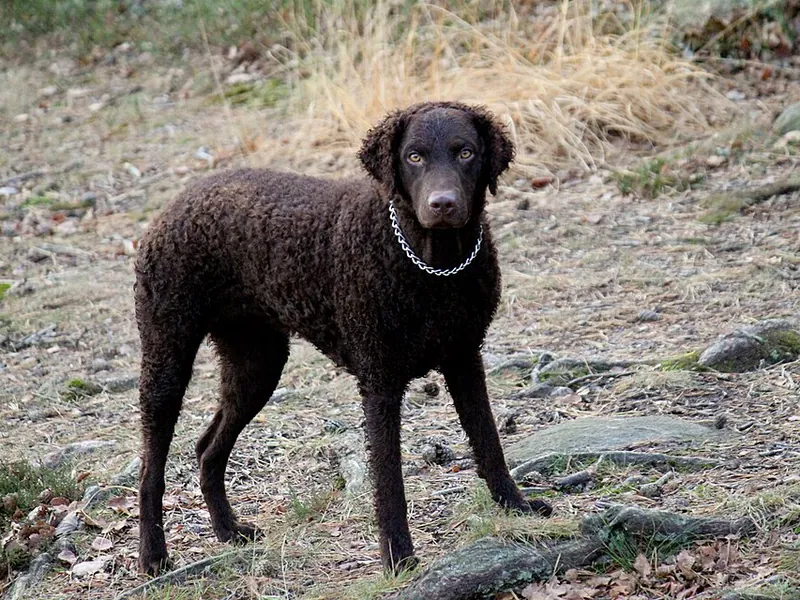
The coat is the breed's signature: a mass of small, tight, crisp curls covering the body, tail and ears, with short, smooth hair on the face, forehead and front of the legs. The curls should be water-resistant and lie close to the skin. Only two colors are accepted: solid black and solid liver. Small white patches are undesirable but may occur.
Temperament and Personality
Curlies are affectionate and loyal with their families and often excellent with children. Compared with other retrievers, they are more independent and more reserved with strangers. Many are watchful and will bark to announce visitors, though they are not typically guard dogs.
They mature slowly and can stay puppyish and boisterous until two or three years of age. Adults are usually calm in the house if they get enough exercise. Most get along with other dogs, and many live peacefully with cats they know.
Is the Curly-Coated Retriever Good for First-Time Owners?
It can be, for active first-time owners who are prepared for an independent retriever. Curlies are affectionate and loyal but not as eager to please as Labradors.
First-time owners often expect a retriever to be instantly obedient. Curlies think for themselves and can be stubborn when bored. They also stay puppyish and boisterous until about two or three years of age. Training should be varied, reward-based and consistent, and socialization is important to temper reserve with strangers. A first-time owner who enjoys training, has time for daily exercise and connects with the breed club can do very well.
Are Curly-Coated Retrievers Easy to Train?
Moderately. Curlies are intelligent and capable, but they get bored with repetition and may test the rules.
They respond best to short, varied sessions and positive methods. Harsh corrections tend to make them shut down or become more stubborn. Recall around birds and water deserves extra practice, as does polite behavior with visitors. Many Curlies excel in hunting tests, obedience, agility and tracking once training clicks. Patience during adolescence pays off with a thoughtful, reliable adult. Joining a retriever club gives structure and helps channel the dog's working drive.
Can Curly-Coated Retrievers Be Left Alone?
Adults can usually handle a few hours alone, especially after exercise. Young Curlies are more likely to get into trouble when bored.
Build up alone time gradually from puppyhood, using a crate or dog-proofed room. Exercise the dog before you leave and offer durable chews or puzzle toys. Curlies are somewhat more independent than other retrievers, which helps, but long workdays without a break can lead to chewing, digging or barking. A dog walker or midday visit is a good idea for owners away for extended periods. Long hours alone are usually harder on Curlies than on more independent working breeds.
Exercise and Training
As a working retriever, the Curly needs at least an hour or more of daily exercise, ideally including swimming and retrieving. They excel in hunting tests, dock diving, agility, obedience and tracking, and many are still used as hunting companions.
Curlies are intelligent but think for themselves and can get bored with repetition. Keep sessions varied and rewarding, and work on recall around birds and water early. Harsh corrections tend to backfire with this sensitive breed.
Because Curlies are slow to mature, keep training sessions for young dogs short and playful, and avoid repetitive high-impact exercise until growth is complete, at around 18 months. Many owners find that a Curly with a regular job, such as retrieving or scent work, is far easier to live with.
Grooming and Shedding
The coat is a mass of small, tight, crisp curls in black or liver, with short smooth hair on the face. Surprisingly, it is low maintenance. Do not brush it routinely, as brushing breaks up the curls and leaves frizz. Instead, wet the coat and let it dry naturally, and trim stray hairs occasionally.
Shedding is light for most of the year with a seasonal shed or two. Some Curlies develop thinning or patchy coat (follicular dysplasia).
Feeding and Nutrition
Curly-Coated Retrievers are large, athletic dogs, and their food needs vary with activity. Working dogs in hunting season need much more food than family companions. Keep them lean, with ribs easy to feel beneath the dense curls.
Feed puppies a complete large breed puppy food, three to four times a day at first and twice daily from about six months. Controlled, steady growth supports healthy hips, a concern in the breed.
- Bloat is reported in the breed. Split food into two meals, avoid vigorous exercise around mealtimes and learn the warning signs.
- Exercise-induced collapse is a separate inherited condition; dogs affected should not be pushed hard, and owners should discuss activity and feeding plans with their vet.
- Glycogen storage disease IIIa is screened for by DNA test; affected dogs need veterinary dietary management.
Use small treats in training and count them toward the daily ration. Part of the daily kibble can be used for retrieving or scent games.
| Adult weight | Less active | Typical adult | Very active |
|---|---|---|---|
| 60 lb | 1,170 kcal | 1,330 kcal | 1,670 kcal |
| 95 lb | 1,650 kcal | 1,880 kcal | 2,350 kcal |
Estimates use the resting energy formula veterinarians work with (70 × body weight in kg0.75) and standard activity factors. Use the feeding guide on your food as a starting point and adjust to body condition. Puppies, seniors, pregnant animals and pets that need to lose weight have different needs, so ask your vet.
Health and Lifespan
Curlies usually live 10 to 12 years. Breed health concerns include hip dysplasia, progressive retinal atrophy, exercise-induced collapse, glycogen storage disease type IIIa, bloat, follicular dysplasia, and in older dogs cataracts and heart disease. Some cancers are also seen.
DNA tests exist for exercise-induced collapse and glycogen storage disease IIIa. Choose a breeder who tests for these, hip scores and checks eyes.
Curly-Coated Retriever Price and Cost of Ownership
Typical breeder price in the US$1,500 to $3,000
A Curly-Coated Retriever puppy from a reputable US breeder typically costs about $1,500 to $3,000, and prices vary by breeder, region and lines. The breed is rare in the US, so expect to wait for a litter and possibly travel. The breed club may help with rescue placements.
Breed-specific cost drivers include:
- Health screening: hip scores, eye exams and DNA tests for exercise-induced collapse and glycogen storage disease IIIa.
- Possible preventive gastropexy discussions given bloat risk.
- Hunting tests, dock diving or field training fees for active owners.
- Food for a large, active dog.
- Insurance for orthopedic, cancer or bloat-related emergencies.
Is the Curly-Coated Retriever Right for You?
A Curly suits active, outdoorsy people who like the idea of a retriever but appreciate some independence. It does best with a house and yard and access to water.
- Good match: hunters, hikers, families with children, people who enjoy dog sports.
- Think twice: apartments, owners who want an instantly obedient dog, very sedentary homes.
Curly-Coated Retriever Traits at a Glance
Curly-Coated Retriever FAQ
Are Curly-Coated Retrievers good family dogs?
Yes. They are affectionate and often very good with children, though young Curlies can be boisterous.
Do Curly-Coated Retrievers shed?
They shed lightly for most of the year and more heavily during seasonal coat changes.
Are Curly-Coated Retrievers hypoallergenic?
No dog is truly hypoallergenic. Curlies shed less than many retrievers, which some allergy sufferers tolerate better, but reactions vary.
How big do Curly-Coated Retrievers get?
They stand about 25 to 27 inches tall and weigh roughly 60 to 95 lb.
Should you brush a Curly-Coated Retriever?
Not routinely. Brushing causes frizz. Wetting the coat and letting it air dry keeps the curls tight.
How long do Curly-Coated Retrievers live?
Typically 10 to 12 years.