Bernese Mountain DogGentle Swiss farm dog with tricolor coat
The Bernese Mountain Dog worked on farms in the Swiss canton of Bern, pulling carts and watching over property. It is gentle, affectionate and good-natured with families, but it is large, sheds heavily and has a short average lifespan.
Why people love the Bernese Mountain Dog
- Gentle, patient temperament with children and other pets
- Calm adult that enjoys hikes, carting and drafting work
- Usually easy to train with soft, positive methods
- Striking tricolor coat that is consistent across the breed
- Sociable with visitors rather than suspicious
Things to consider
- Short average lifespan of 7 to 10 years
- High cancer rate, especially histiocytic sarcoma
- Heavy year-round shedding and frequent brushing
- Poor heat tolerance due to thick dark coat
- Very strong as an adult, needs leash training early
Is this breed right for you?
10 questions · live resultHistory and Origin
The Berner Sennenhund is one of four Swiss mountain dog breeds, alongside the Greater Swiss Mountain Dog, the Appenzeller and the Entlebucher. Farmers in the Dürrbach area near Bern used these dogs to pull carts of milk and cheese to market, drive cattle and guard farmyards. By the late 1800s their numbers had fallen as farming changed.
Breeders including Franz Schertenleib and the geologist Albert Heim worked to preserve the breed, and the Swiss Dürrbach-Klub was founded in 1907. Bernese reached the United States in the 1920s, and the AKC recognized the breed in 1937.
The name reflects that past: Senn is the Swiss term for an alpine dairy farmer, and the breed was long called the Dürrbächler after the village area where it was most common.
Size, Coat and Tricolor Markings
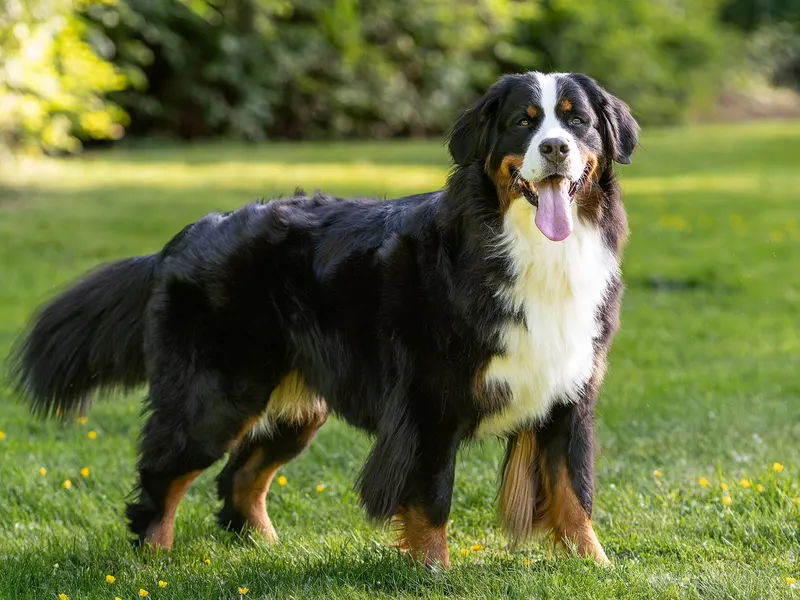
The Bernese Mountain Dog is a large, sturdy draft dog, slightly longer than tall, with a broad head, strong bone and a balanced, sure-footed gait. Adults stand about 23 to 28 inches at the shoulder and weigh roughly 71 to 115 lb. Males are clearly larger and more masculine in head and body; females are smaller and lighter boned.
The coat is thick, moderately long and slightly wavy or straight, with a bright natural sheen and a dense undercoat. There is only one recognized variety.
Every Bernese wears the same tricolor pattern:
- a jet-black base coat
- rich rust markings over each eye, on the cheeks, on all four legs and under the tail
- white on the chest, usually forming an inverted cross, plus a white blaze on the face and often white feet and tail tip
Any color other than tricolor is a serious fault. Puppies sometimes advertised as red, blue or merle Bernese are not purebred standard dogs, and they should be treated with caution.
Temperament and Personality
Bernese are calm, affectionate and devoted to their families. They are typically patient with children and friendly toward other dogs and pets. Many are watchful and will bark to alert, but they are rarely suspicious without reason.
They are sensitive and do not respond well to harsh training. Bernese strongly prefer to be with their people and are prone to separation anxiety if left alone for long periods. Puppies are clumsy and boisterous, and their size can overwhelm small children.
Are Bernese Mountain Dogs Good for First-Time Owners?
Yes, Bernese are often a good choice for first-time owners, provided they are ready for the size, shedding and health costs. The breed is soft, eager to please and rarely suspicious, which makes everyday training straightforward.
The challenges are practical rather than behavioral. A Bernese puppy grows into a dog that can pull an adult off balance, so leash manners and polite greetings must start early. You will brush often, vacuum often and need a plan for heat. Most important, a novice owner should research breeders carefully, ask about longevity and cancer in the pedigree and set aside money for veterinary care.
Can Bernese Mountain Dogs Be Left Alone?
Bernese do not cope well with long days alone. They are companion-oriented working dogs and are prone to separation anxiety when left for many hours.
Most adults can manage about four hours if they have been taught gradually from puppyhood. Build alone time in short steps, offer a long-lasting chew and make departures low-key. For longer workdays, a dog walker, doggy daycare or a family member at home makes a big difference. A lonely Bernese may bark, dig or chew. Because the dogs are so large, damage to doors and furniture can be considerable.
Are Bernese Mountain Dogs Good Apartment Dogs?
A Bernese is not an ideal apartment dog, though a calm adult can manage in a large, air-conditioned unit with an elevator and plenty of outdoor time.
The concerns are size, heat and stairs. Growing puppies should not climb many flights daily, and older dogs often develop joint problems that make stairs hard. A heavy, long coat combined with warm indoor air can be uncomfortable without good climate control. Bernese are generally quiet indoors, which helps, but they need room to stretch out and a shady place outside. A house with a fenced yard suits most dogs far better.
Exercise and Training
Adults need an hour or more of moderate activity daily: walks, hikes and pulling activities such as carting, which the breed enjoys. They are built for steady work rather than long-distance running. Avoid heavy exercise in hot weather, since the thick dark coat absorbs heat. Puppies should have limited exercise while their joints develop.
Training is usually easy with positive methods. Teach leash manners early, because an adult Bernese is very strong. Many enjoy tracking, obedience and drafting tests.
Bernese mature slowly, both physically and mentally, and many stay goofy adolescents until about two years of age. Short daily sessions of basic manners, such as waiting at doors and not jumping up, pay off once the dog weighs as much as an adult person.
Grooming and Shedding
The long, silky double coat sheds year-round and heavily during seasonal molts. Brush several times a week, and daily during heavy shedding, using a slicker brush and undercoat rake. Pay attention to the areas behind the ears and on the hind legs, where mats form. Expect hair on furniture and clothes. Some Bernese drool, especially after drinking.
Feeding and Nutrition
Bernese puppies grow quickly and keep filling out until about two to three years old. Feed a complete large-breed puppy diet with controlled calcium and energy, and aim for slow, steady growth. Rapid weight gain puts extra strain on joints already prone to hip and elbow dysplasia and cruciate tears.
Weight control: a lean Bernese has a visible waist and ribs you can feel under the coat. The thick coat hides fat well, so use your hands, not your eyes, and weigh your dog monthly. Extra pounds shorten active life in a breed that already has a short lifespan.
Bloat: the deep chest raises the risk of gastric dilatation-volvulus. Feed two or three smaller meals a day, avoid vigorous exercise around mealtimes and ask your vet about a preventive gastropexy.
Bernese are food-motivated and easy to train with treats, so subtract rewards from the daily ration. In older dogs, appetite changes or weight loss can be an early sign of illness, including cancer, and deserve a prompt vet visit.
| Adult weight | Less active | Typical adult | Very active |
|---|---|---|---|
| 71 lb | 1,320 kcal | 1,510 kcal | 1,890 kcal |
| 93 lb | 1,620 kcal | 1,850 kcal | 2,320 kcal |
| 115 lb | 1,900 kcal | 2,170 kcal | 2,720 kcal |
Estimates use the resting energy formula veterinarians work with (70 × body weight in kg0.75) and standard activity factors. Use the feeding guide on your food as a starting point and adjust to body condition. Puppies, seniors, pregnant animals and pets that need to lose weight have different needs, so ask your vet.
Health and Lifespan
The Bernese has one of the shortest average lifespans of any breed, usually 7 to 10 years, largely because of cancer. Histiocytic sarcoma, an aggressive cancer, is particularly common. Other conditions include hip and elbow dysplasia, bloat, degenerative myelopathy, progressive retinal atrophy and cruciate ligament damage.
Look for breeders who score hips and elbows, test for degenerative myelopathy and consider longevity in their breeding decisions. Keeping your dog lean and limiting high-impact exercise while young helps protect its joints.
Bernese Mountain Dog Price and Cost of Ownership
Typical breeder price in the US$1,500 to $4,000
A Bernese Mountain Dog puppy from a reputable US breeder typically costs around $1,500 to $4,000. Prices vary by breeder, region and lines, and long waiting lists are common for breeders who track longevity in their pedigrees. Ask for hip and elbow scores, degenerative myelopathy results and information on the ages and causes of death of relatives.
Adoption is possible through breed rescues, though Bernese appear in shelters less often than many large breeds.
Ongoing cost drivers include food for a dog that can weigh more than 100 lb, frequent grooming or deshedding appointments, preventive gastropexy and treatment for orthopedic disease or cancer. Insurance premiums for the breed are among the higher ones because of its health profile. Larger crates, beds, car ramps and air conditioning in summer also add to the budget.
Is the Bernese Mountain Dog Right for You?
The Bernese suits families who want a gentle, sociable companion and can offer space, a cool climate or air conditioning, and someone at home for much of the day. It thrives in homes with a yard and room to move.
It is less suited to small apartments, hot climates or people who want a home free of dog hair. Prospective owners should prepare, emotionally and financially, for a large breed with a short lifespan.
Bernese Mountain Dog Traits at a Glance
Bernese Mountain Dog FAQ
Are Bernese Mountain Dogs good family dogs?
Yes, they are gentle, patient and affectionate with children. Their size means supervision with small kids is still important.
How long do Bernese Mountain Dogs live?
Bernese typically live 7 to 10 years. Cancer is the most common cause of early death.
How big do Bernese Mountain Dogs get?
Adults stand about 23 to 28 inches and weigh roughly 71 to 115 lb, with males larger than females.
Do Bernese Mountain Dogs shed?
Yes, heavily. Their thick double coat sheds year-round and especially in spring and fall.
Can Bernese Mountain Dogs handle hot weather?
They cope poorly with heat because of their thick dark coat. Exercise them in cool hours and provide shade and water.
Do Bernese Mountain Dogs drool?
Some do, especially after drinking or in warm weather, but most drool less than giant mastiff breeds.