HimalayanA colorpoint Persian with sapphire eyes
<p>The Himalayan combines the long coat and cobby body of the Persian with the pointed pattern and blue eyes of the Siamese. It is quiet, gentle and happiest in a calm indoor home. It suits owners who are ready for daily grooming and who understand the health concerns linked to very flat faces.</p>
Why people love the Himalayan
- Calm, sweet and quiet companion
- Often chooses a favorite lap
- Low-energy, well suited to apartments
- Striking blue eyes and pointed coloring
- Usually fine with gentle children and calm dogs
Things to consider
- Daily combing is essential to prevent mats
- Flat faces can cause breathing, eye and dental problems
- PKD testing of parents is essential
- Heavy shedding and frequent hairballs
- Struggles with heat and busy, noisy homes
Health note: this breed is affected by health concerns linked to its body shape or coat. Read the health section and choose a breeder who screens their cats and breeds responsibly.
Some European countries (for example Germany under its torture-breeding provisions, and the Netherlands) restrict breeding animals with traits that cause suffering, which can apply to very flat-faced cats.
Is this breed right for you?
10 questions · live resultHistory and Origin
In the 1930s, researchers at Harvard University crossed Siamese and Persian cats to study how the colorpoint pattern is inherited, producing the first known pointed longhair. Breeders in Britain and the US then took up the idea. In the UK, work by Brian Stirling-Webb and others led the GCCF to recognize the cats as the Colourpoint Longhair in the 1950s, and in the US the name Himalayan was adopted, after the pointed pattern of Himalayan rabbits.
Breeders repeatedly bred back to Persians to keep Persian body and head type while preserving the point coloring. Since 1984, CFA has shown the Himalayan as a color division of the Persian rather than a separate breed. Other registries handle it differently, so you may see it called a Himalayan, a Colorpoint Persian or a Colourpoint.
Size, Face Types and Point Colors
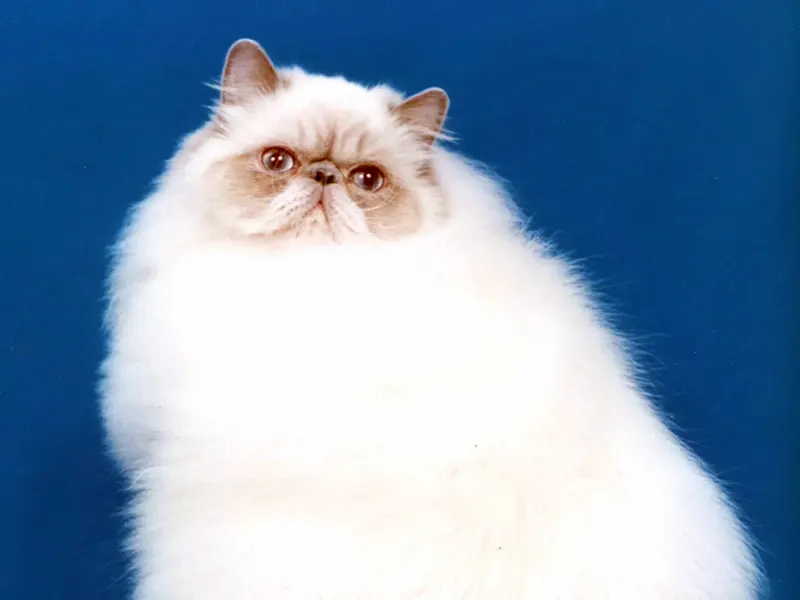
The Himalayan has the build of a Persian: a cobby, short body with a broad chest, short, thick legs and a short, full tail. The head is round and massive, with small, rounded ears, full cheeks and large, round eyes that are always blue. Adults weigh about 7 to 12 lb, though the dense coat makes them look larger. Males are typically heavier and have broader heads and more pronounced jowls than females.
Face type varies. Show-style cats have a very short nose with a pronounced break, while so-called doll-face Himalayans have a longer, more moderate muzzle. A more open face is linked to fewer breathing and eye problems.
The coat is long, thick and fine, with a dense undercoat, a large ruff and a full tail. The pattern is colorpoint, with a pale body and darker face, ears, legs and tail. Point colors include seal, blue, chocolate, lilac, flame (red) and cream, plus tortie and lynx (tabby) points. Kittens are born pale and darken over time.
Personality and Temperament
Himalayans are calm, sweet and quiet. They enjoy company, often choose a favorite lap and like a predictable routine. Some inherit a little more playfulness from their Siamese ancestry than a typical Persian, but they are rarely vocal or demanding.
They usually prefer a peaceful household. Loud, chaotic homes or rough handling can make them withdraw, and many are shy with strangers. Gentle older children and calm, cat-friendly dogs are usually fine.
Are Himalayan Cats Lap Cats?
Yes, many Himalayans are true lap cats. They are calm, affectionate and enjoy quiet time with their people, often choosing one favorite person whose lap they claim in the evening.
Himalayans are not usually clingy or demanding, though. Many are content to lie near you, on a soft chair or in a sunny spot, and come for cuddles on their own terms. Some inherit a little more playfulness from their Siamese ancestors. Warm laps can be uncomfortable for flat-faced cats in hot weather, so expect them to seek cool floors in summer. Gentle, consistent handling from kittenhood increases the chance of a cuddly adult.
Are Himalayans Good for First-Time Cat Owners?
Himalayans can suit first-time cat owners who want a calm, gentle companion and are truly ready for daily grooming. Their temperament is easy: they are quiet, undemanding and adapt well to indoor life.
The challenges are care and health. Without daily combing, mats form quickly and can become painful. Faces need daily cleaning, and the rear end may need a sanitary trim. Beginners also need to understand brachycephalic health issues and choose a breeder who selects for a more open face and tests parents for PKD. If you prefer a low-maintenance cat, a shorthaired breed may be a better first choice.
Can Himalayan Cats Live with Dogs?
Yes, Himalayans can live peacefully with dogs, as long as the dog is calm and respectful. Their gentle, laid-back temperament means they rarely start conflicts, but they also prefer peaceful homes and can become stressed by boisterous, chasing dogs.
Choose a cat-friendly dog, ideally one with a relaxed temperament, and introduce them slowly. Use baby gates and separate rooms at first, and reward the dog for calm behavior. Give the Himalayan safe retreats the dog cannot reach. Since Himalayans are not big jumpers, low but dog-free hiding places, such as a cat-only room with a gate, work better than tall cat trees.
Activity, Play and Enrichment
This is a low-energy breed. Short, gentle play sessions with feather wands or rolling toys are enough for most adults. They are not big jumpers, so low cat trees and wide, stable perches suit them.
Because they move less, they gain weight easily. Measure meals and use a slow feeder if needed. A flat-faced cat can struggle with heat and heavy exertion, so keep play sessions moderate and the home cool in summer.
Grooming and Shedding
The Himalayan's long, thick double coat is the biggest daily commitment. Plan on combing every day with a wide-toothed then fine-toothed metal comb, working down to the skin. Without this, mats form quickly, especially behind the ears, under the legs and on the belly, and severe mats may need shaving by a vet or groomer.
- Many owners bathe every four to six weeks to keep the coat from getting greasy.
- Wipe tear stains around the eyes daily with a damp cloth.
- Check the rear end for soiled fur; a sanitary trim helps.
Shedding is heavy, and grooming also limits hairballs.
Feeding and Nutrition
Himalayans are low-energy cats that gain weight easily, so measured meals are better than free feeding. Use a puzzle feeder or slow feeder to add activity, and check body condition by feel, since the long coat hides the outline. Extra weight also makes grooming the rear end harder.
The flat face affects how a Himalayan eats. Some cats struggle to pick up small, round kibble or push food out of deep bowls. A shallow, wide dish and a kibble shape designed for flat-faced cats can help. Dental crowding is common, so regular dental checks are important.
Polycystic kidney disease is a concern in Persian-type cats. Good hydration supports kidney health, so encourage drinking with a fountain and consider including wet food. Food does not prevent or cure PKD, but your vet may adjust the diet if kidney function changes.
Long-coated cats swallow a lot of hair. Daily combing reduces hairballs, and your vet can advise if they become frequent.
| Adult weight | Indoor, less active | Typical adult | Active or intact |
|---|---|---|---|
| 7 lb | 170 kcal | 200 kcal | 230 kcal |
| 10 lb | 220 kcal | 260 kcal | 300 kcal |
| 12 lb | 250 kcal | 300 kcal | 350 kcal |
Estimates use the resting energy formula veterinarians work with (70 × body weight in kg0.75) and standard activity factors. Use the feeding guide on your food as a starting point and adjust to body condition. Kittens, seniors, pregnant animals and pets that need to lose weight have different needs, so ask your vet.
Health and Lifespan
Himalayans typically live 9 to 15 years. Their main health concerns are shared with the Persian:
- Brachycephaly: very short faces can bring narrow nostrils, breathing difficulty, eye discharge, dental crowding and trouble picking up food. Cats with a more moderate, open face tend to have fewer problems.
- Polycystic kidney disease (PKD): inherited and common in Persian-type cats historically; a DNA test exists and both parents should be tested negative.
- Eye problems such as entropion and corneal ulcers, and skin fold infections.
Some European countries, such as Germany and the Netherlands, have animal welfare laws restricting breeding for traits that cause suffering, and very flat faces in cats have come under scrutiny. When choosing a kitten, favor breeders who select for open nostrils and a less extreme face.
Himalayan Price and Cost of Ownership
Typical breeder price in the US$800 to $2,500
A pet-quality Himalayan kitten from a reputable US breeder typically costs about $800 to $2,500. Prices vary by breeder, region, color and lines, and show-quality kittens cost more. Ask for PKD test results on both parents, and look at the parents' faces and breathing. Persian and Himalayan rescues regularly rehome adults, often already well socialized.
Grooming is a major ongoing cost. Many owners book professional grooming every four to eight weeks for baths, sanitary trims and dematting, and severe mats may require shaving at a vet or groomer.
Breed-specific cost drivers include treatment for eye conditions such as corneal ulcers, dental care for crowded teeth, monitoring of kidney function and possibly air conditioning to keep a flat-faced cat comfortable in summer. Pet insurance can help with these recurring issues.
Is the Himalayan Right for You?
A Himalayan suits a calm, mostly indoor household with someone who enjoys a daily grooming routine and can afford regular vet care. It is not ideal for busy families who cannot groom daily, for hot homes without air conditioning, or for anyone wanting an active, athletic cat.
Pet-quality kittens in the US usually cost about $800 to $2,500, varying by breeder and region. Ask for PKD test results on both parents, and look at the parents' faces and breathing. Persian and Himalayan rescues regularly rehome adults, often already well socialized.
Himalayan Traits at a Glance
Himalayan FAQ
Is a Himalayan a Persian?
In CFA, yes: the Himalayan is shown as a colorpoint division of the Persian. Other registries treat it separately or call it a Colorpoint Persian, but the cat's build and care needs are the same.
How much grooming does a Himalayan need?
Daily combing is needed to prevent mats, plus regular face cleaning. Many owners also bathe their cat every four to six weeks.
Are Himalayan cats hypoallergenic?
No. They produce the Fel d 1 allergen and shed heavily, so they are a poor choice for most allergy sufferers.
How big do Himalayan cats get?
Most weigh 7 to 12 lb (about 3 to 5.5 kg). They look larger because of their thick coat and cobby build.
How long do Himalayan cats live?
Typically 9 to 15 years. PKD-tested parents and a less extreme face improve the odds of a long, healthy life.
Are Himalayans good with kids?
They do best with calm, gentle older children. Loud, busy homes can stress them.