Small MunsterlanderGermany's versatile, friendly gundog
The Small Munsterlander is a medium-sized, long-coated German hunting dog that points, retrieves and tracks. Friendly and biddable at home, it is driven in the field and needs owners who can offer lots of exercise and real work for its nose.
Why people love the Small Munsterlander
- Friendly and gentle with children and visitors
- Versatile hunting dog: points, retrieves and tracks
- Eager to please and easy to train
- Medium size fits many homes and cars
- Usually tolerant of other dogs
Things to consider
- Needs one to two hours of daily exercise
- Strong hunting drive around birds and small animals
- Dislikes being left alone for long
- Feathered coat collects burrs and seeds
- Rare in the US with few breeders
Is this breed right for you?
10 questions · live resultHistory and Origin
The breed comes from the Münster region of northwestern Germany. Its ancestors were small, long-haired bird dogs, sometimes called Heidewachtel, used for centuries to find and flush game on heathland. In the early 1900s, hunters and breeders including Edmund Löns worked to collect and standardize the surviving dogs, and the breed club was founded in 1912.
Despite the name, it is not simply a smaller version of the Large Munsterlander, which has separate origins. It was bred as a versatile hunting dog: pointing, retrieving on land and water, and tracking wounded game. The AKC has placed it on its path to full recognition.
Size, Coat and Colors
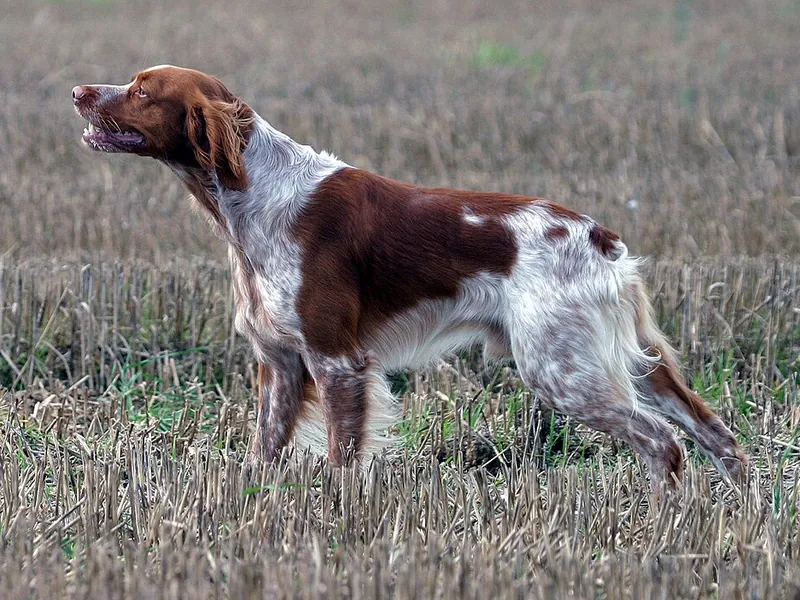
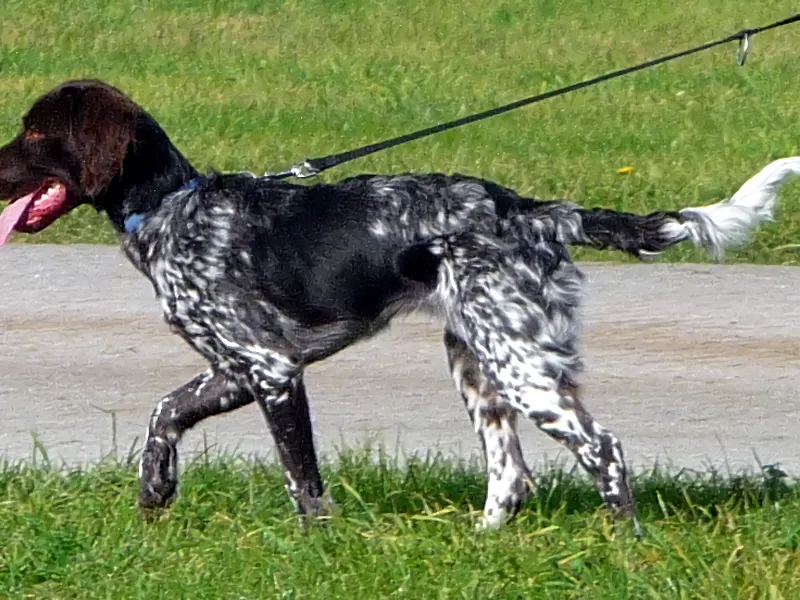
The Small Munsterlander is a medium-sized, elegant gundog standing about 20 to 22 inches at the shoulder and weighing roughly 40 to 60 lb. Males are generally larger and heavier, with a stronger head, while females are slightly finer.
The coat is medium-long, dense and lies close to the body, with a slight wave. Feathering appears on the ears, the back of the legs and the tail, giving a flag-like look when the dog moves. The coat protects against brush and water and needs no trimming beyond tidying the feet.
Accepted colors include:
- Brown and white, with patches
- Brown roan, with mixed brown and white hairs
- Either of these, with or without ticking or tan markings on the muzzle and above the eyes
The head is long with a slightly rounded skull and dark brown eyes. The tail is carried horizontally or slightly curved upward. Despite the name, it is not a miniature of the Large Munsterlander, which differs in color and origins.
Temperament and Personality
Small Munsterlanders are friendly, affectionate and gentle with their family, and usually very good with children. They are not suspicious of strangers and rarely bark without reason.
Their hunting drive is strong. They are keen to follow scent and chase birds or small animals, so cats and small pets require careful introduction. They are very people-oriented and do not cope well with being left alone for long hours.
Many are described as soft and cuddly indoors and focused and tireless outdoors. They often bond with every family member rather than just one person, and they are usually tolerant of other dogs.
Are Small Munsterlanders Easy to Train?
Yes, Small Munsterlanders are generally easy to train thanks to their eagerness to please and quick learning.
They respond best to consistent, gentle methods. Harsh corrections can make them shut down, as they are sensitive dogs. The main challenge is their hunting drive: recall around birds and wildlife needs dedicated work, often with a long line until it is reliable. Gundog training, retrieving games and scent work give them structure and purpose. Many excel in hunting tests, tracking and obedience.
Are Small Munsterlanders Good with Cats?
Small Munsterlanders can live with cats they are raised with, but their hunting drive means introductions must be careful.
As a pointing and retrieving breed, they are interested in birds and small animals. A puppy that grows up with a household cat often learns to respect it, while an adult with no cat experience may chase. Introduce them slowly, supervise early interactions and provide escape routes for the cat. Outdoor cats and small pets such as rabbits or birds remain at risk.
Can a Small Munsterlander Be a Pet for Non-Hunters?
Yes, but only if non-hunting owners can provide a real outlet for its nose and drive.
The Small Munsterlander is a versatile hunting dog by design. Without work, many become restless or start hunting on their own. Non-hunting families can meet those needs through scent work, tracking, retrieving games, dummy training and long off-leash runs in safe areas. Many breeders prefer to place puppies with hunters or active families who commit to these activities. Ask breeders about the drive levels of the parents before choosing.
Exercise and Training
This breed needs a lot of exercise: at least one to two hours of activity each day, ideally including off-leash running in safe areas and swimming. Most important is using its nose. Hunting, tracking, retrieving games, scent work and gundog training all suit it well. Retrieving dummies hidden in long grass combines exercise and nose work in little time. Without work, many become restless.
Small Munsterlanders are eager to please and train readily with consistent, gentle methods. They can be sensitive, so avoid harsh corrections. Start recall and impulse-control training early, using a long line until it is reliable around wildlife, especially in spring when wildlife is breeding.
Grooming and Shedding
The medium-long coat is dense and slightly wavy, with feathering on the ears, legs and tail. Typical colors are brown and white or brown roan. Brush once or twice a week and check for burrs, seeds and ticks after outings in fields or forests. Clean the ears regularly, particularly after swimming. Shedding is moderate, and most dogs need a bath only occasionally, as the coat sheds dirt well once dry.
Feeding and Nutrition
Small Munsterlanders burn a lot of energy, especially during hunting season or intensive training. Adjust portions to the dog's workload: a working dog in the fall may need noticeably more food than in summer. Check body condition regularly, feeling under the feathered coat for the ribs and waist.
Puppies grow steadily and benefit from a complete puppy food suited to medium to large breeds. Avoid rapid growth and extra calcium.
- Feed two meals a day for adults, three or four for young puppies.
- Avoid hard exercise right before and after meals.
- Carry water and small snacks on long hunting days or hikes.
- Use food rewards for training, especially for recall and retrieving, and count them in the daily ration.
When activity drops in the off-season or with age, reduce portions to prevent weight gain, which is common in retired working dogs.
| Adult weight | Less active | Typical adult | Very active |
|---|---|---|---|
| 40 lb | 860 kcal | 980 kcal | 1,230 kcal |
| 60 lb | 1,170 kcal | 1,330 kcal | 1,670 kcal |
Estimates use the resting energy formula veterinarians work with (70 × body weight in kg0.75) and standard activity factors. Use the feeding guide on your food as a starting point and adjust to body condition. Puppies, seniors, pregnant animals and pets that need to lose weight have different needs, so ask your vet.
Health and Lifespan
The Small Munsterlander is considered a healthy breed with no exaggerated features, typically living 12 to 14 years. Few breed-specific problems are documented. As with other active gundogs, hip dysplasia screening of breeding dogs is sensible, and ear infections can occur in dogs that swim often. Ask breeders about hip results and eye exams.
Small Munsterlander Price and Cost of Ownership
Small Munsterlanders are rare in the US, and breeders often prioritize hunting homes. Prices vary by breeder, region and lines, and many litters are planned through breed clubs with waiting lists. Look for breeders who screen for hip dysplasia and eye conditions and test working ability.
Rescue placements are uncommon, but breed clubs sometimes help rehome adults.
Breed-specific ongoing costs include:
- Training classes, hunting tests and field gear.
- Tick and flea prevention for dogs that spend time in fields and forests.
- Pet insurance for hip problems and injuries.
- Grooming supplies for the feathered coat.
Food costs depend largely on activity level.
Is the Small Munsterlander Right for You?
A Small Munsterlander suits hunters and very active families in rural or suburban areas who want a friendly, trainable dog and can give it daily outdoor work. It is less suited to apartments, owners with long working hours or homes with small pets. In Germany, many breeders prefer to place puppies with active hunters.
Expect to search for a breeder, since puppies are relatively uncommon outside Germany, and ask about the working background of the parents.
Small Munsterlander Traits at a Glance
Small Munsterlander FAQ
How big do Small Munsterlanders get?
They stand about 20 to 22 inches tall and weigh roughly 40 to 60 lb.
Are Small Munsterlanders good family dogs?
Yes. They are friendly and gentle with children, provided their high exercise needs are met.
Is the Small Munsterlander related to the Large Munsterlander?
They share a region and a name but have separate origins and are distinct breeds.
Do Small Munsterlanders shed?
Moderately. Weekly brushing keeps the coat in good condition.
How much exercise does a Small Munsterlander need?
At least one to two hours a day, ideally including scent work or hunting.
How long do Small Munsterlanders live?
Typically 12 to 14 years.