SalukiGraceful gazelle hound of the desert
The Saluki is one of the oldest sighthound types, bred in the Middle East to run down gazelles and hares by sight. Gentle and dignified at home but driven to chase outdoors, it suits patient owners who can offer safe off-leash running.
Why people love the Saluki
- Quiet indoors and rarely barks
- Light shedding and very little body odor
- Graceful, gentle and dignified companion
- Long-lived for its size
- Stunning athlete for lure coursing
Things to consider
- Very strong chase instinct, poor off-leash recall
- Needs regular sprints in a secure area
- Reserved and not very demonstrative
- Thin skin and low body fat injure easily
- Independent and slow to obey commands
Is this breed right for you?
10 questions · live resultHistory and Origin
Slender hounds resembling the Saluki appear in ancient art from the Middle East, and the breed type has been kept across a wide region from the Arabian Peninsula to Iran and Central Asia. Bedouin tribes prized Salukis as hunting partners, sometimes working them alongside falcons to course gazelles.
Salukis reached Britain in the late 1800s, and Florence Amherst played a key role in establishing the breed there. The Kennel Club recognized the breed in 1923, and the AKC in 1927. Both smooth and feathered varieties exist, with feathering on the ears, tail and legs in the latter.
Size, Smooth and Feathered Coats, Colors
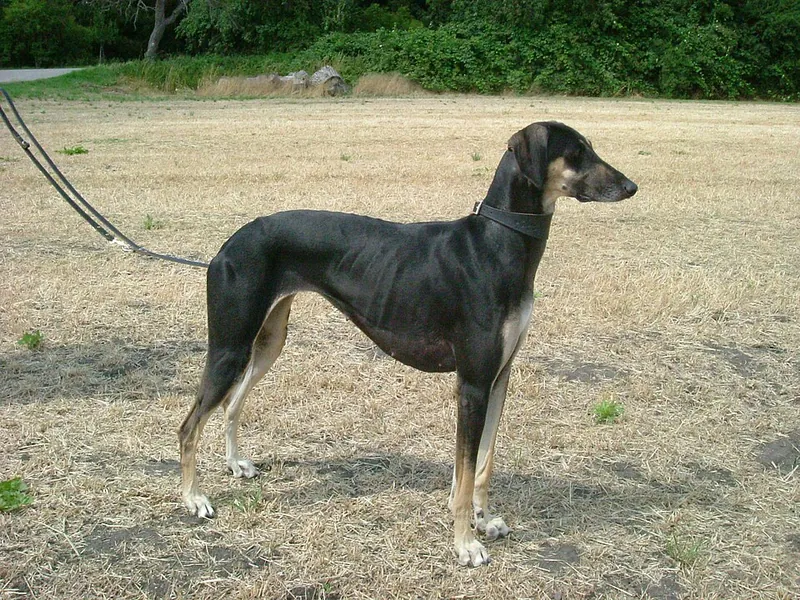
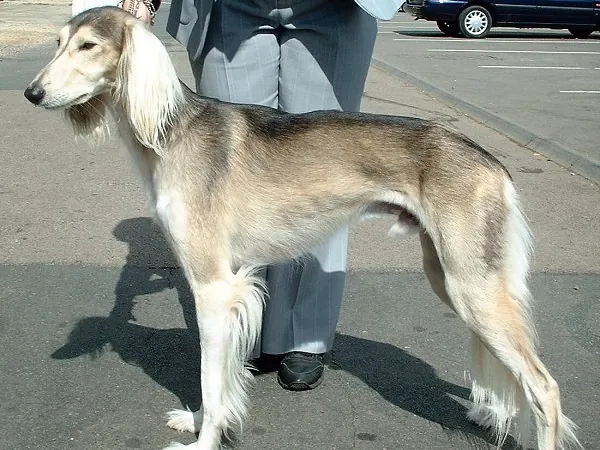
The Saluki is a tall, lean sighthound built for speed and endurance over long distances. It stands 23 to 28 inches at the shoulder and weighs about 40 to 65 lb. Males are at the upper end, while females can be considerably smaller and lighter. The long, narrow head, deep but narrow chest and well-arched loin give the breed its gazelle-like outline.
Two coat varieties exist. The feathered Saluki has smooth, silky body hair with long feathering on the ears, the back of the legs and the underside of the tail. The smooth Saluki has the same body but no feathering. Both can appear in the same litter.
Colors are varied. The AKC lists white, cream, fawn, golden, red, grizzle and tan, tricolor (white, black and tan), and black and tan, while The Kennel Club accepts any color except brindle. Particolors with white are common. The feet are well feathered between the toes in the feathered variety, an old adaptation to running on sand.
Temperament and Personality
Salukis are quiet, gentle and somewhat aloof. They are devoted to their family but often reserved with strangers and not especially demonstrative. Most are not watchdogs.
The chase instinct is very strong. A Saluki that spots a running animal may be gone in seconds and is unlikely to respond to recall. They can live with cats if raised with them indoors, but outdoor cats and small pets are often seen as prey. They are sensitive and dislike harsh handling and loud chaotic households.
Indoors, a well-exercised Saluki is often a quiet couch dog that enjoys soft furniture and warm spots. Many are cat-like in their independence, offering affection on their own terms.
Are Salukis Good With Cats?
Some Salukis live well with indoor cats they grew up with, but the breed's chase instinct makes this a careful decision. Salukis were bred to pursue fast-moving animals by sight, and a cat that bolts can trigger that response.
Indoor harmony with a family cat does not usually carry over to cats outside. Many Salukis that ignore the household cat will still chase neighborhood cats, squirrels and rabbits. If you have cats, look for a puppy raised with them, supervise closely, use baby gates and give the cat high escape routes. Ask the breeder or rescue about each dog's history with cats.
Are Salukis Easy to Train?
Salukis are not easy to train in the obedience sense. They are intelligent and learn quickly, but they are independent and sensitive, and they see little point in repeating an exercise.
Short sessions, high-value food rewards and a calm tone work best. Harsh corrections or long drills tend to make a Saluki shut down. Focus on practical skills: house manners, loose-leash walking, waiting at doors and coming back inside a fenced area. Even a well-trained Saluki should not be trusted off leash in open spaces, because the chase drive can override any recall.
Can a Saluki Live in an Apartment?
A Saluki can live in an apartment if it gets enough running elsewhere. Indoors, a well-exercised Saluki is quiet and spends much of the day resting on soft furniture.
The challenge is the exercise. Leash walks alone rarely satisfy the breed. Apartment owners need regular access to a large, securely fenced area where the dog can sprint, such as a rented dog field, a fenced park or lure coursing practice. Stairs are usually fine, but provide thick bedding, since lean sighthounds get pressure sores on hard floors. A ground-floor apartment with easy outdoor access makes daily life simpler.
Exercise and Training
Salukis need more exercise than many sighthounds: the PDSA suggests more than two hours a day. Daily walks plus regular sprints in a large, securely fenced area are ideal. Lure coursing is an excellent outlet.
- Keep them on leash in unfenced areas; they can reach high speeds and ignore traffic in pursuit.
- Train with patience, short sessions and food rewards. Salukis are intelligent but independent.
- Provide soft bedding; their lean frames need padding.
Grooming and Shedding
The coat is smooth and silky. Smooth Salukis need only a weekly wipe or brush; feathered Salukis need their ear and tail feathering combed to prevent tangles. Shedding is light.
The breed has little body odor. Use a coat or sweater in cold weather, since Salukis have little body fat. Check nails and teeth regularly.
Feathered Salukis can pick up burrs and seeds on country walks, so a quick comb-through afterwards keeps the ears and tail tidy.
Feeding and Nutrition
Salukis are naturally lean, and healthy weight looks thinner than owners of other breeds expect. You should see the outline of the last two or three ribs and the hip bones. Owners and even some vets may push for more weight than the breed needs, so learn sighthound body condition.
- Many Salukis are picky eaters, especially males and adolescents. Offer measured meals at set times and remove uneaten food rather than adding toppings every time.
- Feed two meals a day, and avoid hard running right after eating, as with other deep-chested dogs.
- Puppies grow tall quickly. Feed a balanced puppy diet and keep them lean to support joints.
- Adults that run hard or course regularly may need more food than less active dogs.
Sighthounds have low body fat and can show different normal values on thyroid and other blood tests, so discuss weight and lab results with a vet familiar with the group. Use small, tasty treats for training, since motivation can be low.
| Adult weight | Less active | Typical adult | Very active |
|---|---|---|---|
| 40 lb | 860 kcal | 980 kcal | 1,230 kcal |
| 52 lb | 1,050 kcal | 1,200 kcal | 1,500 kcal |
| 65 lb | 1,240 kcal | 1,420 kcal | 1,770 kcal |
Estimates use the resting energy formula veterinarians work with (70 × body weight in kg0.75) and standard activity factors. Use the feeding guide on your food as a starting point and adjust to body condition. Puppies, seniors, pregnant animals and pets that need to lose weight have different needs, so ask your vet.
Health and Lifespan
Salukis typically live 10 to 17 years, with many reaching their early to mid teens. Heart disease, including cardiomyopathy, and hemangiosarcoma (a cancer of blood vessels) are among the main concerns. Hypothyroidism and hip dysplasia are also reported.
Like other sighthounds, Salukis have low body fat and may react differently to some anesthetic drugs, so tell your vet the breed before procedures. Normal thyroid values in sighthounds can differ from other breeds too. Breeders should screen hearts by echocardiogram.
Saluki Price and Cost of Ownership
Typical breeder price in the US$2,000 to $3,500
A Saluki puppy from a reputable US breeder typically costs about $2,000 to $3,500. Prices vary by breeder, region and lines, and litters are relatively rare, so a waiting list is common. Ask about cardiac screening by echocardiogram and longevity in the pedigree. Imported or coursing-proven lines can cost more.
Breed rescues and sighthound rescue groups place Salukis occasionally, including former coursing dogs.
Breed-specific cost drivers include:
- Secure, tall fencing or regular access to fenced running areas.
- Lure coursing club fees if you want a structured outlet.
- Insurance or savings for heart disease, cancer and injuries from running.
- Coats for cold weather and thick, padded bedding.
Is the Saluki Right for You?
A Saluki suits calm households that also offer serious daily exercise, a securely fenced yard and patience with an independent mind. It can be a graceful, low-shedding, quiet companion.
It is less suitable for homes with small pets, for owners who want off-leash walks in open country, or for people seeking an obedient or protective dog. Long hours alone also suit this sensitive breed poorly.
Saluki Traits at a Glance
Saluki FAQ
Are Salukis good family dogs?
They are gentle and affectionate but reserved. They suit calm families with older children who respect their space.
How big do Salukis get?
They stand 23 to 28 inches tall and weigh about 40 to 65 lb.
Can Salukis be off leash?
Only in securely fenced areas. Their chase instinct is strong and recall is unreliable.
Do Salukis shed?
Lightly. Smooth Salukis need minimal grooming; feathered dogs need combing of the feathering.
How long do Salukis live?
Typically 10 to 17 years.
Are Salukis hypoallergenic?
No dog is fully hypoallergenic, but Salukis shed little and have little odor, which some allergy sufferers tolerate better.