Basset Fauve de BretagneA lively, wire-coated hound from Brittany
The Basset Fauve de Bretagne is a compact, rough-coated scenthound from Brittany with a cheerful, sociable nature and seemingly endless energy. It suits active families who enjoy the outdoors and can cope with a dog that follows its nose first.
Why people love the Basset Fauve de Bretagne
- Cheerful, outgoing and great with children
- Sociable with other dogs
- Compact size fits smaller homes
- Rough coat needs only weekly brushing
- Generally robust and long-lived
Things to consider
- Follows its nose; recall is unreliable
- Needs at least an hour of exercise daily
- May bark, howl or dig when bored
- Training takes patience and food rewards
- Rare in the US; long waits likely
Is this breed right for you?
10 questions · live resultHistory and Origin
The breed comes from Brittany in northwestern France. It descends from the larger Grand Fauve de Bretagne, a now-extinct hound once used in packs. Hunters developed the shorter-legged basset version to work rabbits and hares on foot through dense, rocky cover.
Numbers fell sharply in the 20th century, and French enthusiasts revived the breed after World War II. It has a following in Britain and has grown in the United States, where the AKC granted full recognition in 2026, placing it in the Hound Group. Fauve means fawn, referring to its color.
Size, Color and Coat
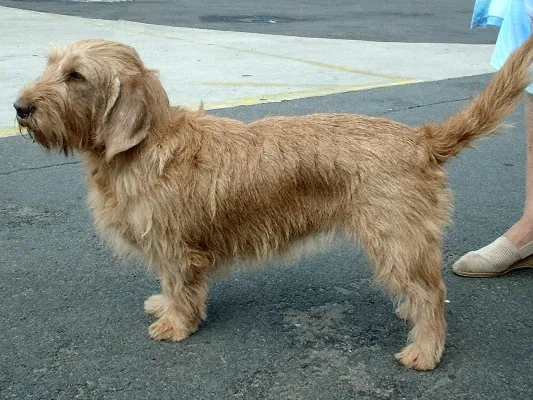
The Basset Fauve de Bretagne is a compact, short-legged scenthound standing 13 to 15 inches at the shoulder and weighing 22 to 40 lb. It is longer than tall, but less elongated and more agile than the Basset Hound. Males are usually larger and heavier, with broader heads.
The coat is harsh, dense and fairly short, never woolly or silky. It is shorter on the head and ears, with slight eyebrows and a bit of beard.
The breed's name refers to its color: fauve means fawn. Shades include:
- Golden wheaten
- Red wheaten
- Red brick
A few black hairs on the back and ears are acceptable, and a small white star on the chest is tolerated. The ears are thin, folded inward and reach to the end of the nose. The legs may be straight or slightly crooked. The eyes are dark, giving a lively, friendly expression.
Temperament and Personality
Fauves are friendly, outgoing and affectionate, and they are known for being great with children. Most are sociable with other dogs, a legacy of pack hunting. They are poor guard dogs: they are more likely to greet a stranger than warn you.
They are also busy, curious and determined. Once a scent catches their attention, everything else fades. They dislike being alone for long and may bark, howl or dig when bored.
Fauves tend to be adaptable and robust. They enjoy family activities, cope well with travel and usually do best with company, whether human or canine. Many owners find a second dog helps meet their social needs.
Is the Basset Fauve de Bretagne Good for First-Time Owners?
A Basset Fauve de Bretagne can suit a first-time owner who is active and patient, though its independence surprises some beginners.
Its friendly, adaptable nature and easy coat are big advantages. The challenge is the nose: once a scent takes over, the Fauve may ignore cues it knows well. First-time owners should plan to keep it on a leash or long line in open areas, fence the yard securely and use plenty of food rewards. A puppy class and regular scent games help channel its energy. Owners who accept some stubbornness usually find the breed delightful.
Do Basset Fauves Bark a Lot?
Basset Fauves are moderately vocal: most bark at visitors and use their hound voice when excited or bored.
They are not usually constant barkers when they get enough exercise and company. A Fauve left alone for long periods may bark or howl, which can be an issue in shared housing. On walks, an exciting scent can bring out bays. Daily sniffing walks, scent work and food puzzles reduce restlessness. Teach a quiet cue early, and reward calm behavior at windows and doors. Many owners find that a second dog helps ease loneliness and related noise.
Are Basset Fauves Good with Cats?
Many Basset Fauves get along well with cats they grow up with, but they may chase unfamiliar cats outdoors.
As pack hounds bred to hunt rabbits and hares, Fauves have a real chase instinct. A puppy raised alongside a confident resident cat usually learns to accept it. An adult Fauve without cat experience is less predictable. Introduce them gradually, keep the dog on a leash for early meetings and give the cat high places and a dog-free room. Pet rabbits and rodents are a much higher risk and should not share space with this breed.
Exercise and Training
Do not let the short legs fool you. This is one of the more active basset breeds and needs at least an hour of exercise daily, ideally with time to sniff and explore. Scent work, tracking and long country walks suit it well.
Training is a real challenge. The Fauve is intelligent but independent, and food rewards plus patience work best. Off-leash freedom is only realistic in fenced areas, because recall usually loses to a fresh trail. Secure fencing is essential; many dig.
A long line lets a Fauve sniff and explore safely in open countryside.
Grooming and Shedding
The coat is harsh, dense and fairly short, never woolly, in shades of fawn from golden wheaten to red brick. Brush weekly and hand strip loose hair a couple of times a year. Shedding is moderate.
Check the ears and paws after field walks for burrs and debris.
Trim nails regularly and brush teeth a few times a week. Avoid clipping the coat, which softens its weatherproof texture.
Feeding and Nutrition
Basset Fauves are enthusiastic eaters, and their compact, short-legged build makes weight control important. Extra pounds strain the back and joints. Aim for a defined waist and ribs that are easy to feel through the harsh coat, and measure meals rather than free feeding.
Hyperuricosuria, an inherited condition that can cause urate bladder stones, occurs in the breed. A DNA test identifies affected dogs. Make sure your dog drinks well, and offer fresh water at all times. For affected dogs, your vet may advise a specific diet to reduce the risk of stones; this should be guided by the vet, not by guesswork.
- Feed puppies three or four meals a day and adults two.
- Use small, tasty treats for recall and scent work, deducted from daily meals.
- Secure trash and counters; Fauves will scavenge.
Working or very active Fauves need more food than family pets, so adjust portions to activity and check body condition regularly.
| Adult weight | Less active | Typical adult | Very active |
|---|---|---|---|
| 22 lb | 550 kcal | 630 kcal | 790 kcal |
| 31 lb | 710 kcal | 810 kcal | 1,020 kcal |
| 40 lb | 860 kcal | 980 kcal | 1,230 kcal |
Estimates use the resting energy formula veterinarians work with (70 × body weight in kg0.75) and standard activity factors. Use the feeding guide on your food as a starting point and adjust to body condition. Puppies, seniors, pregnant animals and pets that need to lose weight have different needs, so ask your vet.
Health and Lifespan
Fauves are generally robust and often live 13 to 16 years. Two inherited conditions are known in the breed: primary open-angle glaucoma, which raises pressure in the eye and can cause blindness, and hyperuricosuria, which can lead to bladder stones. DNA tests are available for both.
Its short-legged build means you should keep your dog lean and limit excessive jumping. Choose breeders who DNA test and examine eyes.
Basset Fauve de Bretagne Price and Cost of Ownership
The Basset Fauve de Bretagne is rare in the US, with few breeders and limited litters. Puppies are often imported from the UK or France, which adds transport costs. Prices vary by breeder, region and lines, and waiting lists are common. Rescue Fauves are uncommon, but breed clubs may help rehome adults.
Breed-specific cost drivers include:
- DNA testing for glaucoma and hyperuricosuria, plus eye exams
- Regular eye pressure checks in dogs at risk of glaucoma
- Secure fencing that stops digging and escape
- Training classes and scent work activities
- Pet insurance that covers eye conditions and bladder stones
Grooming costs are low; occasional hand-stripping can be learned at home.
Is the Basset Fauve de Bretagne Right for You?
A Fauve is a fun, affectionate family dog for people who love being outside and accept a strong-minded hound. It can live in a smaller home if exercised well, but its voice and energy need consideration.
- Good match: active families with children, multi-dog homes, rural or suburban settings.
- Think twice: owners who want off-leash obedience, homes where the dog would be alone all day, households with pet rabbits or rodents.
Basset Fauve de Bretagne Traits at a Glance
Basset Fauve de Bretagne FAQ
Are Basset Fauves good with children?
Yes. They are known for being friendly, playful and very good with children.
How big do Basset Fauves get?
They stand about 13 to 15 inches tall and weigh roughly 22 to 40 lb.
Are Basset Fauves easy to train?
No. They are smart but independent hounds driven by scent, so training takes patience and food rewards.
How much exercise does a Basset Fauve need?
At least an hour a day, ideally with plenty of sniffing and exploring.
Is the Basset Fauve de Bretagne AKC recognized?
Yes. It gained full AKC recognition in the Hound Group in 2026.
How long do Basset Fauves live?
Often 13 to 16 years.