Grand Basset Griffon VendéenThe cheerful, tousled French rabbit hound
The Grand Basset Griffon Vendéen is a cheerful, rough-coated French hound bred to hunt rabbit and hare through thick brush. It is friendly, energetic and vocal, and it needs plenty of exercise and an owner who appreciates a hound's independent streak.
Why people love the Grand Basset Griffon Vendéen
- Friendly, outgoing and good with children
- Enjoys other dogs as a pack hound
- Rugged rough coat needs no clipping
- Long-lived and generally healthy
- Sense of humor and zest for activity
Things to consider
- Vocal and prone to baying
- Independent and easily distracted by scent
- Needs a lot of exercise for its size
- Not reliable off leash outside fenced areas
- Very few breeders in North America
Is this breed right for you?
10 questions · live resultHistory and Origin
The Grand Basset Griffon Vendéen comes from the Vendée region of western France, home to a family of rough-coated hounds. It was developed as a longer-legged, faster basset type that could keep up with hare in rough, rocky and overgrown country, where a harsh coat protected it from thorns.
The breed was refined in the early 20th century, with the Dezamy family playing a major role in fixing the type. For many years the Grand and Petit Basset Griffon Vendéen were interbred and separated only by size; they became fully separate breeds later. The GBGV is recognized by the FCI in Group 6, by The Kennel Club in the Hound group, and by the AKC, which admitted it to the Hound Group in 2018.
Size, Coat and Colors
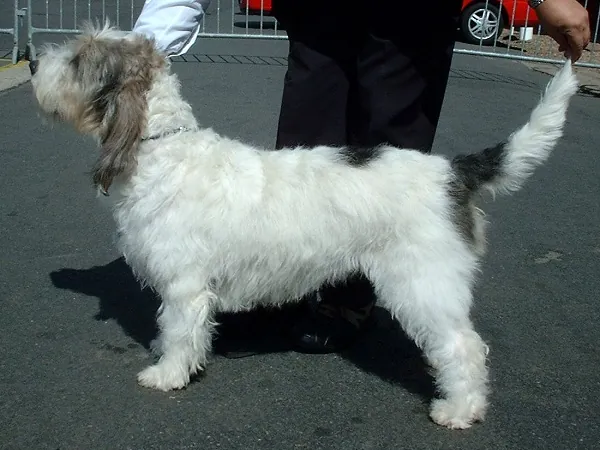
The Grand Basset Griffon Vendéen is a sturdy, rough-coated hound that stands about 15 to 17 inches at the shoulder and weighs roughly 40 to 44 lb. It is longer than tall but less extreme than a Basset Hound, with straight legs and a level back that give it real speed over rough ground. Males usually stand a little taller and look more substantial than females.
Compared with the Petit Basset Griffon Vendéen, the GBGV is taller, longer in leg and muzzle, and has longer, lower-set ears that reach at least to the tip of the nose.
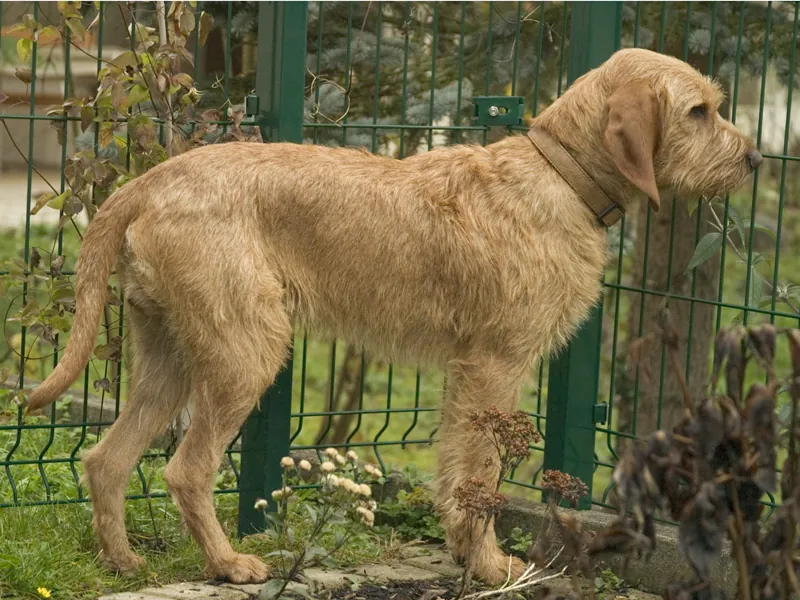
The coat is rough, harsh and not too long, lying fairly flat, with a dense undercoat. Facial furnishings form a beard, mustache and eyebrows. The coat should look natural rather than trimmed. The base color is white, with markings in any combination of lemon, orange, black, sable, tricolor or grizzle. Tricolors and white with orange are among the most common. The tail is long, carried like a saber and often tipped with white.
Temperament and Personality
GBGVs are friendly, outgoing and affectionate. They are usually good with children and enjoy the company of other dogs, since they were bred to hunt in packs. Most greet visitors happily rather than guarding.
They are vocal and will bark or bay when excited, bored or following a scent. They are also independent thinkers that can seem stubborn, especially when a scent catches their attention. Small pets may trigger the hunting instinct.
Owners often describe GBGVs as happy, busy dogs with a sense of humor. They enjoy being part of family activities and tend to be sociable at dog parks, provided the area is securely fenced.
Are GBGVs Good for First-Time Owners?
They can be, if the owner is patient and active. GBGVs are friendly and easy to live with in many ways, but they are scenthounds with strong independent streaks.
First-time owners should prepare for baying, unreliable recall and the need for long daily walks and nose work. Training takes creativity and food rewards rather than repetition. A securely fenced yard and leash habits are essential. Owners who enjoy a happy, sociable dog and can live with some noise and stubbornness often find the breed a good first hound, but those wanting an obedient, quiet dog should look elsewhere.
Are GBGVs Easy to Train?
They are smart but not easy. GBGVs learn quickly when motivated, yet they were bred to make their own decisions while following a scent, so they may ignore cues when something more interesting is on the ground.
Training works best with:
- High-value food rewards and short, varied sessions.
- Early recall training on a long line.
- Games and scent work instead of repetitive drills.
Housetraining is usually manageable with routine. Many GBGVs do well in scent work and tracking, where their independence becomes an asset rather than a problem.
Can a GBGV Live in an Apartment?
It is possible, but not ideal. Their size fits an apartment, but their exercise needs and voice make it challenging.
A GBGV needs long daily walks, chances to run in fenced areas and regular scent games. Without these, it may bay, howl or become restless, which neighbors notice. The breed also dislikes being left alone, often the bigger problem in apartment life. Owners with flexible schedules, access to parks and a commitment to training can make it work, but a house with a fenced yard suits most GBGVs better.
Exercise and Training
This hound needs a lot of exercise for its size: long daily walks, running in secure areas and regular scent games. Many enjoy tracking, scent work and hiking. A GBGV is only reliably safe off-lead in fenced areas, as it will follow a trail without looking back.
Training requires patience and creativity. Use food rewards, keep sessions short and fun, and work on recall from puppyhood. Avoid repetitive drills, which bore this breed. GBGVs do not like being alone for long and can become noisy when under-stimulated.
Grooming and Shedding
The rough, harsh coat is not overly long and should look natural rather than sculpted. Colors include white with orange, black, tricolor or grizzle markings.
- Brush weekly to remove loose hair and debris.
- Hand-strip occasionally to keep the coat harsh.
- Check ears weekly, trim the hair around the feet and keep nails short.
The beard and mustache benefit from a quick wipe after meals.
Feeding and Nutrition
GBGVs have a hearty hound appetite, and weight can creep up quickly, especially in less active homes. Keep the dog lean, with ribs easy to feel under the rough coat, which can disguise extra weight.
- Feed adults two measured meals a day; puppies three or four.
- Count training treats as part of the daily food.
- Use slow-feeder bowls or puzzle toys to slow eating and engage the nose.
Puppies should grow steadily on a balanced diet suited to medium breeds, without being pushed to grow quickly.
Scenthounds are skilled at finding food, so secure garbage cans and counters. Teach a solid leave-it, since GBGVs may eat items found on walks. The beard collects food and water, so wipe it after meals to prevent odor and skin irritation. Long ears can dip into bowls, and narrow, deep bowls help keep them clean.
If your GBGV seems hungry all the time, use snuffle mats and scent games with part of its daily ration. These satisfy the drive to search without adding extra food.
| Adult weight | Less active | Typical adult | Very active |
|---|---|---|---|
| 40 lb | 860 kcal | 980 kcal | 1,230 kcal |
| 44 lb | 930 kcal | 1,060 kcal | 1,320 kcal |
Estimates use the resting energy formula veterinarians work with (70 × body weight in kg0.75) and standard activity factors. Use the feeding guide on your food as a starting point and adjust to body condition. Puppies, seniors, pregnant animals and pets that need to lose weight have different needs, so ask your vet.
Health and Lifespan
GBGVs are generally healthy, with a lifespan of about 13 to 15 years. The parent club recommends hip and eye examinations for breeding dogs, so ask breeders for these results.
Keep the dog lean, since a hound's appetite can lead to weight gain, and check the long, hanging ears regularly for signs of infection.
Grand Basset Griffon Vendéen Price and Cost of Ownership
GBGVs are rare in North America, with only a small number of breeders, so prices vary widely by breeder, region and lines. Many owners join waiting lists or import from Europe, which adds travel and paperwork costs. The parent club can provide breeder referrals. Ask for hip and eye examination results on both parents.
Adult GBGVs occasionally need rehoming through breed club networks, but rescue availability is very limited.
Breed-specific ongoing costs include:
- Occasional hand-stripping by a groomer familiar with rough-coated hounds.
- Ear cleaning supplies and vet visits for ear infections.
- Secure fencing and possibly a GPS collar.
- Training classes focused on recall.
Is the Grand Basset Griffon Vendéen Right for You?
This breed suits active families and hound lovers with a fenced yard and a tolerance for barking. It is a happy, sociable companion when given enough exercise and nose work.
- Good match: active families, multi-dog homes, hikers, scent sport fans.
- Less ideal: noise-sensitive neighbors, owners wanting off-lead obedience, homes where the dog is often alone.
Breeders are few in North America, so plan ahead and ask the parent club for referrals. Expect a puppy to be lively, nosy and determined, and puppy-proof the house accordingly.
Grand Basset Griffon Vendéen Traits at a Glance
Grand Basset Griffon Vendéen FAQ
How big do Grand Basset Griffon Vendéens get?
They stand about 15 to 17 inches at the shoulder and weigh roughly 40 to 44 lb.
How is a GBGV different from a PBGV?
The GBGV is larger and longer-legged than the Petit Basset Griffon Vendéen, and was bred mainly for hare.
Are GBGVs good family dogs?
Yes, they are friendly, playful and usually good with children.
Do GBGVs bark a lot?
Yes, they are vocal, especially when excited or on a scent.
Do GBGVs shed?
They shed moderately. Weekly brushing and occasional stripping keep the coat in good condition.
How long do GBGVs live?
Typically 13 to 15 years.