Pharaoh HoundMalta's elegant, blushing rabbit hound
The Pharaoh Hound is a sleek, red, amber-eyed hound from Malta, famous for blushing when excited. Friendly, playful and athletic, it suits active owners who can manage a very strong chase instinct.
Why people love the Pharaoh Hound
- Affectionate, playful and often clownish at home
- Short coat with little odor and easy care
- Usually polite with visitors and considerate children
- Gets along well with other dogs, especially hounds
- Generally hardy, often living 12 to 14 years
Things to consider
- Extremely high prey drive; recall rarely stops a chase
- Needs tall, secure fencing; can jump well
- Can be vocal, especially when bored
- Feels the cold; needs a coat in winter
- Sensitive to some anesthetics and chemicals
Is this breed right for you?
10 questions · live resultHistory and Origin
In Malta the breed is called Kelb tal-Fenek, the rabbit dog, and it is the national dog of the island. Maltese hunters traditionally worked it at night, using sight, scent and hearing to find rabbits among stone walls, sometimes with a bell on its collar so the hunter could follow.
The English name comes from its resemblance to dogs shown in ancient Egyptian art, but modern genetic studies do not support a direct ancient Egyptian descent. The breed was imported to Britain in the 1960s and recognized by the AKC in 1983.
Size, Coat and Tan Coloring
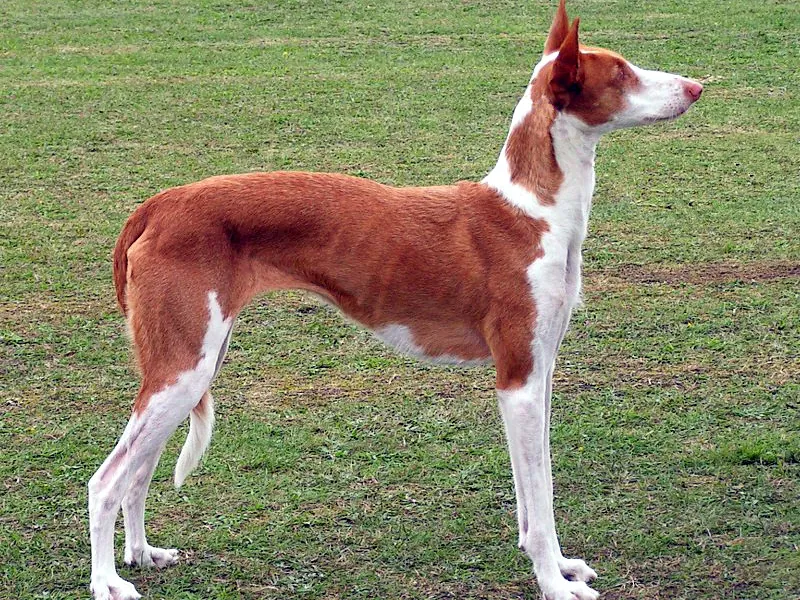
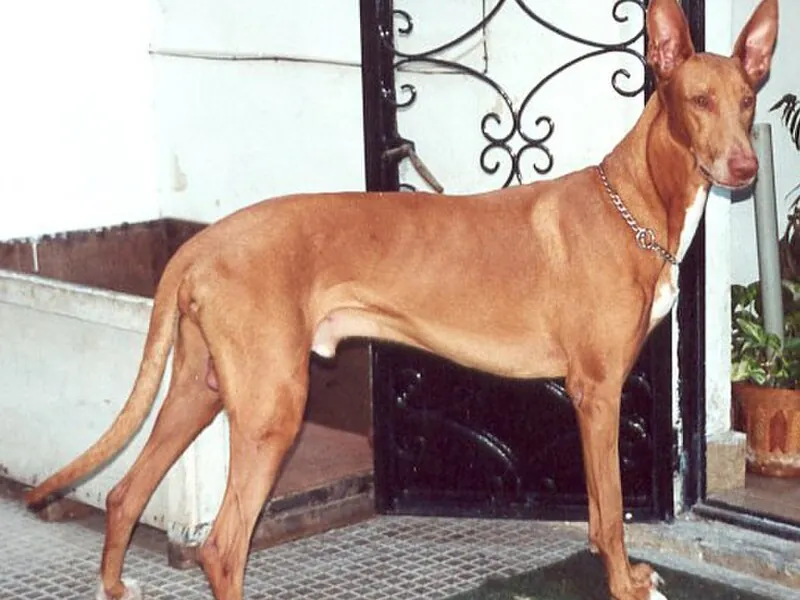
The Pharaoh Hound is a medium-sized, graceful hound standing about 21 to 25 inches and weighing roughly 44 to 55 lb. Males are taller and somewhat heavier than females, but both sexes are lean, with a deep chest, long legs and a slightly longer-than-tall outline built for speed and agility.
The head is long and chiseled, with large, mobile ears carried erect when alert and amber eyes that blend with the coat. The nose is flesh-colored, never black. The famous blush, when the nose and ears turn deeper pink, shows clearly against this light pigment.
The coat is short, glossy and fine to slightly harsh, with no feathering. The standard allows tan or chestnut in various shades. A white tail tip is strongly desired, and white is allowed on the chest (often called a star), on the toes and as a slim blaze on the center of the face. White elsewhere is a fault. The whip-like tail is carried low at rest and raised in a curve when the dog is excited.
Temperament and Personality
Pharaohs are friendly, affectionate and often playful clowns with their families. They are usually polite with visitors and good with considerate children. One quirk delights owners: when happy or excited, the nose and ears flush a deeper rose color.
They are sensitive dogs that react poorly to harsh handling. Many are vocal and some bark a lot, especially when bored.
Pharaohs often get along well with other dogs, especially other hounds, and enjoy having a canine playmate. Indoors they are usually calm once exercised and like comfortable spots on the sofa. They are clever and can be mischievous, so food left on counters is not safe.
Do Pharaoh Hounds Bark a Lot?
Many Pharaoh Hounds are vocal, and some bark a lot, though it varies by individual. They bark to alert, to play and to express frustration, and bored Pharaohs left alone may bark or yodel persistently.
Exercise is the best prevention. A Pharaoh that gets daily chances to sprint in a secure area and some mental work is far quieter at home. Teach a quiet cue with rewards early, avoid leaving the dog alone in a yard where it can bark at passersby and give it chew toys and puzzle feeders. Neighbors in close housing may notice the breed's voice.
Are Pharaoh Hounds Good for First-Time Owners?
A Pharaoh Hound can suit a well-prepared first-time owner, but it is not the easiest choice. Its temperament is friendly and affectionate, and the coat is very simple to maintain. The difficulty lies in the hound traits.
Prey drive is extremely high, recall is unreliable when something runs, and the breed needs tall fencing and regular sprinting. Training must be upbeat and varied, since repetitive drills bore it. First-time owners who understand that the dog will likely spend most of its life on leash or behind fences, and who enjoy activities like lure coursing, often do well with the breed.
Can Pharaoh Hounds Be Left Alone?
Adult Pharaoh Hounds can usually handle a few hours alone, but they are social dogs that do best with company. Many cope better with another dog in the home than alone.
Before leaving, give a good run or play session. Crate training in puppyhood helps keep the dog safe, since bored Pharaohs can raid counters or chew. Leave food puzzles and a comfortable, warm bed, as the breed dislikes cold. Avoid leaving a Pharaoh alone in a yard: it may bark, dig or jump fences if something interesting goes by. For long workdays, a dog walker is a good investment.
Exercise and Training
Pharaoh Hounds need daily exercise, including chances to sprint at full speed in a securely fenced area. Lure coursing is an excellent outlet. Long walks alone are not enough for a young dog.
Prey drive is extremely high. Off-leash walks in open areas are risky, and a recall will rarely stop a chase. Fences should be tall, as these dogs can jump. Training works best with short, upbeat sessions and rewards; repetitive drills bore them.
Grooming and Shedding
The short, glossy coat is very easy to keep: a weekly wipe with a soft mitt and an occasional bath. Shedding is moderate and has little odor. With thin skin and little body fat, Pharaohs feel the cold and benefit from a coat in winter.
Trim nails regularly, since many Pharaohs dislike nail care; start handling paws in puppyhood.
Feeding and Nutrition
Pharaoh Hounds are naturally lean, and a healthy adult should look slim, with the last couple of ribs and hip bones faintly visible. Owners used to heavier breeds sometimes overfeed them, but extra weight slows a sprinting hound and stresses joints. Feed a complete diet in two meals and adjust portions to body condition and activity.
Some Pharaohs are picky eaters, while others are notorious counter-surfers. Keep food out of reach and feed at set times rather than leaving food out.
The breed is fairly deep-chested, so take sensible bloat precautions: two meals a day and no hard running shortly before or after eating. With thin skin and little body fat, Pharaohs burn more energy keeping warm in cold weather, so watch body condition through the winter.
Because they are sensitive to some drugs and chemicals, tell your vet about the breed before changes involving medication, and avoid unapproved supplements. Use small treats in training, since short, upbeat sessions work best.
| Adult weight | Less active | Typical adult | Very active |
|---|---|---|---|
| 44 lb | 930 kcal | 1,060 kcal | 1,320 kcal |
| 55 lb | 1,090 kcal | 1,250 kcal | 1,560 kcal |
Estimates use the resting energy formula veterinarians work with (70 × body weight in kg0.75) and standard activity factors. Use the feeding guide on your food as a starting point and adjust to body condition. Puppies, seniors, pregnant animals and pets that need to lose weight have different needs, so ask your vet.
Health and Lifespan
Pharaoh Hounds are generally a hardy breed and often live 12 to 14 years. Like many lean hounds, they can be sensitive to some anesthetics and to certain chemicals such as some insecticides, so tell your vet about the breed before any procedure.
The breed has a small gene pool, so choose breeders who health test and track the wider pedigree.
Keep vaccination and parasite control on a schedule your vet sets, and avoid flea or tick products your vet has not approved for sighthound-type breeds.
Pharaoh Hound Price and Cost of Ownership
Typical breeder price in the US$1,500 to $3,000
A Pharaoh Hound puppy from a reputable US breeder typically costs about $1,500 to $3,000. The breed is rare in the US, so expect waiting lists and possibly travel or shipping. Prices vary by breeder, region and lines. Ask about health testing and the wider pedigree, since the gene pool is small.
Breed clubs sometimes help place adult dogs, and occasional rescue placements happen, but they are not common.
Ongoing cost drivers include tall, secure fencing, winter coats and possibly lure coursing or sport fees. Grooming costs are minimal. Pet insurance is worth considering for injuries from sprinting, and tell your vet about anesthetic sensitivity, which may influence how procedures are handled. Food costs are moderate for a lean, medium-sized dog.
Is the Pharaoh Hound Right for You?
A Pharaoh fits active owners with a secure yard who enjoy a lively, affectionate dog. It is less suitable for households with cats or small pets unless raised together and supervised.
- Good match: active singles or families, lure coursing fans, homes with high fences.
- Think twice: apartments without safe running space, homes with small pets, cold outdoor living.
Pharaoh Hound Traits at a Glance
Pharaoh Hound FAQ
Do Pharaoh Hounds really blush?
Yes. When excited or happy, the nose and ears turn a deeper pink because of increased blood flow.
Are Pharaoh Hounds good family dogs?
They are affectionate and playful and usually good with respectful children.
How big do Pharaoh Hounds get?
They stand about 21 to 25 inches tall and weigh roughly 44 to 55 lb.
Can Pharaoh Hounds live with cats?
Only with care. Their prey drive is very high, so introductions should happen early and supervision is wise.
Do Pharaoh Hounds shed?
Their short coat sheds moderately and is very easy to maintain.
How long do Pharaoh Hounds live?
Typically 12 to 14 years.
Do Pharaoh Hounds need a fenced yard?
Yes, ideally a tall, secure fence. Their prey drive and jumping ability make unfenced areas risky.