NorrbottenspetsA small Nordic spitz that barks at game
The Norrbottenspets is a small, agile Nordic spitz bred to find game birds in northern forests and hold them in place with its bark. It is lively, independent and long-lived, a good fit for active owners who appreciate a vocal, self-reliant dog.
Why people love the Norrbottenspets
- Compact size and easy-care coat
- Long-lived, often 14 to 17 years
- Friendly with family and usually good with children
- Clean, low-drama dog indoors when exercised
- Agile and athletic for hiking and agility
Things to consider
- Very vocal by design
- Strong prey drive around small animals
- Independent; recall needs extensive work
- May roam if given the chance
- Rare in the US with few breeders
Is this breed right for you?
10 questions · live resultHistory and Origin
The breed comes from the far north of Sweden and Finland, where small spitz dogs have long hunted forest birds such as capercaillie and black grouse. The dog finds the bird, which flies up into a tree, then barks rhythmically to hold its attention while the hunter approaches. These dogs also served as all-round farm dogs.
By the mid 20th century the breed was close to extinction, and the Swedish Kennel Club even closed its registry for a time. Interested breeders later found remaining dogs on farms in northern Sweden and revived it. The FCI recognizes the breed in Group 5. In the United States it entered the AKC Miscellaneous Class in 2014.
Size, Coat and Colors
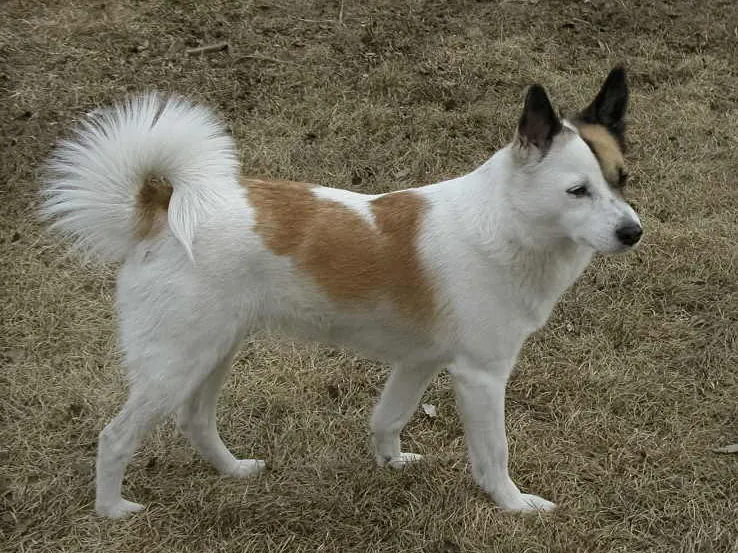
The Norrbottenspets is a small to medium Nordic spitz with a square, lightly built body. Adults stand about 17 to 18 inches at the shoulder and weigh roughly 20 to 31 lb. Males are slightly taller and heavier than females, with a more pronounced head.
The head is wedge-shaped with erect, pointed ears and almond-shaped dark eyes. The tail curls over the back, as in other spitz breeds. The overall impression is of a quick, agile dog built for searching forests rather than pulling sleds.
The coat is short, dense and close-fitting, with a soft undercoat. It is shorter than that of many Nordic spitz breeds. The base color is white with clearly defined colored patches, most often:
- Red or yellow patches
- Tan patches
- Black patches
Other colors are accepted as patches on white. The coat is weather-resistant and sheds dirt easily.
Temperament and Personality
Norrbottenspets are lively, friendly and alert. They are affectionate with their family, usually good with children and often polite with visitors. They are vocal by design, and barking is part of how they communicate.
They are independent and like to think for themselves. Prey drive is strong, so they may chase cats, squirrels and small animals, especially outdoors.
Indoors, a well-exercised Norrbottenspets is usually calm and easy to live with. It tends to be curious and playful, and many owners appreciate its clean habits and low drama.
Are Norrbottenspets Good for First-Time Owners?
Norrbottenspets can work for first-time owners who are active and patient, but their independence and vocal nature are real challenges.
They are friendly, small and easy to groom, which makes daily care simple. However, barking is part of their hunting style, and they may choose their own priorities, especially near wildlife. Recall training requires time and a long line. First-time owners should plan for daily exercise, secure fencing and early quiet-cue training. Talking with breeders and meeting adult dogs helps set realistic expectations.
Are Norrbottenspets Good with Cats?
Norrbottenspets can live with cats they grow up with, but their strong prey drive means caution is needed.
Bred to find and hold game, they are naturally interested in small animals. A puppy raised with a household cat may learn to accept it, but outdoor cats and small pets remain at risk. Introductions should be slow and supervised, with escape routes for the cat. Many owners keep small pets such as rabbits, rodents or birds separate permanently.
Indoors, many Norrbottenspets learn to ignore a resident cat once the novelty fades, but a cat running outdoors can still trigger a chase.
Are Norrbottenspets Good Apartment Dogs?
Norrbottenspets can adapt to apartments size-wise, but their barking makes them a challenging choice for close living.
Indoors, a well-exercised Norrbottenspets is usually calm. The issue is noise: barking is part of the breed's working style, and it can disturb neighbors. Owners in apartments need consistent training on a quiet cue and should ensure at least an hour of daily activity. Access to safe, fenced areas for running helps a lot. A house with a yard in a quieter area is generally a better fit.
Exercise and Training
Plan for an hour or more of daily activity: walks, off-lead running in secure areas and games that use the nose. Many enjoy hiking, agility and barn hunt. They are agile and quick, so fences need to be secure.
Training needs patience and rewards. The breed learns quickly but may choose its own priorities, especially near wildlife. Teach recall on a long line, keep sessions varied and work on a quiet cue early. They do not like long periods alone.
Because they hunt by searching widely and then barking, Norrbottenspets may roam if given the chance. Microchip and ID tags are important, and a GPS collar is useful for dogs that hunt.
Grooming and Shedding
The short, dense double coat is mostly white with colored patches, often red, tan or black. It is weather-resistant and easy to keep clean.
- Brush weekly, and more often during seasonal shedding.
- Check ears and trim nails regularly.
- Look for ticks after time in the forest.
The coat sheds dirt well and the breed has little doggy odor, so bathing is only needed occasionally. Dense undercoat comes out in bursts once or twice a year, when daily brushing keeps hair under control.
Feeding and Nutrition
Norrbottenspets are active, lightly built dogs that should stay lean. Adjust portions to activity level: hunting dogs in the fall or dogs that hike frequently need more food than those with moderate daily walks. A fit dog has a visible waist and ribs you can feel easily.
The breed was developed in cold northern climates, and dogs that spend a lot of time outdoors in winter may need slightly more food in cold months. Reduce portions when activity drops.
- Feed two meals a day for adults, three or four for puppies.
- Avoid heavy exercise right after meals.
- Use small food rewards for recall training, which is crucial for this independent breed.
- Food puzzles and scatter feeding satisfy their urge to search and reduce boredom.
Long-lived dogs benefit from gradual portion adjustments as they age, since senior dogs often need less food.
| Adult weight | Less active | Typical adult | Very active |
|---|---|---|---|
| 20 lb | 510 kcal | 590 kcal | 730 kcal |
| 31 lb | 710 kcal | 810 kcal | 1,020 kcal |
Estimates use the resting energy formula veterinarians work with (70 × body weight in kg0.75) and standard activity factors. Use the feeding guide on your food as a starting point and adjust to body condition. Puppies, seniors, pregnant animals and pets that need to lose weight have different needs, so ask your vet.
Health and Lifespan
The breed is considered robust and long-lived, typically reaching 14 to 17 years. Major sources do not highlight specific inherited problems.
Responsible breeders still screen for common issues such as hip dysplasia. Keep the dog lean and active, and ask breeders about the health of related dogs.
Their light build and modest size help them stay agile well into old age, as long as weight is kept in check.
Norrbottenspets Price and Cost of Ownership
Norrbottenspets are rare in the US, with only a small number of breeders and some imports from Sweden and Finland. Prices vary by breeder, region and lines, and import costs can be significant. Look for breeders who screen for eye conditions and hip health and who can describe the temperaments of the parents.
Rescue placements are rare, but breed clubs may help with rehoming.
Breed-specific ongoing costs include:
- Secure fencing to prevent roaming.
- GPS collars for dogs that hunt or roam.
- Training classes for recall and barking management.
- Tick prevention for dogs active in forests.
Food and grooming costs are low for a dog of 20 to 31 lb.
Is the Norrbottenspets Right for You?
This breed suits active owners who can handle barking and an independent streak. Its small size makes it portable, but it is still a hunting dog at heart.
- Good match: hunters, hikers, active families, people who enjoy dog sports.
- Less ideal: noise-sensitive neighbors, apartments with thin walls, owners wanting off-lead obedience.
The breed's compact size and long life expectancy make it appealing, but plan for a vocal dog that needs real outdoor time throughout its long life.
Norrbottenspets Traits at a Glance
Norrbottenspets FAQ
How big do Norrbottenspets get?
They stand about 17 to 18 inches at the shoulder and weigh roughly 20 to 31 lb.
Do Norrbottenspets bark a lot?
Yes. Barking is part of their hunting style and they tend to be vocal at home too.
Are Norrbottenspets good family dogs?
They are friendly and affectionate and usually good with children, as long as their exercise needs are met.
Do Norrbottenspets shed?
They shed moderately, with heavier seasonal sheds.
How long do Norrbottenspets live?
Typically 14 to 17 years.