Portuguese PodengoPortugal's hunting hound in three sizes
The Portuguese Podengo is a lively, curious hunting hound that comes in small, medium and large sizes, with either a smooth or a wire coat. Social, alert and full of energy, it suits active owners who enjoy a dog with personality and can handle a strong prey drive.

Why people love the Portuguese Podengo
- Three sizes to suit different homes and lifestyles
- Easy-care smooth or wire coat
- Cheerful, affectionate and curious
- Hardy, generally healthy primitive-type breed
- Excellent at lure coursing, barn hunt and scent work
Things to consider
- Strong prey drive toward cats and small animals
- Unreliable recall when prey appears
- Escape artist that digs, climbs and jumps
- Vocal watchdog, especially when bored
- Copes poorly with long periods alone
Is this breed right for you?
10 questions · live resultHistory and Origin
Podengos have hunted in Portugal for centuries and belong to the family of Mediterranean primitive-type hounds that hunt by sight, scent and hearing. Each size had its own job. The large (grande) hunted deer and boar, the medium (médio) hunted rabbits in packs, and the small (pequeno) flushed rabbits from dense brush and rocky terrain and kept homes and ships free of rodents.
The Podengo is Portugal's national dog and is recognized by the FCI as one breed in three sizes. The AKC recognized the Portuguese Podengo Pequeno as a separate breed in the Hound Group in 2013, while the medium and large sizes are listed separately as the Portuguese Podengo. The large size has become rare even in Portugal.
Sizes, Coat Types and Colors
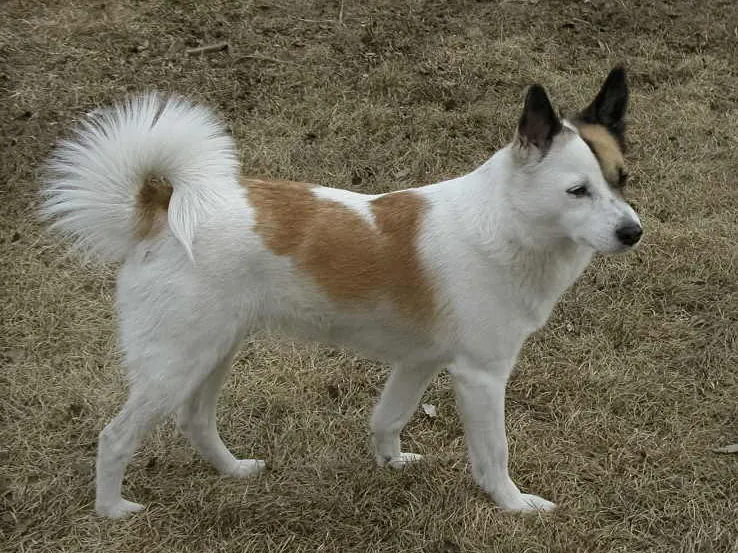
The Portuguese Podengo is a lean, primitive-type hound with a wedge-shaped head, large, erect triangular ears and a sickle-shaped tail. The breed comes in three sizes, which explains the very wide 8 to 28 inch and 9 to 66 lb range:
- Pequeno (small): about 8 to 12 inches and 9 to 13 lb
- Médio (medium): about 16 to 22 inches and 35 to 44 lb
- Grande (large): about 22 to 28 inches and 44 to 66 lb
In the US, the AKC recognizes the Pequeno as a separate breed, while the medium and large sizes are registered as the Portuguese Podengo.
Each size comes in two coats:
- Smooth: short and dense
- Wire: longer and harsh, with a beard on the muzzle
The most common colors are yellow and fawn, from light to dark, with or without white markings, or white with yellow or fawn patches. Some sizes and registries also allow black or brown. Males are usually a bit larger and more substantial than females within each size.
Temperament and Personality
Podengos are cheerful, bold and endlessly curious. They are usually affectionate with family and good with children who play respectfully, and many enjoy the company of other dogs. They are alert watchdogs and can be quite vocal, announcing visitors and anything unusual.
Their hunting instinct is strong. Small animals, including cats outdoors, birds and rodents, may be chased. Podengos are also clever problem-solvers and can be independent, which shows up as selective listening when something interesting is happening.
Are Portuguese Podengos Good With Cats?
Some Podengos live peacefully with cats, but it is never guaranteed. The breed was developed to hunt rabbits and rodents, and its prey drive is strong.
The best chance of success is raising a puppy with a confident, adult cat that does not run. Even then, many Podengos treat cats outside the household as prey. Use gradual introductions, baby gates and supervision, and give the cat high escape routes. Small pets such as rabbits, guinea pigs and birds are not a good match. If you already have a cat, an adult Podengo with a known cat-safe history from a rescue is the safer choice.
Are Portuguese Podengos Good Apartment Dogs?
The Pequeno can live in an apartment if it gets enough exercise; the medium and large sizes are better suited to houses with secure yards.
All three sizes are energetic and alert. In apartments, the main challenges are barking at hallway sounds and finding safe places to run, since recall is unreliable around prey. Plan for at least an hour of daily activity, including fenced running areas, scent games and training. Teach a quiet cue early. Leave enough enrichment, such as puzzle feeders, for when you are out, as bored Podengos tend to bark or chew.
Are Portuguese Podengos Easy to Train?
Podengos learn quickly but are not always easy to train. They are clever and food-motivated, yet independent, and their attention drifts when something more interesting appears.
Short, upbeat, reward-based sessions work best, with lots of variety, since repetition bores them. House training is usually straightforward. Recall is the hardest skill; practice it on long lines and accept that it may fail when prey is in sight. Many Podengos thrive in sports that use their natural instincts, such as lure coursing, barn hunt and scent work, which also builds cooperation with their owners.
Exercise and Training
All three sizes are energetic. Plan for at least an hour of daily activity combining walks with running in a fenced area and games that use their nose. They excel in lure coursing, agility, barn hunt and scent work.
Training works best with short, upbeat, reward-based sessions. Podengos learn quickly but get bored with repetition. Keep them leashed in open areas, as recall fails when prey appears. Secure fencing matters: they dig, climb and jump. This breed does not cope well with long periods alone and may bark or become destructive.
Grooming and Shedding
The smooth coat is short and dense; the wire coat is longer and harsh, with a bearded look on the muzzle. Both are easy to care for with weekly brushing. Neither coat should be trimmed or stripped for show beyond basic tidiness. Shedding is moderate. Common colors are yellow or fawn, with or without white markings.
Brush teeth regularly, especially in the small size, which is prone to tartar, and keep nails short.
Feeding and Nutrition
Because the Podengo comes in three sizes, feeding guidance has to start with the size of your dog. A 10 lb Pequeno and a 60 lb Grande have very different needs, so feed to the individual's weight and body condition rather than a breed average.
Podengos are naturally lean, athletic dogs. You should easily feel the ribs and see a clear waist. Extra weight is especially hard on the knees of the small size, where patellar luxation is a known concern.
The Pequeno is prone to tartar buildup. Choose a kibble size it can chew properly, brush its teeth regularly and do not rely on food to clean teeth.
Puppies of the small size need three to four meals a day; larger puppies should grow steadily on a diet appropriate for their expected adult size. Most adults do well with two meals.
Podengos are clever scavengers and opportunistic food thieves. Secure trash cans and counters. Their food drive makes treats a powerful training tool, so use small, high-value pieces for recall practice and subtract them from meals.
| Adult weight | Less active | Typical adult | Very active |
|---|---|---|---|
| 9 lb | 280 kcal | 320 kcal | 400 kcal |
| 38 lb | 830 kcal | 950 kcal | 1,180 kcal |
| 66 lb | 1,250 kcal | 1,430 kcal | 1,790 kcal |
Estimates use the resting energy formula veterinarians work with (70 × body weight in kg0.75) and standard activity factors. Use the feeding guide on your food as a starting point and adjust to body condition. Puppies, seniors, pregnant animals and pets that need to lose weight have different needs, so ask your vet.
Health and Lifespan
Podengos are generally robust and typically live 10 to 15 years, with small dogs often at the upper end. Breed clubs recommend screening for eye conditions, hip dysplasia and patellar luxation (slipping kneecaps), which is especially relevant in the small size. Ask breeders for health results and meet the parents if possible. Dogs imported from Portugal or adopted through rescues should be checked for Mediterranean diseases such as leishmaniasis.
Portuguese Podengo Price and Cost of Ownership
Portuguese Podengos are uncommon in the US, and published prices are limited. The Pequeno is the most available size through AKC breeders, while medium and large dogs are rare and often imported from Portugal. Prices vary by breeder, region, lines and size, and import costs can add considerably to the total. Expect to join a waiting list.
Rescue is a real option: Podengo-type dogs are common in Portuguese shelters, and some rescues bring them to the US and UK. Imported rescues should be tested for Mediterranean diseases such as leishmaniasis.
Ongoing cost drivers include:
- Secure fencing that resists digging, climbing and jumping
- Dental care for the small size
- Insurance covering patellar luxation and injuries from running
- Sports fees for lure coursing or barn hunt
Is the Portuguese Podengo Right for You?
The Podengo suits you if you:
- Want an energetic, affectionate dog with an easy coat
- Can provide daily exercise and secure fencing
- Enjoy dog sports or scent games
- Can choose a size that fits your home: the small adapts well to apartments if exercised
It may not suit owners who need a quiet dog, keep small pets or are away all day.
Portuguese Podengo Traits at a Glance
Portuguese Podengo FAQ
What sizes does the Portuguese Podengo come in?
Three sizes: small (pequeno), medium (médio) and large (grande). Together they range from about 8 to 28 inches tall and 9 to 66 lb.
Are Portuguese Podengos good family dogs?
Yes, they are typically affectionate and great with respectful children. Their prey drive means small pets need careful management.
Do Portuguese Podengos bark a lot?
They can be vocal. They are alert watchdogs and bark at visitors and noises, especially when bored.
Do Podengos shed?
Moderately. Both smooth and wire coats are easy to keep with weekly brushing.
How long do Portuguese Podengos live?
Typically 10 to 15 years, with the small size often living longest.