Petit Basset Griffon VendéenThe cheerful, scruffy rabbit hound of Vendée
The Petit Basset Griffon Vendéen, or PBGV, is a small, rough-coated scent hound from western France with a famously happy outlook. It is friendly with children and other dogs, but it is also stubborn, nose-driven and loud. It suits active families who enjoy a dog with personality and can live with plenty of barking.
Why people love the Petit Basset Griffon Vendéen
- Cheerful, sociable hound that usually loves children and dogs
- Sturdy, compact size that is easy to travel with
- Long lifespan, commonly 14 to 16 years
- Rough coat sheds relatively little
- Comic, upbeat personality with plenty of charm
Things to consider
- Very vocal; barks and bays readily
- Independent hunter that ignores recall on a scent
- Digging, counter-surfing and escaping are common
- Beard needs washing after meals
- Demand has grown since 2023, so waitlists are long
Is this breed right for you?
10 questions · live resultHistory and Origin
The PBGV comes from the Vendée region on France's Atlantic coast, a landscape of thorny brush, rocks and hedges. Local hunters needed a short-legged, wire-coated hound that could push through brambles after rabbit and hare while the hunters followed on foot.
For a long time the Petit and the larger Grand Basset Griffon Vendéen were bred as two sizes of the same breed, and litters could produce both. The two were separated into distinct breeds in the 1970s. The PBGV reached the US in the 1980s and gained AKC recognition in 1990. It drew wide attention when a PBGV won Best in Show at Westminster in 2023.
Size, Coat and Colors
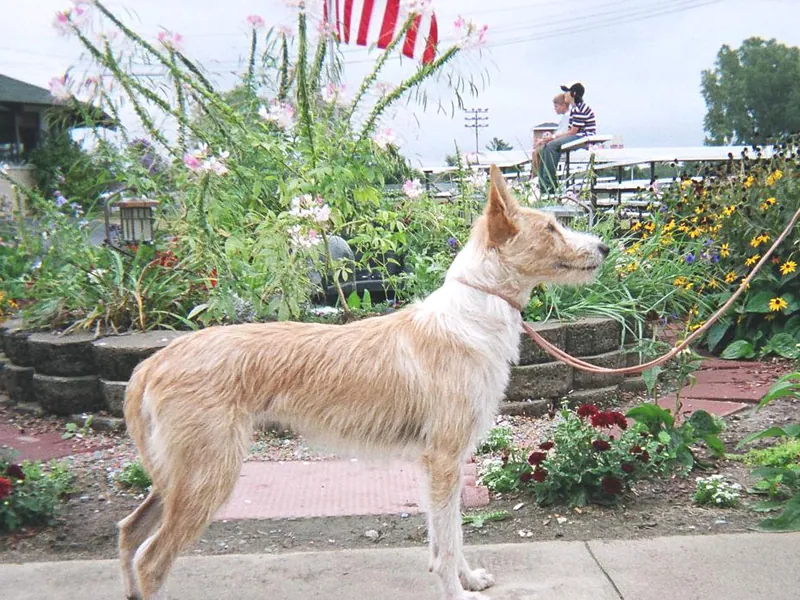
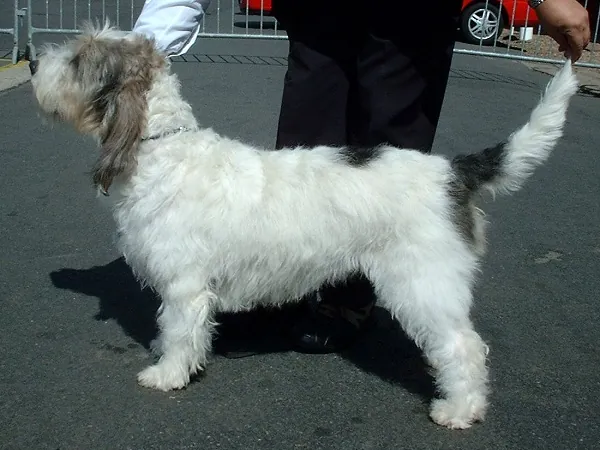
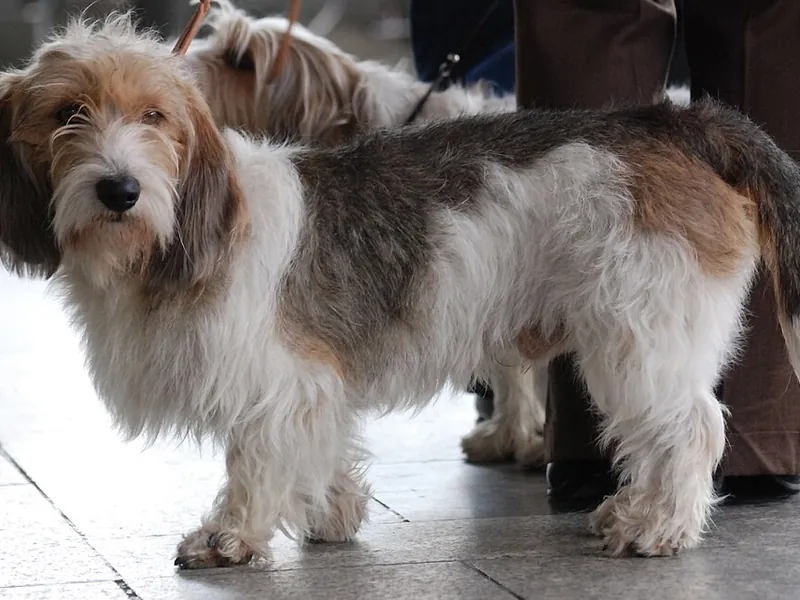
The Petit Basset Griffon Vendéen is a small, rough-coated scent hound that is longer than tall, with short but not crooked legs and a confident, alert outline. Adults stand 13 to 15 inches at the shoulder and weigh roughly 25 to 40 lb. The AKC allows males and females in the same height range, though males are often slightly larger and more substantial.
The head has a long, domed skull, long eyebrows, a beard and mustache, large dark eyes and long, low-set ears covered in long hair. The tail is carried proudly, like the blade of a saber.
The coat is rough, long and harsh to the touch with a thick, shorter undercoat. It is meant to look casual and unexaggerated, never silky or woolly, and is not trimmed into a sculpted shape.
The coat is white with combinations of:
- Lemon or orange
- Black
- Tricolor (black, tan and white)
- Grizzle or sable markings
Markings vary widely in size and placement, and no pattern is preferred.
Temperament and Personality
PBGVs are sociable, curious and upbeat. They usually get along well with children and other dogs, a legacy of hunting in packs. Many owners describe them as clowns with a busy, comic energy.
The flip side is independence. A PBGV hunts by following its nose, often out of sight of the hunter, so it does not wait for instructions. It also barks a lot, with a voice bigger than its body. Expect it to announce visitors, squirrels and interesting smells.
Are PBGVs Easy to Train?
They are trainable but not easy. PBGVs are clever and food motivated, yet they were bred to hunt independently, and their nose often takes priority over your cues.
Success comes from making training a game:
- Use high-value food rewards and keep sessions short.
- Practice recall daily in fenced spaces, never relying on it outdoors.
- Teach leave-it and wait early to manage counter-surfing.
- Use scent work and tracking as rewards that tap into natural drive.
House training can take longer than average, so stick to a routine. Harsh methods make PBGVs stubborn. Owners who keep a sense of humor and stay consistent typically end up with a well-mannered, if occasionally selective, companion.
Can PBGVs Be Left Alone?
An adult PBGV can usually manage a few hours alone, but it is a pack hound that prefers company. Lonely or bored PBGVs often bark, bay, dig or raid kitchens.
Many owners find a second dog helps, as PBGVs generally enjoy canine companions. Exercise before leaving, a food puzzle and a secure, dog-proofed space reduce problems. Avoid leaving the dog in a yard unattended for long; PBGVs dig under or climb over fences and their voice carries. Crate training from puppyhood is helpful for safety and gives the dog a calm place to rest.
Are PBGVs Good With Cats?
Many PBGVs live happily with cats they have been raised with, as they are generally sociable pack hounds rather than intense chasers. They were bred to trail rabbits and hare, though, so a running cat can still spark interest.
Introduce a puppy to a resident cat calmly, provide the cat with high perches and safe zones and reward the dog for relaxed behavior. Adult PBGVs coming into a home with cats should be tested carefully first. Outdoor cats, rabbits and small pets are more at risk, especially when the hound is in hunting mode on walks. Keep it leashed in areas with wildlife.
Exercise and Training
Plan on at least an hour of activity daily, split between brisk walks and play. Scent games, tracking and nose work give this breed real satisfaction.
- Keep it leashed or in a securely fenced yard; a PBGV on a scent will not come back reliably.
- Many are skilled diggers and escape artists, so check fences.
- Use short, upbeat, food-based training sessions. Harsh corrections make a PBGV dig in its heels.
- Counter-surfing is common; keep food out of reach.
Grooming and Shedding
The coat is rough, harsh and deliberately tousled, with a thick undercoat. Weekly brushing with a pin brush and comb prevents mats, and occasional hand-stripping keeps the texture correct. Wash the beard after meals, since it collects food and water. Check the long, low-set ears weekly. Shedding is low to moderate, and while some allergy sufferers do better with a PBGV than with smooth-coated dogs, no breed is truly hypoallergenic.
Feeding and Nutrition
PBGVs are enthusiastic eaters with excellent noses, and counter-surfing is part of the breed's reputation. Weight gain sneaks up easily under the rough coat, so feel for ribs regularly and adjust portions when activity drops.
Keeping a PBGV lean matters for its long back and short legs, which carry the risk of back and joint problems. Hip and elbow dysplasia and patellar luxation are also reported in the breed, and extra weight makes all of them worse.
- Feed two measured meals a day to adults; three to four for puppies.
- Keep food, trash and lunch bags out of reach, and store dog food in a secured container.
- Use scent games and snuffle mats to stretch mealtimes and satisfy the nose.
- Wipe the beard after eating to prevent food residue and staining.
A raised or deep water bowl can reduce how much the beard drips across the floor. Treats used in recall training should be small and counted as part of the daily food.
| Adult weight | Less active | Typical adult | Very active |
|---|---|---|---|
| 25 lb | 610 kcal | 690 kcal | 870 kcal |
| 40 lb | 860 kcal | 980 kcal | 1,230 kcal |
Estimates use the resting energy formula veterinarians work with (70 × body weight in kg0.75) and standard activity factors. Use the feeding guide on your food as a starting point and adjust to body condition. Puppies, seniors, pregnant animals and pets that need to lose weight have different needs, so ask your vet.
Health and Lifespan
PBGVs often live 14 to 16 years. Known breed concerns include:
- Primary open-angle glaucoma (POAG): a DNA test exists and breeding dogs should be tested.
- PBGV pain syndrome: a painful neck and fever condition, usually in young dogs.
- Hip and elbow dysplasia, patellar luxation, and some heart and eye conditions.
- Ear infections and epilepsy.
The longish back and short legs mean you should avoid heavy jumping and keep the dog lean. Choose a breeder who tests for POAG and screens joints and eyes.
Petit Basset Griffon Vendéen Price and Cost of Ownership
Typical breeder price in the US$2,000 to $4,000
A PBGV puppy from a reputable US breeder typically costs about $2,000 to $4,000. Prices vary by breeder, region and lines. Interest in the breed rose after a PBGV won Best in Show at Westminster in 2023, and long waiting lists are common. Ask breeders for POAG DNA results and hip, elbow, patella, eye and heart screening.
Breed club rescue networks sometimes place adult PBGVs, often older dogs whose owners could no longer manage the barking or escape habits.
Breed-specific ongoing costs include:
- Occasional professional grooming or hand-stripping to keep coat texture
- Secure, dig-proof fencing
- Eye exams and glaucoma monitoring
- Dog sport or scent work classes
- Insurance covering POAG and back and joint problems
Is the Petit Basset Griffon Vendéen Right for You?
A PBGV is a great match for active households that want a sturdy, fun, kid-friendly dog and have a fenced yard. It can manage apartment life if it gets enough outdoor time, but neighbors may object to the barking.
It is less suited to owners who want instant obedience, quiet homes, or off-leash walks in open country. Patience and a sense of humor are part of the job.
Before committing, meet adult PBGVs, not just puppies. Hearing a few of them greet visitors is the best way to judge whether the noise level fits your home.
Petit Basset Griffon Vendéen Traits at a Glance
Petit Basset Griffon Vendéen FAQ
Are PBGVs good family dogs?
Yes, for most families. They are friendly and tolerant with children and usually enjoy other dogs, but they need daily exercise and patient training.
Do PBGVs bark a lot?
Yes. They are vocal hounds that bark and bay at visitors, wildlife and boredom. Training can reduce it but not remove it.
How big does a Petit Basset Griffon Vendéen get?
They stand about 13 to 15 inches tall and weigh roughly 25 to 40 pounds.
Are PBGVs hypoallergenic?
No. Their rough coat sheds relatively little, which some allergy sufferers tolerate better, but no dog is truly hypoallergenic.
How long do PBGVs live?
PBGVs commonly live 14 to 16 years.
Can a PBGV be off leash?
Only in securely fenced areas. Like most scent hounds, it follows its nose and ignores recall when on a trail.