BeagleMerry scent hound with a big nose
The Beagle was bred in England to hunt hare in packs, following scent for hours. It is friendly, merry and great with children, but its powerful nose, independence and vocal nature make training and secure fencing essential.
Why people love the Beagle
- Gentle, sociable temperament that usually suits children and other dogs
- Short, easy-care coat needs only a weekly hound-mitt session
- Compact size travels well and fits most homes
- Strong food drive makes reward-based training motivating
- Hardy breed with a typical lifespan of 10 to 15 years
Things to consider
- Scent drive overrides recall, so most need leashes or fences
- Baying and howling can strain relations with close neighbors
- Gains weight easily and raids trash cans and counters
- Dislikes long hours alone and may howl or chew
- Long, floppy ears need weekly checks to prevent infections
Is this breed right for you?
10 questions · live resultHistory and Origin
Small hounds were used for hunting hare in England for centuries, but the modern Beagle owes much to Reverend Phillip Honeywood, who established a well-known pack in Essex in the 1830s. Hunters on foot followed packs of Beagles, a tradition known as beagling that still exists in Britain.
Beagles arrived in the United States after the Civil War, and the AKC recognized the breed in 1885. Their nose and friendly nature later made them the dog of choice for detection work at US airports, where the USDA Beagle Brigade sniffs luggage for prohibited food. The AKC divides the breed into two varieties, 13 inches and under and over 13 up to 15 inches.
Size Varieties, Coat and Colors
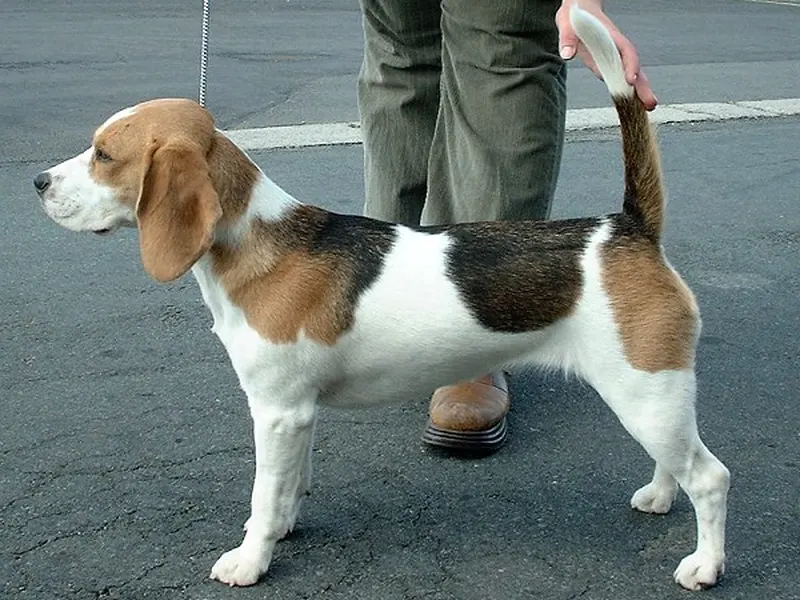
The Beagle is a sturdy, compact hound with a broad skull, a square muzzle, long low-set ears and soft brown or hazel eyes. The tail, often called the stern, is carried gaily and usually has a white tip, which once helped hunters spot their dogs in tall grass.
In the US the AKC shows Beagles in two varieties: dogs 13 inches and under, and dogs over 13 but not exceeding 15 inches. The Kennel Club in the UK uses a single range of roughly 13 to 16 inches. Most adults weigh about 18 to 30 lb, with the smaller variety at the lighter end.
The coat is short, close and hard. The standard accepts any true hound color, so you will see:
- classic tricolor (black saddle, tan and white)
- red and white, lemon and white, and tan and white
- chocolate tricolor and blue tricolor
- ticked patterns, such as blue tick or red tick
Males are usually slightly taller and heavier with a broader head, but the difference is modest.
Temperament and Personality
Beagles are cheerful, sociable and gentle, bred to live and work in packs. They usually get along well with other dogs and children and greet strangers with enthusiasm, so they are poor guard dogs. Many are clownish and love attention.
Their nose rules their behavior. A Beagle following a scent may ignore its owner completely. They are also vocal, with a distinctive bay or howl used to alert the hunter. Beagles dislike being alone and can howl or become destructive when bored.
Because they were bred to work in groups, many Beagles enjoy living with a second dog, which can help when owners are out. Their friendly attitude toward almost everyone also makes them popular therapy dogs.
Are Beagles Good Apartment Dogs?
Beagles can live in apartments, but noise is the main obstacle. Their size and calm indoor behavior after exercise are fine for small spaces. The problem is the bay: a bored or lonely Beagle may howl at hallway sounds or when you leave, and shared walls carry that sound.
Apartment Beagles do best when they get a long sniffing walk every morning and evening, food puzzles during the day and gradual alone-time training from puppyhood. A dog walker or second dog helps for longer workdays. If your building has strict noise rules or you are out ten hours a day, a quieter breed is a safer choice.
Are Beagles Easy to Train?
Beagles are easy to motivate but hard to make reliable. They learn sit, down and tricks quickly for food, yet they were bred to follow a scent on their own judgment, and a fresh trail beats any cue.
House training is often slower than average, so keep a strict schedule, supervise closely and use a crate for short periods. Recall is the hardest skill: practice it on a long line for months and still expect it to fail near rabbits. Keep sessions short and upbeat, avoid harsh corrections, and count kibble from the daily ration as rewards so training does not add pounds. Scent work classes are a great way to train with the nose, not against it.
Are Beagles Good With Cats?
Many Beagles live peacefully with cats, especially when raised with them. Beagles were bred to hunt hare in packs and are generally sociable, so their chase instinct is usually lower toward a household cat than in many terriers or sighthounds.
A running cat can still trigger a chase, and some Beagles stay interested in the litter box and cat food. Introduce them gradually with the dog on a leash, give the cat high perches and escape routes, and feed the cat out of the dog's reach. Outdoor cats, rabbits and small rodents are a different story: those are exactly what the Beagle's nose was built to find.
Exercise and Training
Plan for at least an hour of exercise a day, with time to sniff. Scent games, tracking and trailing are ideal outlets. Off-leash walks should only happen in secure areas, because recall often fails once a Beagle catches a scent. Fences must be secure, as many dig or climb.
Training requires patience. Beagles are intelligent but independent and are strongly motivated by food, which helps with rewards but also leads to counter-surfing and trash raiding. Short, upbeat sessions and consistency work best. Keep food out of reach and measure meals, since the breed gains weight easily.
- Use a long line or harness in open spaces rather than relying on recall.
- Feed part of the daily ration through snuffle mats or scatter feeding to use the nose.
- Check the yard fence for gaps and digging spots regularly.
Grooming and Shedding
The short, dense coat is low maintenance: weekly brushing with a hound mitt removes loose hair. Beagles shed moderately year-round and more in spring. Check and clean the long, floppy ears weekly, since poor airflow makes ear infections common. Trim nails and brush teeth regularly.
Feeding and Nutrition
Weight control is the central feeding issue for Beagles. They are intensely food motivated, rarely refuse a meal and are known for stealing from counters and trash cans, so many become overweight by middle age. Extra pounds put strain on the back and are a concern in a breed prone to intervertebral disc disease.
- Weigh food rather than scooping it, and adjust portions to body condition: you should feel the ribs easily under a thin layer of fat and see a waist from above.
- Feed puppies three or four meals a day, then move adults to two measured meals.
- Use part of the daily ration for training rewards, snuffle mats and scatter feeding, which also satisfies the nose.
- Keep treats small and low in fat, and keep human food, garbage and cat food out of reach.
If your Beagle has been diagnosed with hypothyroidism, which can cause weight gain, follow your veterinarian's plan and recheck weight regularly. Because they eat quickly, a slow-feeder bowl can help.
| Adult weight | Less active | Typical adult | Very active |
|---|---|---|---|
| 18 lb | 470 kcal | 540 kcal | 680 kcal |
| 24 lb | 590 kcal | 670 kcal | 840 kcal |
| 30 lb | 690 kcal | 790 kcal | 990 kcal |
Estimates use the resting energy formula veterinarians work with (70 × body weight in kg0.75) and standard activity factors. Use the feeding guide on your food as a starting point and adjust to body condition. Puppies, seniors, pregnant animals and pets that need to lose weight have different needs, so ask your vet.
Health and Lifespan
Health issues seen in the breed include epilepsy, hypothyroidism, intervertebral disc disease, cherry eye and ear infections. Steroid-responsive meningitis, sometimes called Beagle pain syndrome, can cause fever and neck pain in young dogs. DNA tests exist for factor VII deficiency, a bleeding disorder, and Imerslund-Gräsbeck syndrome, which affects vitamin B12 absorption. Obesity is a common and preventable problem.
Choose a breeder who uses available DNA tests and screens eyes and hips. Beagles typically live 10 to 15 years.
Beagle Price and Cost of Ownership
Typical breeder price in the US$800 to $2,000
A Beagle puppy from a reputable US breeder typically costs about $800 to $2,000. Prices vary by breeder, region and lines, and puppies from show or field lines with full health testing sit at the upper end. Beagles are also common in shelters and in dedicated Beagle rescues, including retired laboratory Beagles, so adoption is a realistic option.
Ongoing costs are modest compared with many breeds, but a few drivers stand out:
- Ear cleaning supplies and vet visits for recurring ear infections
- Secure fencing, dig guards and long lines for safe exercise
- Dental care and weight-management visits as the dog ages
- Pet insurance that covers back problems and epilepsy, both reported in the breed
Professional grooming is rarely needed, which keeps routine care inexpensive.
Is the Beagle Right for You?
The Beagle suits active families and people who enjoy long walks and can tolerate some noise. Its friendly nature makes it a good companion for children and other dogs.
It is less suited to apartments with thin walls, to owners away all day or to people who want reliable off-leash obedience. Homes with pet rabbits or rodents need careful management.
Beagles also mature slowly and can stay puppyish and mischievous for the first two years. Owners who enjoy a dog with a sense of humor and can laugh off the occasional stolen sandwich tend to love the breed.
Beagle Traits at a Glance
Beagle FAQ
Are Beagles good family dogs?
Yes, Beagles are friendly, gentle and usually excellent with children. They need plenty of company and activity.
How big do Beagles get?
Most stand up to 15 inches at the shoulder and weigh about 18 to 30 lb, with 13-inch Beagles under 20 lb and 15-inch Beagles 20 to 30 lb.
Do Beagles bark a lot?
Yes, Beagles are vocal and may bark, bay or howl, especially when bored or following a scent.
Can Beagles be off leash?
Only in secure areas. Their strong scent drive can override training, and they may follow a trail for long distances.
Do Beagles shed?
They shed moderately year-round. Weekly brushing keeps loose hair under control.
How long do Beagles live?
Beagles typically live 10 to 15 years.