Slovensky KopovSlovakia's tireless black and tan boar hound
The Slovensky Kopov, or Slovakian Hound, is a medium-sized black and tan scenthound bred to track wild boar through Slovakia's mountain forests, giving voice for hours on end. It is spirited, alert and determined, with a strong sense of direction. It suits hunters or very active outdoor owners with space and secure fencing.
Why people love the Slovensky Kopov
- Tough, hardy hound with great stamina
- Devoted to its family and an effective watchdog
- Excellent sense of direction on long chases
- Easy-care short coat
- Generally healthy, living about 12 to 13 years
Things to consider
- Very strong prey drive; recall unreliable on scent
- Bays loudly when it picks up a trail
- Poor fit for apartments and noise-sensitive neighbors
- Dislikes long hours alone
- Rare outside Slovakia and neighboring countries
Is this breed right for you?
10 questions · live resultHistory and Origin
The breed developed in the mountains and forests of Slovakia, where hunters needed a hound that could follow boar and other game over long distances. It is known for stamina and a strong sense of direction.
The FCI recognizes the breed. In the US it is recorded through the AKC Foundation Stock Service.
Hounds of this type have been used in the Carpathian region for a long time. The breed was formally standardized in the 20th century, and Slovak hunters still value it highly for its ability to track boar independently, bay the animal and keep it in place until the hunter arrives. Its dark coat earned it the nickname Black Forest Hound.
The breed is lightly built yet tough, with a slightly rectangular body and long legs suited to rough mountain ground. Hunters prize its ability to find its way back after a long chase.
Size, Coat and Black and Tan Color
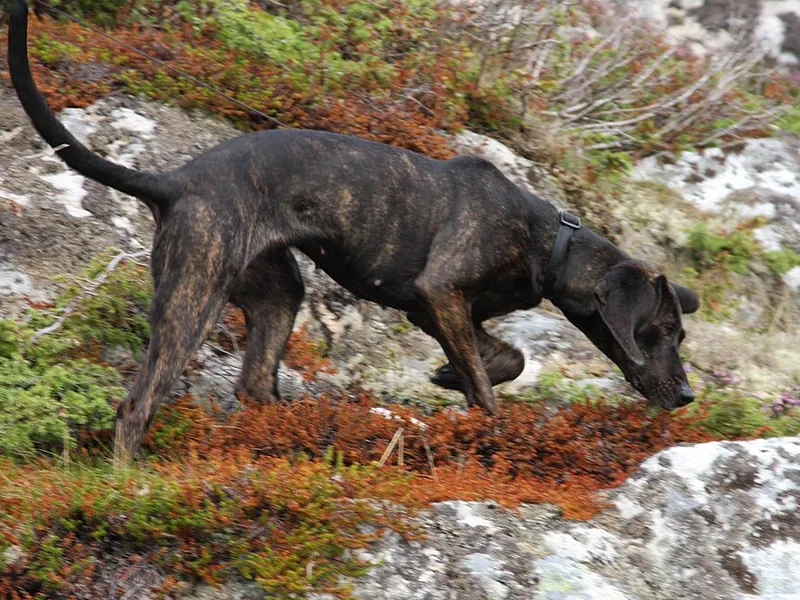
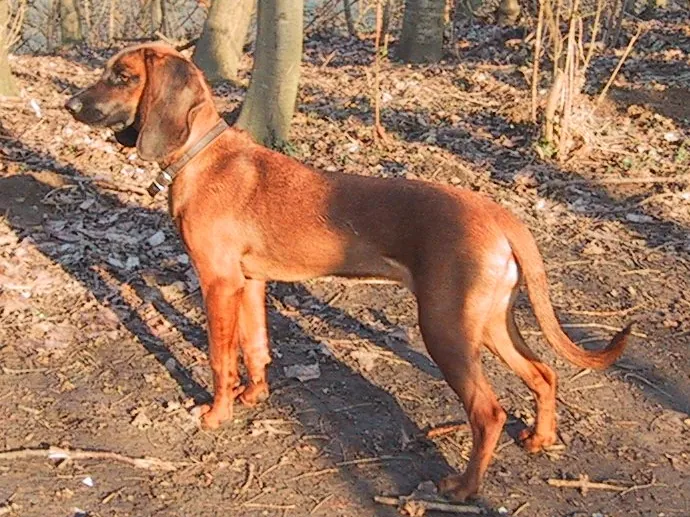
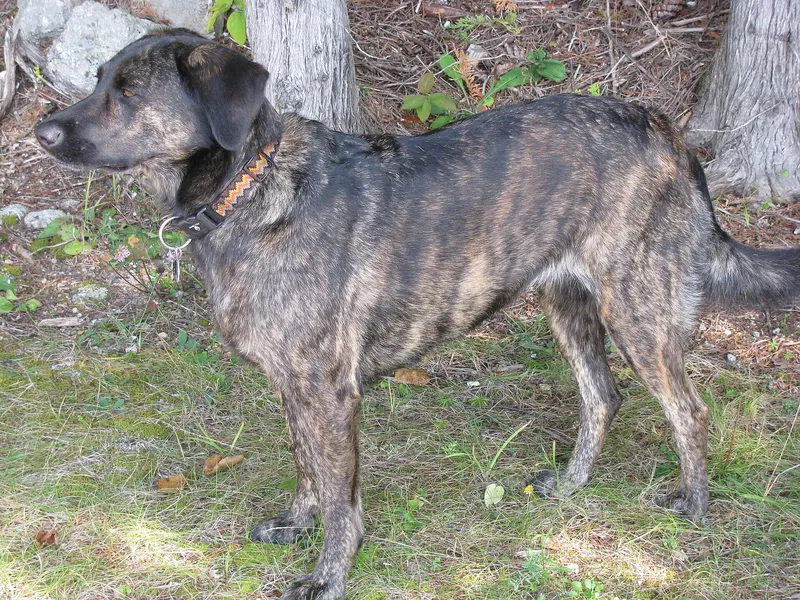
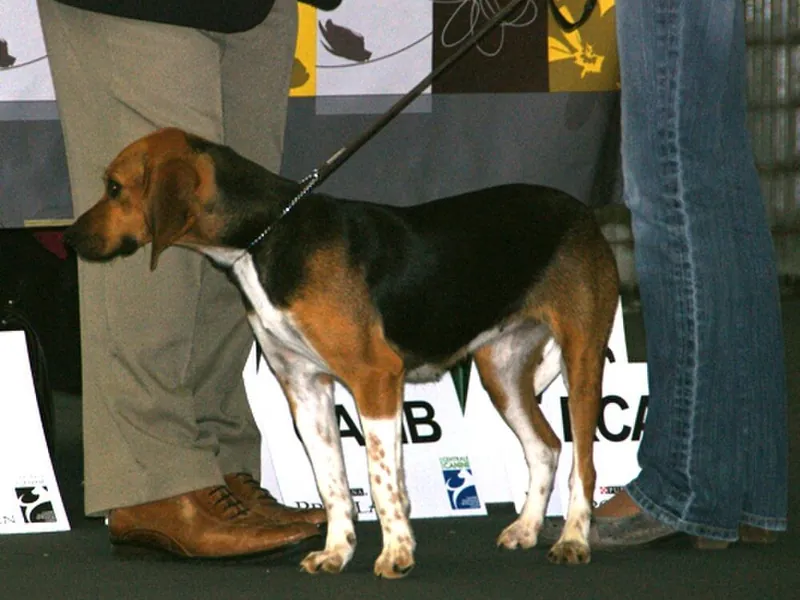
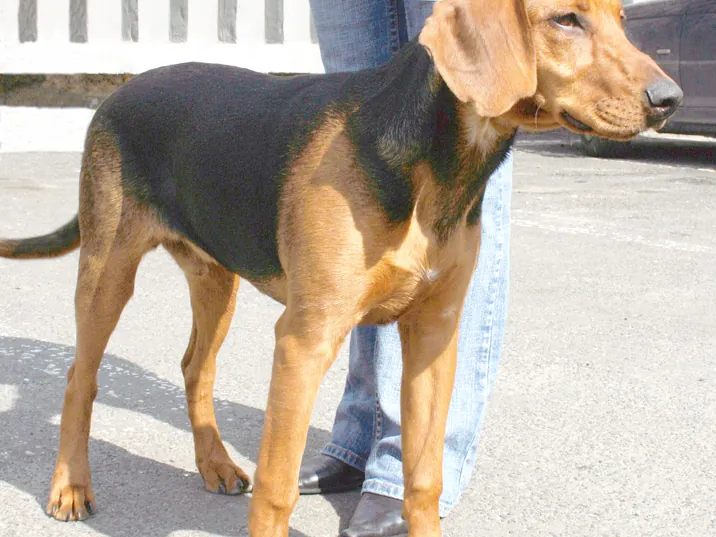
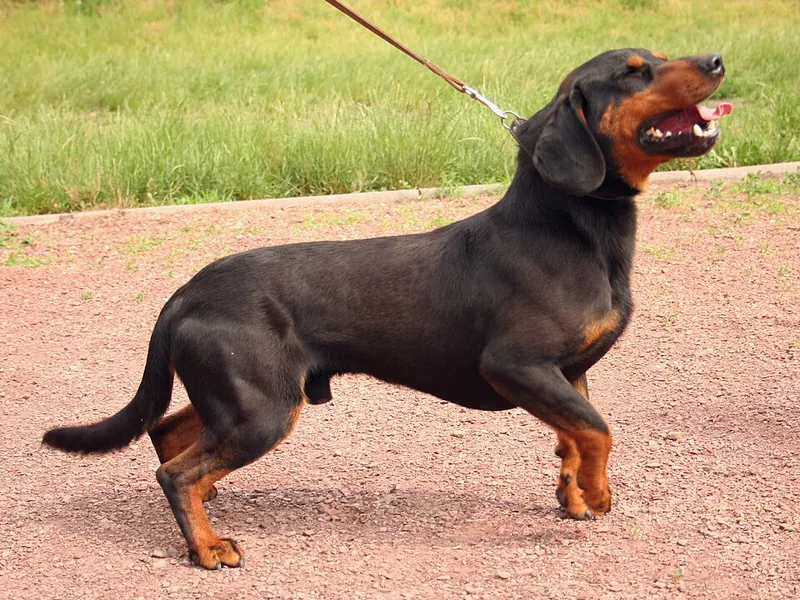
The Slovensky Kopov is a medium-sized, lightly built but tough scent hound with a slightly rectangular body, long legs and a long head with medium drop ears. It is designed for endurance over rough mountain terrain. Adults stand about 16 to 20 inches tall and weigh roughly 33 to 44 lb. Males are typically around 18 to 20 inches, while females are around 16 to 18 inches and lighter in build.
The coat is short, dense and close-lying, with a thicker undercoat that develops in winter. It provides protection from cold and rough undergrowth.
Colors: the breed is always black and tan. The base is black, with tan to mahogany markings:
- above the eyes
- on the muzzle and cheeks
- on the chest
- on the lower legs and feet
The dark eyes and black coat give the breed its nickname, the Black Forest Hound. The clear contrast of black and tan is typical, while large white markings are not desired.
Temperament and Personality
Kopovs are lively, courageous and alert, and make good watchdogs. They are devoted to their family but independent on a trail.
The Kopov is lively and courageous, with enough nerve to face a wild boar. It is usually devoted to its family and can be reserved with strangers, which makes it an effective watchdog.
Its prey drive is very strong, and it will follow a scent for long distances and long periods. Indoors it is calmer when its exercise needs are met. With children it does best with calm, respectful kids, and it should be introduced carefully to small pets.
Do Slovensky Kopovs Bark a Lot?
Yes, Slovensky Kopovs are vocal hounds. They bay when they pick up an interesting trail and bark to alert their family to visitors or unusual sounds.
Baying is part of the breed's job: on a hunt, the hound gives voice to let hunters know where it is and to hold wild boar at bay. At home, a Kopov that gets plenty of exercise and sniffing time is usually calmer, but boredom and long periods alone can lead to nuisance baying. Teaching a quiet cue and providing daily tracking or scent work helps. The breed is best suited to rural homes where its voice will not disturb close neighbors.
Are Slovensky Kopovs Good With Other Pets?
Slovensky Kopovs usually get along with other dogs, but their strong prey drive makes cats and small pets more of a challenge.
As hunting hounds, they are often kept with other dogs and tend to be sociable with them. Cats raised with the dog from puppyhood can sometimes live alongside a Kopov indoors, but supervision is wise, and outdoor cats are likely to be chased. Rabbits, guinea pigs and other small animals should be kept safely separate. When introducing a Kopov to a cat, go slowly, use a leash and give the cat high escape routes.
Are Slovensky Kopovs Easy to Train?
Slovensky Kopovs are intelligent but independent, so they are moderately challenging to train, especially when it comes to recall.
Basic manners and house routines usually come with consistent, reward-based training. On a trail, however, the hound's instinct to follow scent for long distances takes over, and recall becomes unreliable. Use a long line in open areas, and keep the dog in securely fenced spaces off leash. Short, varied training sessions work better than repetition. Tracking and mantrailing give the Kopov a cooperative outlet for its nose and strengthen the bond between dog and owner.
Exercise and Training
Plan on at least an hour of daily exercise. Tracking work suits the breed. Recall is unreliable on scent.
- Walk on leash or long line outside fenced areas; scent will override recall.
- Tracking, mantrailing and long hikes on varied terrain suit it well.
- Use consistent, reward-based training. The breed is intelligent but independent.
- Provide company; it does not like long hours alone.
- Expect baying when it picks up an interesting trail.
A Kopov that does not hunt needs a substitute job. Daily long walks with plenty of sniffing, plus regular tracking sessions, help prevent restlessness and nuisance baying.
Grooming and Shedding
The short coat is easy to care for with weekly brushing. Shedding is moderate.
The short, dense coat is black with tan markings and has a thick undercoat in winter. Brush weekly with a rubber mitt or bristle brush. Check ears and paws after outings, and keep nails short.
Feeding and Nutrition
The Slovensky Kopov is a lean endurance hound, and its feeding needs depend strongly on activity. A dog hunting boar in the mountains through the season needs considerably more food than a companion dog walking daily. Adjust portions to body condition, keeping the ribs easy to feel and the waist visible.
Puppies: feed a complete puppy diet for medium breeds, in three or four meals daily at first, then two meals as an adult. Aim for steady growth and avoid forced exercise during the growth phase.
Seasonal needs: Kopovs working or living in cold conditions may need slightly more food in winter. Reduce portions again when activity drops.
Scavenging: like most scent hounds, Kopovs are food-driven and will scavenge on walks. Teach a reliable leave it cue, store food securely and avoid letting the dog eat game remains or carcasses, which can carry parasites.
Treats: food rewards are effective for training recall. Use small, high-value treats and count them in the daily ration.
| Adult weight | Less active | Typical adult | Very active |
|---|---|---|---|
| 33 lb | 750 kcal | 850 kcal | 1,070 kcal |
| 44 lb | 930 kcal | 1,060 kcal | 1,320 kcal |
Estimates use the resting energy formula veterinarians work with (70 × body weight in kg0.75) and standard activity factors. Use the feeding guide on your food as a starting point and adjust to body condition. Puppies, seniors, pregnant animals and pets that need to lose weight have different needs, so ask your vet.
Health and Lifespan
No breed-specific inherited diseases are listed by the AKC or FCI. Typical lifespan is 12 to 13 years.
The breed is generally hardy. As with any active medium-sized hound, ask breeders about hip screening of the parents, keep ears clean, and maintain a lean body condition.
Slovensky Kopov Price and Cost of Ownership
The Slovensky Kopov is rare in the United States. It is recorded in the AKC Foundation Stock Service, but very few US breeders exist, and puppies are mostly found in Slovakia and neighboring countries. Prices vary by breeder, region and lines, and importing adds travel, transport and paperwork costs. Ask breeders about hip screening and the health and working ability of the parents.
Adoption is unlikely, though hound rescues sometimes have similar black and tan scent hounds.
Ongoing costs are moderate for a medium, short-coated breed. The main drivers are secure fencing, tracking or mantrailing classes, ear care and veterinary care for injuries from rough terrain. Hunters should also budget for GPS collars and equipment. Pet insurance can help protect against unexpected costs.
Is the Slovensky Kopov Right for You?
The Slovensky Kopov suits hunters and active rural owners. It is not suited to apartments or neighbors sensitive to noise.
For the right owner, the Kopov is a loyal, tough and low-maintenance companion with real working ability. It is a poor fit for owners who want off-leash city walks or a quiet dog. Puppies are mostly found in Slovakia and neighboring countries.
Slovensky Kopov Traits at a Glance
Slovensky Kopov FAQ
How big do Slovensky Kopovs get?
They stand about 16 to 20 inches tall and weigh roughly 33 to 44 pounds.
Are Slovensky Kopovs good watchdogs?
Yes. They are alert and vocal.
Do Slovensky Kopovs shed?
Moderately.
How long do Slovensky Kopovs live?
About 12 to 13 years.
Is the Slovensky Kopov good for families?
It can be devoted to its family, but its energy and hunting drive make it best for active, experienced homes.
Can a Slovensky Kopov be off leash?
Only in securely fenced areas. Its tracking instinct is very strong.