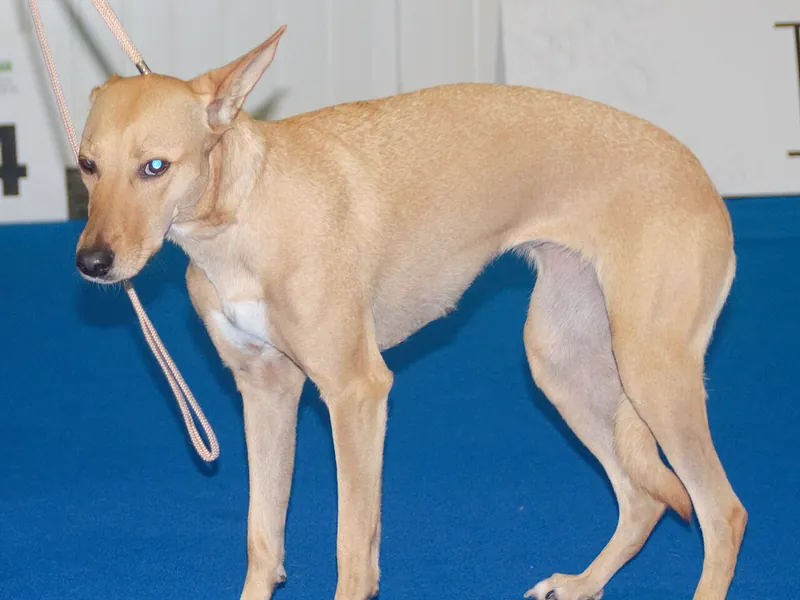
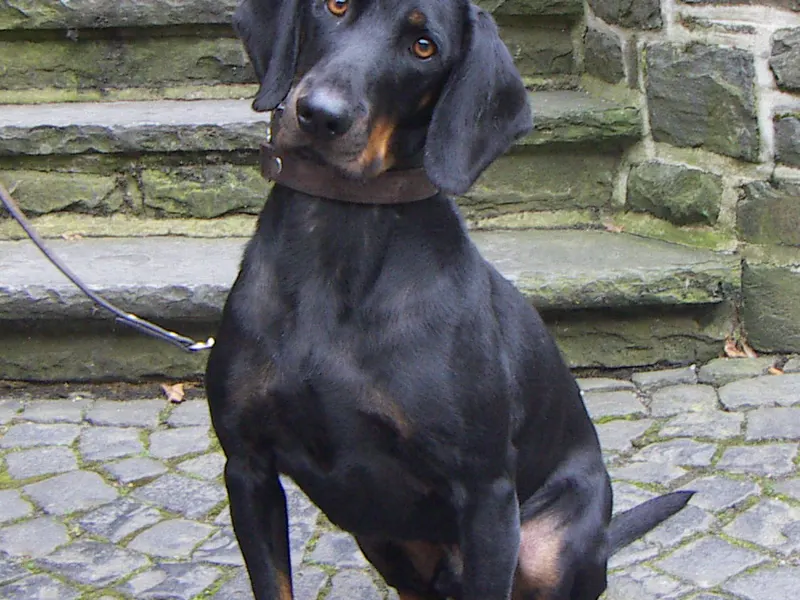
Bavarian Mountain HoundSpecialist tracker of wounded game
The Bavarian Mountain Hound is a German scent hound bred for one specialized job: following the blood trail of wounded game through mountain terrain. Calm and affectionate at home, it needs regular scent work and is best suited to hunters or dedicated tracking enthusiasts.
Why people love the Bavarian Mountain Hound
- Calm, quiet and affectionate at home
- Specialist nose for tracking wounded game
- Short coat is easy to maintain
- Usually gets along with other dogs
- Generally healthy breed with relatively low inbreeding
Things to consider
- Needs regular scent work to stay content
- Strong hunting drive, unreliable off leash
- Reserved with strangers
- Bred mainly for hunters, few pet-only homes
- Rare in the US with limited breeders
Is this breed right for you?
10 questions · live resultHistory and Origin
In the late 1800s, hunters in Bavaria wanted a lighter, more agile tracking dog than the heavy Hanoverian Scenthound for work in the mountains. They crossed Hanoverian Scenthounds with local mountain hounds, creating a dog that could follow cold blood trails over steep, rocky ground.
The breed club was founded in Munich in 1912. In Germany, these hounds are traditionally placed with hunters and gamekeepers who need them for tracking wounded deer and wild boar. The Kennel Club in the UK recognizes the breed in its Hound Group, and the AKC records it in the Foundation Stock Service.
Size, Coat and Colors
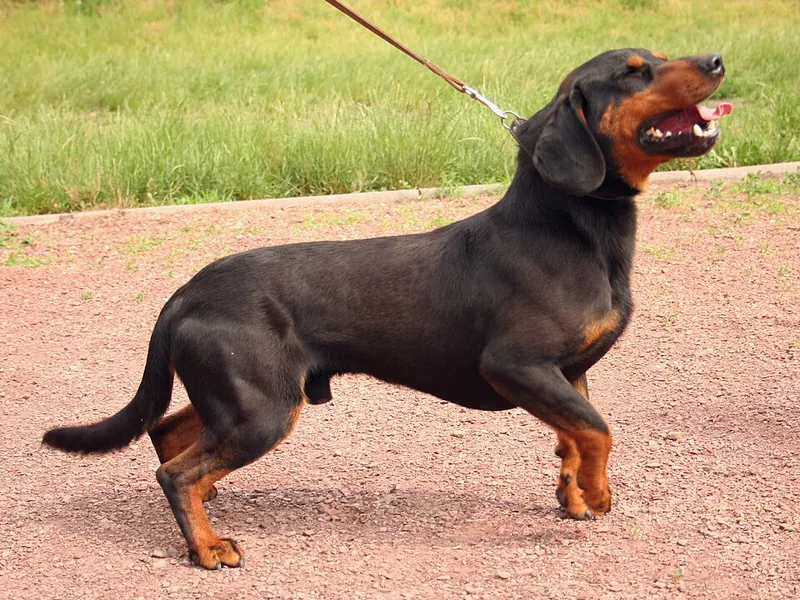
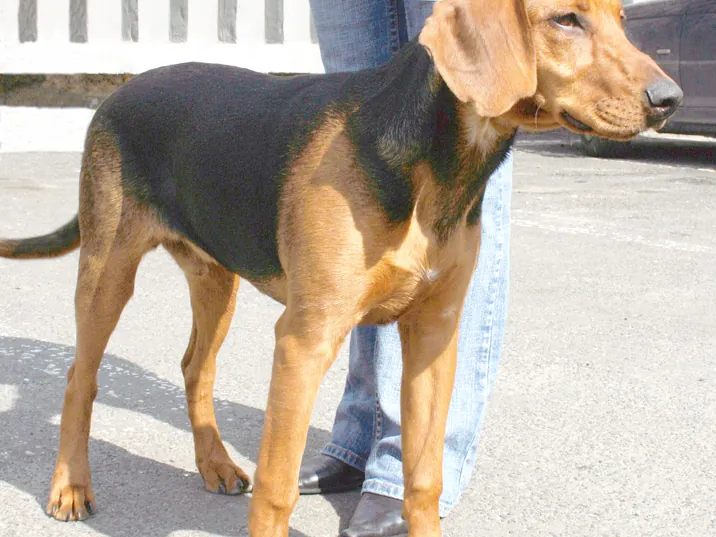
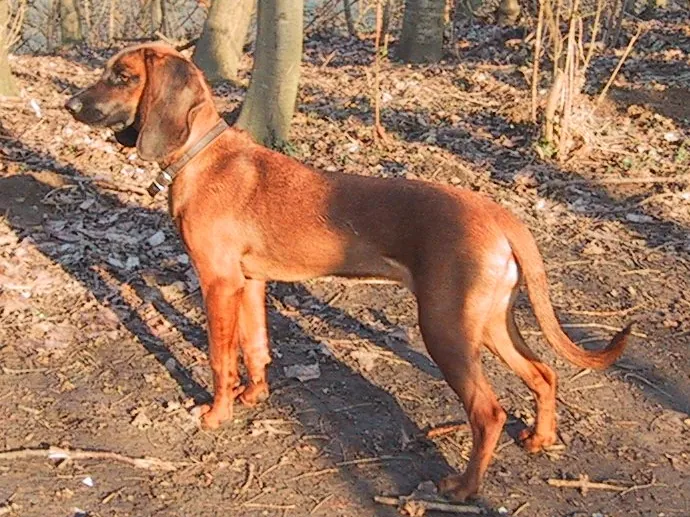
The Bavarian Mountain Hound is a medium-sized, light and agile scent hound, built for endurance on steep terrain. It stands 17 to 20 inches tall and weighs about 44 to 66 lb. Males are usually taller and heavier, about 18.5 to 20 inches, while females are about 17 to 19 inches and more lightly built.
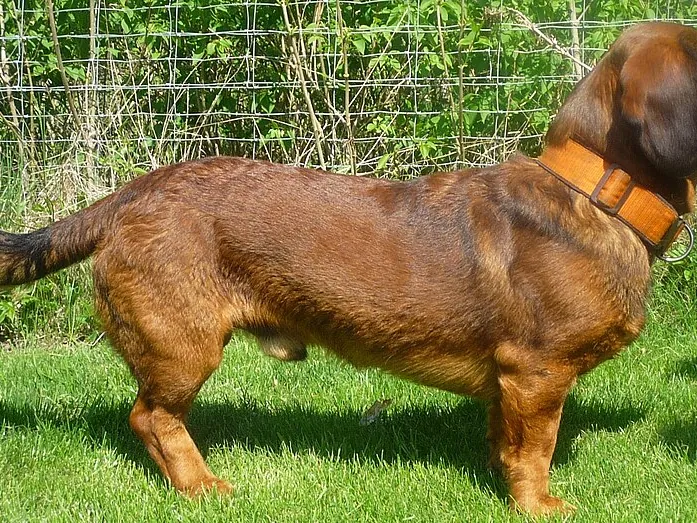
The body is slightly longer than tall, with a deep chest, strong back and well-muscled hindquarters. The head is broad with a slightly domed skull and a strong muzzle. The ears are high-set, broad and hang close to the head, and the tail is carried horizontally or slightly downward.
The coat is short, dense and close-lying, slightly harsher on the back and softer on the head and ears. Colors include deep red, deer red, red-brown, red-yellow, fawn and biscuit, as well as red-gray and brindle with black. A dark mask and darker ears are common. A small light patch on the chest is permitted. Puppies often start darker and lighten as they mature.
Temperament and Personality
At home, Bavarian Mountain Hounds are quiet, calm and very attached to their handler. They are sensitive and do not respond well to harsh treatment. With strangers they are usually reserved.
On the trail they are persistent, focused and fearless toward game. Their hunting drive is high, and they can be determined to follow a scent once they find it. Many get along with other dogs, but small animals may trigger their prey instincts.
Inside the house they are typically quiet and undemanding once their work needs are met. Many bond strongly with one handler, which is valuable in tracking, where dog and handler work as a close team for years.
Is the Bavarian Mountain Hound Good for First-Time Owners?
The Bavarian Mountain Hound is usually not a good choice for first-time owners. It is calm and affectionate, but it is a specialist working dog that needs regular, structured scent work and handlers who understand hounds.
Many breeders, especially in Germany, place puppies mainly with hunters or tracking enthusiasts. A motivated beginner who commits to tracking or mantrailing training and joins a club can succeed, but owners who want a casual family companion will struggle to meet the breed's needs. Be prepared to work with an experienced trainer and spend time outdoors several days a week.
Do Bavarian Mountain Hounds Bark a Lot?
Bavarian Mountain Hounds are generally quiet at home and are not known for constant barking. They may bark to alert you to visitors, but most are calm and undemanding indoors when their exercise needs are met.
On the trail they can be more vocal, giving voice when they find a fresh scent or locate game. Boredom or lack of scent work can increase noise and restlessness at home. Regular tracking sessions, long walks with time to sniff and puzzle games help keep the dog content and quiet.
Are Bavarian Mountain Hounds Good With Cats?
Some Bavarian Mountain Hounds live with cats they were raised with, but the breed's hunting drive makes this uncertain. It was bred to track and find game, and fast-moving small animals can trigger its instincts.
Introduce a puppy to a calm cat early and supervise closely. Give the cat high perches and safe rooms, and teach the dog a reliable leave-it. Even dogs that accept the household cat may chase unfamiliar cats or wildlife outdoors. Small pets such as rabbits and guinea pigs should be kept separate from this breed.
Exercise and Training
This breed needs daily exercise, around one to two hours, and regular nose work to stay content. Long walks on varied terrain, hiking and structured tracking sessions are ideal.
- Blood-tracking training or mantrailing gives the dog a purpose that matches its breeding.
- Keep it on a leash or long line in unfenced areas; a scent can pull it far away quickly.
- Train calmly and consistently with rewards. Bavarians are willing but think independently on a track.
Tracking work is mentally tiring, and a long session on a trail can satisfy this hound more than a run of the same length. Many owners use a tracking harness and long leash, as practiced in traditional blood-tracking.
Grooming and Shedding
The short, dense coat is easy to care for. A weekly brushing removes dead hair and dirt. Colors range from deer red to fawn and brindled, often with a darker mask.
After work in the woods, check ears, paws and the coat for ticks, thorns and cuts. The drop ears benefit from regular cleaning.
Feeding and Nutrition
Bavarian Mountain Hounds are lean, athletic dogs that should stay light enough to move easily over rough terrain. You should feel the ribs easily and see a clear waist from above.
- Feed puppies three or four meals a day, then two meals for adults.
- Match portions to the dog's workload: hounds that track several times a week or work in hunting season need more energy than family companions.
- Keep young dogs lean to support hip health, since hip dysplasia is screened for in the breed.
- The breed carries a known risk variant linked to intervertebral disc disease. Healthy body weight reduces strain on the spine.
Use small treats or part of the daily ration during tracking training. After long sessions, provide fresh water and allow the dog to rest before feeding a large meal.
| Adult weight | Less active | Typical adult | Very active |
|---|---|---|---|
| 44 lb | 930 kcal | 1,060 kcal | 1,320 kcal |
| 66 lb | 1,250 kcal | 1,430 kcal | 1,790 kcal |
Estimates use the resting energy formula veterinarians work with (70 × body weight in kg0.75) and standard activity factors. Use the feeding guide on your food as a starting point and adjust to body condition. Puppies, seniors, pregnant animals and pets that need to lose weight have different needs, so ask your vet.
Health and Lifespan
Bavarian Mountain Hounds typically live 10 to 14 years. The breed is considered relatively healthy, and its inbreeding level has been reported as comparatively low. Hip dysplasia screening is standard among responsible breeders.
Genetic testing has identified a risk variant for chondrodystrophy (CDDY) in the breed, which is linked to intervertebral disc disease. Ask breeders about DNA test results and hip scores.
Bavarian Mountain Hound Price and Cost of Ownership
The Bavarian Mountain Hound is rare in the US, and there is no widely published US price range. A few breeders work with hunting and tracking organizations, and some puppies are imported from Germany or Central Europe. Prices vary by breeder, region and lines. Many breeders prefer homes that will use the dog for tracking, so be prepared to explain your plans.
Rescue dogs are rare, but tracking and hound groups may know of adults needing homes.
Breed-specific ongoing costs include:
- Tracking harness, long leash and training equipment.
- Club memberships, tracking seminars or mantrailing classes.
- Insurance or savings for hip and spinal problems.
- Tick prevention and checks after work in the woods.
Is the Bavarian Mountain Hound Right for You?
The breed is ideal for hunters, gamekeepers and committed tracking or mantrailing enthusiasts with access to woods and countryside. A home with a garden suits it best.
It is not suitable for city apartments or for owners who want a casual companion without regular scent work. Breeders in its home country often place puppies primarily with hunters.
Bavarian Mountain Hound Traits at a Glance
Bavarian Mountain Hound FAQ
How big do Bavarian Mountain Hounds get?
They stand about 17 to 20 inches tall and weigh roughly 44 to 66 lb.
Are Bavarian Mountain Hounds good pets?
They are affectionate with their family but need regular tracking work. Without it they can become restless.
What is a Bavarian Mountain Hound used for?
It is a specialist blood-tracking dog used to find wounded game, especially in mountainous terrain.
Do Bavarian Mountain Hounds shed?
They shed moderately. Their short coat needs only weekly brushing.
How long do Bavarian Mountain Hounds live?
Typically 10 to 14 years.
Can a Bavarian Mountain Hound be a family pet?
It is affectionate with its family, but without regular tracking or scent work it is rarely content as a pure companion dog.