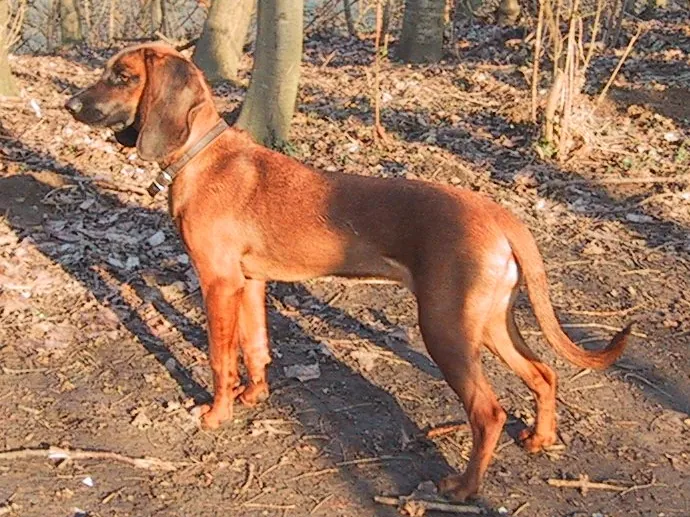
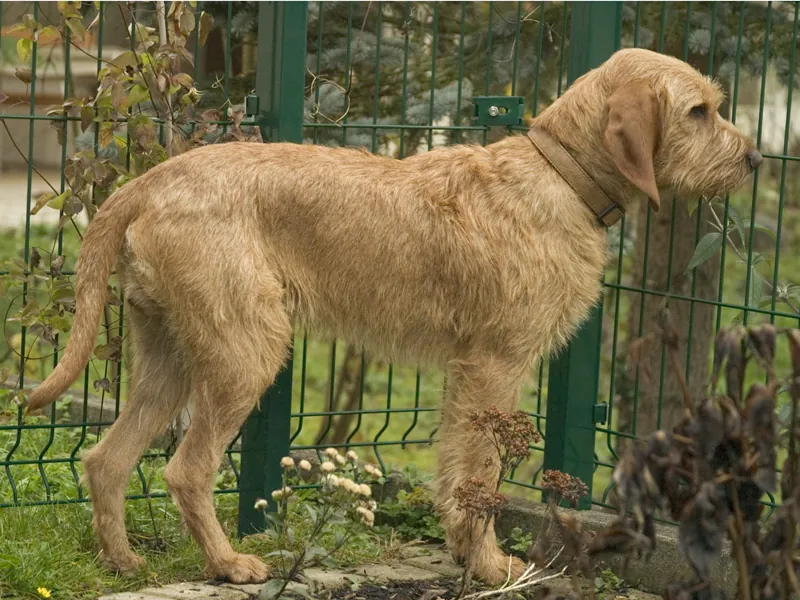
Austrian Black and Tan HoundAustria's devoted tracking and trailing hound
The Austrian Black and Tan Hound, or Brandlbracke, is a medium-sized scenthound from Austria known for its tracking ability on wounded game and its persistent trailing voice. Calm and people-oriented at home, it belongs with hunters or rural owners who can give its nose daily work.
Why people love the Austrian Black and Tan Hound
- Excellent tracker of wounded game
- Calm, quiet and gentle indoors
- Short, smooth coat that is easy to maintain
- No breed-specific hereditary diseases known
- Gets along well with other dogs
Things to consider
- Needs regular, serious scent work to stay content
- Gives voice loudly on the trail
- Rare outside Austria, mostly placed with hunters
- Unreliable recall in wildlife areas
- Dislikes long hours alone
Is this breed right for you?
10 questions · live resultHistory and Origin
The Brandlbracke is a traditional Austrian hound, used for hunting in mountainous and forested terrain. Its name comes from the tan markings (Brand) on its black coat, and the two tan spots above the eyes give it the nickname Vieräugl, meaning four-eyed. The breed is generally traced back to older Celtic-type hounds of Central Europe.
It was formally standardized in Austria in the late 19th century and is recognized by the FCI in Group 6. Today it is used for driven hunts on hare and fox and is especially valued for blood tracking, following the trail of wounded deer. It stands about 19 to 22 inches tall and weighs roughly 33 to 49 lb.
Size, Coat and Markings
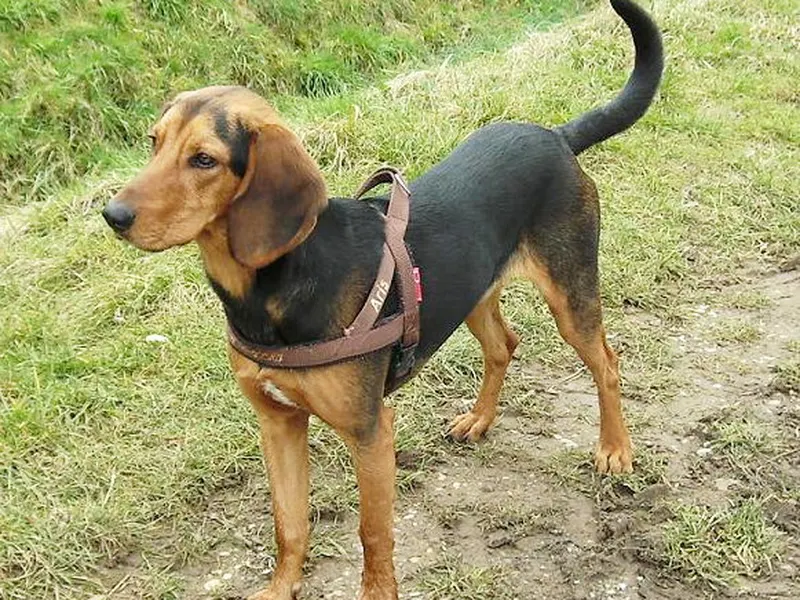
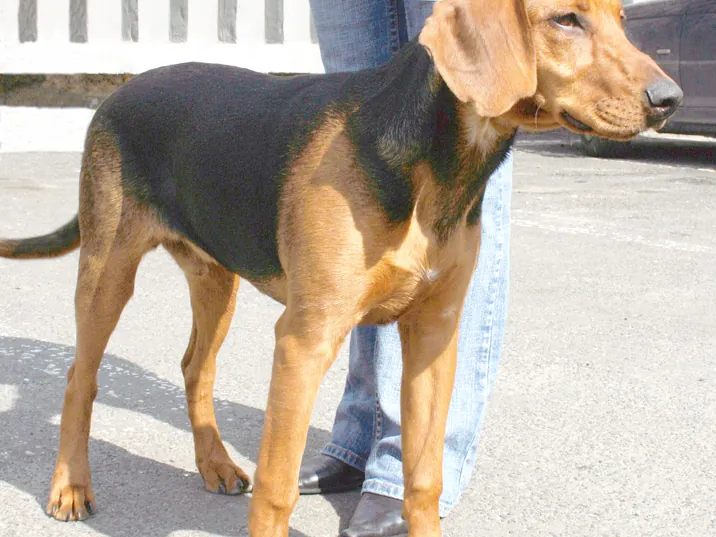
The Austrian Black and Tan Hound is a medium-sized, athletic scent hound with a slightly elongated body and strong but not heavy bones. Adults stand 19 to 22 inches at the shoulder and weigh about 33 to 49 lb. Males are somewhat taller and heavier than females, with a stronger head.
The coat is short, dense and smooth, close-lying and glossy. It is about one inch long or less and offers good protection in forest and mountain terrain.
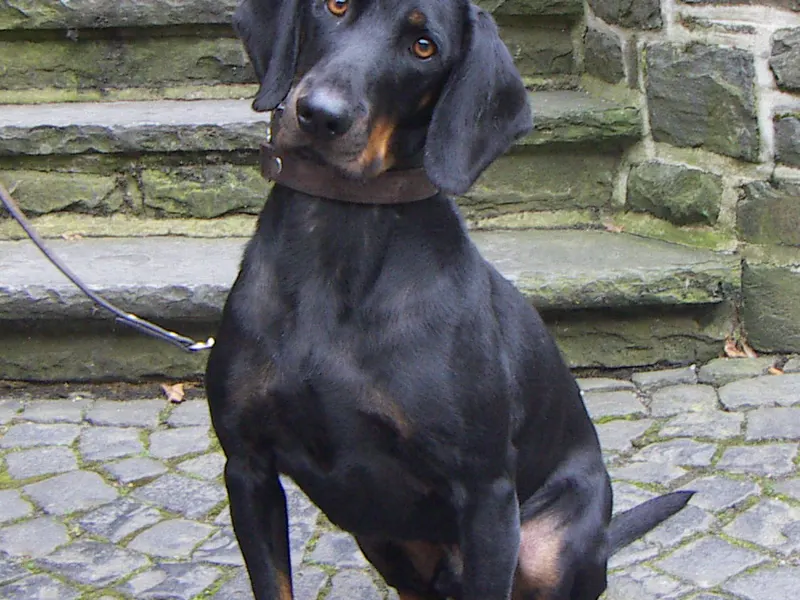
The breed's only color is black with tan markings, which gives it the German name Brandlbracke. The tan should be sharply defined and appears on the muzzle, chest, legs and under the tail. The most distinctive feature is the pair of tan spots above the eyes, which earned the breed its nickname Vieräugl, or four-eyed. A small white spot on the chest is tolerated in the standard.
The ears are medium length, broad and rounded at the tips, hanging flat. The tail is long, slightly curved and tapers to a point.
Temperament and Personality
Brandlbrackes are calm, friendly and closely attached to their people. In the house they are usually quiet and gentle. Their drive to follow a trail is extreme, and once tracking they show remarkable persistence and give voice on the trail.
They usually get along with other dogs. Because of their size, energy and strong drive, they are better suited to families with older, calmer children than to homes with toddlers.
Do Austrian Black and Tan Hounds Bark a Lot?
At home, usually not. Brandlbrackes are calm and quiet indoors when their exercise needs are met.
On a trail, it is a different story. The breed gives voice while tracking, meaning it bays persistently so the hunter can follow. That sound is loud and carries a long way.
Barking or howling at home becomes more likely when the dog is bored, under-exercised or left alone for long periods. Regular scent work, company and a calm routine are the most effective ways to keep the noise level down. Neighbors close by should be considered before choosing this breed.
Are Austrian Black and Tan Hounds Easy to Train?
Moderately. Brandlbrackes are cooperative and attached to their people, so basic manners come fairly easily with patient, reward-based training.
The challenge is the nose. Once on a scent, the dog is focused and determined, and recall is often unreliable around wildlife. Training priorities include:
- Leash manners and a long line for walks in game-rich areas
- Recall practice in fenced or low-distraction spaces
- Structured scent work, such as blood tracking or mantrailing
Many hunters train the breed specifically for tracking wounded game, where its persistence becomes a strength rather than a problem.
Are Austrian Black and Tan Hounds Good with Cats?
It depends on the individual and its upbringing. The Brandlbracke is bred to hunt hare and fox and to follow game, so prey drive is real.
A puppy raised with a cat often learns to accept it indoors, especially if introductions are calm and supervised. However, a running cat outdoors, or neighborhood cats in the yard, may trigger chasing.
Homes with existing cats should look for a puppy from a breeder who can describe the temperament of the parents and, ideally, has exposed puppies to cats. Pet rabbits, rodents and birds are at greater risk and should be kept separate.
Exercise and Training
This hound needs plenty of exercise and, above all, scent work. Long daily walks are a baseline; regular tracking, trailing or hunting is what truly satisfies it. Without nose work, it tends to become restless and vocal.
- Training is moderately easy with patient, reward-based methods.
- Blood tracking and mantrailing are ideal activities for non-hunting homes.
- Keep it on a leash or long line in wildlife-rich areas.
- It does not like long periods alone.
Grooming and Shedding
The short, dense, smooth coat is easy to maintain. A weekly brushing with a rubber mitt is enough. Check the drop ears weekly and clean them as needed, since hanging ears can trap moisture. After hunting, inspect for ticks and cuts.
Feeding and Nutrition
A working Brandlbracke that tracks for hours in mountain terrain needs much more food than a dog on a quiet walking routine. Adjust portions to activity and season: hunting season in fall and winter often calls for larger meals, while summer may need less. Keep the dog lean and muscular, with ribs easy to feel.
Puppies grow into medium-sized dogs. A complete puppy food fed in measured portions supports steady growth. Avoid over-exercising young dogs on steep ground until their joints are mature.
- Feed adults two meals a day.
- On long tracking days, a small meal in the morning and the main meal after work is often easier on digestion.
- Carry water and offer small amounts during work.
- Use food rewards in tracking and training, and count them in the daily total.
The breed has no known food sensitivities documented. Keep an eye on weight in retired or less active dogs, which can gain quickly on a working dog's ration.
| Adult weight | Less active | Typical adult | Very active |
|---|---|---|---|
| 33 lb | 750 kcal | 850 kcal | 1,070 kcal |
| 49 lb | 1,000 kcal | 1,150 kcal | 1,430 kcal |
Estimates use the resting energy formula veterinarians work with (70 × body weight in kg0.75) and standard activity factors. Use the feeding guide on your food as a starting point and adjust to body condition. Puppies, seniors, pregnant animals and pets that need to lose weight have different needs, so ask your vet.
Health and Lifespan
No breed-specific hereditary diseases are known for the Brandlbracke. Its typical lifespan is about 12 to 14 years. The most common practical problem is ear infections associated with its drop ears. Hunting injuries and joint wear in hard-working dogs are also possible.
Buy from breeders, often affiliated with hunting clubs, who know their dogs' health and working background.
Austrian Black and Tan Hound Price and Cost of Ownership
The Austrian Black and Tan Hound is very rare in the US, and it is not recognized by the AKC. Most puppies are bred in Austria, where clubs often place them primarily with active hunters, so getting one may require an import and proof of hunting use. Prices vary by breeder, region and lines, and import costs add significantly.
Rescue Brandlbrackes are extremely rare outside Europe.
Breed-specific ongoing costs include:
- Import, travel and paperwork if buying from Austria
- Tracking courses, hunting licenses or mantrailing classes
- Ear cleaning supplies and treatment of ear infections
- Insurance that covers hunting injuries
- GPS tracking collars for work in wild areas
Is the Austrian Black and Tan Hound Right for You?
The Brandlbracke is a great choice for hunters and rural owners who can provide daily scent work. In Austria, puppies are often placed primarily with hunters. It is not a good fit for apartments, city life or households with very young children.
- Good fit: hunters, tracking enthusiasts, rural families with older children.
- Poor fit: apartments, sedentary owners, long hours alone.
Austrian Black and Tan Hound Traits at a Glance
Austrian Black and Tan Hound FAQ
How big do Austrian Black and Tan Hounds get?
They stand about 19 to 22 inches tall and weigh roughly 33 to 49 lb.
What is a Brandlbracke used for?
It is used for driven hunts on hare and fox and especially for tracking wounded game.
Do Austrian Black and Tan Hounds shed?
They shed lightly. Their short coat needs only weekly brushing.
Are Brandlbrackes good family dogs?
They are calm and affectionate with their people but need a lot of scent work. They suit rural families with older children best.
How long do Austrian Black and Tan Hounds live?
Typically about 12 to 14 years.
Why is the Brandlbracke called four-eyed?
The two tan spots above its eyes look like a second pair of eyes, which is where the Austrian nickname Vieräugl comes from.