Ibizan HoundThe high-jumping rabbit hunter of Ibiza
The Ibizan Hound is a lean, deer-like hunter with huge upright ears and a famous ability to leap. Calm and gentle indoors, it turns into a fast, independent athlete outdoors, which makes it best for experienced owners with secure space and time to let it run.
Why people love the Ibizan Hound
- Calm, clean and gentle indoors
- Elegant, athletic hound with very little odor
- Low-maintenance coat in smooth or wire versions
- Usually sociable with other dogs
- Generally robust health for its size
Things to consider
- Off-leash recall unreliable once prey is spotted
- Can jump very high; needs tall fencing
- Chases cats and small animals outdoors
- Independent and easily bored by repetitive training
- Rare in the US; few breeders
Is this breed right for you?
10 questions · live resultHistory and Origin
The breed takes its name from Ibiza, one of Spain's Balearic Islands, where it has been used for generations to hunt rabbits. Islanders hunted with small packs of these hounds, which work by sight, scent and hearing together, flushing and catching rabbits over rough, rocky ground.
The Ibizan is often linked with dogs depicted in ancient Egyptian art, but modern genetic research does not support the idea that it descends directly from those dogs. What is clear is that it is an old Mediterranean hunting type, closely related to other podencos. The AKC recognized the breed in 1979, and it is also recognized by The Kennel Club in the UK.
Size, Coat Types and Colors
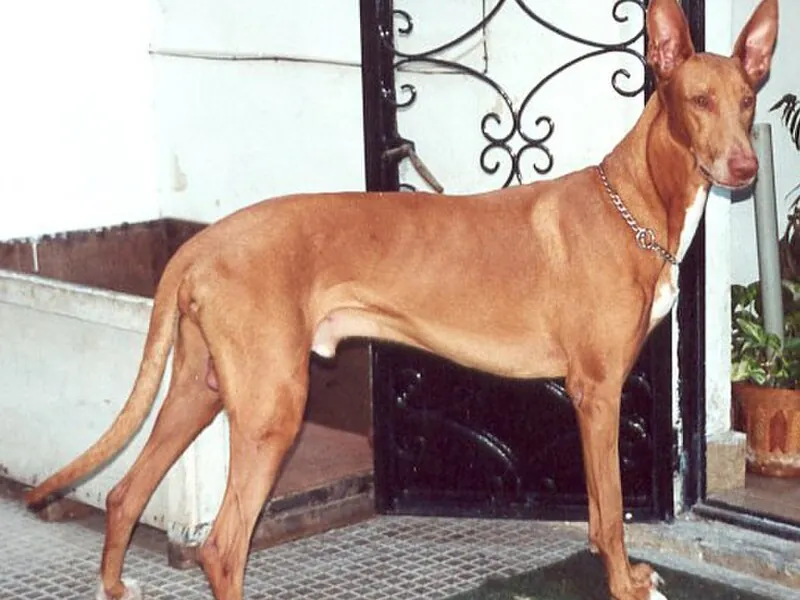
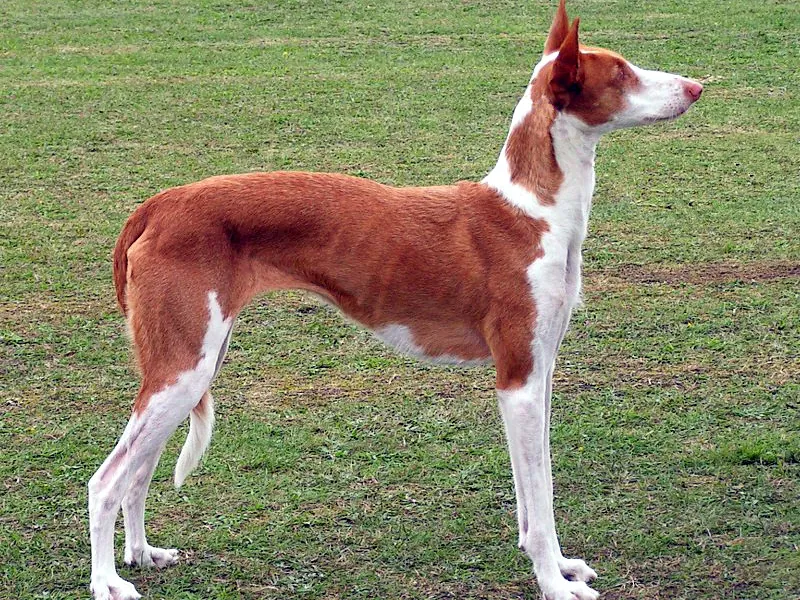
The Ibizan Hound is a tall, lean, deer-like hound standing 24 to 28 inches at the shoulder and weighing 44 to 51 lb. Males are taller and slightly heavier than females, but both look racy and light-boned rather than muscular.
Its most striking features are the huge, upright ears, a long, narrow head, a flesh-colored nose and light amber eyes. The body is slightly longer than tall, with a deep, narrow chest and a long, low-set tail.
Two coat types are recognized by the AKC:
- Smooth: short, hard and close-lying
- Wire: about 1 to 3 inches long, often with a mustache
The FCI also lists a long-haired variety. Colors are white, red (from light yellowish lion color to deep red) or any combination of the two. Pigment on the nose, eye rims and lips is always pink or flesh-toned, never black.
Temperament and Personality
At home, Ibizans are typically quiet, clean and affectionate, happy to stretch out on a soft bed. They are polite with visitors, though some are reserved. Many are good with respectful children, and they usually live comfortably with other dogs.
Outdoors, the hunting instinct takes over. Anything that runs, including cats and small wildlife, may be chased at high speed. Ibizans are also clever and independent, and some become accomplished counter-surfers and escape artists.
Is the Ibizan Hound Good for First-Time Owners?
An Ibizan Hound can work for a first-time owner who is patient and well prepared, but it is not an easy beginner breed.
Indoors it is quiet and affectionate, which appeals to many novices. The challenges are outdoors: strong prey drive, limited off-leash reliability and an athletic dog that can clear ordinary fences. First-time owners must be comfortable keeping the dog leashed in open areas, installing tall, secure fencing and finding enclosed spaces for regular sprints. Training needs creativity and food rewards rather than repetition, and progress can feel slower than with sporting breeds.
Are Ibizan Hounds Good with Cats?
Some Ibizan Hounds live with indoor cats they were raised with, but the breed's hunting instinct makes cats outdoors and unfamiliar cats at risk.
Ibizans hunt by sight, scent and hearing together, so quick movement triggers a chase. A puppy raised with a calm adult cat may accept that individual cat indoors, but behavior can change outside or during play. Introduce them gradually, keep the dog leashed at first and give the cat plenty of escape routes. Never assume a household truce applies to the yard. Rabbits, guinea pigs and other small pets should be kept fully separate.
Can Ibizan Hounds Live in an Apartment?
Yes, an Ibizan Hound can live in an apartment if it gets daily walks and several chances a week to run full speed in a secure, enclosed space.
Indoors, adult Ibizans are typically calm and spend much of the day resting on soft furniture. They are fairly quiet, though some are vocal when excited. The challenge in city living is finding safe places to sprint, such as fenced fields or lure coursing clubs. Balconies need secure barriers, since this breed can jump surprisingly high. Without running opportunities, apartment Ibizans may become restless or destructive.
Exercise and Training
This breed needs real running, not just walks. Daily on-leash outings plus several sessions a week of free running in a fully enclosed area keep it fit and content. Lure coursing is an excellent outlet.
Ibizans can jump remarkably high from a standstill, so a tall, solid fence is essential; many owners aim for around six feet. Off-leash recall is unreliable once prey is spotted. Training works best with patience, food rewards and variety, since repetitive drills bore them quickly and harsh methods make them shut down.
Grooming and Shedding
The breed comes in two coat types, smooth and wire, both in red, white or red-and-white. Neither needs much grooming. A weekly brush or hound glove removes loose hair, and the wire coat may need a little tidying. Shedding is light to moderate.
With little body fat and a thin coat, Ibizans get cold easily, so a coat in winter is sensible. Keep nails short, check those large ears and brush teeth regularly.
Feeding and Nutrition
A healthy Ibizan Hound looks very lean: the last ribs and hip bones are faintly visible, and the waist is pronounced. Owners unfamiliar with sighthounds often worry that this is too thin and overfeed. Ask your vet to help you judge body condition the first time, then use the scale to keep weight steady.
Ibizans are clever food thieves and skilled counter-surfers. Keep food, trash and lunch bags out of reach rather than relying on training alone.
- Feed puppies three or four meals a day and adults two.
- Feed after running, not before, and give the dog time to rest after meals.
- Raised bowls are not needed; feed at a height that is comfortable for the dog.
- Use small, high-value treats for training, since food motivation helps hold its attention outdoors.
With little body fat, Ibizans may need slightly more food in cold weather, especially if they live in chilly climates or spend time outdoors. Allergies are reported in the breed; if your vet suspects a food sensitivity, follow a supervised elimination trial.
| Adult weight | Less active | Typical adult | Very active |
|---|---|---|---|
| 44 lb | 930 kcal | 1,060 kcal | 1,320 kcal |
| 51 lb | 1,030 kcal | 1,180 kcal | 1,480 kcal |
Estimates use the resting energy formula veterinarians work with (70 × body weight in kg0.75) and standard activity factors. Use the feeding guide on your food as a starting point and adjust to body condition. Puppies, seniors, pregnant animals and pets that need to lose weight have different needs, so ask your vet.
Health and Lifespan
Ibizan Hounds are generally robust and usually live 11 to 14 years. Veterinary sources mention seizures and allergies as conditions seen in the breed. Like many sighthounds, they are lean and may be sensitive to certain anesthetic drugs, so let your vet know the breed before any procedure.
Choose a breeder who screens for hips, eyes and hearing as recommended by the breed club, and ask about epilepsy in the dog's family line.
Ibizan Hound Price and Cost of Ownership
Ibizan Hounds are rare in the US, with only a handful of litters registered each year. Expect to contact breeders through the national breed club and to wait for a puppy. Prices vary by breeder, region and lines. Breed rescue groups occasionally place adults.
Breed-specific cost drivers include:
- Tall, solid fencing, often around six feet, which can be a major one-time expense
- Access fees for secure running fields or lure coursing events
- Winter coats and soft bedding for a thin-coated, lean dog
- Anesthesia monitoring adapted to sighthounds for surgeries and dental cleanings
- Pet insurance that covers seizures and allergies
Grooming costs are minimal for both smooth and wire coats.
Is the Ibizan Hound Right for You?
An Ibizan Hound can be a wonderful companion if you:
- Have a tall, secure fence and access to safe running areas
- Enjoy an independent, gentle dog that is calm indoors
- Are patient with training and accept limited off-leash freedom
It is not ideal for homes with free-roaming cats or small pets, for apartments without running opportunities, or for owners who want a highly obedient dog.
Ibizan Hound Traits at a Glance
Ibizan Hound FAQ
Are Ibizan Hounds good family dogs?
They can be. Most are gentle and affectionate at home and fine with considerate children, but their chase instinct makes small pets a concern.
How high can an Ibizan Hound jump?
Very high: the breed is known for clearing tall fences from a standstill. Many owners use fencing of around six feet.
How big do Ibizan Hounds get?
They stand about 24 to 28 inches tall and weigh around 44 to 51 lb, with a slim, leggy build.
Do Ibizan Hounds shed?
Only lightly. Both smooth and wire coats are easy to care for with weekly brushing.
Are Ibizan Hounds hypoallergenic?
No dog is fully hypoallergenic. Ibizans shed little, which some allergy sufferers tolerate better, but reactions vary.
How long do Ibizan Hounds live?
Typically 11 to 14 years.