BasenjiCat-like, barkless hunter from Central Africa
The Basenji is a small, elegant hunting dog from Central Africa, famous for not barking: it yodels, howls and chortles instead. Clean, curious and independent, it is a fascinating companion for experienced owners who enjoy a clever dog with a mind of its own.
Why people love the Basenji
- Rarely barks; vocalizes with yodels and howls instead
- Very clean, with little doggy odor and minimal grooming
- Compact, athletic size suits many homes
- Playful, curious and entertaining companion
- Long lifespan of around 13 to 14 years
Things to consider
- Strong prey drive; off-leash recall is rarely reliable
- Escape artist that climbs fences and opens doors
- Chews and destroys when bored or under-exercised
- Independent mind makes training slow and creative
- Fanconi syndrome requires DNA-tested parents and ongoing monitoring
Is this breed right for you?
10 questions · live resultHistory and Origin
The Basenji is considered one of the oldest dog types. Dogs resembling it appear in ancient Egyptian art, and genetic studies place it among the basal breeds, those that branched off early from other dogs. In the Congo basin, people used Basenjis to flush small game into nets, often fitting them with wooden bells so hunters could follow them in dense forest.
British explorers and settlers brought Basenjis to England in the 1930s, after earlier imports had died of distemper. The breed reached the US soon after, and the AKC recognized it in 1943. Both the AKC and The Kennel Club place it in the Hound group.
Size, Coat, Colors and Signature Features
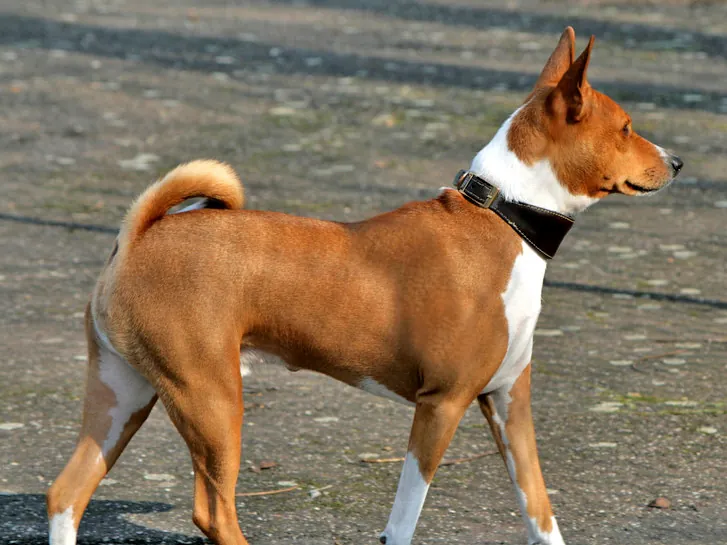
The Basenji is a small, lightly built hound with long legs, a short back and an elegant, square outline. Adults stand 16 to 17 inches at the shoulder and weigh about 22 to 24 lb. Under the AKC standard, males are ideally about 17 inches and 24 lb, females about 16 inches and 22 lb, so the difference between the sexes is small.
Several features are unique to the breed: fine wrinkles on the forehead that deepen when the dog is alert, upright pointed ears, almond-shaped eyes and a tail curled tightly over one side of the back. The gait is swift and tireless, often compared to a trotting horse.
The coat is short, fine and close-lying. Recognized colors are:
- Red and white
- Black and white
- Tricolor (black and tan with white)
- Brindle (black stripes on a red base) with white
White appears on the feet, chest and tail tip, and may extend to the legs, a blaze or a collar. The color should be clear and the borders well defined.
Temperament and Personality
Basenjis are alert, curious and playful, often described as cat-like: they groom themselves, climb onto high perches and can be aloof with strangers. With their own family they are affectionate in their own way.
The larynx is shaped differently than in most dogs, so instead of barking they make a yodel-like sound called a barroo, plus howls, whines and screams when excited. They are not silent dogs.
Prey drive is very strong, and they may chase cats and small animals. They are intelligent problem solvers and notorious escape artists that open doors, climb fences and chew when bored.
Are Basenjis Good for First-Time Owners?
Usually not, though a well-prepared first-timer can succeed. The Basenji's quiet nature and easy coat attract beginners, but the daily reality is a clever, independent hound that tests fences, steals food and gets into trouble when bored.
A first-time owner should only consider the breed if they can commit to secure containment, crate training, an hour or more of exercise and daily mental work. Talking with Basenji owners and breed clubs, and meeting adults rather than just puppies, gives a realistic picture. Those who already know sighthounds or spitz breeds tend to find the Basenji easier to read and manage.
Can Basenjis Be Left Alone?
A trained adult can stay alone for a few hours, but an unsupervised, bored Basenji is notorious for destruction. Chewing drywall, door frames and cables, raiding trash and escaping are common complaints.
Crate training from puppyhood is the most reliable safety tool, combined with a good exercise session before you leave. Food puzzles, frozen chews and safe toys help pass the time. Many Basenjis do better with a canine companion of similar energy, though pairs can also team up on mischief. Leaving a Basenji loose in a yard while you are out is not recommended, as it can climb or dig out quickly.
Are Basenjis Good Apartment Dogs?
They can be, which surprises many people. The Basenji is small, does not bark at every noise and has little odor, so neighbors rarely notice it.
The catch is energy. An apartment Basenji needs a committed routine: brisk walks, a safe place to sprint such as a fenced field or lure coursing club, and daily brain games. Without that, its frustration shows as chewing and loud yodeling or screaming, which carries well through walls. Stairs and elevators are no issue for this athletic breed. Plan secure leash walks, since a Basenji that slips its collar in the city may not come back.
Exercise and Training
Basenjis need at least an hour of active exercise daily plus serious mental stimulation. Lure coursing is a natural fit, and many enjoy agility, scent work and puzzle toys.
- Always keep them leashed or in a high, secure fence; recall is rarely reliable.
- Use short, varied, reward-based sessions. Repetition bores them and harsh corrections fail.
- Puppy-proof the house thoroughly; Basenjis chew and investigate everything.
- Crate training helps keep a young Basenji safe when unsupervised.
Grooming and Shedding
The short, fine coat needs very little care: a weekly rub with a soft brush or mitt is enough. Basenjis shed lightly, have little doggy odor and clean themselves much like cats. Some people with mild allergies find them easier, though no dog is fully hypoallergenic.
Many Basenjis dislike water and rain. Keep nails short, and brush teeth regularly.
Coat colors include red, black, tricolor and brindle, all with white feet, chest and tail tip. The tightly curled tail and wrinkled forehead are breed signatures.
Feeding and Nutrition
Basenjis are typically lean, athletic dogs that should show a defined waist and a hint of ribs. Many are opportunistic food thieves, so the challenge is less about appetite and more about managing access: secure the trash, keep counters clear and feed measured meals rather than leaving food out.
Fanconi syndrome is the breed's signature health concern. Diet does not prevent or cure it, but owners of dogs with unknown or affected DNA status are often advised to check urine glucose at home with simple test strips from about age three, and to see a vet about increased thirst or urination. If a dog is diagnosed, follow the veterinarian's supplement and diet protocol closely.
- Two meals a day suit most adults.
- Persistent diarrhea or weight loss is worth investigating early because of IPSID, an intestinal disease seen in the breed.
- Puzzle feeders and snuffle mats give this clever hound something to solve.
- Use small, high-value treats; Basenjis work for rewards they actually care about.
| Adult weight | Less active | Typical adult | Very active |
|---|---|---|---|
| 22 lb | 550 kcal | 630 kcal | 790 kcal |
| 24 lb | 590 kcal | 670 kcal | 840 kcal |
Estimates use the resting energy formula veterinarians work with (70 × body weight in kg0.75) and standard activity factors. Use the feeding guide on your food as a starting point and adjust to body condition. Puppies, seniors, pregnant animals and pets that need to lose weight have different needs, so ask your vet.
Health and Lifespan
Basenjis typically live 13 to 14 years. Fanconi syndrome, an inherited kidney disorder that causes nutrients to be lost in the urine, is the best-known concern; a DNA test exists, and affected dogs can often be managed if diagnosed early. Other conditions include progressive retinal atrophy, pyruvate kinase deficiency (an inherited anemia, also DNA testable), kneecap luxation, hypothyroidism, hip dysplasia and immunoproliferative small intestinal disease (IPSID).
Choose breeders who use DNA tests for Fanconi syndrome and PK deficiency and screen eyes, hips and thyroid.
Basenji Price and Cost of Ownership
Typical breeder price in the US$1,500 to $3,000
A Basenji puppy from a reputable US breeder typically costs about $1,500 to $3,000. Prices vary by breeder, region and lines, and litters are relatively small, so waiting lists are normal. A good breeder will show DNA results for Fanconi syndrome and pyruvate kinase deficiency, plus eye, hip and thyroid screening.
Basenji rescue groups in the US place adult dogs regularly, often ones surrendered for escaping or destructive behavior that settle well with experienced owners.
Breed-specific cost drivers include:
- Tall, climb-resistant fencing and secure gates
- A sturdy crate and replacement of chewed items
- Home urine glucose strips and periodic kidney checks
- Lure coursing or dog sport fees for safe running
- Insurance that covers inherited kidney and eye conditions
Is the Basenji Right for You?
A Basenji suits experienced owners who appreciate an independent, clean, quiet-ish dog and can provide secure containment, daily exercise and creative training.
It is less suited to first-time owners, homes with cats or small pets, or anyone who wants an obedient off-leash dog.
A Basenji is rarely a good choice for owners who leave dogs loose in a garden unsupervised.
Basenji Traits at a Glance
Basenji FAQ
Do Basenjis bark?
Basenjis rarely bark. They make a yodel-like sound called a barroo, plus howls and whines.
How big do Basenjis get?
Basenjis stand about 16 to 17 inches tall and weigh roughly 22 to 24 lb.
Are Basenjis hard to train?
They are intelligent but independent and easily bored, which makes training a challenge. Short, fun sessions help.
Are Basenjis good with cats?
Often not. Their prey drive is strong, although some live with cats they were raised with.
Do Basenjis shed?
Lightly. Their short coat is easy to care for, and they groom themselves like cats.
How long do Basenjis live?
Most live 13 to 14 years.