American English CoonhoundFast, loud and tireless American trail hound
The American English Coonhound is a fast, high-stamina scenthound bred to trail raccoons through the night and tree them with a ringing voice. Friendly and easygoing with people, it is also loud, stubborn and very energetic, so it suits experienced, active owners best.

Why people love the American English Coonhound
- Friendly with people and other dogs
- Mellow and relaxed at home once exercised
- Easy-care short coat
- Superb endurance for running and hiking
- Excellent nose for tracking and scent sports
Things to consider
- Loud, carrying bawl that can upset neighbors
- Follows scent and ignores recall
- Needs a lot of daily exercise
- Stubborn in training outside hunting
- Prone to ear infections and possible hound odor
Is this breed right for you?
10 questions · live resultHistory and Origin
The breed descends from English hounds brought to colonial America, particularly Virginia, where they were adapted into fox hounds suited to American terrain. Hunters later developed lines that excelled at trailing raccoons at night, a faster and more demanding job.
It was once known as the English Fox and Coonhound and was registered by the United Kennel Club in the early 20th century. The AKC fully recognized the American English Coonhound in the Hound Group in 2011. Colors include redtick, bluetick, tricolor with ticking, and red and white.
The breed shares its roots with other coonhounds, and for many years Bluetick and Treeing Walker types were registered together with it before being separated into their own breeds. Today it is still widely used by raccoon hunters, especially in the southern and eastern United States, and is valued for speed and endurance on a hot trail.
Size, Coat and Colors
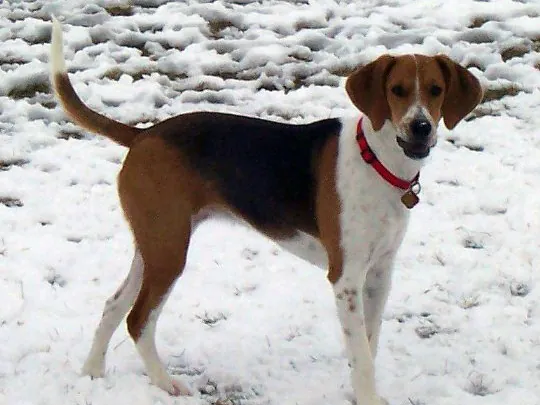
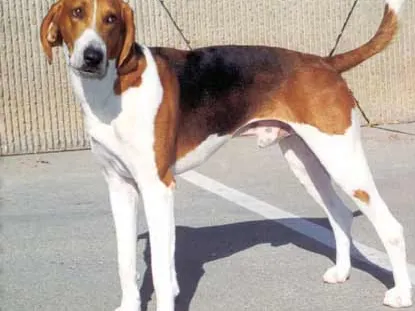
The American English Coonhound is a lean, athletic hound built for speed and endurance on a hot trail. Adults stand about 23 to 26 inches and weigh roughly 44 to 64 lb. Males are usually 24 to 26 inches and females 23 to 25 inches, with males showing a broader head and heavier frame.
The body is deep-chested, with a strong, level back and well-muscled hindquarters. The head has a domed skull, a broad muzzle and long, low-set ears that hang close to the cheeks. The tail is carried high with a slight curve.
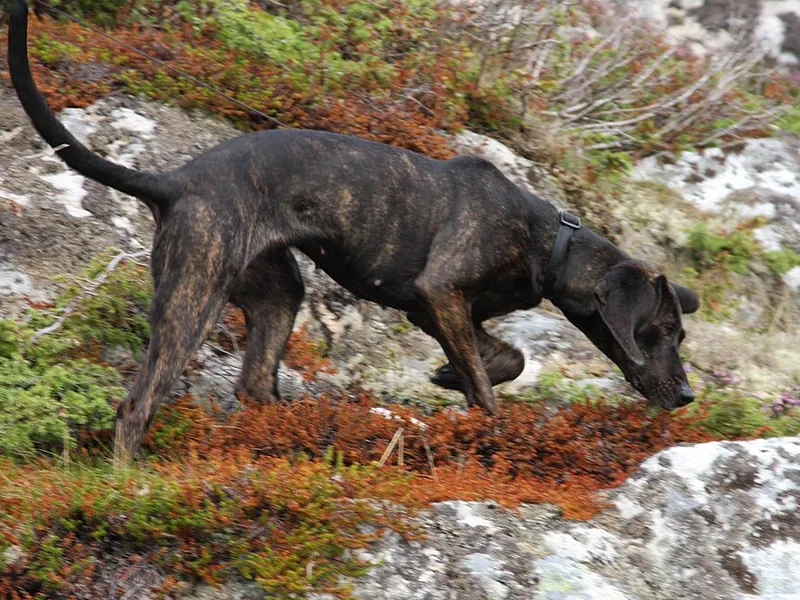
The coat is hard, protective and of medium length. Accepted colors include:
- Red and white ticked (redtick).
- Blue and white ticked (bluetick).
- Tricolor with ticking.
- Red and white, and white and black.
Ticking means small flecks of color scattered over the white areas. Coloring often becomes clearer as puppies mature.
Temperament and Personality
American English Coonhounds are usually friendly, sociable and good-natured. Many are mellow at home and enjoy company, both human and canine.
They can be stubborn outside hunting, and their independence makes training slower than with many breeds. The AKC notes that they are not ideal for first-time owners. Their voice is legendary: a loud bawl or chop that carries a long way.
Around the house, an exercised American English Coonhound is often relaxed and fond of comfortable sofas. It is generally good with other dogs, reflecting its pack background, and can be good with children who are respectful. Its sociable nature means it is not a reliable guard dog, though it will certainly announce visitors.
Can American English Coonhounds Live in an Apartment?
Generally no. Their exercise needs and loud voice make apartment living difficult, and the AKC suggests the breed suits active homes with space.
A coonhound that does not get long daily runs or hikes is likely to bay, chew or become restless indoors. Their bawl carries through walls, which often causes problems with neighbors. A house with a large, securely fenced yard and nearby trails or fields is a much better fit. Even then, the yard is a supplement to, not a replacement for, daily exercise with the owner.
Are American English Coonhounds Good With Cats?
Some are, especially if raised with a cat from puppyhood, but many have a strong instinct to chase. Coonhounds were bred to trail and tree animals, and a running cat can trigger that drive.
A puppy introduced calmly to a confident indoor cat often learns to accept it. Introductions should be supervised, and the cat should have high perches and dog-free areas. Outdoor and unfamiliar cats remain at risk even with a cat-friendly hound. Adult coonhounds from hunting lines without cat experience should be tested carefully before going into a cat home.
Are American English Coonhounds Good for First-Time Owners?
Usually not. The AKC notes the breed is not ideal for first-time owners. While coonhounds are friendly and sociable, their exercise needs, independent nature and voice are demanding.
A first-time owner who runs, hikes or wants to try scent sports, lives in a rural or suburban area with tolerant neighbors and has a secure fence may manage well. Patience with training is essential, because a coonhound follows its nose first and listens second. People seeking an obedient, quiet companion will find the breed frustrating.
Exercise and Training
This is a very energetic breed that needs lots of exercise.
- Long runs, hikes and night-time scent trailing are ideal.
- Keep it on a lead or in fenced areas; it will follow scent for miles.
- Use positive, consistent training with high-value food rewards.
- Puzzle feeders and scent games help on quieter days.
Without enough exercise, coonhounds often become destructive and noisy.
Night hunting and competitive coonhound events are popular outlets in the US, but non-hunting owners can use long-line tracking, canicross or hiking. Yards need sturdy fences; coonhounds can climb and dig when a scent tempts them.
Grooming and Shedding
The short, hard coat sheds lightly to moderately. Weekly brushing with a hound glove is usually enough.
Long ears need regular cleaning to prevent infections. Check nails and teeth, and bathe only as needed. The breed is not hypoallergenic.
Some coonhounds have a distinct hound odor, which regular brushing and occasional baths help keep in check. Wipe the lips after meals if the dog drools a little.
Feeding and Nutrition
American English Coonhounds are lean, hard-working hounds. Active hunting dogs can need much more food in season, while a pet that walks an hour a day needs far less, so adjust portions to activity and keep the dog lean. Ribs should be easy to feel, with a clear tuck at the waist.
As a deep-chested breed, it is at risk of bloat (gastric dilatation-volvulus). Reduce risk by:
- Feeding two or more smaller meals a day.
- Avoiding hard exercise for an hour before and after meals.
- Using a slow-feeder bowl for dogs that gulp.
Puppies grow quickly; use a diet suited to medium to large breed growth and avoid overfeeding, which stresses developing hips and elbows.
Coonhounds are skilled scavengers and counter-surfers. Store food securely and teach a solid leave-it, since they may find and eat dead animals or garbage on walks. Long ears can trail in food and water bowls, so narrow, deep bowls help keep them clean and reduce ear problems. Food rewards work well in training, but count them in the daily ration.
| Adult weight | Less active | Typical adult | Very active |
|---|---|---|---|
| 44 lb | 930 kcal | 1,060 kcal | 1,320 kcal |
| 64 lb | 1,230 kcal | 1,400 kcal | 1,750 kcal |
Estimates use the resting energy formula veterinarians work with (70 × body weight in kg0.75) and standard activity factors. Use the feeding guide on your food as a starting point and adjust to body condition. Puppies, seniors, pregnant animals and pets that need to lose weight have different needs, so ask your vet.
Health and Lifespan
American English Coonhounds typically live 11 to 12 years. Health issues noted by the AKC include hip and elbow dysplasia, progressive retinal atrophy and cataracts.
As a deep-chested breed, it is at risk of bloat. Ear infections are common without regular cleaning. Choose a breeder who screens hips, elbows and eyes, and keep your dog at a lean weight.
American English Coonhound Price and Cost of Ownership
Typical breeder price in the US$500 to $1,000
An American English Coonhound puppy from a US breeder typically costs about $500 to $1,000. Prices vary by breeder, region and lines, with puppies from proven hunting lines sometimes priced higher. Ask for hip and elbow evaluations and eye exams on both parents.
Coonhound rescues and shelters, especially in the southern US, regularly have American English Coonhounds and mixes, including adults with known temperaments.
Breed-specific ongoing costs include:
- Secure, tall fencing to contain a hound that follows scent.
- Regular ear cleaning supplies and vet visits for ear infections.
- Insurance that covers bloat surgery.
- GPS collars, popular with owners and hunters.
Is the American English Coonhound Right for You?
This breed is best for experienced, active owners.
- Good match: hunters, runners, rural families with fenced yards and tolerant neighbors.
- Poor match: apartments, first-time owners, homes with noise restrictions, households with small pets.
For people who enjoy a friendly, outdoorsy hound, it can be a loyal and fun companion.
Before choosing this breed, be honest about noise. A coonhound bay is not easy to train away, and in towns it can quickly cause problems with neighbors.
American English Coonhound Traits at a Glance
American English Coonhound FAQ
How big do American English Coonhounds get?
They stand about 23 to 26 inches tall and weigh roughly 44 to 64 lb.
Are American English Coonhounds good family dogs?
They are friendly and sociable, but their energy and voice suit active families rather than quiet homes.
Do American English Coonhounds bark a lot?
Yes. They have a loud bawl and bay that carries far, especially when trailing.
How long do American English Coonhounds live?
Typically about 11 to 12 years.
Are American English Coonhounds hypoallergenic?
No. They shed lightly but are not hypoallergenic.
Are American English Coonhounds easy to train?
They can be stubborn outside hunting and need patient, reward-based training.