Russian Tsvetnaya BolonkaCheerful Russian lapdog in many colors
The Russian Tsvetnaya Bolonka is a small, colorful companion developed in the Soviet Union. It is gentle, easygoing and sociable, and it suits families and apartment dwellers who can keep up with brushing its long, wavy coat.
Why people love the Russian Tsvetnaya Bolonka
- Friendly and gentle with children, dogs and cats
- Not as vocal as many small breeds
- Small, sturdy size suits apartments
- Easy to train with gentle, positive methods
- Colorful coat in many shades
Things to consider
- Long, wavy coat needs brushing several times weekly
- Rare in the US, with long waits for puppies
- Small gene pool and limited health data
- Fragile around rough play and high furniture
- Hair around the eyes needs regular trimming
Is this breed right for you?
10 questions · live resultHistory and Origin
The Tsvetnaya Bolonka, meaning colored lapdog in Russian, was developed in the Soviet Union in the mid-20th century, when small companion dogs were rare. Breeders used small dogs available at the time, likely including the Bichon Frise, Shih Tzu, Lhasa Apso and Bolognese, to create a small companion in colors other than white.
The breed is recognized by the Russian Kynological Federation but not by the FCI or The Kennel Club. The AKC lists it in its Foundation Stock Service, a step toward possible full recognition. The breed has grown in popularity in Germany and other parts of Europe.
Colors range from black, brown and gray to red, cream and parti-color, and white is generally not accepted in the breed standard, a deliberate contrast to the white Bichon breeds. The breed remained mostly in Russia until the late 20th century, when it became better known in Western Europe and the US.
Size, Coat and Colors
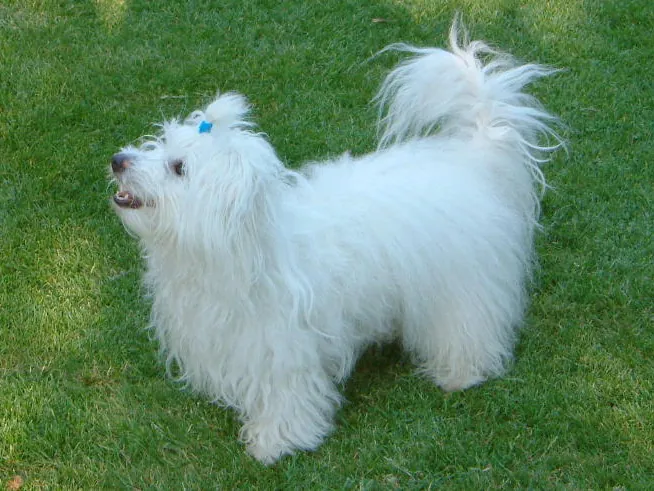
The Russian Tsvetnaya Bolonka is a small, compact, slightly longer-than-tall companion dog with a round head, a short muzzle, large dark eyes and drop ears hidden under long hair. It is sturdy rather than delicate for its size. Adults weigh about 7 to 9 lb and stand roughly 7 to 11 inches at the shoulder. Males and females are very similar in size, with males sometimes slightly taller.
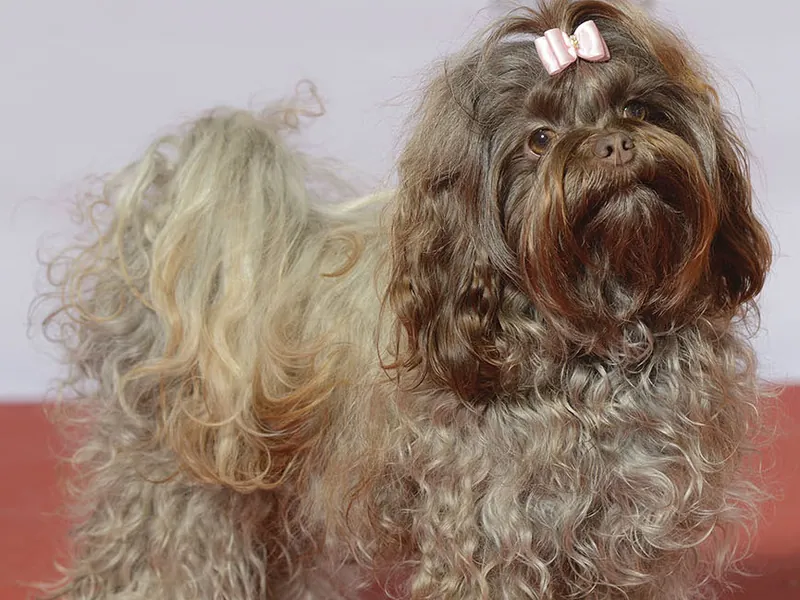
The coat is long, soft and dense, with an undercoat. It is usually wavy or loosely curled and falls over the eyes and face, forming a beard and moustache. The long hair on the head is often tied up or trimmed to keep the eyes clear. Many pet owners keep a shorter trim.
The defining trait is color. Any color except white is accepted, including black, brown, gray, red, fawn, cream, sable and parti-colors. Small white markings on the chest and feet are allowed. The coat may change shade as puppies mature, so a puppy's final color is not always clear at eight weeks.
Temperament and Personality
Bolonkas are friendly, gentle and sociable. They usually get along with children, other dogs and cats. Many are calm and adaptable, and they rarely bark excessively.
They enjoy being close to their owners but often cope better with short absences than some toy breeds. Their easygoing nature makes them suitable for first-time owners.
Bolonkas tend to be playful and curious, enjoying games, short walks and spending time with their families. They are generally not as vocal as many small breeds, which makes them suitable for apartment living. Most are relaxed with visitors and adapt well to family routines.
Are Bolonkas Hypoallergenic?
No dog is truly hypoallergenic, and that includes the Bolonka. Its long, wavy coat sheds relatively little hair compared with many breeds, and some people with mild dog allergies find it easier to live with. Allergens are also found in skin flakes and saliva, though, so a low-shedding coat does not guarantee a reaction-free home.
If you have allergies, spend several hours with adult Bolonkas before committing, ideally in a home setting. Regular brushing and bathing, frequent vacuuming and keeping the dog off the bed can reduce exposure. Talk to an allergist if your symptoms are more than mild.
Do Bolonkas Bark a Lot?
Bolonkas are generally not big barkers, which makes them a good fit for apartments and close neighbors. Most will alert you to a knock at the door or an unusual sound and then settle quickly.
Like any small dog, a bored, under-exercised or lonely Bolonka may bark more, and some individuals are more vocal than others. A couple of daily walks, some play and short training sessions usually keep them content. Teach a quiet cue early and reward calm behavior when the doorbell rings. Meeting the parents can give you a sense of how vocal a breeder's line tends to be.
Can Bolonkas Be Left Alone?
Bolonkas often cope with short absences better than many toy breeds, but they are companion dogs and do not like long hours alone. A few hours is usually fine for an adult dog that has been exercised and has a comfortable resting place.
Build alone time gradually from puppyhood, starting with a few minutes and extending slowly. A stuffed food toy, a safe chew and calm departures help. If you work full days away from home, consider a dog walker, a pet sitter or a second dog for company. Signs of distress, such as constant barking, destruction or soiling while alone, are worth addressing early with a trainer.
Exercise and Training
Bolonkas need moderate exercise: a couple of daily walks and play sessions, about 30 to 45 minutes in total. They adapt well to apartment life.
Training is usually easy with positive reinforcement. Bolonkas are eager to please and respond well to gentle methods.
Many Bolonkas enjoy trick training, short agility courses and games of fetch. Training sessions should be short and fun. Because they are small, avoid rough play with larger dogs and discourage jumping from high furniture.
Grooming and Shedding
The long, wavy coat needs brushing several times a week to prevent matting. Mats can lead to skin problems if left untreated. Many owners keep a shorter trim. Check the eyes, ears and teeth regularly.
Brush down to the skin, paying attention to areas behind the ears, under the legs and around the collar where mats form first. Keep the hair around the eyes trimmed or tied back. Regular bathing with a gentle dog shampoo keeps the coat clean.
Feeding and Nutrition
The Bolonka is a small dog with a small stomach, so frequent, modest meals work best. Puppies do well on three or four meals a day until about six months, then two meals. Very small puppies can become weak if they go too long without food, so keep feeding times regular.
Choose a complete food for small breeds with a kibble size that suits a small mouth. As in other small breeds, dental disease is common, so daily tooth brushing is important.
Bolonkas are not highly active, and weight gain can creep up under the long coat. Feel for the ribs during grooming and adjust portions if they become hard to find. Extra weight also adds strain to small knees, and luxating patellas are a known concern in small breeds.
The beard and moustache collect food and water. Wipe the face after meals to prevent staining and irritation, or keep the facial hair trimmed. Use tiny treats in training and count them in the daily allowance.
| Adult weight | Less active | Typical adult | Very active |
|---|---|---|---|
| 7 lb | 230 kcal | 270 kcal | 330 kcal |
| 9 lb | 280 kcal | 320 kcal | 400 kcal |
Estimates use the resting energy formula veterinarians work with (70 × body weight in kg0.75) and standard activity factors. Use the feeding guide on your food as a starting point and adjust to body condition. Puppies, seniors, pregnant animals and pets that need to lose weight have different needs, so ask your vet.
Health and Lifespan
There is little breed-specific health data for the Bolonka. The AKC recommends eye, patella and heart evaluations for breeding dogs. As with other small breeds, dental disease and luxating patellas are possible.
Choose a breeder who screens eyes, knees and hearts. Bolonkas often live 14 to 20 years.
Because the breed has a small gene pool, buying from breeders who test their dogs and are transparent about health problems in their lines is important. Regular dental care and keeping the coat free of mats help prevent common problems.
Russian Tsvetnaya Bolonka Price and Cost of Ownership
The Russian Tsvetnaya Bolonka is rare in the US, with a small number of breeders, so a reliable published price range is not available. Prices vary by breeder, region, lines and color, and some puppies are imported from Europe. Look for breeders who screen eyes, knees and hearts, as the AKC recommends for breeding dogs, and who are open about health in their lines. Bolonkas rarely appear in US rescues, though small-breed rescues may occasionally have one.
Grooming is the main ongoing cost. Many owners book a professional trim every six to ten weeks to keep the coat shorter and the eyes clear, and brush at home several times a week.
Other breed-specific cost drivers include dental cleanings, eye checks and possible treatment of luxating patellas. Food and equipment costs are low for a dog of this size.
Is the Bolonka Right for You?
The Bolonka suits families, seniors and apartment dwellers who want a gentle, low-exercise companion. Its friendly nature makes it a good choice for first-time owners.
It is less suited to owners unwilling to keep up with regular grooming.
Bolonkas are adaptable and enjoy being part of family life. They can travel well and are generally relaxed in new places. Their gentle nature and modest exercise needs make them a good match for older owners and families with children who handle small dogs carefully.
Russian Tsvetnaya Bolonka Traits at a Glance
Russian Tsvetnaya Bolonka FAQ
Are Bolonkas good family dogs?
Yes, they are friendly, gentle and usually get along well with children and other pets.
How big do Bolonkas get?
Adults weigh about 7 to 9 lb and stand around 7 to 11 inches tall.
Do Bolonkas shed?
They shed moderately. Regular brushing helps prevent mats.
Is the Bolonka recognized by the AKC?
The AKC lists the Bolonka in its Foundation Stock Service, but it is not yet fully recognized.
Are Bolonkas easy to train?
Yes, they are eager to please and respond well to positive reinforcement.
How long do Bolonkas live?
Bolonkas often live 14 to 20 years.