Japanese ChinA cat-like aristocrat of the toy world
The Japanese Chin is a small, silky-coated companion bred for centuries to live with Japanese nobility. Gentle, quiet and charming, it suits calm homes and apartment living, but its very short face brings health risks owners must understand.
Why people love the Japanese Chin
- Quiet, cat-like companion that rarely barks
- Small size and modest exercise needs suit apartments
- Usually friendly with other dogs and cats
- Silky single coat mats less than expected
- Gentle, affectionate and devoted to its people
Things to consider
- Short muzzle can cause breathing problems and heat intolerance
- Large eyes are prone to injury and dryness
- Fragile; not ideal around toddlers
- Crowded teeth need daily dental care
- Reserved with strangers and sensitive to harsh handling
Health note: this breed is affected by health concerns linked to its body shape. Read the health section and choose a breeder who health-tests and breeds for moderate features.
Is this breed right for you?
10 questions · live resultHistory and Origin
Despite the name, the Chin's ancestors probably came from China, perhaps as gifts to Japanese nobles. In Japan the dogs were refined over centuries as companions in aristocratic households and the imperial court.
Western visitors brought Chins to Europe and America in the mid-19th century after Japan opened to trade. Queen Alexandra of Britain was among their admirers. The AKC recognized the breed in the 1880s under the name Japanese Spaniel; the name changed to Japanese Chin in 1977.
Size, Silky Coat and Colors
The Japanese Chin is a small, square, light-boned toy dog with a large, broad head, wide-set eyes and a short muzzle. Adults stand about 8 to 11 inches tall and weigh roughly 7 to 11 lb. Males and females look very similar; males may be slightly sturdier, but size differences are small.
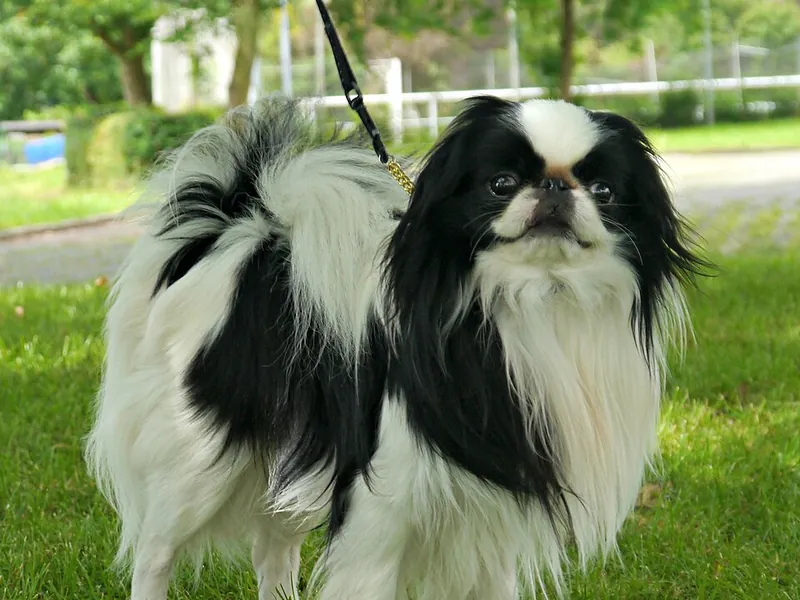
The coat is single, long, straight and silky, standing away from the body rather than lying flat. It forms a ruff around the neck, feathering on the ears, legs and thighs, and a richly plumed tail carried over the back. The eyes are large and dark, often with a little white showing in the inner corners, which gives the breed its look of astonishment.
Colors: the AKC standard accepts
- black and white
- red and white, a category that includes lemon, orange, sable, brindle and similar shades with white
- black and white with tan points, known as tricolor
A clear white blaze, symmetrical facial markings and evenly marked ears are desired in all colors.
Temperament and Personality
Chins are affectionate, sensitive and often described as cat-like. Many wash their faces with their paws, like to perch on the back of the sofa and are graceful and quiet indoors. Some perform the famous Chin spin, turning in circles when excited.
They are devoted to their people, usually reserved with strangers, and rarely bark much. They tend to get along very well with other dogs and cats. Because they are small and sensitive, homes with older, gentle children suit them better than busy households with toddlers.
Chins often attach strongly to one person. They tend to be adaptable and usually cope with short periods alone, but they are happiest close to their owner, ideally on a lap or a cushion with a view.
Are Japanese Chins Good With Kids?
Japanese Chins are good with calm, older children who handle them gently, but they are not the best match for families with toddlers.
The breed is small and fine-boned, and its prominent eyes are vulnerable to bumps and scratches. Rough play, being picked up awkwardly or being dropped can cause injuries, and a startled Chin may become fearful. Children around school age and older can learn to sit on the floor, let the dog approach and offer gentle petting. In homes with young kids, supervise every interaction and give the Chin a retreat where it will not be disturbed.
Are Japanese Chins Good for First-Time Owners?
Yes, the Japanese Chin is a good choice for many first-time owners, especially calm adults and seniors. It is quiet, adaptable and needs only moderate exercise and coat care.
A novice should learn about brachycephalic health. Watch for noisy breathing, heat stress and eye problems, and get a vet check if your dog snores loudly or tires quickly. Daily tooth brushing and gentle eye cleaning should become routine. Chins can be a little independent and dislike harsh handling, so training should be gentle and short. First-time owners who choose a breeder selecting for open nostrils and moderate features start off well.
Are Japanese Chins Easy to Train?
Japanese Chins are moderately easy to train. They are intelligent and enjoy tricks, but they have an independent streak and respond poorly to pressure.
Keep sessions short, playful and reward-based, using tiny treats or praise. Many Chins learn tricks such as spinning, waving or dancing on their hind legs quickly, which builds a good working relationship. House training can take longer in winter or rain, as with many small breeds, so a consistent schedule and an indoor potty option help. Socialize puppies gently with visitors to reduce reserve with strangers. Use a harness for leash training to protect the airway.
Exercise and Training
Exercise needs are moderate: a couple of short walks plus indoor play is plenty. Many enjoy trick training and some take part in agility. Avoid hot, humid weather and strenuous activity, because the flat face makes cooling down harder.
Chins can be a little independent and dislike harsh treatment. Short, gentle sessions with rewards work best. Use a harness rather than a collar to protect the airway.
Grooming and Shedding
The long, silky single coat has no woolly undercoat and mats less than you might expect. Brush once or twice a week, paying extra attention to the feathered ears, legs and tail. Shedding is moderate, with a seasonal increase.
Wipe facial folds and around the large eyes gently and keep them dry. Regular tooth brushing matters in a small, crowded mouth.
Trim hair between the paw pads to prevent slipping on smooth floors.
Feeding and Nutrition
A Japanese Chin weighs only 7 to 11 lb, so small amounts of extra food make a big difference. Keep your Chin lean: excess weight makes breathing harder and adds strain on the kneecaps. Weigh your dog every few weeks, because the long coat hides body shape.
Dental crowding: the short jaw holds a full set of teeth in very little space, so tartar and gum disease are common. Brush teeth daily and schedule regular veterinary dental checks. Puppies may also retain baby teeth, which should be checked at around six months.
Comfortable eating: a shallow, wide bowl makes eating easier for a flat-faced dog. Small kibble that fits the mouth helps. Some Chins are picky eaters; avoid tempting a fussy dog with table scraps, which can unbalance the diet.
Meals: young puppies of toy breeds are at risk of low blood sugar if they miss meals, so feed three or four small meals a day. Adults usually do well with two.
Use very small treats for training and count them as part of the daily food. Wipe the face after meals to keep the folds clean.
| Adult weight | Less active | Typical adult | Very active |
|---|---|---|---|
| 7 lb | 230 kcal | 270 kcal | 330 kcal |
| 11 lb | 330 kcal | 370 kcal | 470 kcal |
Estimates use the resting energy formula veterinarians work with (70 × body weight in kg0.75) and standard activity factors. Use the feeding guide on your food as a starting point and adjust to body condition. Puppies, seniors, pregnant animals and pets that need to lose weight have different needs, so ask your vet.
Health and Lifespan
Japanese Chins usually live 10 to 12 years. The breed is brachycephalic: its standard calls for a very short, broad muzzle. This can narrow the airways, causing snoring, noisy breathing, poor heat tolerance and in some dogs serious breathing difficulty. Crowded or misaligned teeth are also common.
The large, prominent eyes are prone to injury and dryness. Kneecap luxation and heart problems are also reported. Choose a breeder who selects for open nostrils and moderate features, and ask a vet to assess breathing. Keep your Chin cool and lean.
Japanese Chin Price and Cost of Ownership
Typical breeder price in the US$1,500 to $3,000
A Japanese Chin puppy from a reputable US breeder typically costs around $1,500 to $3,000. Prices vary by breeder, region and lines, and litters are small, so a waitlist is common. Ask about the parents' breathing, eye exams, kneecap checks and heart health.
Adoption is an option through toy breed rescues and occasional breed-specific rescue groups.
Ongoing cost drivers include dental cleanings under anesthesia, which many Chins need regularly, treatment for eye injuries or dryness, and assessment or surgery for breathing problems. Kneecap luxation can also require surgery. Grooming costs are modest if you brush at home, though some owners book occasional tidying of feet and feathering. Pet insurance purchased early helps with the breed's most common eye and airway problems.
Is the Japanese Chin Right for You?
A Chin is a lovely choice for a calm apartment or house where it can stay close to its people. It is quiet, adaptable and usually friendly with other pets.
- Good match: adults, seniors, quiet families, multi-pet homes, apartment living.
- Think twice: hot climates without air conditioning, very active outdoor lifestyles, homes with toddlers.
Be prepared for possible vet costs related to breathing, eyes and teeth.
Japanese Chin Traits at a Glance
Japanese Chin FAQ
Are Japanese Chins good apartment dogs?
Yes. They are small, quiet and need only moderate exercise, which makes them well suited to apartments.
Why are Japanese Chins called cat-like?
Many wash their faces with their paws, climb to high perches and move gracefully and quietly, much like cats.
How big do Japanese Chins get?
They stand about 8 to 11 inches tall and weigh roughly 7 to 11 lb.
Do Japanese Chins have breathing problems?
Their very short muzzle can cause breathing difficulties and heat intolerance, so choose dogs with open nostrils and keep them cool.
Do Japanese Chins bark a lot?
No, they are usually quiet dogs that bark relatively little.
How long do Japanese Chins live?
Typically 10 to 12 years.