Italian GreyhoundElegant miniature sighthound and lap warmer
The Italian Greyhound is the smallest of the sighthounds: a graceful, affectionate companion that loves warmth and its people. Its fine bones, sensitivity to cold and dental needs require careful owners, and it is best suited to calm adult homes.
Why people love the Italian Greyhound
- Affectionate lap dog that loves to cuddle
- Small, clean and almost odorless coat
- Adapts well to apartment living
- Usually quiet compared with many toy breeds
- Long lifespan, often 12 to 15 years
Things to consider
- Fine leg bones fracture easily in falls
- House training is often slow
- Strong chase instinct, needs leash or fences
- Feels the cold and needs coats in winter
- Prone to serious dental disease
Is this breed right for you?
10 questions · live resultHistory and Origin
Small greyhound-type dogs appear in Mediterranean art from ancient times, and the breed as we know it was refined in Italy, where it became a favorite of the nobility during the Renaissance. Italian Greyhounds appear in paintings by Renaissance artists and were kept by royals including Catherine the Great and Queen Victoria.
The breed nearly vanished after the World Wars, and was rebuilt with help from dogs in Britain and the US. The AKC recognized it in 1886 and places it in the Toy group, as does The Kennel Club. The FCI lists it as a sighthound under Italy.
Size, Coat and Colors
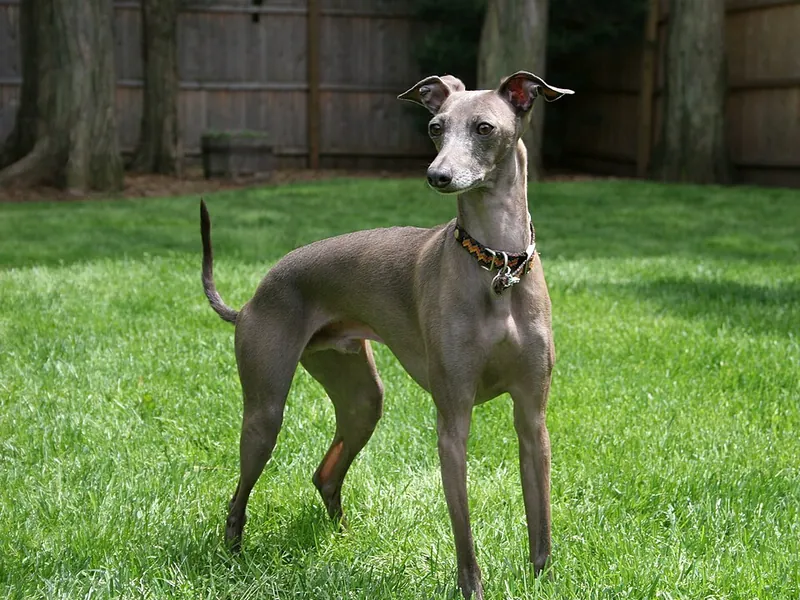
The Italian Greyhound is a miniature sighthound built along the same lines as a full-size Greyhound: a long, narrow head, deep chest, tucked-up belly, curved back and long, fine legs. It stands 13 to 15 inches at the withers and weighs about 7 to 11 lb. Its high-stepping, springy gait is a hallmark of the breed.
Males and females are close in size, though males are often slightly taller and a little heavier. Both sexes should look elegant rather than tiny or fragile, and dogs that are too small or too heavy are faulted.
The coat is short, fine and glossy, like satin, with no undercoat. The AKC accepts any color and marking except brindle and the classic black-and-tan pattern seen in Dobermans. Common colors include gray (called blue), fawn, red, cream, black and seal, solid or broken with white. The Kennel Club lists black, blue, cream, fawn, red and white, or any of these broken with white. Pigment around the eyes and nose should be dark.
Temperament and Personality
Italian Greyhounds are gentle, sensitive and deeply attached to their family. They love to cuddle, burrow under blankets and stay close to their people. With strangers many are shy or reserved at first.
They are playful and quick, and their sighthound heritage gives them a chase instinct for small, fast-moving animals. They can be stubborn about training and are easily upset by rough handling or a loud, chaotic home. Their delicate legs make them a poor match for boisterous young children.
Many IGs prefer the company of another Italian Greyhound or a similarly gentle dog, and pairs are common in the breed. They often do well with calm cats when raised together.
Are Italian Greyhounds Good With Cats?
Many Italian Greyhounds live well with cats, especially when they are raised together. Indoors, an IG usually sees the household cat as a companion and may even share a blanket with it.
The sighthound chase instinct is still there. A cat that suddenly runs can trigger a chase, and unfamiliar cats or small animals outdoors are often fair game. Introduce a new cat slowly, keep the first meetings calm and leashed, and give the cat high perches to escape. Never leave an IG unsupervised with rabbits, hamsters or birds, which can look like prey to any sighthound.
Can Italian Greyhounds Be Left Alone?
Italian Greyhounds can be left alone for a few hours, but many struggle with long absences. They bond closely with their people and are prone to separation stress, which can show up as whining, chewing or house-soiling.
A second IG or a calm companion dog often helps a lot, which is one reason the breed is frequently kept in pairs. Build alone time gradually from puppyhood, leave a warm, enclosed bed and a chew, and keep departures and returns quiet. Because of the breed's slow house training, plan potty breaks around your schedule or provide an indoor option.
Do Italian Greyhounds Bark a Lot?
No, Italian Greyhounds are usually fairly quiet dogs. They bark to alert you to visitors or unusual sounds, but most do not bark constantly the way some terriers and spitz breeds do.
Where noise does appear, it is usually linked to emotion rather than guarding. A lonely or anxious IG may whine, howl or bark when left alone, and some are vocal when excited at mealtimes or during play. Plenty of company, regular sprints in a safe area and a predictable routine keep most IGs calm and quiet indoors.
Exercise and Training
Daily walks plus a chance to sprint in a safely fenced area keep an IG happy. They are fast and agile, and many enjoy lure coursing.
- Always walk on leash or in secure areas; they bolt after moving targets.
- Prevent leaps from high furniture and stairs in puppies, as leg fractures are a known risk.
- Use gentle, reward-based training in short sessions.
- House training can be slow, especially in cold or wet weather; consider an indoor option and plenty of patience.
Grooming and Shedding
The short, fine coat needs minimal grooming, and IGs have little odor. They shed moderately. With thin coats and little body fat, they need a sweater or coat in cool weather.
Dental care is very important. Italian Greyhounds are prone to gum disease, so brush teeth daily and schedule regular dental checks.
Many IGs also need their nails trimmed every couple of weeks, and protective jackets help on rainy walks, which many of them dislike.
Feeding and Nutrition
Italian Greyhounds should stay lean. Their fine bones are vulnerable to fractures, and even a pound or two of extra weight is a significant load on a 7 to 11 lb frame. At healthy weight you should see a faint outline of the last ribs and the hip bones, as in other sighthounds.
- Feed puppies three or four small meals a day, moving to two meals for adults.
- Many IGs are picky eaters, while others are opportunistic. Measure meals and resist adding toppers every time a bowl is left.
- Dental disease is a well-known issue in the breed. Daily tooth brushing is the most important habit, and chews or dental diets approved by your vet can help.
- Choose small kibble or food that suits a narrow jaw.
IGs burn more energy in cold weather, so some need slightly more food in winter if they spend time outdoors. Use tiny treats during training and remember that lean does not mean underweight: ask your vet to assess body condition.
| Adult weight | Less active | Typical adult | Very active |
|---|---|---|---|
| 7 lb | 230 kcal | 270 kcal | 330 kcal |
| 11 lb | 330 kcal | 370 kcal | 470 kcal |
Estimates use the resting energy formula veterinarians work with (70 × body weight in kg0.75) and standard activity factors. Use the feeding guide on your food as a starting point and adjust to body condition. Puppies, seniors, pregnant animals and pets that need to lose weight have different needs, so ask your vet.
Health and Lifespan
Italian Greyhounds typically live 12 to 15 years. Fractures of the front legs, especially in young dogs, are a well-known risk. Other conditions include kneecap luxation, periodontal disease, epilepsy and progressive retinal atrophy.
Choose breeders who screen eyes and knees, and keep your IG lean, since even small weight gains stress fine bones.
Italian Greyhound Price and Cost of Ownership
Typical breeder price in the US$1,200 to $3,000
An Italian Greyhound puppy from a reputable US breeder typically costs about $1,200 to $3,000. Prices vary by breeder, region and lines. Ask for eye and patella results on both parents and avoid puppies bred to be extra small. Show-quality puppies and rare colors usually cost more.
Italian Greyhound rescues place adults and seniors across the US, often dogs that are already house trained.
Breed-specific costs to plan for:
- Regular professional dental cleanings, which many IGs need throughout life.
- Insurance or savings for leg fractures, which can require surgical repair.
- Coats, sweaters and warm bedding for cold months.
- Ramps or steps to reduce jumping from high furniture.
Is the Italian Greyhound Right for You?
An IG suits calm adults, couples or seniors who want an affectionate small dog that enjoys both short sprints and long naps. It adapts well to apartment living.
It is less suited to households with very young children, homes with big, rough dogs, or owners unwilling to invest in dental care and patient house training.
Plan for a warm bed, soft blankets and a coat for winter walks: comfort matters a great deal to this breed.
Italian Greyhound Traits at a Glance
Italian Greyhound FAQ
Are Italian Greyhounds good with kids?
They are better with older, gentle children. Their fine legs can break during rough play or falls.
How big do Italian Greyhounds get?
They stand about 13 to 15 inches tall and weigh roughly 7 to 11 lb.
Are Italian Greyhounds hard to house train?
Many are slow to house train, especially in cold or wet weather. Consistency and patience help.
Do Italian Greyhounds get cold?
Yes. They have very little body fat and a thin coat, so they need a sweater or coat in cool weather.
Do Italian Greyhounds shed?
They shed moderately, but their short coat is easy to keep clean.
How long do Italian Greyhounds live?
Most live 12 to 15 years.