Petit BrabançonThe smooth-coated cousin of the Brussels Griffon
The Petit Brabançon is a small, smooth-coated Belgian companion with a pushed-in face and a very human expression. It is devoted, alert and sensitive, best suited to adults or calm families who can give it close company and pay attention to its flat-faced health risks.
Why people love the Petit Brabançon
- Devoted, people-focused companion
- Small and well suited to apartments
- Short coat needs only weekly brushing
- Alert watchdog despite its size
- Expressive, almost human face
Things to consider
- Short face brings breathing and heat risks
- Prone to eye injuries and Chiari-like malformation
- Sensitive, may snap with rough handling
- Often attaches strongly to one person
- Housetraining can take time
Health note: this breed is affected by health concerns linked to its body shape. Read the health section and choose a breeder who health-tests and breeds for moderate features.
Is this breed right for you?
10 questions · live resultHistory and Origin
The Petit Brabançon shares its history with the Griffon Bruxellois and Griffon Belge. In 19th-century Brussels, small wiry dogs kept by cab drivers ratted in stables and rode on carriages. Crosses with the Pug introduced a smooth coat and shorter face, and later crosses with toy spaniels also influenced the type.
The breed became fashionable after Belgian royalty took an interest in the late 1800s. The FCI recognizes the Petit Brabançon as a separate breed in Group 9. The AKC and The Kennel Club treat it as the smooth-coated variety of the Brussels Griffon (Griffon Bruxellois in the UK), so in those registries it shows in the Toy group alongside its rough-coated relatives.
Size, Coat and Colors
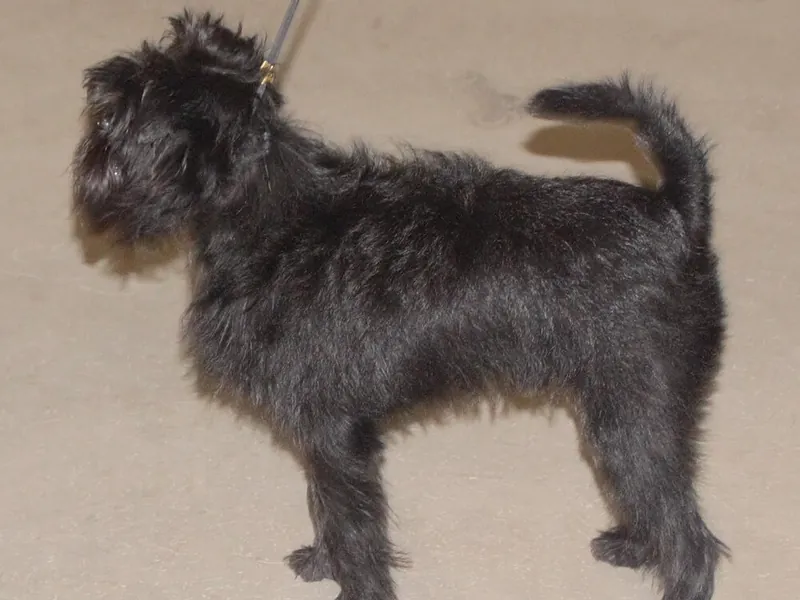
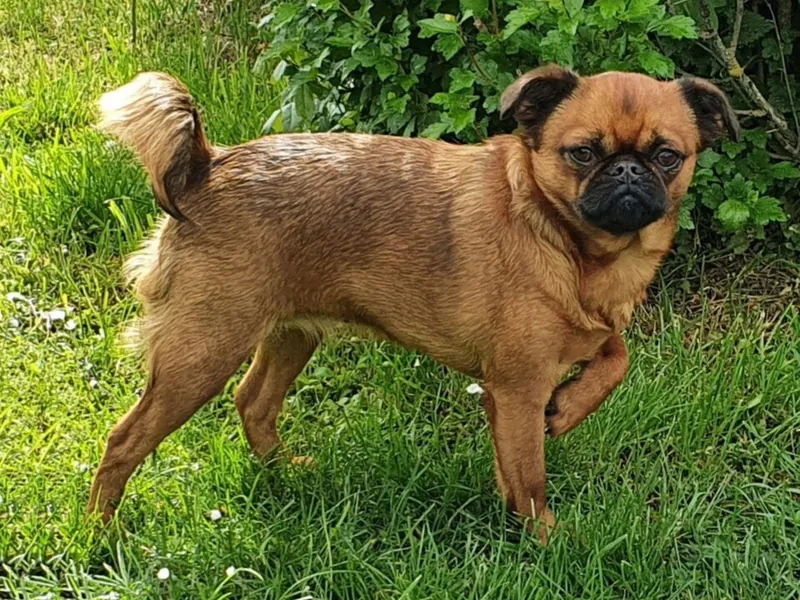
The Petit Brabançon is a small, sturdy toy dog standing 7 to 10 inches and weighing 8 to 13 lb. It is compact and square, with a deep chest and solid bone for its size.
The head is the defining feature: a large, round skull, a very short, upturned nose and large, dark, widely set eyes that give an almost human expression. The chin is prominent and the jaw slightly undershot.
Males and females are similar in size.
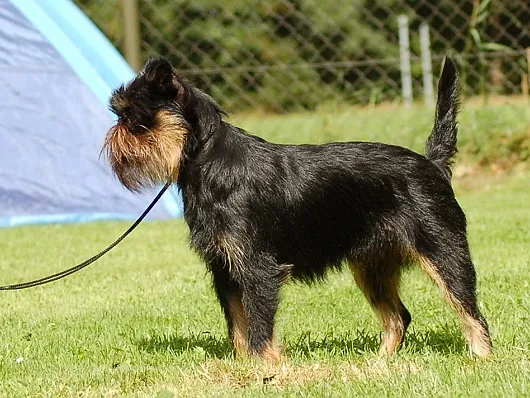
Unlike its rough-coated relatives, the Petit Brabançon has a short, smooth, glossy coat. In the AKC and The Kennel Club it is the smooth variety of the Brussels Griffon. Colors include:
- Red, a reddish brown
- Belge, a mix of black and reddish brown
- Black and tan
- Black
A black mask is often seen. The FCI treats the Petit Brabançon as a separate breed from the Griffon Bruxellois and Griffon Belge.
Temperament and Personality
Petit Brabançons are affectionate, people-focused and often attach strongly to one person. They want to be included and tend to follow their owners from room to room. They are alert and bark at noises and visitors, which makes them keen little watchdogs.
The breed is sensitive. Loud, chaotic households and rough handling can make these dogs anxious or snappy, so they are usually better with adults or older, calm children than with toddlers. They generally get along with other pets when introduced carefully.
Do Petit Brabançons Bark a Lot?
Petit Brabançons bark moderately. They are alert and often bark at doorbells, visitors, footsteps in the hallway and noises outside, which makes them keen little watchdogs despite their size.
Barking tends to increase when they are bored, anxious or left alone, because the breed is so attached to its people. Early training helps:
- Reward calm behavior when visitors arrive
- Teach a quiet cue and practice it daily
- Build up short separations from puppyhood
In apartments, working on barking early makes life easier for dog and neighbors. A well-adjusted Petit Brabançon is usually quieter than many small terriers.
Is the Petit Brabançon Good for First-Time Owners?
A Petit Brabançon can suit a first-time owner who is home often and prepared for its health needs and sensitivity. Its small size and modest exercise needs make daily care straightforward.
Beginners should be ready for:
- Watching breathing closely, especially in heat and humidity
- Daily checks of the prominent eyes and the folds around the nose
- Patient housetraining, which often takes longer than in larger breeds
- Gentle handling, since rough treatment can make the dog anxious or snappy
Choosing a breeder who selects for open airways and screens for Chiari-like malformation matters more for this breed than almost anything else.
Can Petit Brabançons Be Left Alone?
Petit Brabançons do not like being left alone for long periods. They are very people-focused and often attach strongly to one person, which can lead to separation anxiety.
Adults can usually manage a few hours if taught gradually. Tips:
- Start with short absences
- Leave a chew toy or food puzzle
- Keep departures and arrivals calm
- Provide a cozy bed in a quiet space
For longer days, a pet sitter or a calm companion animal helps. The breed suits retirees and people who work from home.
Exercise and Training
Daily short walks and indoor play are enough for most. Because of the short muzzle, exercise must be adjusted to the weather: avoid heat, humidity and strenuous activity, and stop at the first sign of heavy breathing.
Training should be gentle and reward-based. These dogs are clever but can be stubborn, and harsh tones upset them. Housetraining can take time, as with many toy breeds. Work on being alone in small steps, since the breed does not like separation.
Grooming and Shedding
The short, tight coat needs only a weekly brush, though it sheds moderately, more so in spring and fall. Colors include red, black and tan, and black.
Face care is the main task. Wipe the skin folds around the nose regularly and check the prominent eyes daily for redness or discharge. Brush teeth often, since small jaws crowd teeth, and keep nails short.
Feeding and Nutrition
Petit Brabançons are small and easily overfed. Even a few extra treats can add noticeable weight to an 8 to 13 lb dog, and extra weight makes breathing harder for a flat-faced breed. Aim for a compact body with a visible waist and ribs easy to feel.
Small, flat-faced dogs can find large kibble hard to pick up and chew. Choose food sized for small mouths, and consider a shallow bowl that suits the short muzzle.
Toy breeds are prone to dental crowding. Brush teeth several times a week and schedule regular dental checks.
Puppies can be prone to low blood sugar if they skip meals, so feed three or four small meals a day until about six months, then two meals for adults. Wipe the face folds after meals to prevent irritation. Use tiny treats for training.
| Adult weight | Less active | Typical adult | Very active |
|---|---|---|---|
| 8 lb | 260 kcal | 290 kcal | 370 kcal |
| 10 lb | 300 kcal | 350 kcal | 440 kcal |
| 13 lb | 370 kcal | 420 kcal | 530 kcal |
Estimates use the resting energy formula veterinarians work with (70 × body weight in kg0.75) and standard activity factors. Use the feeding guide on your food as a starting point and adjust to body condition. Puppies, seniors, pregnant animals and pets that need to lose weight have different needs, so ask your vet.
Health and Lifespan
Petit Brabançons typically live 12 to 15 years. The breed is on the FCI list of brachycephalic breeds, and the short face brings a risk of breathing difficulties and heat intolerance. Choose puppies from parents with open nostrils and quiet breathing.
The most serious inherited concern is Chiari-like malformation with syringomyelia, a condition where the skull is too small for the brain, which can cause pain and neurological signs. The large, prominent eyes are prone to injuries, and lens luxation and glaucoma have been reported. Look for breeders who MRI-scan and eye-test breeding dogs.
Petit Brabançon Price and Cost of Ownership
Typical breeder price in the US$1,500 to $3,500
In the US, the Petit Brabançon is registered as the smooth-coated Brussels Griffon. A puppy from a reputable breeder typically costs about $1,500 to $3,500. Prices vary by breeder, region and lines, and litters are small, so waiting lists are common. Ask for eye exams, MRI screening for Chiari-like malformation and evidence that parents breathe quietly with open nostrils.
Toy breed and Brussels Griffon rescues occasionally have smooth-coated dogs.
Ongoing cost drivers:
- Veterinary care for eyes, which are prone to injury and ulcers
- Possible airway surgery for brachycephalic breathing problems
- Dental cleanings, common in toy breeds
- Insurance covering brachycephalic and neurological conditions
Food and grooming costs are low for a dog this size.
Is the Petit Brabançon Right for You?
The Petit Brabançon suits owners who are home a lot, live in a calm setting and want a close companion. It adapts well to apartments.
- Good match: adults, retirees, quiet households, apartment dwellers.
- Less ideal: homes with young children, hot climates without air conditioning, owners away all day.
Be prepared to budget for veterinary care related to the face and eyes.
Petit Brabançon Traits at a Glance
Petit Brabançon FAQ
Is the Petit Brabançon the same as a Brussels Griffon?
In the AKC and The Kennel Club it is treated as the smooth-coated Brussels Griffon. The FCI lists it as a separate breed.
How big do Petit Brabançons get?
They stand about 7 to 10 inches tall and weigh roughly 8 to 13 lb.
Are Petit Brabançons good with children?
They are usually better with adults or calm older children, since they are small and sensitive to rough handling.
Do Petit Brabançons shed?
Yes, the smooth coat sheds moderately despite being short.
Do Petit Brabançons have breathing problems?
Their short face can cause breathing difficulty and heat sensitivity, so choose a breeder who selects for open airways.
How long do Petit Brabançons live?
Typically 12 to 15 years.