Russian ToyA tiny, lively Russian companion
The Russian Toy is one of the smallest dog breeds, a fine-boned, long-legged companion with a lively, devoted personality. It suits owners who want a portable dog that is easy to train and happy in an apartment.
Why people love the Russian Toy
- One of the smallest breeds, highly portable and travel-friendly
- Lively, trainable and eager to learn with rewards
- Modest exercise needs suit apartment living
- Two coat varieties, both easy to maintain
- Devoted companion that loves to stay close
Things to consider
- Fine bones break easily in falls or rough play
- Retained baby teeth and dental crowding are common
- Alert barking can be frequent
- Feels the cold and needs clothing in winter
- Not suited to homes with toddlers or rough large dogs
Is this breed right for you?
10 questions · live resultHistory and Origin
Small English Toy Terriers were fashionable among the Russian aristocracy before the Revolution. Their numbers collapsed in the following decades, and in the 1950s Soviet breeders rebuilt a tiny toy terrier from the remaining dogs.
In 1958 a long-coated puppy appeared in a Moscow litter, which led to the Moscow Long-haired Toy Terrier, now the long-coated variety of the breed. The FCI recognized the Russian Toy in the 2000s. The Kennel Club in the UK recognized it in 2017 and has since moved it onto its main breed register.
Size, Coat Varieties and Colors
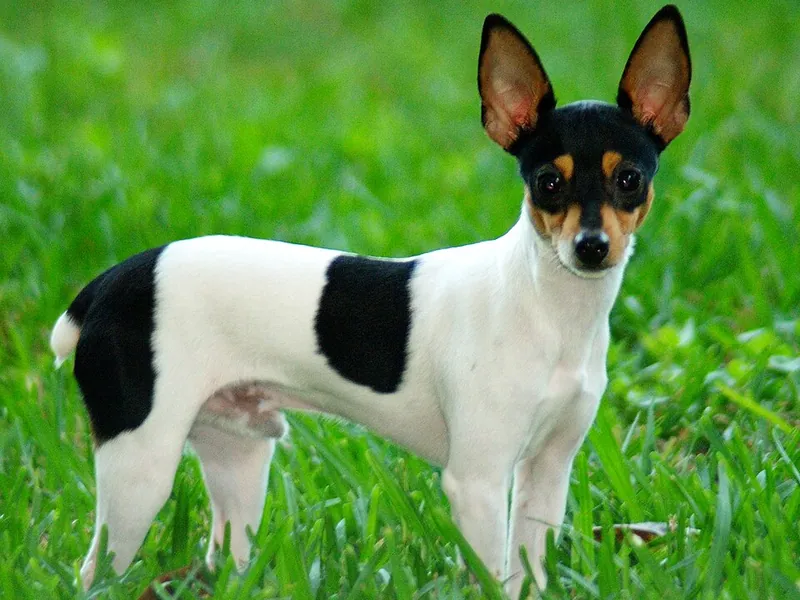
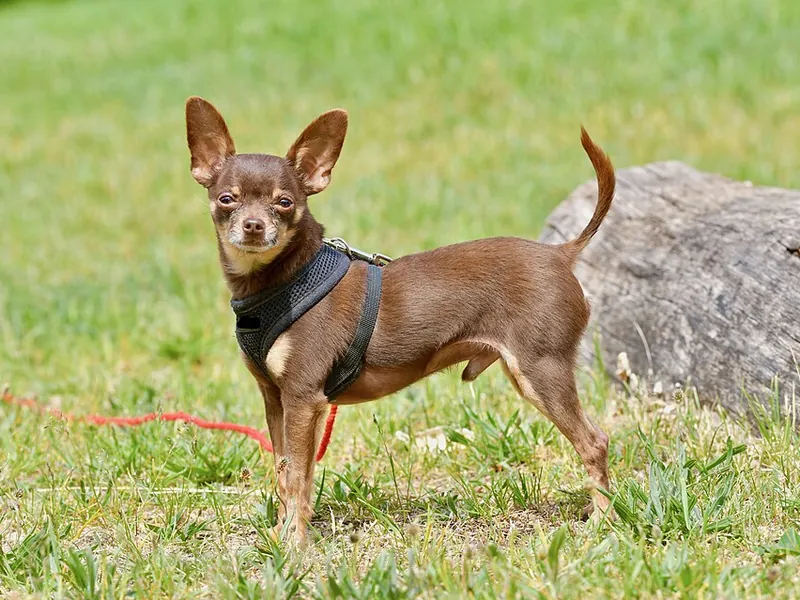
The Russian Toy is a tiny, elegant, long-legged dog with a small head, a pointed muzzle, large, upright ears and big, dark eyes. It has fine bones and a nearly square body, giving it a delicate, graceful look.
Adults stand about 8 to 11 inches and weigh up to about 7 lb. Males and females are similar in size, though males may look a little sturdier.
There are two coat varieties:
- Smooth coat: short, close and glossy, with no undercoat
- Long coat: moderate body hair, with long fringes on the ears and feathering on the legs and tail
In long-coated puppies the ear fringes develop slowly and are often not complete until around three years of age.
Accepted colors include:
- black and tan, brown and tan, blue and tan, lilac and tan
- red in any shade, with or without black or brown overlay
Solid white, large white patches and brindle are faults under most standards.
Temperament and Personality
Russian Toys are cheerful, active and very attached to their owners. They like to stay close, often following their person from room to room. They are alert and announce visitors loudly, and many enjoy barking.
They can be reserved with strangers. With gentle, older children they do fine, but toddlers can hurt them by accident. They usually get along with other dogs, though large dogs should be supervised because of the size difference.
Despite its fragile look, the Russian Toy is an active, curious dog rather than a passive lap pet. It enjoys exploring, playing with toys and learning tricks, and it usually copes with short periods alone better than some other toy breeds if it has been taught gradually.
Are Russian Toys Good for First-Time Owners?
Yes, Russian Toys can suit first-time owners who understand how fragile the breed is. They are cheerful, trainable and happy with modest exercise, which makes daily life easy.
The main learning curve is safety and care. Owners must prevent falls from furniture and arms, supervise play with larger dogs and children, and use a harness instead of a collar. Dental care deserves attention from the start, as retained puppy teeth and crowding are common. House training may take longer than with larger breeds, so be patient and consistent. A beginner who is home a lot and wants a close companion is a good match.
Can Russian Toys Be Left Alone?
Adult Russian Toys can usually manage a few hours alone if they have been taught gradually, but they are companion dogs that prefer to stay close to their people.
Start with short absences in puppyhood and increase slowly. Leave the dog in a safe, warm area with a soft bed, water and a chew toy, and avoid places where it can jump from heights. Exercise pens work well for this tiny breed. Puppies need frequent meals and potty breaks, so they cannot be left for long. For full workdays, consider a pet sitter or a calm, compatible second dog.
Are Russian Toys Good With Cats?
Usually yes. Russian Toys generally get along with cats, particularly when raised with them, and their prey drive is modest compared with working terriers.
Size is the main concern. A large or rough cat can injure a dog that weighs up to about 7 lb, especially a puppy. Introduce them gradually, supervise early interactions and give both animals separate retreat spaces. Many households find that the cat and the Russian Toy become playmates or companions. Keep cat food out of the dog's reach, as it is too rich for such a small dog.
Exercise and Training
Daily short walks and indoor play cover their exercise needs, but they enjoy more if offered. Many take part in agility and trick training. Use a harness rather than a collar to protect the delicate throat.
Russian Toys are bright and generally eager to learn with rewards. House training can take patience, as with many toy breeds. Teach them to use ramps or be lifted, since jumping from furniture can break their slender legs.
Grooming and Shedding
The smooth variety has a short, close coat that needs only a weekly wipe or brush. The long-coated variety has moderate body hair and characteristic fringes on the ears; brush it a couple of times a week to keep fringes tangle free. Both shed moderately. In cold weather a sweater helps.
Feeding and Nutrition
Russian Toys are tiny and burn through energy fast, so feeding is about steady, frequent meals and keeping a precise eye on weight.
- Very small puppies are prone to low blood sugar. Feed three to four small meals a day and never let a young puppy go long without food. Weakness, trembling or lethargy need prompt veterinary attention.
- Adults usually do well on two or three small meals.
- Choose a small kibble suited to a tiny mouth.
- Weigh food with a kitchen scale: a few extra pieces of kibble or treats make a big difference for a dog of this size.
Dental crowding and retained puppy teeth are common in the breed, so daily tooth brushing and regular dental checks are essential. Chews should be sized carefully and supervised. Extra weight puts strain on delicate knees, so keep your Russian Toy lean. Training treats should be tiny, and table scraps are best avoided.
| Adult weight | Less active | Typical adult | Very active |
|---|---|---|---|
| 7 lb | 230 kcal | 270 kcal | 330 kcal |
Estimates use the resting energy formula veterinarians work with (70 × body weight in kg0.75) and standard activity factors. Use the feeding guide on your food as a starting point and adjust to body condition. Puppies, seniors, pregnant animals and pets that need to lose weight have different needs, so ask your vet.
Health and Lifespan
Russian Toys typically live 12 to 14 years. The most common issue is retained baby teeth: many puppies keep deciduous teeth that need removal under anesthesia. Crowded mouths make early gum disease likely, so daily tooth brushing and regular dental checks are important.
Kneecap luxation, progressive retinal atrophy and eye injuries from the prominent eyes also occur. Fractures from falls or jumps are a risk for any dog this fine boned.
Russian Toy Price and Cost of Ownership
The Russian Toy is still uncommon in the US, and there is no well-established typical price. Puppies may come from a small number of US breeders or be imported from Russia or other European countries, which adds transport, paperwork and travel costs. Prices vary by breeder, region, lines and coat variety. Rescue is rare but worth checking with toy-breed organizations.
Breed-specific cost drivers include:
- Dental care, including removal of retained puppy teeth under anesthesia and professional cleanings
- Treatment for fractures from falls, which can be costly in fine-boned dogs
- Knee and eye checks, and insurance covering these conditions
- Sweaters and coats for cold weather
Food and equipment costs are low for such a small dog.
Is the Russian Toy Right for You?
This breed is ideal for apartment dwellers and people who want a companion that can travel with them. It needs company and does not like being ignored.
- Good match: adults, seniors, families with older children, city homes.
- Think twice: homes with toddlers or rough large dogs, owners who need a quiet dog.
Look for breeders who check knees and eyes and monitor dental development in puppies.
Russian Toy Traits at a Glance
Russian Toy FAQ
How big do Russian Toys get?
They stand about 8 to 11 inches tall and weigh up to about 7 lb.
Are Russian Toys good apartment dogs?
Yes. Their small size and modest exercise needs make them well suited to apartments, though barking should be managed.
Do Russian Toys bark a lot?
They are alert and often vocal, so early training helps keep barking under control.
What coat types does the Russian Toy have?
There are two varieties: smooth coated and long coated, which has fringed ears.
Are Russian Toys good with children?
They suit gentle, older children. Their fine bones make them vulnerable to rough handling.
How long do Russian Toys live?
Typically 12 to 14 years.
Do Russian Toys need clothing?
In cold or wet weather, a sweater or coat helps, since they are small and carry little body fat.