Brussels GriffonThe bearded Belgian toy with a human face
The Brussels Griffon is a small Belgian toy dog with a bearded, almost human face and a strong sense of self. It is devoted to its people and alert to everything, but its short muzzle and sensitive nature need knowledgeable care.
Why people love the Brussels Griffon
- Small and portable, ideal for apartments
- Comical, expressive and devoted to its people
- Rough coat sheds little when hand-stripped
- Alert watchdog despite its size
- Long-lived toy breed, often 12 to 15 years
Things to consider
- Flat face limits exercise in heat and humidity
- Sensitive and can be overwhelmed by young children
- House training is often slow
- Hand-stripping is time-consuming or costly
- Tends to dislike being left alone
Health note: this breed is affected by health concerns linked to its body shape. Read the health section and choose a breeder who health-tests and breeds for moderate features.
Is this breed right for you?
10 questions · live resultHistory and Origin
The Brussels Griffon began in 19th-century Brussels, where cab drivers kept small, wiry ratting dogs in their stables. These dogs were crossed with Pugs, which shortened the face and introduced a smooth coat, and with toy spaniels such as the English Toy Spaniel.
The breed caught the eye of Belgian royalty in the late 1800s and quickly became a fashionable companion. The FCI divides the family into three breeds: the red rough-coated Griffon Bruxellois, the darker rough-coated Griffon Belge and the smooth Petit Brabançon. The AKC and The Kennel Club treat them as one breed with rough and smooth coats.
Size, Coat Types and Colors
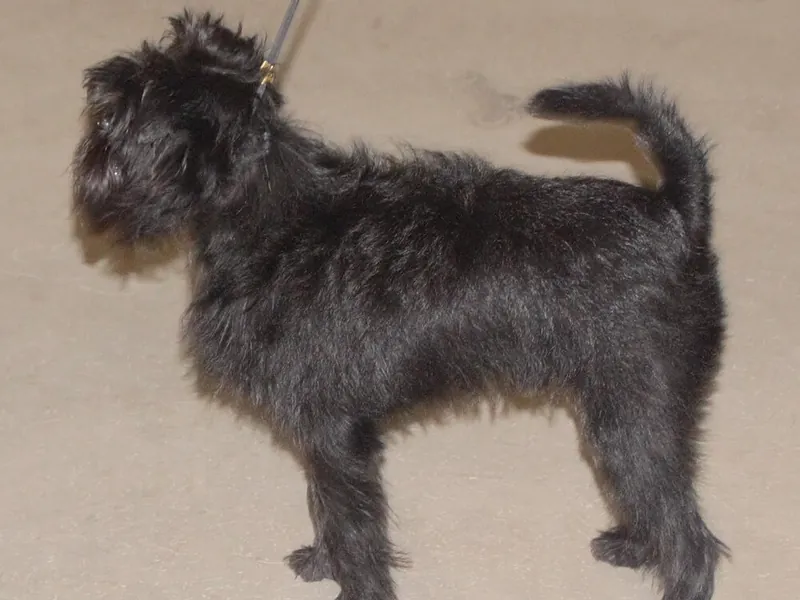
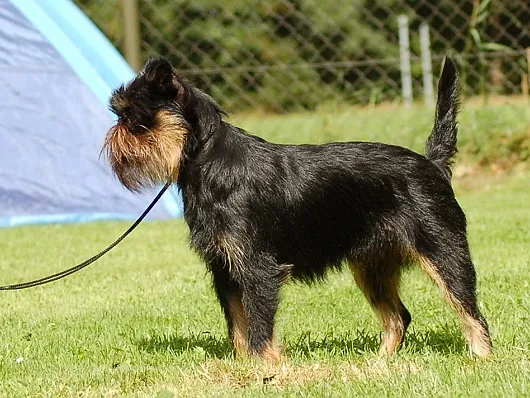
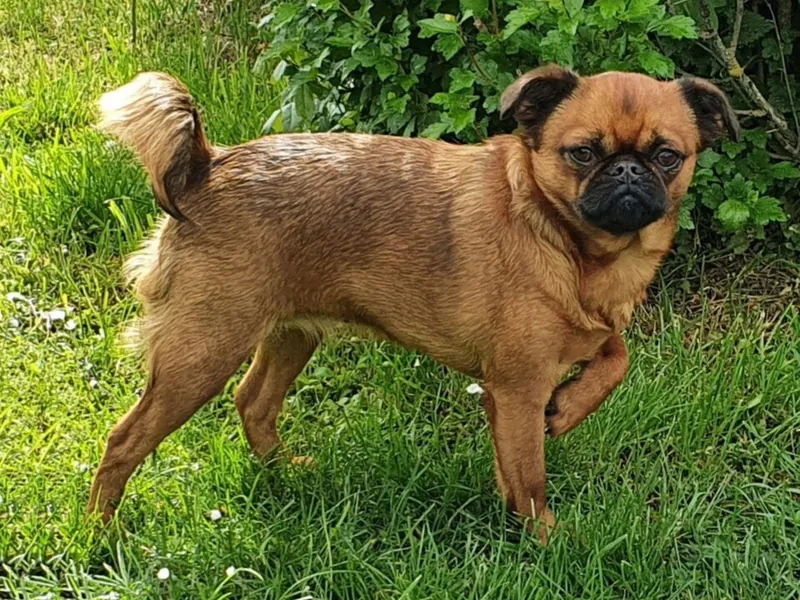
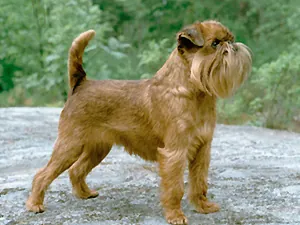
The Brussels Griffon is a compact, square toy dog standing about 7 to 10 inches tall and weighing 8 to 13 lb. Its most striking feature is the face: a very short nose, prominent chin, large dark eyes and an expression often described as almost human. Females are often a little lighter than males, but size varies more between lines.
In the US and UK the breed comes in two coats:
- Rough: wiry, dense hair with a beard and mustache.
- Smooth: short, glossy hair similar to a Pug's, sometimes called the Petit Brabançon.
Four colors are accepted by the AKC:
- Red: reddish-brown, often with a little black on the whiskers and chin
- Belge: black and reddish-brown mixed, usually with a black mask
- Black and tan
- Black
Elsewhere, the FCI splits these into three separate breeds by coat and color. Ears may be natural or, in some countries, cropped, though cropping is banned in the UK and much of Europe.
Temperament and Personality
Griffons are often described as self-important little dogs. They are curious, alert and very attached to their people, often to one person in particular. They notice everything and bark at unusual sounds or visitors.
The breed is sensitive. It may be wary of strangers and can be overwhelmed by loud households or rough handling. It usually does best with adults or calm older children and can live with other pets when introduced well.
Griffons often have strong opinions and very expressive faces, and owners frequently describe them as funny and full of character. They tend to follow their favorite person everywhere and may sulk if left out of activities.
Do Brussels Griffons Bark a Lot?
Brussels Griffons are alert and tend to bark at visitors, unusual noises and passersby, though most are not nonstop barkers.
Their watchful nature makes them effective little alarm systems. Problems usually arise when a Griffon is bored, left alone too long or allowed to patrol a front window all day. Teach a quiet cue early, reward calm behavior when the doorbell rings and block views of busy streets if needed. Daily walks, play and simple trick training help channel their busy minds. In apartments, barking is the main issue to manage.
Are Brussels Griffons Hard to Potty Train?
Yes, house training is often one of the harder parts of raising a Brussels Griffon, but consistency pays off.
Like many toy breeds, Griffons have small bladders and can sneak off to go behind furniture without being noticed. They also dislike rain and cold. Take puppies out frequently, especially after sleeping, eating and play, and reward immediately outdoors. A crate or pen helps during short rests, and supervision indoors prevents habits from forming. Griffons are sensitive, so scolding backfires. Expect several months before full reliability, and keep a routine through weather changes.
Are Brussels Griffons Good for First-Time Owners?
They can be, if the owner is prepared for a sensitive dog with a strong personality and specific health needs.
Griffons need gentle handling, patient training and a calm home. Their short face means owners must learn to spot breathing problems and avoid heat. Grooming the rough coat also takes commitment, either learning to hand-strip or paying a groomer who knows the technique. A first-time owner who has time at home, chooses a breeder who health-tests and selects for a moderate face, and enjoys a dog that wants to be involved in everything can find the Griffon very rewarding.
Exercise and Training
Short daily walks and indoor play meet most Griffons' needs. Because of their flat face, avoid exercise in hot or humid weather and watch for labored breathing.
Training should use gentle, rewarding methods. Griffons are clever and can learn quickly, but they may be stubborn and dislike pressure. Housetraining can be slow, as with many toy breeds. They do not like being left alone and benefit from gradual practice with short absences.
Griffons enjoy short sniffing walks, gentle fetch and simple trick training, which also builds confidence in more cautious dogs. Use a harness rather than a collar to avoid pressure on the throat, and carry water on warm days.
Grooming and Shedding
The rough coat is wiry and dense and needs brushing a couple of times a week. To keep the correct texture, it is hand-stripped several times a year; pet owners sometimes have it clipped instead, which softens the coat.
Clean the beard after meals, wipe around the eyes and nose daily and check the prominent eyes for irritation. Brush teeth frequently and trim nails regularly.
Feeding and Nutrition
Brussels Griffons have small, often crowded mouths and a short muzzle, which affects how they eat. Many do better with small kibble or a shallow, wide dish that lets them pick up food without pushing their face deep into a bowl. Wipe the beard after each meal, as trapped food causes odor and skin irritation.
Dental disease is common in this breed because teeth are packed into a short jaw. Daily tooth brushing helps more than any type of food.
- Feed puppies three or four small meals a day to keep blood sugar stable, then move to two meals as adults.
- Weigh portions carefully. Even a pound of extra weight makes breathing harder for a flat-faced dog.
- Use tiny treats for training and subtract them from the daily ration.
- Feed in a calm place; some Griffons gulp air when excited, which can cause gas.
Fresh water should be easy to reach, especially in warm weather, when Griffons overheat quickly.
| Adult weight | Less active | Typical adult | Very active |
|---|---|---|---|
| 8 lb | 260 kcal | 290 kcal | 370 kcal |
| 10 lb | 300 kcal | 350 kcal | 440 kcal |
| 13 lb | 370 kcal | 420 kcal | 530 kcal |
Estimates use the resting energy formula veterinarians work with (70 × body weight in kg0.75) and standard activity factors. Use the feeding guide on your food as a starting point and adjust to body condition. Puppies, seniors, pregnant animals and pets that need to lose weight have different needs, so ask your vet.
Health and Lifespan
Brussels Griffons typically live 12 to 15 years. As a brachycephalic breed, they can have breathing difficulties and poor heat tolerance. Pick puppies from parents with open nostrils and normal breathing.
Chiari-like malformation with syringomyelia is common in the breed, according to veterinary research, and can cause neck pain, scratching at the neck and neurological signs. The large eyes are prone to injury. Ask breeders about MRI screening and eye exams for breeding dogs.
Brussels Griffon Price and Cost of Ownership
Typical breeder price in the US$1,500 to $4,000
A Brussels Griffon puppy from a reputable US breeder typically costs about $1,500 to $4,000. Prices vary by breeder, region, coat and lines. Litters are small and many require cesarean births, which pushes prices up and keeps waiting lists long.
Toy breed and Griffon rescues sometimes place adults, so adoption is worth checking.
Breed-specific ongoing costs include:
- Professional hand-stripping or regular clipping for the rough coat.
- Dental cleanings under anesthesia.
- Pet insurance for eye injuries, breathing problems and Chiari-like malformation.
- Possible airway surgery for dogs with narrow nostrils or a long soft palate.
Food costs stay low for a dog of 8 to 13 lb.
Is the Brussels Griffon Right for You?
The Griffon suits owners who want a small, characterful companion and are home much of the day. It is well suited to apartments.
- Good match: adults, couples, retirees, quiet homes.
- Less ideal: busy homes with toddlers, owners who travel a lot without the dog, very hot climates.
Brussels Griffon Traits at a Glance
Brussels Griffon FAQ
Are Brussels Griffons good family dogs?
They are loving with their family but are best with adults or calm older children because they are small and sensitive.
How big do Brussels Griffons get?
They stand about 7 to 10 inches tall and weigh roughly 8 to 13 lb.
Do Brussels Griffons shed?
Rough-coated Griffons shed modestly if hand-stripped; smooth-coated Griffons shed more.
Do Brussels Griffons have health problems?
Their short face can cause breathing issues, and Chiari-like malformation and eye injuries are known concerns. Health-tested parents matter.
How long do Brussels Griffons live?
Typically 12 to 15 years.
Are Brussels Griffons good apartment dogs?
Yes. Their size and moderate exercise needs suit apartment life, as long as their barking is managed and they are not left alone for long periods.