Silky TerrierA true terrier in a silky coat
The Silky Terrier looks like an elegant toy dog but behaves like a working terrier: bold, curious and quick to sound the alarm. It suits owners who want a small, spirited companion and are happy to brush a long coat often.
Why people love the Silky Terrier
- Small, portable dog with a big, bold personality
- Very low shedding thanks to a single, silky coat
- Alert watchdog that notices everything
- Long-lived, often 13 to 15 years
- Energetic enough for brisk walks and short hikes
Things to consider
- Barks readily at sights and sounds
- Coat tangles easily and needs frequent brushing
- Strong terrier instinct puts small pets at risk
- Can be bossy with other dogs, even large ones
- Prone to knee problems and tracheal collapse
Is this breed right for you?
10 questions · live resultHistory and Origin
The Silky Terrier was developed in Australia in the late 19th century, mainly around Sydney, by crossing Yorkshire Terriers with Australian Terriers. Breeders wanted a small companion that kept the Australian Terrier's hardiness and the Yorkie's fine coat.
For some years different Australian states used different names and standards, but the breed was eventually standardized. Silkies became popular with American servicemen stationed in Australia during the Second World War, and the AKC recognized the breed in 1959. The Kennel Club in the UK lists it as the Australian Silky Terrier.
Size, Coat and Colors
The Silky Terrier is a small, lightly built toy terrier, slightly longer than tall, with a refined but sturdy frame. Adults stand 9 to 10 inches at the shoulder and weigh 10 to 12 lb. Males and females look very similar; females may be slightly smaller, and males often have a little more substance.
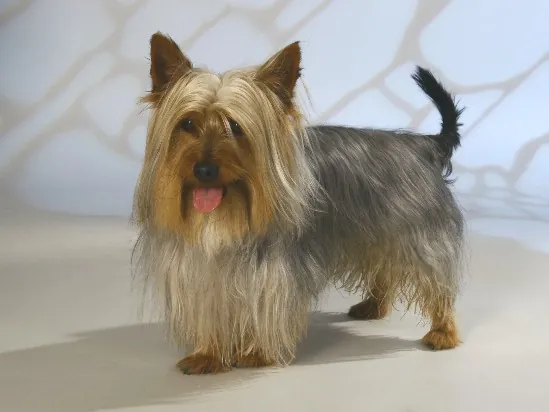
The coat is the breed's namesake: straight, single, fine and glossy, with a silky texture. In adults it typically falls about 5 to 6 inches from behind the ears to the base of the tail. It parts down the back and should not reach the floor, which distinguishes the Silky from the Yorkshire Terrier. The topknot is lighter in color and often tied up or trimmed.
The only accepted color is blue and tan. The blue may range from silver blue to pigeon blue or slate blue, and the tan should be deep and rich on the muzzle, legs, feet and under the tail. Puppies are born black and tan and gradually clear to blue, usually by around 18 months.
The ears are small, V-shaped and erect, giving an alert terrier expression.
Temperament and Personality
Silkies are confident, inquisitive and lively. They bond closely with their people and enjoy being involved in everything. As watchdogs they are very alert and quick to bark at unfamiliar sights and sounds.
They were bred partly to dispatch mice and rats, and that instinct remains. Small pets such as hamsters or birds are at risk, and some Silkies can be bossy with other dogs. They are best with older children who handle them calmly.
Many Silkies are confident beyond their size and will happily confront a much larger dog, so owners need to keep an eye on encounters at parks and on walks.
Is the Silky Terrier Good for First-Time Owners?
It can be, for owners who are ready for a terrier personality in a toy-sized body. Silkies are affectionate and clever, but they are also willful and noisy.
Beginners should plan for:
- Consistent training, including bark control, from day one
- Brushing several times a week or regular grooming appointments
- Careful management around other dogs and small pets
New owners often let small dogs get away with too much. If you treat the Silky like a real dog, with rules and outings, it can be a fun and manageable first companion for an adult household.
Is the Silky Terrier a Good Apartment Dog?
Yes, with conditions. A Silky's size and modest exercise needs suit apartment life, and many live happily in city homes.
The main issue is barking. Silkies react to hallway noise, doorbells and neighbors, which can cause friction in shared buildings. To make apartment life work:
- Teach a quiet cue early and reward calm behavior.
- Give two brisk walks and play every day.
- Use white noise or a quiet room when you leave.
A Silky that is exercised and mentally busy is a much calmer neighbor than one left bored.
Are Silky Terriers Easy to Train?
Moderately. Silkies are quick learners, but they have a terrier's independence and can decide that their own plan is more interesting.
Effective approaches include:
- Short, upbeat sessions with tiny food rewards
- Clear, consistent household rules
- Early socialization to calm dogs of all sizes
Housetraining may take longer than with larger breeds, so stick to a strict schedule. Silkies often enjoy trick training, rally and even earthdog or barn hunt, which channel their hunting instinct in a positive way. Harsh methods tend to make them more stubborn.
Exercise and Training
A couple of brisk walks a day plus play is usually enough. Silkies enjoy exploring and digging, so provide safe outlets like sniffing walks or a dig box. They are fast and may chase, so keep them leashed in unfenced areas.
Training needs clear, consistent rules and positive methods. They are clever but can be willful, and small dogs often get away with behavior that would not be tolerated in a large one. Work on barking control and polite greetings early. Silkies do not like long hours alone.
Grooming and Shedding
The coat is long, straight, fine and glossy, in blue and tan. It has no woolly undercoat, so it sheds very little, but it tangles easily. Plan on brushing and combing several times a week, or daily for long coats.
- Bathe every few weeks with a gentle shampoo.
- Tie up or trim the topknot so hair stays out of the eyes.
- Trim around the feet and brush teeth often.
Some pet owners keep the coat shorter for easier care.
Feeding and Nutrition
At 10 to 12 lb, a Silky needs only a small amount of food each day, so treats and table scraps quickly tip the balance. Silkies are lively and often stay slim, but less active or older dogs can gain weight, which worsens knee problems and tracheal collapse. Keep them lean, with ribs easy to feel under the coat.
- Feed young puppies three or four small meals a day to prevent low blood sugar, then two meals a day for adults.
- Choose small kibble or food sized for toy breeds.
- Dental disease is common in small dogs; brush teeth daily and provide safe chews sized for small mouths.
- Use tiny training treats and count them in the daily total.
A glossy, healthy coat depends on a complete and balanced diet. If the coat becomes dry or itchy despite good grooming, ask your vet before adding supplements. Some Silkies can be picky eaters; a regular schedule and removing food after 20 minutes usually helps more than switching foods often.
| Adult weight | Less active | Typical adult | Very active |
|---|---|---|---|
| 10 lb | 300 kcal | 350 kcal | 440 kcal |
| 12 lb | 350 kcal | 400 kcal | 500 kcal |
Estimates use the resting energy formula veterinarians work with (70 × body weight in kg0.75) and standard activity factors. Use the feeding guide on your food as a starting point and adjust to body condition. Puppies, seniors, pregnant animals and pets that need to lose weight have different needs, so ask your vet.
Health and Lifespan
Silky Terriers typically live 13 to 15 years. Conditions seen in the breed include patellar luxation, Legg-Calvé-Perthes disease (a hip problem in small breeds) and epilepsy.
Tracheal collapse can also occur, so many owners walk Silkies on a harness instead of a collar. Dental care matters for this small breed. Buy from breeders who screen knees and eyes and are open about health in their lines.
Silky Terrier Price and Cost of Ownership
Typical breeder price in the US$1,000 to $2,500
A Silky Terrier puppy from a reputable US breeder typically costs about $1,000 to $2,500. Prices vary by breeder, region and lines. Silkies are less common than Yorkies, so waitlists are possible. Ask about knee and eye checks in the parents.
Silkies and Silky mixes do turn up in small-breed rescues, so adoption is worth exploring.
Breed-specific ongoing costs include:
- Professional grooming every four to eight weeks, especially for shorter pet trims
- Dental cleanings, which toy breeds often need
- A well-fitting harness to protect the trachea
- Insurance that covers patellar luxation, Legg-Calve-Perthes disease and epilepsy
- Training classes to manage barking and reactivity
Is the Silky Terrier Right for You?
The Silky suits owners who want a portable dog with a big personality and are willing to keep up with coat care. It can live in an apartment if barking is managed and it gets daily outings.
- Good match: adults, retirees, families with older children, people home much of the day.
- Less ideal: homes with small pets, very noise-sensitive neighbors, or owners who dislike grooming.
Silky Terrier Traits at a Glance
Silky Terrier FAQ
Are Silky Terriers hypoallergenic?
No breed is truly hypoallergenic, but Silkies shed little and some allergy sufferers tolerate them better than heavy shedders.
How big do Silky Terriers get?
They stand about 9 to 10 inches tall and weigh 10 to 12 lb.
What is the difference between a Silky Terrier and a Yorkshire Terrier?
Silkies are slightly larger, with a more wedge-shaped head and a coat that is usually not floor-length in pets. They also tend to act more like working terriers.
Do Silky Terriers bark a lot?
Yes, they are alert watchdogs and bark readily. Consistent training helps.
How long do Silky Terriers live?
Typically 13 to 15 years.
Are Silky Terriers good with children?
They can be, with older children who handle them gently. Toddlers and rough play are not a good mix for a dog this small.