Cairn TerrierScrappy working terrier from Skye
The Cairn Terrier is a small, rugged Scottish terrier bred to bolt foxes and vermin from rocky cairns. Spirited, curious and affectionate, it makes a lively companion for owners who appreciate terrier independence.
Why people love the Cairn Terrier
- Small, sturdy dog that copes with active family life
- Cheerful, curious and usually friendly with visitors
- Light shedder with a low-fuss, tousled coat
- Adaptable to apartments and travel
- Long-lived and generally hardy
Things to consider
- Strong urge to dig and chase small animals
- Alert barking needs early training
- Recall is unreliable near prey
- Coat needs hand-stripping to keep its texture
- Prone to skin allergies and some eye conditions
Is this breed right for you?
10 questions · live resultHistory and Origin
The Cairn comes from the Isle of Skye and the western Highlands of Scotland, where farmers kept small working terriers to hunt foxes, otters and rodents that hid in cairns, the piles of stones marking fields and graves.
The breed was first shown as a short-haired Skye Terrier, but in 1912 The Kennel Club recognized it as the Cairn Terrier. The AKC followed in 1913. The breed's best-known screen role was Toto in the 1939 film The Wizard of Oz.
Cairns are among the oldest Scottish terrier types and are closely related to the West Highland White Terrier, which was once bred from the same stock.
Size, Coat and Colors
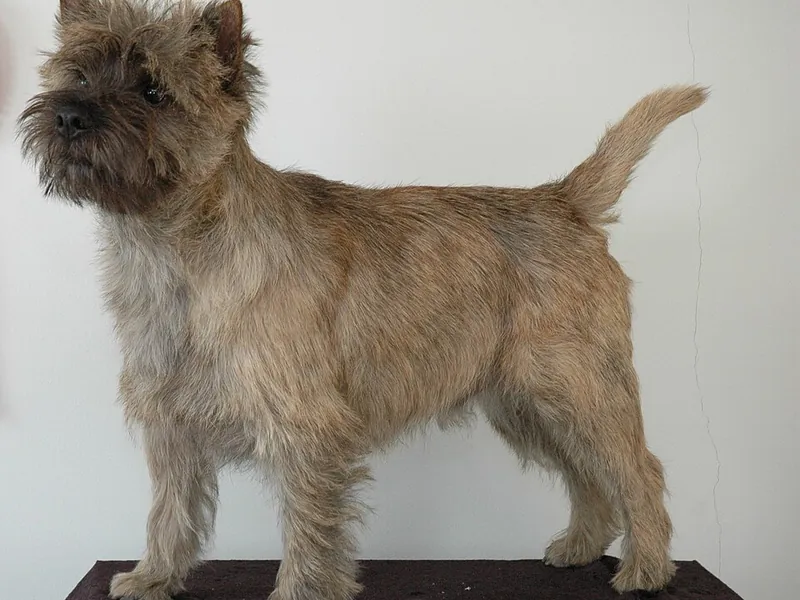
The Cairn is a small, shaggy working terrier, standing about 11 to 12 inches tall and weighing 13 to 17 lb. It is longer than it is tall, with a deep ribcage, strong hindquarters and a broad, short head with small pointed erect ears. Males are a little larger and heavier than females, with a slightly bolder head.
The coat is a weather-resistant double coat: a harsh, profuse outer coat over a short, soft undercoat. The overall look should be natural and slightly rugged, never sculpted.
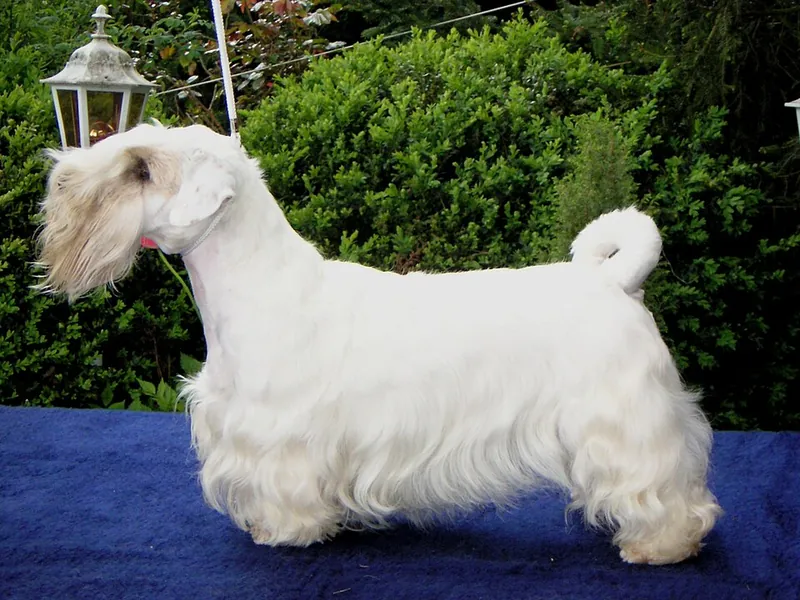
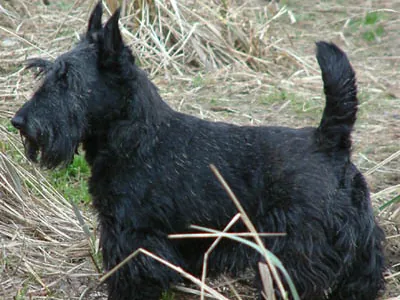
Cairns may be any color except white. Common colors include cream, wheaten, red, sandy, gray and brindle in many shades, and nearly black. Darker ears, muzzle and tail tip are typical and desirable. Brindle Cairns often change color several times as they mature, so a puppy may look very different by age two. White Cairns are not accepted in the standard; white is associated with the West Highland White Terrier.
Temperament and Personality
Cairns are cheerful, curious and confident. They are affectionate with their families and generally friendly with visitors, though they bark to alert.
The hunting instinct is strong. They dig, chase and may fixate on small animals, so rabbits, rodents and outdoor cats need protection. Cairns can be independent and stubborn but are usually more adaptable than their size suggests and tolerate some time alone.
Cairns are usually less sharp than some terrier breeds and enjoy being part of family activities. Many are good travelers and love exploring new places on a leash.
Do Cairn Terriers Bark a Lot?
Cairns bark more than average but are not usually nonstop barkers. They alert to visitors, unfamiliar noises and wildlife, and some bark in frustration when they spot a squirrel they cannot reach.
You can keep barking manageable by:
- Teaching a quiet cue and rewarding calm behavior at windows.
- Giving daily scent games or digging outlets so energy has a job.
- Avoiding long hours alone in the yard, where barking becomes a hobby.
Most Cairns settle quickly once they see the owner has noticed the disturbance.
Are Cairn Terriers Easy to Train?
They are moderately easy: smart and food-motivated, but independent like most terriers. A Cairn learns quickly yet may decide a cue is optional when something more interesting appears.
Short, upbeat sessions with food rewards work best. Cairns often excel at tricks, rally and nosework once they see training as a game. Housetraining is usually straightforward with a regular schedule. The hardest skill is recall in open spaces, where prey drive can override training, so practice on a long line and keep the dog leashed in unfenced areas. Harsh corrections tend to make Cairns more stubborn, not less.
Are Cairn Terriers Good With Cats?
Many Cairns live peacefully with a cat they were raised with, but outdoor and unfamiliar cats often trigger chasing. Cairns were bred to hunt vermin, and anything small and fast-moving catches their attention.
For the best chance, introduce a puppy to a confident cat that does not run, give the cat high perches and dog-free zones, and supervise until both are relaxed. Adult Cairns without cat experience vary; some adjust well, others never stop pestering. Pet rabbits, guinea pigs and rodents are much riskier and should be kept securely separated.
Exercise and Training
Cairns need moderate exercise, about 45 minutes to an hour a day of walks and play. They enjoy scent work, earthdog trials and agility.
- Keep them on leash in open areas; recall may fail when prey is spotted.
- Train with patience and rewards, keeping sessions short.
- Give approved outlets for digging, such as a sandpit.
They are hardy dogs that enjoy weather and rough terrain. Many can keep up on half-day hikes once fully grown, as long as they are conditioned gradually.
Cairns do respond to food rewards, and short daily sessions of tricks or nosework help them focus their curiosity productively.
Grooming and Shedding
The double coat is harsh and weather-resistant on top with a soft undercoat. Brush weekly and hand-strip two to three times a year to remove dead hair. Clipping is possible but softens the coat.
Shedding is light. Check eyes, teeth and nails regularly.
Cairns come in many colors, including wheaten, red, gray and brindle, and many change color with age. Their tousled look is intended, so avoid over-trimming.
Feeding and Nutrition
Keeping a Cairn lean is one of the best ways to protect its knees, which can be affected by patellar luxation. You should feel the ribs easily and see a defined waist. Cairns are efficient eaters and gain weight quickly when treats pile up, especially in older or less active dogs.
- Feed adults two measured meals a day; small puppies three or four.
- Use tiny treats or part of the meal for training rewards.
- Recheck portions after neutering, when energy needs often drop.
Skin allergies (atopic dermatitis) are common in the breed. If your Cairn has chronic itching, ear infections or paw licking, ask your vet whether a diet trial is useful as part of diagnosis rather than switching foods on your own.
Portosystemic shunt, a liver blood vessel defect, occurs in Cairns. Signs in puppies can include poor growth, odd behavior after meals or vomiting. Affected dogs often need a vet-designed diet, so report these signs promptly. Dental care also matters in a small breed, so include chews or brushing in the routine.
| Adult weight | Less active | Typical adult | Very active |
|---|---|---|---|
| 13 lb | 370 kcal | 420 kcal | 530 kcal |
| 17 lb | 450 kcal | 520 kcal | 650 kcal |
Estimates use the resting energy formula veterinarians work with (70 × body weight in kg0.75) and standard activity factors. Use the feeding guide on your food as a starting point and adjust to body condition. Puppies, seniors, pregnant animals and pets that need to lose weight have different needs, so ask your vet.
Health and Lifespan
Cairns typically live 13 to 15 years. Conditions in the breed include patellar luxation, Legg-Calvé-Perthes disease, eye disorders such as ocular melanosis, glaucoma and cataracts, atopic dermatitis, portosystemic shunt and von Willebrand's disease.
Choose breeders who screen eyes and knees and use available DNA tests. Regular eye checks help catch ocular melanosis early.
Ocular melanosis is particularly associated with the breed and can lead to glaucoma, so annual eye checks are a sensible part of routine care. Keep your Cairn lean to protect its knees.
Cairn Terrier Price and Cost of Ownership
Typical breeder price in the US$1,200 to $2,500
A Cairn Terrier puppy from a reputable US breeder typically costs about $1,200 to $2,500. Prices vary by breeder, region and lines. Look for breeders who screen eyes for ocular melanosis and other conditions, check knees and use available DNA tests.
Cairn rescue groups across the US place adult dogs and seniors, and terrier mixes with Cairn traits are common in shelters.
Breed-specific ongoing costs include:
- Hand-stripping by a groomer who knows terrier coats, a few times a year.
- Annual eye exams, since ocular melanosis can lead to glaucoma.
- Allergy management, which may involve vet visits, diet trials or medication.
- Dental cleanings, common in small terriers.
Is the Cairn Terrier Right for You?
A Cairn suits families, singles and seniors who want a small, sturdy dog with personality. It adapts to apartments or houses with daily walks.
It is not ideal for homes with small pets or for people who want a quiet, highly obedient dog.
Cairns are a good fit for first-time owners who want a small but sturdy dog with plenty of character, as long as they accept some digging and barking as part of the package.
Cairn Terrier Traits at a Glance
Cairn Terrier FAQ
Are Cairn Terriers good family dogs?
Yes. They are sturdy, playful and affectionate, and usually do well with respectful children.
How big do Cairn Terriers get?
They stand about 11 to 12 inches tall and weigh 13 to 17 lb.
Do Cairn Terriers shed?
Lightly. Weekly brushing and occasional hand-stripping keep shedding low.
Are Cairn Terriers hypoallergenic?
No dog is fully hypoallergenic, but Cairns shed little, which some allergy sufferers tolerate better.
How long do Cairn Terriers live?
Typically 13 to 15 years.
Are Cairn Terriers good apartment dogs?
They can be, with daily walks and training to manage alert barking.