Norwegian LundehundThe flexible, six-toed puffin hunter
The Norwegian Lundehund is a small spitz from Norway's remote Lofoten islands, bred to climb cliffs and pull puffins from rocky nests. It has at least six toes on each foot, an extraordinarily flexible neck and ears it can fold shut. It is affectionate but stubborn, and its health needs make it a breed for committed, well-informed owners.
Why people love the Norwegian Lundehund
- Unique anatomy: six toes and remarkably flexible joints
- Playful, affectionate and closely attached to family
- Small, sturdy size suits homes of many types
- Short coat needs only weekly brushing
- Usually good with respectful children and other pets
Things to consider
- Lundehund syndrome, a chronic intestinal disorder, is common
- Notoriously slow to house train
- Stubborn and sensitive; needs patient training
- Very small gene pool and scarce puppies
- Agile climber that can escape weak fencing
Is this breed right for you?
10 questions · live resultHistory and Origin
For centuries, islanders on Værøy and Røst at the tip of the Lofoten archipelago used these dogs to hunt puffins, whose meat and feathers were valuable. The dogs squeezed into narrow rock crevices and climbed steep cliffs to reach the nesting birds.
When puffins became protected and netting replaced dogs, the breed nearly disappeared. Disease outbreaks in the 1940s left only a handful of dogs, and today's population descends from this tiny group. Norwegian breeders have since run a carefully managed crossbreeding project with related Nordic breeds to widen the gene pool. The AKC recognized the Lundehund in the Non-Sporting Group in 2011.
Size, Six Toes and Coat Colors
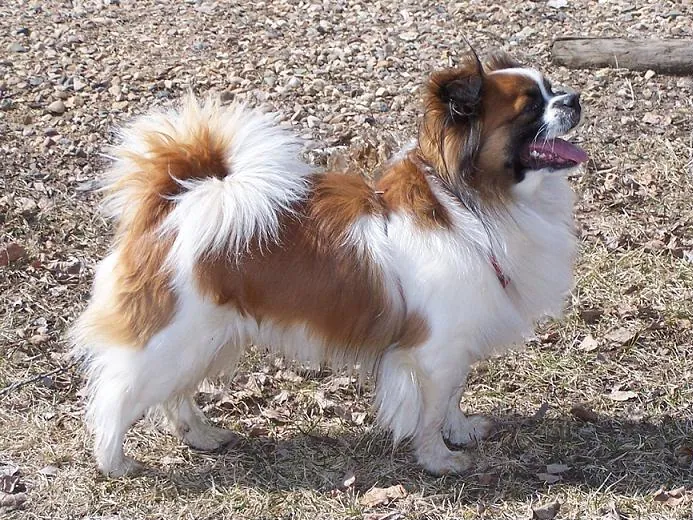
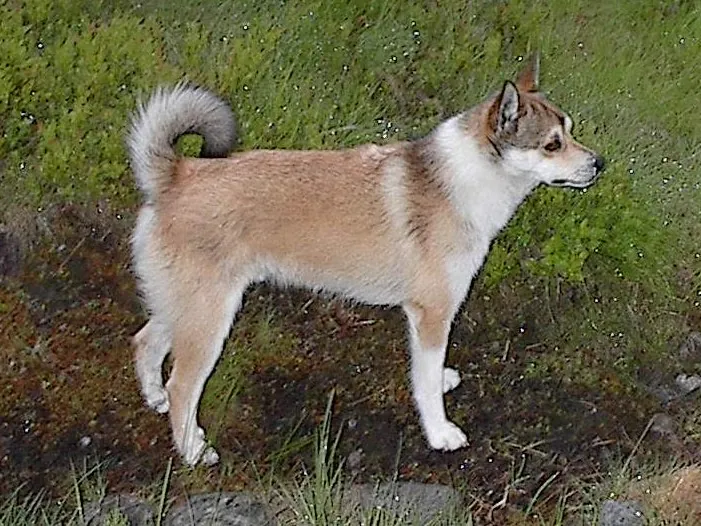
The Norwegian Lundehund is a small, rectangular spitz with a wedge-shaped head, upright triangular ears and a tail curled over the back or hanging. Adults stand about 12 to 15 inches tall and weigh roughly 12 to 18 lb. Males are typically 13.5 to 15 inches and females 12.5 to 14 inches, with males a little heavier and broader in the head.
Its features are unlike any other breed:
- at least six toes on each foot, with extra pads for grip
- ears that fold shut, closing off the ear canal
- a neck so flexible the head can bend back to touch the spine
- shoulders that allow the front legs to extend straight out to the sides
The coat is a dense, rough outer coat over a soft undercoat, shorter on the head and front of the legs and longer around the neck and thighs.
Colors: fallow to reddish brown or tan with black or gray hair tips, combined with white markings, or white with red or dark markings. Darker tipping often increases with age.
Temperament and Personality
Lundehunds are alert, playful and closely attached to their people. They are often reserved with strangers and can be sensitive to loud or chaotic environments.
They are famously stubborn, and many owners find house training slow. They bark readily and enjoy hiding food and objects around the house, a trait thought to relate to their hunting past. With respectful children and other pets they usually do well.
Their unusual flexibility is part of daily life: Lundehunds can bend their heads back until the crown touches the spine and spread their front legs out to the sides, which they once used to brace against rock walls.
Are Norwegian Lundehunds Good Family Dogs?
Yes, Lundehunds can be lovely family dogs for patient households with respectful children. They are playful, affectionate and closely bonded to their people.
Families should know the breed's quirks. House training can take many months, and a Lundehund may hide food or small toys around the house. It can be reserved with strangers and sensitive to loud, chaotic environments, so a busy household with very young children may be stressful. Older children who enjoy training and quiet games usually get along well with the breed. The family also needs to be ready to manage the breed's gut health with a vet throughout the dog's life.
Are Norwegian Lundehunds Good for First-Time Owners?
The Lundehund is usually not the best choice for first-time owners. Its stubbornness, slow house training and complex health needs suit experienced, well-prepared homes better.
A novice can succeed with strong commitment, support from a breed club and a vet familiar with Lundehund syndrome. Expect to keep a strict house-training routine for longer than with most breeds, use gentle positive methods and secure the yard against an agile climber. Because puppies are scarce, first-time owners must also be patient during the search. Meeting adult Lundehunds and talking to owners beforehand gives a realistic picture of daily life with the breed.
Can Norwegian Lundehunds Be Left Alone?
Adult Lundehunds can usually be left alone for a few hours, but they prefer company and do best in homes where someone is around for much of the day.
Short absences should be taught gradually from puppyhood. Because the breed tends to chew and hoard small items, leave the dog in a safe, puppy-proofed area with suitable chews. House training often takes longer than with other breeds, so long absences early on can set progress back. For dogs with Lundehund syndrome, regular monitoring of appetite and stool matters, which is easier when someone is home. A dog walker or sitter is useful for longer days.
Exercise and Training
Daily walks and active play, around 45 to 60 minutes total, keep a Lundehund fit. Hiking, climbing over varied terrain and scent games are favorites.
- Expect house training to take patience and a strict routine.
- Use gentle, reward-based training; harsh methods backfire with this sensitive breed.
- Secure fences carefully, since Lundehunds are agile climbers.
- Keep small items out of reach to prevent chewing and hoarding.
Lundehunds enjoy agility and scent work but may prefer to do things their own way. Keep training fun and short.
Grooming and Shedding
The short, dense double coat needs weekly brushing and sheds moderately, more during seasonal changes. Check the extra toes and pads regularly and keep nails, including the additional dewclaws, trimmed.
Feeding and Nutrition
Nutrition plays a central role in managing Lundehund health, because many dogs develop Lundehund syndrome, a chronic intestinal disorder involving lymphangiectasia and protein-losing enteropathy. Diagnosis and diet planning belong with your vet. Vets often focus on highly digestible, carefully balanced diets for affected dogs, but there is no diet that cures the condition.
Consistency matters: many owners find that Lundehunds do best on a stable routine. Make any diet change slowly over at least a week, avoid rich table scraps and introduce new treats one at a time.
Watch the signs: track your dog's weight regularly and note any diarrhea, vomiting, weight loss or swelling of the belly or legs. These can signal a flare and need prompt veterinary attention.
Meals: two or three smaller meals a day are usually easier on the digestive system than one large meal.
Lundehunds like to hide food. If your dog stashes kibble or chews around the house, feed meals in a crate or quiet room and pick up leftovers. Count training treats in the daily ration.
| Adult weight | Less active | Typical adult | Very active |
|---|---|---|---|
| 12 lb | 350 kcal | 400 kcal | 500 kcal |
| 18 lb | 470 kcal | 540 kcal | 680 kcal |
Estimates use the resting energy formula veterinarians work with (70 × body weight in kg0.75) and standard activity factors. Use the feeding guide on your food as a starting point and adjust to body condition. Puppies, seniors, pregnant animals and pets that need to lose weight have different needs, so ask your vet.
Health and Lifespan
Lundehunds typically live 12 to 15 years, but the breed carries a serious inherited risk.
- Lundehund syndrome: a chronic gastrointestinal disorder involving intestinal lymphangiectasia and protein-losing enteropathy. It can be managed with diet and veterinary care but not cured.
- Low genetic diversity: the population bottleneck increases inbreeding-related problems.
- Patellar luxation and eye conditions; the AKC recommends testing for both.
Work with a breeder who is open about gut health in their lines, and build a relationship with a vet familiar with the syndrome.
Norwegian Lundehund Price and Cost of Ownership
Norwegian Lundehunds are very rare in the United States, with only a small number of litters born each year. Most puppies are placed through breed club contacts, and some owners import from Scandinavia, which adds travel, transport and paperwork costs. Prices vary by breeder, region and lines, and expect to join a waiting list.
Ask breeders about gut health in their lines, testing for eye conditions and patellar luxation, and whether they participate in the Norwegian crossbreeding project.
Adoption is rare but occasionally possible through the breed club's rehoming program.
The main ongoing cost driver is the breed's predisposition to Lundehund syndrome. Diagnostics such as blood work and ultrasound, long-term veterinary diets and medication for flares can add up. Pet insurance should be purchased early, before any digestive signs appear and are recorded as pre-existing.
Is the Norwegian Lundehund Right for You?
This breed suits patient, experienced owners who are home often, enjoy a quirky dog and are ready to manage diet and health carefully. It can live in an apartment if exercised.
It is not ideal for first-time owners who want an easy-to-train dog or for anyone unprepared for possible chronic health costs.
Because the population is small, puppies are scarce. Contact breed clubs early and ask about their health programs and the crossbreeding project.
Norwegian Lundehund Traits at a Glance
Norwegian Lundehund FAQ
Why does the Norwegian Lundehund have six toes?
The extra toes helped it grip slippery cliffs and rocks while hunting puffins.
How big do Norwegian Lundehunds get?
They stand about 12 to 15 inches tall and weigh roughly 12 to 18 pounds.
What is Lundehund syndrome?
It is a chronic intestinal disorder that causes protein loss. It can be managed but not cured.
Are Norwegian Lundehunds easy to house train?
No. They are known for being slow to house train and need patience.
Do Norwegian Lundehunds bark a lot?
They are fairly vocal and alert.
How long do Norwegian Lundehunds live?
Typically 12 to 15 years.