Dandie Dinmont TerrierThe pepper and mustard terrier of the Borders
The Dandie Dinmont Terrier is a rare, long-bodied terrier from the Scottish Borders, recognizable by its curving outline and silky topknot. Calmer than many terriers but still independent and brave, it suits owners who want a loyal, quieter companion with character.
Why people love the Dandie Dinmont Terrier
- Calmer indoors than most terriers
- Distinctive look with a silky topknot
- Light shedding
- Copes with moderate time alone better than many terriers
- Adapts well to apartment life
Things to consider
- Long back needs protection from jumping and weight gain
- Coat needs regular combing and shaping
- Independent and sometimes stubborn
- May not enjoy rough handling by young children
- Very rare, so puppies are hard to find
Is this breed right for you?
10 questions · live resultHistory and Origin
The breed developed in the Border country between Scotland and England, where farmers and gypsies kept small terriers to hunt otter, badger and fox. It is the only breed named after a fictional character: Dandie Dinmont, a farmer in Sir Walter Scott's 1815 novel Guy Mannering, who kept terriers called Pepper and Mustard.
The two coat colors are still called pepper and mustard. The breed was recognized by the AKC in 1886. Today it is one of the rarest native British breeds, and The Kennel Club lists it as a vulnerable native breed.
Size, Coat and Colors
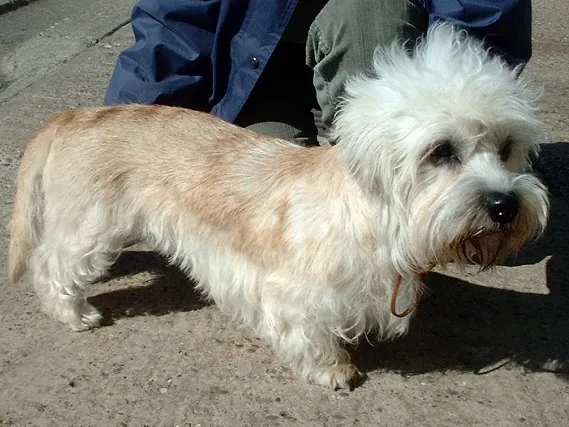
The Dandie Dinmont is a long, low terrier with a shape unlike any other breed. It stands only 8 to 11 inches at the shoulder but weighs 18 to 24 lb, so it is solid and heavier than its height suggests. The body is long and flexible, and the topline dips slightly behind the shoulders, then rises in a gentle arch over the loin before dropping to the tail. The front legs are short and the hind legs a little longer.
The head is large, with a domed skull covered by a soft, silky topknot, large, round, dark hazel eyes and pendulous ears with a light feather at the tips. The tail is curved like a scimitar.
The coat, about 2 inches long, is a mix of harder and softer hair. There are two colors:
- Pepper: from dark bluish black to light silvery gray, with a silvery white topknot.
- Mustard: from reddish brown to pale fawn, with a creamy white topknot.
Puppies are much darker at birth and lighten as they mature. Males and females are similar in size.
Temperament and Personality
Dandies are dignified, affectionate and often calmer indoors than other terriers. They are loyal to their family and can be reserved with strangers, making them good watchdogs with a surprisingly deep bark. Like most terriers, they think for themselves and may consider a command before obeying.
Many prefer older children, as they may not enjoy rough handling. Small animals can trigger hunting behavior, though they can live with cats when raised together.
Dandies are often described as having a big-dog attitude in a small body. They are confident and can be stubborn, but they are also gentle and affectionate with people they know well.
Are Dandie Dinmont Terriers Good for First-Time Owners?
Yes, Dandies can be a good first dog for patient owners. They are calmer and less demanding than many terriers and adapt well to quieter households.
First-time owners should understand three things. Training requires patience, because Dandies think for themselves. The long back needs protection, which means ramps, harnesses and keeping the dog lean. And the coat needs weekly combing plus regular shaping, ideally by a groomer who knows the breed. Because Dandies are rare, new owners also benefit from staying in touch with their breeder or the breed club for advice.
Do Dandie Dinmont Terriers Bark a Lot?
Not usually. Dandies are generally quieter than many terriers, but they do bark to alert, and their bark is surprisingly deep and loud for their size. Visitors often assume a larger dog is behind the door.
Most Dandies settle once the owner acknowledges the disturbance. Barking can increase if the dog is bored, under-exercised or left alone for long periods. Teaching a quiet cue early, giving daily walks and scent games and preventing the dog from patrolling windows all help. In apartments, the occasional deep alert bark is usually the only noise issue.
Are Dandie Dinmont Terriers Good Apartment Dogs?
Yes, they adapt well to apartment life. They are small, need only moderate exercise and are usually calm indoors after daily walks and play.
A few adjustments help. Use elevators where possible or carry the dog on long staircases to protect the back. Provide ramps or steps to furniture. Address alert barking at hallway sounds early with training. Daily outings remain important, since sniffing and exploring keep this terrier content. With these in place, a Dandie is one of the easier terriers to keep in city living.
Exercise and Training
Moderate exercise suits Dandies: daily walks and play sessions. They enjoy sniffing and digging, and some take part in earthdog trials. Patient, reward-based training works best, with short sessions.
Protect the long back. Discourage repeated jumping off furniture, use ramps where possible, and keep the dog at a healthy weight. They tolerate being alone for moderate periods better than many terriers but still need company.
Many Dandies enjoy short bursts of play followed by long naps. Scent games and short training sessions keep their minds engaged without stressing the back.
Grooming and Shedding
The coat is a mix of hard and soft hair, with a soft, silky topknot. It sheds lightly but needs regular care:
- Comb through weekly to prevent tangles
- Hand-strip or trim every few months to maintain shape
- Keep the topknot and ears tidy
Many owners have a groomer familiar with the breed help shape the coat.
Feeding and Nutrition
Weight control is the core of feeding a Dandie Dinmont. Its long back and short legs make it prone to intervertebral disc disease, and extra pounds increase the strain on the spine. The coat can hide fat, so check condition by touch: ribs should be easy to feel, with a visible waist when the coat is flattened.
- Feed adults two measured meals a day; puppies three or four.
- Choose small treats and count them in the daily ration.
- Reduce food if activity drops with age or after injury.
Dandies are often enthusiastic eaters, and a sedentary adult can gain weight quickly. Puzzle feeders and scent games with part of the daily ration help satisfy their curiosity without extra food.
Hypothyroidism and Cushing's disease, both reported in the breed, can change appetite and weight. If your Dandie suddenly eats or drinks much more, or gains weight despite normal portions, see your vet. Liver shunts have also been reported, and affected dogs may need a special diet prescribed by a vet. Keep the beard area clean after meals to prevent staining and skin irritation.
| Adult weight | Less active | Typical adult | Very active |
|---|---|---|---|
| 18 lb | 470 kcal | 540 kcal | 680 kcal |
| 24 lb | 590 kcal | 670 kcal | 840 kcal |
Estimates use the resting energy formula veterinarians work with (70 × body weight in kg0.75) and standard activity factors. Use the feeding guide on your food as a starting point and adjust to body condition. Puppies, seniors, pregnant animals and pets that need to lose weight have different needs, so ask your vet.
Health and Lifespan
Dandies typically live 12 to 15 years. Their long back and short legs increase the risk of intervertebral disc disease. Glaucoma is a recognized concern, and breed clubs recommend eye testing. Other conditions reported include liver shunts and Cushing's disease. Buy from breeders who screen for glaucoma and discuss back health openly.
Dandie Dinmont Terrier Price and Cost of Ownership
Dandie Dinmonts are among the rarest AKC breeds, with only a handful of US litters each year. Prices vary by breeder, region and lines, and many puppies are reserved before birth or imported from the UK or Europe. Expect a long wait and contact the breed club for referrals. Ask breeders about glaucoma screening and back health in their lines.
Adult Dandies occasionally need new homes through breed club rescue programs.
Breed-specific ongoing costs include:
- Professional grooming by someone experienced with the breed's coat and topknot.
- Eye exams and possible glaucoma treatment.
- Insurance or savings for disc disease, which may need surgery.
- Ramps and harnesses to protect the back.
Is the Dandie Dinmont Terrier Right for You?
A Dandie may suit you if you:
- Want a calmer terrier with real character
- Are happy to brush weekly and shape the coat periodically
- Have an adult household or older children
It adapts well to apartment life. It is less ideal for homes with very young children or for anyone seeking a highly obedient dog.
Because the breed is rare, finding a puppy may take time. Breed clubs can connect you with health-testing breeders and occasionally with adult dogs needing new homes.
Dandie Dinmont Terrier Traits at a Glance
Dandie Dinmont Terrier FAQ
Are Dandie Dinmont Terriers good with children?
They can be gentle family dogs but tend to prefer older, respectful children over toddlers.
How big do Dandie Dinmont Terriers get?
They stand about 8 to 11 inches tall and weigh roughly 18 to 24 lb.
Do Dandie Dinmont Terriers shed?
They shed lightly. The coat needs weekly combing and occasional hand-stripping.
Why is it called the Dandie Dinmont?
It is named after a character in Sir Walter Scott's novel Guy Mannering, who kept terriers named Pepper and Mustard.
How long do Dandie Dinmont Terriers live?
Typically 12 to 15 years.
Are Dandie Dinmont Terriers hypoallergenic?
No dog is fully hypoallergenic. Dandies shed lightly, which some people with mild allergies tolerate better.