Chinese CrestedA playful toy dog in two coats
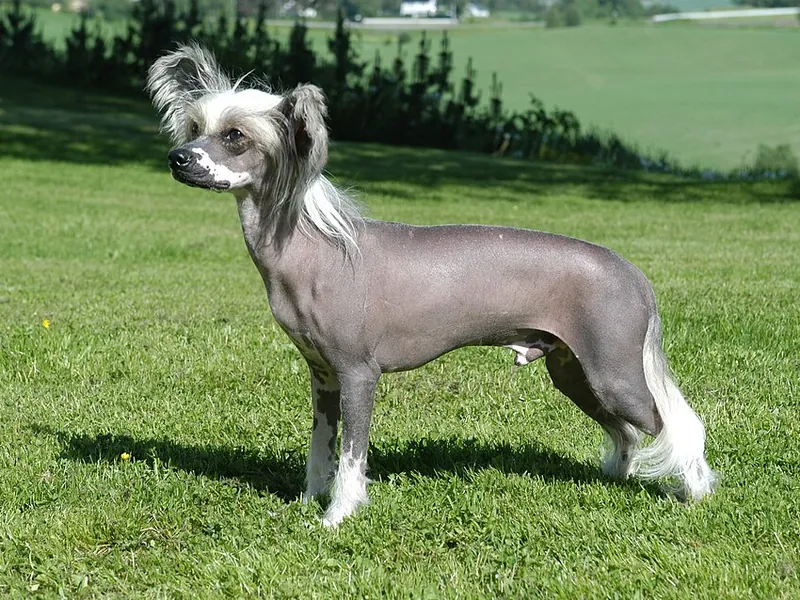
The Chinese Crested is a lively, affectionate toy dog that comes in two varieties: the Hairless, with silky hair only on the head, feet and tail, and the fully coated Powderpuff. It suits owners who want a small, people-focused companion and are ready for skin or coat care.
Why people love the Chinese Crested
- Very affectionate and people-focused companion
- Both varieties shed very little
- Small size suits apartments and travel
- Often lives 13 to 18 years
- Agile and trainable for agility and tricks
Things to consider
- Hairless skin needs sun protection and regular care
- Powderpuff coat mats without frequent brushing
- Dental problems common in the Hairless variety
- Feels the cold and needs sweaters
- Can be shy without early socialization
Health note: this breed is affected by health concerns linked to its body shape. Read the health section and choose a breeder who health-tests and breeds for moderate features.
Is this breed right for you?
10 questions · live resultHistory and Origin
The breed's early history is uncertain. Hairless dogs existed in several parts of the world, and one popular theory holds that Chinese traders carried small hairless dogs on ships as ratters and companions. Whether the breed truly originated in China, Africa or elsewhere is still debated.
The modern breed was developed mainly in the United States and Britain during the 20th century. Breed enthusiasts including Debra Woods and Ida Garrett kept records and dogs that became the foundation of today's lines. The AKC recognized the Chinese Crested in 1991.
Varieties, Body Types and Colors
The Chinese Crested is a fine-boned toy dog standing 9 to 13 inches at the shoulder and weighing about 9 to 12 lb. It comes in two varieties that can appear in the same litter:
- Hairless: soft, smooth skin with silky hair on the head (the crest), the feet (socks) and the tail (plume). Some dogs have more body hair and are called hairy hairless.
- Powderpuff: a full, soft double coat of long, straight hair over the whole body.
Breeders also describe two body types. The deer type is very slender and fine-boned, while the cobby type has a heavier body and bone. Both are acceptable.
Any color or combination of colors is allowed, and hairless skin can be solid or spotted, often changing shade with sun exposure and season. Ears are large and erect in Hairless dogs; Powderpuffs may have drop ears. Males and females look similar, with females sometimes slightly longer in body.
Temperament and Personality
Cresties are cheerful, gentle and very attached to their people. Many like to cuddle under blankets and follow their owner from room to room. They are generally polite with other dogs and pets.
Some are shy with strangers, and they can be sensitive to rough handling, so early socialization and a calm home help. They are moderate barkers and tend to cope reasonably well with short periods alone if trained gradually.
Do Chinese Cresteds Bark a Lot?
Chinese Cresteds are moderate barkers. They will announce visitors or unusual noises but are generally less vocal than many toy breeds.
Barking tends to increase when a Crested is bored, anxious or left alone too long. Early socialization reduces nervous barking at strangers, which matters because some Cresteds are naturally shy. Teaching a quiet cue and rewarding calm behavior at the door helps. Most settle well in apartments if their need for company and play is met.
Powderpuffs and Hairless dogs behave the same way here, so coat type does not predict how much a Crested will bark.
Are Chinese Cresteds Good for First-Time Owners?
Yes, Chinese Cresteds can be a good choice for first-time owners who are ready for their special care needs.
They are affectionate, eager to please and easy to handle, and their small size makes daily walks simple. Owners must be prepared for skin care in the Hairless variety, including sunscreen, regular baths and moisturizing, or for frequent brushing of the Powderpuff coat. House training can be slow, and dental care is important. Choosing a breeder who socializes puppies well and is open about dental and eye health makes a big difference for new owners.
Are Chinese Cresteds Good Apartment Dogs?
Yes, Chinese Cresteds are well suited to apartments thanks to their small size, moderate exercise needs and low shedding.
A couple of short walks and play sessions each day keep them fit, and they enjoy lounging on soft furniture. They are moderate barkers, so neighbors are rarely a major issue if the dog is socialized and not left alone too long. Hairless Cresteds need a warm home in winter and protection from strong sun through windows or on balconies. Lightweight and agile, they still need supervision on balconies and stairs.
Exercise and Training
A couple of short walks and play sessions a day keep a Crested fit. They are agile and often enjoy agility, rally and trick training. Hairless dogs need a sweater in cold weather and shade or sun protection on bright days.
They are usually eager to please and respond well to gentle, reward-based training. House training can take extra time, as with many toy breeds. Use a harness rather than a collar to protect the small neck.
Grooming and Shedding
The two varieties need very different care:
- Hairless: bathe regularly to prevent clogged pores and blackheads, apply a pet-safe sunscreen on exposed skin, moisturize if dry, and brush the crest, socks and plume a few times a week. Some owners shave stray body hair.
- Powderpuff: the long, soft double coat mats easily and needs brushing several times a week, plus regular baths. Some owners clip the face for a cleaner look.
Both varieties shed very little.
Feeding and Nutrition
Many Hairless Chinese Cresteds have missing or misshapen teeth, which can make chewing large, hard kibble difficult. Small kibble, softened kibble or a complete wet food often works better for dogs with few teeth. Powderpuffs usually have normal teeth but still benefit from daily brushing, since toy breeds are prone to dental disease.
Hairless dogs lose body heat faster, especially in cold weather, and some need slightly more food in winter. Adjust by body condition rather than guessing: you should feel the ribs easily without seeing them sharply.
- Feed small puppies three or four meals a day to keep blood sugar stable, then two meals as adults.
- Weigh portions; small dogs gain weight quickly from extra treats.
- Food allergies or sensitivities can show up as skin problems in the Hairless variety. Ask your vet before changing diets.
- Use tiny, soft treats for training, especially for dogs with dental issues.
| Adult weight | Less active | Typical adult | Very active |
|---|---|---|---|
| 9 lb | 280 kcal | 320 kcal | 400 kcal |
| 12 lb | 350 kcal | 400 kcal | 500 kcal |
Estimates use the resting energy formula veterinarians work with (70 × body weight in kg0.75) and standard activity factors. Use the feeding guide on your food as a starting point and adjust to body condition. Puppies, seniors, pregnant animals and pets that need to lose weight have different needs, so ask your vet.
Health and Lifespan
Chinese Cresteds often live 13 to 18 years. In the Hairless variety, hairlessness is caused by a dominant gene (FOXI3) that also affects teeth, so many hairless dogs have missing or misshapen teeth. Two copies of the gene are lethal before birth. German welfare guidelines classify hairless breeding as a welfare concern because of these dental and skin effects. Hairless skin is also prone to sunburn, acne and injuries.
Other inherited conditions in both varieties include primary lens luxation, progressive retinal atrophy, luxating kneecaps and Legg-Calvé-Perthes disease. Responsible breeders use DNA tests for PLL and PRA and screen knees and eyes.
Chinese Crested Price and Cost of Ownership
Typical breeder price in the US$1,000 to $3,000
A Chinese Crested puppy from a reputable US breeder typically costs about $1,000 to $3,000. Prices vary by breeder, region, variety and lines. Responsible breeders screen for eye conditions, including primary lens luxation and progressive retinal atrophy, and discuss dental expectations for Hairless puppies.
Rescues sometimes have adult Cresteds, including Powderpuffs, which are less in demand.
Breed-specific ongoing costs include:
- Dog-safe sunscreen, moisturizers and gentle shampoos for Hairless skin.
- Professional grooming or clipping for Powderpuffs.
- Dental cleanings and possible extractions.
- Coats and sweaters for cold weather.
- Pet insurance for eye and dental conditions.
Hairless puppies are often in higher demand, while Powderpuffs may cost less from the same breeder.
Is the Chinese Crested Right for You?
A Crested is a great fit for apartment living, seniors and adult households that want an affectionate, low-shedding companion. It travels well and enjoys being close to its owner.
It is less suited to homes with rough young children, owners who spend long days away, or anyone who cannot provide cold and sun protection for a hairless dog.
Chinese Crested Traits at a Glance
Chinese Crested FAQ
Are Chinese Cresteds hypoallergenic?
Both varieties shed very little, and many allergy sufferers tolerate them, but no dog is fully allergen-free.
What is the difference between a Hairless and a Powderpuff?
The Hairless has bare skin with hair on the head, feet and tail, while the Powderpuff has a full soft coat; both can be born in the same litter.
How big do Chinese Cresteds get?
They stand about 9 to 13 inches tall and weigh roughly 9 to 12 lb.
How long do Chinese Cresteds live?
Typically 13 to 18 years.
Do hairless Chinese Cresteds get sunburned?
Yes; their exposed skin needs shade, sunscreen made for dogs or light clothing in strong sun.
Are Chinese Cresteds good with kids?
They are affectionate but small and delicate, so calm, older children are the best match.