Sealyham TerrierWales' bold, rare white terrier
The Sealyham Terrier is a sturdy, short-legged white terrier from Wales, bred to tackle badger, otter and fox. It is confident, alert and funny, with a strong will and a coat that needs serious grooming. It suits owners who enjoy a characterful terrier and are ready for regular coat care.
Why people love the Sealyham Terrier
- Calmer indoors than many terriers
- Compact size suits apartments and houses
- Funny, confident and devoted to its family
- Keen watchdog with a surprisingly deep bark
- Moderate exercise needs
Things to consider
- White wiry coat needs frequent brushing and stripping
- Can be intolerant of other dogs, especially terriers
- Chases small animals readily
- Stubborn, exploits any inconsistency in rules
- Rare, with a small gene pool
Is this breed right for you?
10 questions · live resultHistory and Origin
The breed was created by Captain John Edwardes at his Sealyham estate in Pembrokeshire, Wales, between about 1850 and 1891. He wanted a small, brave terrier that could work with hounds and go to ground after badger, otter and fox, and he selected for gameness and a white coat that hunters could see easily.
The Sealyham became fashionable in the early 20th century, particularly with Hollywood stars, and Alfred Hitchcock famously appeared with his own Sealyhams in a cameo. Popularity later fell sharply, and The Kennel Club now lists it as a vulnerable native breed.
Edwardes reportedly tested his terriers' courage rigorously, keeping only the gamest dogs for breeding. The Kennel Club recognized the breed in 1911, and the AKC followed shortly after. Its white coat, long head and short legs remain its trademarks.
Size, Coat and Markings
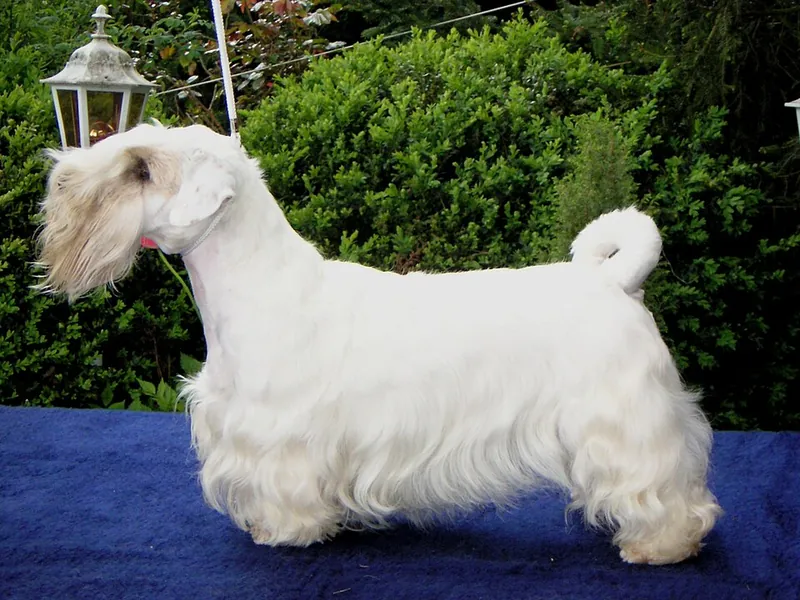
The Sealyham Terrier is a short-legged, sturdy, well-balanced terrier with a long, powerful head, deep chest and heavy bone for its size. It looks low and substantial rather than dainty. Adults stand about 10 to 12 inches at the shoulder, with the AKC standard calling for about 10.5 inches, and weigh roughly 18 to 24 lb. Males tend to be at the upper end of the weight range, with females slightly lighter.
The double coat combines a hard, wiry, weather-resistant outer coat with a soft, dense undercoat. In the show ring it is hand-stripped to a tidy outline with longer furnishings on the legs, beard and eyebrows, which give the breed its distinctive face.
The body color is all white, or white with lemon, tan or badger markings on the head and ears. Heavy body markings or excessive ticking are discouraged. Puppies sometimes have darker patches that fade with age. The ears are folded and hang close to the cheeks, and the tail is carried upright.
Temperament and Personality
Sealyhams are confident, alert and often clownish with their families. They are calmer indoors than many terriers but still bold and opinionated.
They make keen watchdogs with a surprisingly deep bark. They may not tolerate other dogs well, especially same-sex terriers, and chase small animals readily. Consistent rules are essential, because a Sealyham will exploit any inconsistency.
Many Sealyhams are reserved with strangers but devoted and affectionate with their family. They can be sensitive to teasing, so children should be taught to treat them respectfully.
Are Sealyham Terriers Good for First-Time Owners?
Sealyhams can suit first-time owners who are patient, consistent and like a characterful dog, but they are not effortless. They are less hyperactive than many terriers, which helps, and their size makes them easy to handle physically.
The challenges are mental and grooming-related. A Sealyham will notice and exploit inconsistent rules, so the whole household needs to agree on boundaries. Training works best with short, fun, reward-based sessions. Beginners also need to commit to brushing several times a week and regular stripping or professional grooming. A first-time owner who wants a calm, obedient dog with an easy coat may find another breed simpler.
Do Sealyham Terriers Bark a Lot?
Sealyhams are moderate barkers. They are alert watchdogs with a deep, surprisingly big voice for their size, and most will announce visitors, delivery people and animals in the yard.
They are usually not as yappy as some small terriers, especially when well exercised and given mental work. Barking increases with boredom, loneliness or a view of busy streets. Teach a quiet cue early, reward calm behavior at windows and doors and provide outlets for terrier instincts, such as digging boxes or scent games. In apartments, managing what the dog can see and hear outside helps keep noise down.
Are Sealyham Terriers Good with Other Pets?
It depends on the pet. Sealyhams were bred to tackle badger, otter and fox, and many retain a strong instinct to chase small, fast-moving animals. Rodents, rabbits and pet birds are rarely safe around them.
Cats can be accepted when the Sealyham is raised with them from puppyhood, though outdoor cats may still be chased. With other dogs, many Sealyhams do well with a calm dog of the opposite sex, but some are intolerant of other dogs, especially same-sex terriers. Early socialization, careful introductions and supervised play help. Meeting the breeder's adult dogs gives you a good idea of what to expect.
Exercise and Training
Moderate daily exercise, such as two brisk walks and play, keeps a Sealyham fit. They also need mental challenges.
- Use firm but positive training and short, fun sessions.
- Teach a reliable recall early, but expect hunting instincts to take over.
- Provide digging or scent games as outlets.
- Keep it leashed near roads and wildlife.
Sealyhams generally prefer interesting walks to long runs. Their low build and heavy bone mean they are not built for high-speed sports, but they enjoy earthdog, scent work and rally.
Grooming and Shedding
The wiry, weather-resistant topcoat and soft undercoat need a lot of care. Brush several times a week, ideally daily, to prevent mats, and plan for hand-stripping or professional grooming every few months. Clean the beard regularly. Shedding is moderate, and the coat can stain.
Pet owners may opt for a clipped coat, which is easier to maintain but softens the texture and color. Check ears and trim the hair between the pads.
Feeding and Nutrition
The Sealyham's long back and short legs make weight control especially important. Extra pounds increase strain on the spine and joints, and a heavy Sealyham can be reluctant to exercise, which makes the problem worse. Check body condition by feel, since the coat can hide a growing waistline.
Puppies do well on three meals a day until about six months, then two meals. A complete food for small breed puppies supports steady growth. Adults have moderate energy needs, and many are enthusiastic eaters, so measure portions rather than filling the bowl.
The beard collects food and water and can stain or develop a sour smell. Wipe the face after meals, and consider stainless steel or ceramic bowls, which are easier to keep clean. Some owners find that tear and beard staining varies with diet and water, so discuss persistent staining or itchy skin with your vet rather than switching foods frequently.
Use small treats in training and count them in the daily allowance.
| Adult weight | Less active | Typical adult | Very active |
|---|---|---|---|
| 18 lb | 470 kcal | 540 kcal | 680 kcal |
| 24 lb | 590 kcal | 670 kcal | 840 kcal |
Estimates use the resting energy formula veterinarians work with (70 × body weight in kg0.75) and standard activity factors. Use the feeding guide on your food as a starting point and adjust to body condition. Puppies, seniors, pregnant animals and pets that need to lose weight have different needs, so ask your vet.
Health and Lifespan
Sealyhams typically live 12 to 14 years. Known concerns include:
- Primary lens luxation (PLL): a DNA test is available and recommended.
- Other eye conditions, so regular eye checks are wise.
- Low genetic diversity, due to the small population.
The long back and short legs mean weight control and sensible jumping limits matter.
Ask breeders for PLL DNA results and recent eye examinations of both parents.
Sealyham Terrier Price and Cost of Ownership
Sealyham Terriers are rare in the US, with only a few litters each year, so published price ranges are inconsistent. Prices vary by breeder, region and lines, and most puppies are reserved well before birth. Reputable breeders will provide primary lens luxation (PLL) DNA results and eye examinations for both parents. Breed rescue occasionally has adults needing homes.
Grooming is the main ongoing cost. Professional hand-stripping every few months is time-consuming and fairly expensive, and few groomers are skilled at it. Clipping is cheaper and more widely available but softens the coat's texture. In between, you will need a good slicker brush, a metal comb and whitening-friendly shampoo.
Other cost drivers include regular eye checks and insurance that covers eye conditions, as well as ramps or steps to reduce jumping strain on the long back.
Is the Sealyham Terrier Right for You?
The Sealyham suits apartments or houses, and owners who enjoy terrier humor and grooming. It is a good companion for adults or families with older children.
It is not ideal for homes with small pets or owners unwilling to keep up with coat care.
Sealyham Terrier Traits at a Glance
Sealyham Terrier FAQ
How big do Sealyham Terriers get?
They stand about 10.5 to 12 inches tall and weigh roughly 18 to 24 pounds.
Are Sealyham Terriers good family dogs?
They can be, especially with older children, but need consistent rules.
Do Sealyham Terriers shed?
Moderately; the main work is grooming and stripping the coat.
Why are Sealyham Terriers rare?
Popularity fell in the late 20th century, and the breed is now listed as vulnerable in the UK.
How long do Sealyham Terriers live?
About 12 to 14 years.
How much grooming does a Sealyham Terrier need?
A lot. Brush several times a week and plan for hand-stripping or professional grooming every few months.