Norfolk TerrierA small, fearless English ratter
The Norfolk Terrier is one of the smallest working terriers, a sturdy little dog with folded ears, a wiry coat and a big, bold personality. It is affectionate, great with kids and fun-loving, but its digging, hunting instinct and independent streak need patient handling.
Why people love the Norfolk Terrier
- Sturdy, gentle and fun with children
- Friendlier with other dogs than many terriers
- Small enough for apartments, tough enough for hikes
- Long lifespan, often into the mid-teens
- Weatherproof wire coat sheds moderately
Things to consider
- Strong urge to chase and dig
- Recall is unreliable near small animals
- Puppies are scarce and waiting lists are common
- Coat needs hand-stripping to keep its texture
- House training can take extra time
Is this breed right for you?
10 questions · live resultHistory and Origin
The Norfolk and the Norwich Terrier share their origins in East Anglia, England, where small, game terriers were kept for ratting and for bolting foxes from their dens. In the early 1900s they were popular with students at Cambridge University as ratters and companions.
For decades both ear types were shown as one breed, the Norwich Terrier. The Kennel Club separated the drop-eared Norfolk in 1964, and the AKC followed in 1979. The Norfolk's folded ears are its quickest distinguishing feature from the prick-eared Norwich.
Size, Coat and Colors
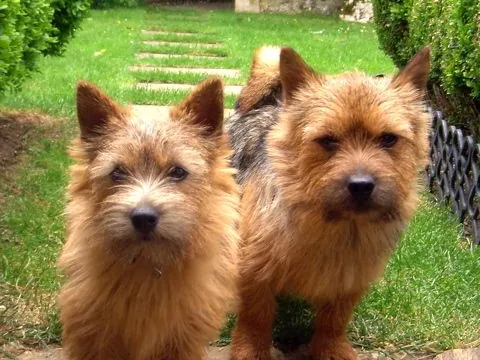
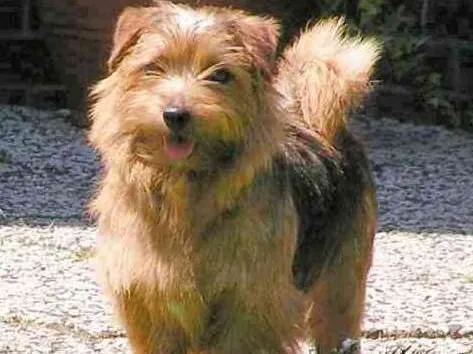
The Norfolk Terrier is one of the smallest working terriers, standing about 10 inches at the shoulder and weighing around 11 to 12 lb. The AKC standard allows 9 to 10 inches. It is compact and short-backed with good bone and substance for its size, a deep chest and a slightly foxy, wedge-shaped head.
The quickest way to recognize a Norfolk is its ears: small, V-shaped and dropped, folding forward with the tips level with the cheek. The prick-eared Norwich Terrier looks otherwise very similar.
The coat is hard, wiry and straight, lying close to the body, with a slightly longer, rougher ruff on the neck and shoulders and short whiskers and eyebrows. Accepted colors are red, wheaten, black and tan and grizzle, and white marks are undesirable. Males and females are close in size, with males often a little heavier in head and bone.
Temperament and Personality
Norfolks are confident, cheerful and affectionate. Unlike some terriers, they are usually friendly with people and gentle with children. They are alert and will bark at unusual sounds, though they are not usually nuisance barkers.
Their hunting instinct is strong. They chase squirrels and cats and should not be trusted with rodents or small pets. Many love to dig, and they can be stubborn when something interesting has their attention.
Norfolks tend to get along with other dogs better than many terriers, and they are generally sociable rather than sharp. They thrive on companionship and like being part of family activities.
Are Norfolk Terriers Hypoallergenic?
No dog is fully hypoallergenic, and the Norfolk is not either. It sheds moderately, and a regularly hand-stripped coat drops less hair around the home than many breeds, which some people with mild allergies find easier to live with.
Allergic reactions are triggered mainly by proteins in dander, saliva and urine rather than by hair alone, and individual dogs and people vary a lot. If allergies are a concern, spend time with adult Norfolks, ideally in a home setting, before committing to a puppy. Keeping the coat stripped, washing bedding often and keeping the dog out of the bedroom all help reduce exposure.
Is the Norfolk Terrier Good for First-Time Owners?
Yes, the Norfolk is one of the more beginner-friendly terriers. It is people-oriented, generally good with children and other dogs and less sharp than many terrier breeds, and its small size makes it easy to handle.
First-time owners should still expect true terrier traits: digging, chasing squirrels and cats, a selective recall and occasional stubbornness. House training can take longer than with larger breeds. Short, upbeat training sessions with food rewards, a securely fenced yard and a dig box go a long way. Learning to hand-strip the coat, or budgeting for a groomer who strips rather than clips, keeps the coat in good shape.
Are Norfolk Terriers Good with Cats?
Some are, but it depends on the individual and on early experience. Norfolks were bred to hunt rats and bolt foxes, and many chase anything that runs, including cats.
A Norfolk raised with a calm resident cat often learns to live with it peacefully indoors, though it may still chase outdoor or unfamiliar cats. Adults with no history of cats are a bigger gamble. To improve the odds:
- Introduce slowly, with the dog leashed or behind a gate.
- Give the cat high perches and a dog-free room.
- Reward calm behavior around the cat and interrupt staring or stalking early.
Pet rodents, rabbits and birds should always be kept out of reach.
Exercise and Training
Despite their size, Norfolks are energetic and need daily walks and play, around 45 to 60 minutes. They enjoy earthdog trials, agility and scent games.
- Walk on a leash or in secure areas; recall is unreliable near prey.
- Check fencing for gaps and digging spots.
- Train with short, varied sessions and food rewards; they get bored with repetition.
Housetraining can take extra time, as with many small terriers.
Norfolks love having a job, even a small one. Scent games, digging boxes and tug games give them an outlet for their instincts and help prevent nuisance digging in the garden.
Grooming and Shedding
The hard, wiry, weatherproof coat should be hand-stripped about twice a year to remove dead hair and maintain texture. Clipping softens the coat and changes its color. Weekly brushing and combing keeps it neat between strippings.
Shedding is moderate. Colors include red, wheaten, black and tan, or grizzle. Trim nails and check ears regularly.
Feeding and Nutrition
Norfolks are small, energetic and usually keen eaters, so measured portions and attention to body condition keep them at a healthy weight. Extra pounds add stress to the knees, which matters in a breed where patellar luxation is reported, and to the heart in older dogs.
Feed adults two meals a day. Puppies need three or four small meals until about six months, because tiny dogs can run low on blood sugar if they skip food.
- Choose a kibble size suited to a small mouth, and brush teeth daily, since small terriers often build up tartar.
- Training a terrier takes many rewards, so cut treats into tiny pieces and count them in the daily ration.
- Food puzzles and scatter feeding use part of the ration to satisfy the urge to hunt and dig.
- Senior Norfolks often need fewer calories as activity drops.
| Adult weight | Less active | Typical adult | Very active |
|---|---|---|---|
| 11 lb | 330 kcal | 370 kcal | 470 kcal |
| 12 lb | 350 kcal | 400 kcal | 500 kcal |
Estimates use the resting energy formula veterinarians work with (70 × body weight in kg0.75) and standard activity factors. Use the feeding guide on your food as a starting point and adjust to body condition. Puppies, seniors, pregnant animals and pets that need to lose weight have different needs, so ask your vet.
Health and Lifespan
Norfolks are generally hardy and often live 12 to 16 years. Conditions reported in the breed include hip dysplasia, patellar luxation, skin problems and cataracts. Mitral valve disease and difficult births are also known in small breeds like this one.
Ask breeders for hip and knee evaluations, eye exams and cardiac screening of parents, and keep your Norfolk at a healthy weight.
Norfolk Terrier Price and Cost of Ownership
Typical breeder price in the US$2,500 to $4,500
Norfolk Terriers are among the pricier small breeds in the US, with puppies from reputable breeders often costing about $2,500 to $4,500. Prices vary by breeder, region and lines. Litters are small and births often need veterinary help, so supply is limited and waiting lists are normal.
Breed rescue organizations occasionally place adult Norfolks, often retired show or breeding dogs, and are worth contacting.
Ongoing costs include hand-stripping about twice a year by a groomer experienced with terrier coats, since clipping changes the coat's texture and color. Budget also for dental cleanings, knee checks and heart monitoring in older dogs. Fencing that stops digging and squeezing through gaps is another breed-specific expense.
Is the Norfolk Terrier Right for You?
At around 11 to 12 lb and 10 inches tall, the Norfolk suits families with children, city dwellers and older owners who want an active, sturdy small dog. It adapts well to apartment life if exercised.
It is not ideal in homes with pet rodents or birds, or for owners who want reliable off-leash freedom.
Litters are small and the breed is not common, so finding a well-bred puppy can take time. A Norfolk that gets daily walks, games and company is usually a cheerful, adaptable little dog well into old age.
Norfolk Terrier Traits at a Glance
Norfolk Terrier FAQ
Are Norfolk Terriers good with kids?
Yes, they are typically sturdy, playful and affectionate with children.
What is the difference between Norfolk and Norwich Terriers?
Norfolks have folded, drop ears, while Norwich Terriers have upright, pricked ears. They were once one breed.
Do Norfolk Terriers shed?
They shed moderately. Hand-stripping a few times a year keeps the coat healthy.
How big do Norfolk Terriers get?
They stand about 10 inches tall and weigh around 11 to 12 lb.
How long do Norfolk Terriers live?
They often live 12 to 16 years.
Do Norfolk Terriers bark a lot?
They are alert and bark at unusual noises, but they are generally less noisy than some other terriers.